Wastewater Treatment Plant Manufacturer - Page 2 of 7 - Sewage Treatment Plant Manufacturers

What-are-the-advanced-wastewater-treatment-techniques.webp

August 1, 2026by Netsol Water

What Are the Advanced Wastewater Treatment Techniques?

Clean water supports every industry and every community. As industries continue to expand, they also produce more wastewater that contains chemicals, oils, heavy metals, and many other pollutants. Simple treatment methods cannot always remove these impurities. This is why industries now use advanced wastewater treatment techniques that provide better treatment and help meet environmental standards. These methods improve water quality and make treated water suitable for reuse in many industrial processes.

A wastewater treatment plant manufacturer plays an important part in this process. A manufacturer understands the quality of wastewater and designs treatment plants that match the needs of each industry. We are the leading wastewater treatment plant manufacturer that provides advanced treatment solutions for different industrial applications. Modern treatment technologies help industries save water, reduce pollution, and improve overall plant performance.

Importance of Advanced Wastewater Treatment Techniques

Many industries use various chemicals in their manufacturing processes, and industrial wastewater is now more difficult to treat. The wastewater may include dissolved solids, organic matter, suspended particles, bacteria, and harmful compounds. Conventional treatment processes eliminate most contaminants, but not all. This creates a need for advanced wastewater treatment methods, which can not only improve water quality but also help industries achieve better results.

Let’s take a look at some advanced wastewater treatment methods used in industries to enhance the efficiency of wastewater treatment and boost water recovery.

1. Membrane Filtration Technology

Membrane filtration is one of the most effective treatment methods for industrial wastewater. This is done by sending the wastewater through a specially designed membrane, which filters impurities out of the clean water. The technology can be used across a variety of industries, as different types of membranes remove contaminants of different sizes.

Suspended solids and larger particles are filtered out of the water by microfiltration. The ultrafiltration process eliminates fine suspended matter, bacteria, and viruses. Nanofiltration can be used to remove dissolved organic compounds and hardness, while reverse osmosis removes dissolved salts and very small contaminants. The treated water is then fit for reuse in manufacturing processes, cooling systems, and boilers.

Membrane filtration also decreases an industry’s daily need for fresh water. This helps reduce costs and manage water use. Membrane technology is used in conjunction with other treatment processes in many industries to produce even better water quality. Wastewater characteristics and production requirements are analyzed by an experienced Wastewater Treatment Plant Manufacturer to select the right membrane technology. This helps maintain stable operations for industries and improves treatment efficiency.

2. Advanced Oxidation Processes

AOP is a great technology for treating wastewater containing chemicals that are more difficult to remove using normal biological treatment. These processes produce powerful oxidants that can break down complex contaminants into simpler ones. As a result, wastewater becomes safer for further treatment or discharge.

Several advanced oxidation techniques are available for industrial use. Ozone treatment removes organic pollutants from wastewater through the use of ozone gas, while also eliminating colour and odour from wastewater. The combination of ultraviolet light with oxidizing agents is known as UV treatment, which is used to eliminate harmful compounds and microorganisms. Treatment with hydrogen peroxide also enhances the oxidation process and makes it easier to remove difficult contaminants from industrial wastewater.

In pharmaceutical, textile, chemical, and dyestuff industries, these techniques are highly effective at treating difficult pollutants in wastewater. They also decrease the concentration of harmful substances that can impact biological treatment systems. Good system design enhances treatment efficiency and minimizes operating issues. A Wastewater Treatment Plant Manufacturer must study the wastewater composition and then choose the proper oxidation process. This helps achieve good treatment outcomes and contributes to the long-term performance of the plant.

Biological Treatment with Advanced Reactor Systems

Although biological methods are not new, they still have an important place in wastewater treatment, as microorganisms decompose organic pollutants. Today, modern industries use advanced biological reactors to enhance treatment efficiency and minimize plant size and operating costs.

Let us look at some advanced biological reactor systems that are widely used in industrial wastewater treatment.

1. Moving Bed Biofilm Reactor

The Moving Bed Biofilm Reactor, also known as MBBR, uses specially designed plastic media inside the treatment tank. Beneficial microorganisms grow on these media surfaces and continuously remove organic pollutants from wastewater. Since the media move freely inside the tank, the bacteria receive better contact with wastewater, which improves treatment performance.

MBBR systems require less space than many conventional treatment methods. They also handle fluctuations in wastewater quality without affecting overall performance. These systems suit food processing, dairy, pharmaceutical, and chemical industries, where wastewater quality changes regularly. Proper design and operation improve efficiency and reduce maintenance requirements.

2. Membrane Bioreactor

The Membrane Bioreactor, or MBR, combines biological treatment with membrane filtration in a single process. The biological section removes organic pollutants, while the membrane section separates treated water from suspended solids. This combination produces very clean water that can often be reused in industrial operations.

MBR systems produce better water quality than many traditional treatment methods. They occupy less space and reduce sludge production. Industries that require high-quality treated water often select MBR technology because it provides consistent performance throughout the year. Proper design ensures stable operation and longer membrane life.

Water Recovery and Reuse Technologies

Water conservation has become an important goal for industries because fresh water resources continue to decrease in many regions. Advanced wastewater treatment allows industries to recover treated water and use it again in different operations. This reduces freshwater consumption and lowers overall operating expenses.

Let us look at some important technologies that support water recovery and reuse in industrial facilities.

1. Reverse Osmosis Plants

Reverse osmosis has become one of the most popular technologies for water recovery. High pressure forces wastewater through semi-permeable membranes that remove dissolved salts, minerals, and many dissolved contaminants. The treated water becomes suitable for several industrial applications, including cooling towers, boilers, and process water requirements.

Industries that reuse treated water reduce their dependence on external water supplies. Reverse osmosis also helps industries meet stricter environmental regulations by reducing wastewater discharge. Proper pretreatment protects membranes and improves system life, which increases overall efficiency.

2. Zero Liquid Discharge Systems

Zero Liquid Discharge, or ZLD, is an advanced treatment approach that aims to eliminate liquid wastewater discharge from industrial plants. This system combines several treatment technologies, such as reverse osmosis, evaporation, and crystallization, to recover almost all available water.

Recovered water returns to industrial processes, while solid waste remains for proper disposal. ZLD systems help industries reduce environmental impact and improve water conservation. Although these systems require careful design, they provide long-term benefits where water availability is limited or discharge regulations are strict. Experienced manufacturers design ZLD systems according to wastewater characteristics and production needs to achieve reliable performance.

Read some interesting information for the Effluent Treatment Plant Manufacturer in Delhi

Conclusion

Advanced wastewater treatment techniques help industries improve water quality, reduce pollution, and increase water reuse. Modern technologies such as membrane filtration, advanced oxidation, biological reactor systems, reverse osmosis, and Zero Liquid Discharge provide effective solutions for complex industrial wastewater. Every industry has different treatment requirements, which makes proper system design very important.

Choosing an experienced Wastewater Treatment Plant Manufacturer ensures that industries receive a treatment plant that matches their operational needs and environmental goals. Netsol Water is the leading Wastewater Treatment Plant Manufacturer that offers advanced wastewater treatment solutions for different industries. Contact the team today to discuss your wastewater treatment requirements and receive expert guidance for selecting the right treatment plant.

Contact Netsol Water at: Phone: +91-9650608473 Email: enquiry@netsolwater.com

What-are-the-advanced-methods-of-wastewater-treatment.webp

July 29, 2026by Netsol Water

What Are the Advanced Methods of Wastewater Treatment?

The amount of wastewater generated by industries and cities on a daily basis is quite high. This water is contaminated with dirt, chemicals, oil, grease, heavy metals, and other harmful substances. This wastewater can have adverse environmental and health consequences when it enters rivers, lakes, and the ground. For this reason, industries need effective treatment plants that can remove pollutants before water is discharged.

A modern treatment plant utilizes advanced technology to enhance the quality of water and comply with environmental requirements. These techniques benefit industrial facilities in their efforts to lower pollution, conserve water, and enhance overall operational efficiency. The right treatment process also minimizes operational issues and facilitates sustainable business expansion.

A reliable wastewater treatment plant manufacturing company designs a treatment plant based on the type of wastewater and the desired water quality. We are the top wastewater treatment plant manufacturer, providing dependable wastewater treatment solutions to various industries. Wastewater treatment methods are highly advanced, and when industries are aware of them, they can choose a method that provides even greater performance and long-lasting results.

Why Advanced Wastewater Treatment Methods Are Important

Over the years, there have been significant changes in wastewater treatment due to the increased complexity of the wastewater produced by industries. Traditional treatment methods can remove many common pollutants; however, not all of these methods can remove dissolved chemicals, harmful microorganisms, or very fine particles. These issues are addressed by advanced treatment techniques, which enhance the quality of treated water.

Let’s take a look at some of the more advanced wastewater treatment methods commonly used in today’s industries.

1. Membrane Bioreactor Technology

Membrane Bioreactor technology combines biological treatment with membrane filtration. During this process, microorganisms decompose organic pollutants, and a special membrane separates the clean water from suspended solids and bacteria. This results in water of high quality, which can be reused in industry in many cases.

The membranes are able to remove very small particles that are not removed by conventional treatment plants. The treated water is much cleaner, and industries can use water recycling to cut down on freshwater use. Another benefit of this process is that it requires less space than numerous traditional treatment plants. The system is also stable in the face of changes in wastewater quality. This technology is employed in many industries, including pharmaceuticals, food processing, and textile manufacturing, due to its consistent results and water conservation.

2. Reverse Osmosis Technology

Reverse Osmosis is another advanced treatment process that removes dissolved salts, heavy metals, and many harmful contaminants from water. Water under pressure is forced through a special membrane, while impurities are left behind on one side and clean water passes through.

This process produces water with very low levels of dissolved solids, which makes it suitable for reuse in industrial operations. Reverse Osmosis also helps industries adhere to strict environmental regulations by enhancing the quality of treated water. This process is often employed as a second stage after biological treatment to achieve a more purified product in many industries.

Advanced Biological Treatment Methods

Biological treatment is significant in wastewater management because microorganisms are naturally able to remove organic pollutants. Modern biological systems enhance this process and make it more efficient. These techniques are used to control the pollution load and ensure consistent system performance for industries.

Let’s take a look at some more sophisticated methods of biological treatment.

1. Moving Bed Biofilm Reactor

The Moving Bed Biofilm Reactor is another technology that employs small plastic media in a treatment tank. As the wastewater passes through the reactor, beneficial microorganisms flourish and consume the organic pollutants.

The media is constantly in motion, which brings microorganisms into closer contact with the wastewater. This means pollutant removal can be improved without the need to enlarge the treatment facility. The system is also more stable amid fluctuations in wastewater flow and pollutant levels.

MBBR is a preferred option for industries due to its low maintenance requirements and stable treatment performance over a longer period. The technology also allows for upgrading existing treatment plants without significant structural modifications.

2. Sequencing Batch Reactor

The Sequencing Batch Reactor, or SBR, carries out all stages of treatment in a single reactor. The sequence of filling, biological treatment, settling, and treated water discharge is carefully planned. This controlled operation enhances treatment quality and reduces the need for additional equipment.

SBR is an excellent method for high-quality removal of organic matter, nitrogen, and phosphorus. The process enables operators to modify the number of treatment cycles based on wastewater characteristics. This versatility is beneficial for industries with varying wastewater quality. All operations take place in a single reactor, which simplifies the overall plant design while retaining good treatment performance.

Advanced Physical and Chemical Treatment Methods

Physical and chemical treatment methods can be used to remove pollutants that microorganisms cannot easily treat, supporting biological treatment. These methods enhance final water quality and facilitate the reuse or safe discharge of wastewater.

Let’s have a look at some advanced physical and chemical treatment methods.

1. Dissolved Air Flotation

Dissolved Air Flotation, also called DAF, is a process that separates suspended solids, oil, grease, and floating materials from wastewater. Small air bubbles form, which pick up contaminants and bring them to the surface, allowing for easy removal.

Food processing, petroleum, and chemical manufacturing are some of the industries that use this process most effectively. Pre-treating oil and suspended solids prior to biological treatment increases the efficiency of the overall treatment system. DAF also helps minimize sludge production and prevents damage to downstream equipment. The process is stable and contributes to improved overall plant operation.

2. Advanced Oxidation Process

Advanced Oxidation Process is a powerful method that uses strong oxidizing agents to destroy complex chemicals that traditional treatment methods are unable to break down. These reactions help degrade harmful organic compounds and reduce pollutants that have not been removed from the water by biological processes.

This technology is used in industries that produce pharmaceutical chemicals, dyes, or hazardous waste, as it processes materials that are difficult to remove using traditional methods. Advanced Oxidation also reduces unwanted colour and odour in treated water. The process benefits both water quality and the safe discharge of water into the environment. It provides very good overall purification when used in conjunction with other treatment technologies.

Choosing the Right Wastewater Treatment Method

It is essential to select the proper treatment technology, as all industries produce different types of wastewater. The treatment design is affected by available water quality, pollutant concentration, production capacity, as well as plans for future expansion. Engineers use the results of extensive wastewater analysis to decide on appropriate treatment technologies based on the desired treatment levels.

An experienced Wastewater Treatment Plant Manufacturer examines these factors before designing a complete treatment solution. By selecting the appropriate system, operational efficiency is improved, maintenance costs are lowered, and equipment life is extended. Today, a variety of modern technologies are used in combination in treatment plants, rather than relying on a single process. This comprehensive approach leads to better treatment results and greater water reuse.

Read some interesting information for the Sewage Treatment Plant Manufacturer in Delhi

Conclusion

Advanced wastewater treatment techniques help industries achieve better water quality, lower pollution levels, and promote sustainable water use. A variety of technologies can be used for the efficient treatment of different industrial wastewater, including Membrane Bioreactor, Reverse Osmosis, Moving Bed Biofilm Reactor, Sequencing Batch Reactor, Dissolved Air Flotation, and Advanced Oxidation Process. The choice of technology is determined by the type of wastewater and the treatment objectives of the industry.

Netsol Water, being one of the leading Wastewater Treatment Plant Manufacturers, can be the right choice to design reliable and efficient wastewater treatment systems. Our professionals deliver tailored wastewater treatment solutions to meet your industrial needs. Call Netsol Water today, let us know what you’re looking for, and our experts will provide advice on the right wastewater treatment solutions for you.

Contact Netsol Water at:

Phone: +91-9650608473

Email: enquiry@netsolwater.com

How-many-types-of-wastewater-treatment-are-there.webp

July 27, 2026by Netsol Water

How Many Types of Wastewater Treatment Are There?

Water is one of the key resources of human existence and industrial development. Wastewater is generated in all commercial and residential structures daily. The contaminants in this water include dirt, chemicals, oils, and other harmful substances, which can harm rivers, lakes, and underground water sources. Due to this, it has become necessary to treat wastewater properly in all parts of the world.

A wastewater treatment plant is an important component in cleaning up wastewater before it enters the environment. Various methods of treatment are capable of removing various pollutants and rendering water safer to be reused or disposed of. In urban areas, which are known for their advanced industrial growth and rapid urban development, the production of a huge quantity of wastewater every day requires advanced wastewater treatment plants.

Industries and communities must understand the various methods of wastewater treatment that can be used to meet their needs. Netsol Water is a renowned manufacturer in this segment and offers effective water treatment solutions, enabling organizations to treat wastewater in an efficient, responsible, and safe way.

What Is Wastewater Treatment and Why Is It Important?

Wastewater treatment is a process of purifying water by removing impurities and harmful substances. This process safeguards natural water resources and contributes to public health. If not treated, polluted water can cause diseases and contribute to environmental pollution. This is the reason why the treatment of wastewater is an important issue in every industry and municipality.

Let’s take a look at some of the most important aspects of wastewater treatment and see why it is required in modern life.

1. Conservation of the Environment

Raw sewage is contaminated with harmful bacteria, chemicals, and organic matter. This water enters rivers or lakes and impacts water quality and aquatic life. The harmful substances are eliminated by wastewater treatment, and a clean environment is maintained. This process also helps safeguard soil and groundwater from contamination.

2. Conservation of Water Resources

However, water scarcity is a problem in many places due to increasing population and industrial growth. Treated wastewater is reused for irrigation, industrial cooling, and other purposes. This practice helps conserve fresh water resources and promote sustainable development.

3. Support for Industrial Growth

Industries need clean water for various processes on a continuous basis. Industries can reuse water and cut costs by using appropriate wastewater treatment. The proper operation of a Wastewater Treatment Plant can assist companies in complying with environmental regulations and in optimizing the use of resources.

Primary Treatment of Wastewater

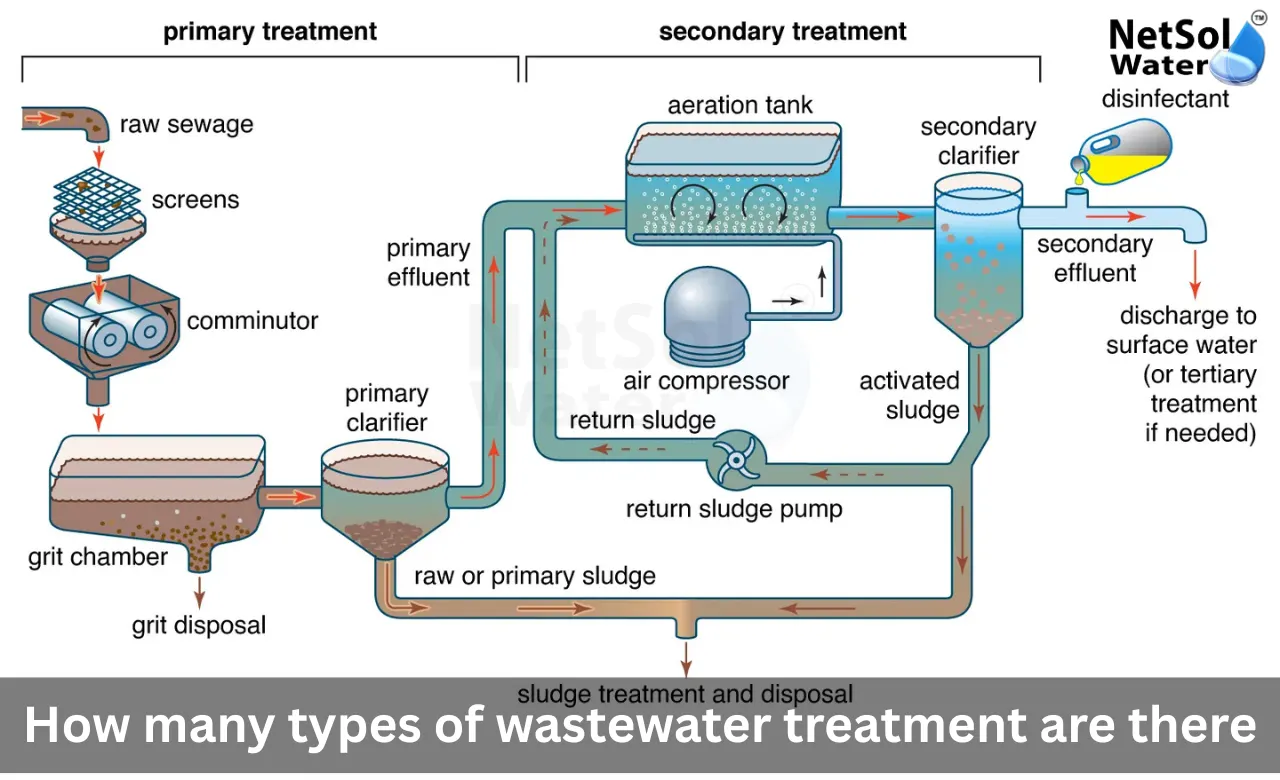
Primary treatment is the initial major phase of treatment in the wastewater treatment system. This stage is used to filter out large and easily separated materials from wastewater. Many impurities are found in solid form in wastewater, which makes this stage important for improving treatment efficiency.

Let us look at some methods used in primary treatment.

1. Screening Process

Large materials like plastic, paper, cloth, and wood pieces are removed by the screening process. These materials are removed by special screens before entering the treatment system. This process can help prevent damage to pumps and other equipment and optimize treatment plant performance.

2. Sedimentation Process

Screened wastewater then goes to sedimentation tanks. Gravity causes heavy particles to settle at the bottom, and lighter particles to float at the surface. Operators remove the settled solids and floating materials from the tanks. This step greatly decreases suspended solids and contributes to the pre-treatment of water for secondary treatment.

Primary treatment captures a significant proportion of solid waste and reduces the organic content of the wastewater. But it does not completely remove dissolved pollutants. For this reason, the wastewater goes to the next step of treatment.

Secondary Treatment of Wastewater

Secondary treatment is one of the most important stages of wastewater treatment. This process helps filter out dissolved and biological pollutants that are not removed by primary treatment. This stage is important because microorganisms are able to decompose organic matter and transform it into harmless substances.

Let’s take a look at some of the typical methods in secondary treatment.

1. Activated Sludge Process

In the activated sludge process, wastewater is mixed with microorganisms inside aeration tanks. Air is continually supplied to promote microbial growth. The microorganisms degrade the organic pollutants and generate clean water. The mixture is then sent to settling tanks, where the solids are separated from the treated water.

2. Trickling Filter Process

The trickling filter consists of a bed of stones or plastic media. Microorganisms grow on the surface of this media, over which wastewater flows. These microorganisms consume the organic matter in the wastewater. This method is used in many treatment applications.

A substantial portion of the organic pollution is removed, and water quality is greatly improved, through secondary treatment. This is a critical step in the treatment process for many municipal and industrial facilities.

Tertiary Treatment of Wastewater

The highest level of water treatment is known as tertiary treatment. This process eliminates fine impurities, nutrients, and any remaining contaminants from the water. Many industries and municipal applications require the highest water quality standards.

Let’s take a quick look at some of the key tertiary treatment techniques.

1. Filtration Process

Fine suspended particles that are not removed in secondary treatment are filtered out. Membrane filters, sand filters, and other advanced filtration systems remove very small particles and enhance water clarity. This process results in water that can be used in a variety of reuse applications.

2. Disinfection Process

The purpose of disinfection is to kill harmful bacteria, viruses, and other microorganisms. This is typically done with chlorine, ultraviolet light, or ozone at treatment plants. The goal of disinfection is to make the water safe before it is discharged from the system or reclaimed.

3. Nutrient Removal Process

Nitrogen and phosphorus present in wastewater can lead to the overgrowth of algae in water bodies. These nutrients are removed through advanced treatment processes, protecting ecosystems. Nutrient removal is a key component of modern wastewater treatment plants.

Tertiary treatment produces high-quality water that can be used in water reuse programs. This is a preferred level of treatment in many industries, as it helps conserve water resources and comply with strict environmental regulations.

Sludge Treatment and Disposal

Sludge management forms an important part of wastewater treatment. During the treatment process, solids accumulate and form sludge. If treatment plants do not handle sludge properly, it can create environmental problems. Therefore, proper treatment and disposal of sludge are necessary.

Let us look at some methods used in sludge treatment.

1. Sludge Thickening and Digestion

Treatment plants first reduce the water content of sludge through thickening. After this process, the sludge enters digestion systems, where microorganisms break down organic matter. Digestion reduces odour and stabilizes the sludge.

2. Dewatering and Disposal

The dewatering process separates additional water from the sludge and reduces its volume. Treatment facilities then safely dispose of the sludge or apply it to agricultural fields in accordance with regulations. Efficient sludge management boosts a plant’s efficiency and safeguards the environment.

Sludge treatment is equally important in modern treatment facilities, as it forms a vital part of the wastewater treatment process and ensures safe disposal.

Read some interesting information for the Effluent Treatment Plant Manufacturer in Gurgaon

Conclusion

Wastewater treatment has become an important necessity for industries, municipalities, and commercial establishments. Pollutants are removed, and water resources are preserved, through the combined action of different stages such as primary, secondary, and tertiary treatment, along with sludge management. Each treatment phase has a different purpose and contributes to the enhancement of treated water quality.

Choosing the best wastewater treatment plant can contribute to water management efficiency and environmental standards. Netsol Water is the leading Wastewater Treatment Plant Manufacturer and offers the latest Wastewater Treatment Plant Solutions to meet your requirements.

If you want to know more about wastewater treatment plants or have questions about your project, be sure to get the answers you need by contacting Netsol Water and scheduling a consultation to determine the optimal solution for you.

Contact Netsol Water at: Phone: +91-9650608473 Email: enquiry@netsolwater.com

Which-is-the-most-effective-type-of-wastewater-treatment.png

July 25, 2026by Netsol Water

Which Is the Most Effective Type of Wastewater Treatment?

Water is one of the most significant resources for human life and the growth of industries. All homes and commercial units generate wastewater each day. Untreated discharge of this water can contaminate rivers, lakes, and groundwater. It can also lead to health issues and impact the environment. This is the reason that the treatment of wastewater has become an important aspect of modern development.

A treatment plant removes harmful materials from water and makes it safe to dispose of or reuse. The treatment process varies according to industry and city owing to differences in the quality and quantity of wastewater. To manage water safely and efficiently, a wastewater treatment plant has been installed in most companies. The most successful treatment method will depend on the kind of wastewater and the desired results.

Need for Wastewater Treatment Facilities

Wastewater treatment is an important component in ensuring human health and environmental protection. Water that is not treated chemically contains organic matter, heavy metals, and harmful microorganisms. These pollutants can enter water bodies and impact aquatic life and the humans who rely on those water bodies. That’s the reason correct treatment is crucial for all industries and municipalities.

Let’s take a look at some of the important reasons why wastewater treatment is needed.

1. Water Resources Protection

Fresh water resources are limited, and people have to ensure their preservation for future generations. Untreated wastewater contaminating rivers and lakes degrades water quality and renders the water unsafe. Treatment processes eliminate contamination and help maintain clean water resources.

2. Public Health Protection

Bacteria, viruses, and other disease-causing organisms are commonly found in wastewater. When people drink contaminated water, they may develop a variety of health problems. When treated properly, these harmful substances can be eliminated and health risks minimized.

3. Compliance with Environmental Standards

Discharge standards are very strict and are set by governments to ensure environmental protection. Wastewater from industries and municipalities needs to be treated before it is disposed of. An adequately sized and designed wastewater treatment plant can assist a company in complying with these standards without causing damage to the environment.

Methods of Wastewater Treatment

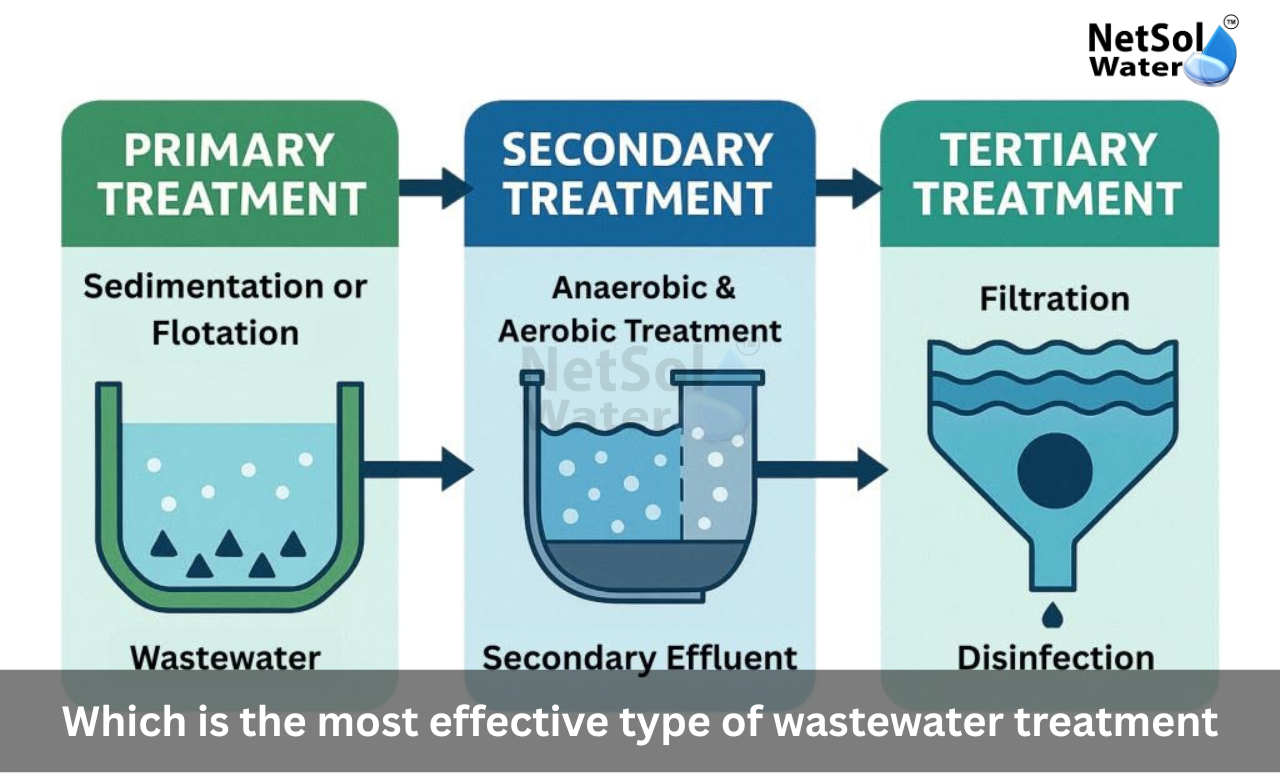
There are three main types of wastewater treatment methods. Each serves a particular purpose, and a treatment method can be more or less effective depending on the pollutants present in the water. For organic wastes, some methods are more effective than others suited to chemical and dissolved materials.

Let’s take a look at these wastewater treatment methods.

1. Primary Treatment

Primary treatment is the first of the series of treatment processes. It is used to filter out large solid objects from wastewater. Typically, screening and sedimentation are part of the process. Heavy particles sink, and floating particles are removed from the surface.

Primary treatment reduces the amount of suspended solids in wastewater. However, it cannot remove dissolved pollutants and microorganisms. Due to this limitation, industries and municipalities employ other treatment technologies after this point.

2. Secondary Treatment

Secondary treatment deals with the removal of organic matter from wastewater. This process basically involves the degradation of pollutants by microorganisms, which remove pollutants naturally. This treatment is often achieved in an activated sludge system or trickling filter.

This process consumes a great quantity of organic contaminants and enhances water quality. This is the method employed by many municipal treatment plants, where it provides good performance and reduced operating costs. Even at this stage, some of the contaminants in the water may not be completely removed.

3. Tertiary Treatment

Tertiary treatment is used to remove the last of the contaminants. This process can eliminate nutrients, dissolved solids, and harmful microorganisms. In this step, filtration membrane systems and chemical treatment methods are used.

Tertiary treatment yields high-quality water which can be utilized for industries, irrigation, and other uses. Many modern facilities have adopted such water treatment systems due to the need for water reuse.

Which Treatment Method Is the Best?

When selecting the most suitable treatment process for wastewater, it is essential to consider the treatment objectives and wastewater properties. There is no single treatment that will address all types of wastewater. Different industries emit different pollutants, and there is a different solution for each scenario.

Let’s take a look at some of the factors that affect the effectiveness of a treatment method.

1. Nature of Wastewater

Chemicals, oils, and heavy metals are frequently found in industrial wastewater. Domestic wastewater contains organic matter and microorganisms. Even a successful treatment process for one type of wastewater could be unsuccessful for another. Knowledge of the characteristics of wastewater assists in choosing an appropriate system.

2. Treatment Objectives

Some facilities require water for safe discharge, while others require water to be reused. For water reuse, more advanced treatment methods are required which produce better-quality water. In many cases, this makes tertiary treatment more effective.

3. Operating and Maintenance Requirements

High operational difficulty should be avoided when using a treatment system. Certain sophisticated systems can only be operated and maintained by trained operators. Long-term performance and efficiency are achieved through proper planning.

Importance of Advanced Wastewater Treatment Technologies

Saving water and protecting the environment is a growing demand for modern industries. Current circumstances have spurred the development of new treatment technologies. These technologies are more effective and promote sustainable water use.

Let’s take a look at some of the advanced technologies that have transformed the wastewater treatment industry.

1. Membrane Filtration Systems

Membrane filtration uses special barriers to separate contaminants from water. Some of the most common applications of this technology are RO and ultrafiltration. These systems are used to eliminate dissolved salts, bacteria, and fine particles from wastewater.

Membrane systems are used in many industries due to the very high quality of water they produce. Treated water can often be reused in production processes, which reduces freshwater consumption.

2. Biological Nutrient Removal

This process eliminates nitrogen and phosphorus from wastewater. Excessively high levels of nutrients can create a serious environmental problem. These compounds can be removed by biological processes that utilize microorganisms, enhancing water quality.

3. Disinfection Technologies

Disinfection eliminates any microorganisms that survive the treatment. Common disinfection processes include chlorination, UV, and ozone treatment. These processes make water safer for reuse and discharge.

Many wastewater treatment plants have adopted advanced technologies to improve performance, allowing industries to implement sustainable water management.

Read some interesting information for the Sewage Treatment Plant Manufacturer in Gurgaon

Conclusion

Effective water treatment is a solution that protects water resources and public health while helping industries comply with water standards. Wastewater problems have no single solution, as there are several ways of treating different types of wastewater.

When it comes to picking the right wastewater treatment plant, it is essential to plan and understand the technical aspects. When it comes to water treatment solutions, it’s important to partner with professionals who have the expertise to deliver efficient and sustainable results.

Netsol Water is a top name in the industry for supplying advanced wastewater treatment solutions for various industries and applications. Don’t wait — reach out to the team today to understand how they can help you get the wastewater treatment plant you need, and take a significant step towards improved water management.

Contact Netsol Water at:

Phone: +91-9650608473

Email: enquiry@netsolwater.com

What-is-anaerobic-wastewater-treatment-how-does-it-works.webp

July 9, 2026by Netsol Water

What is Anaerobic Wastewater Treatment and How Does It Work?

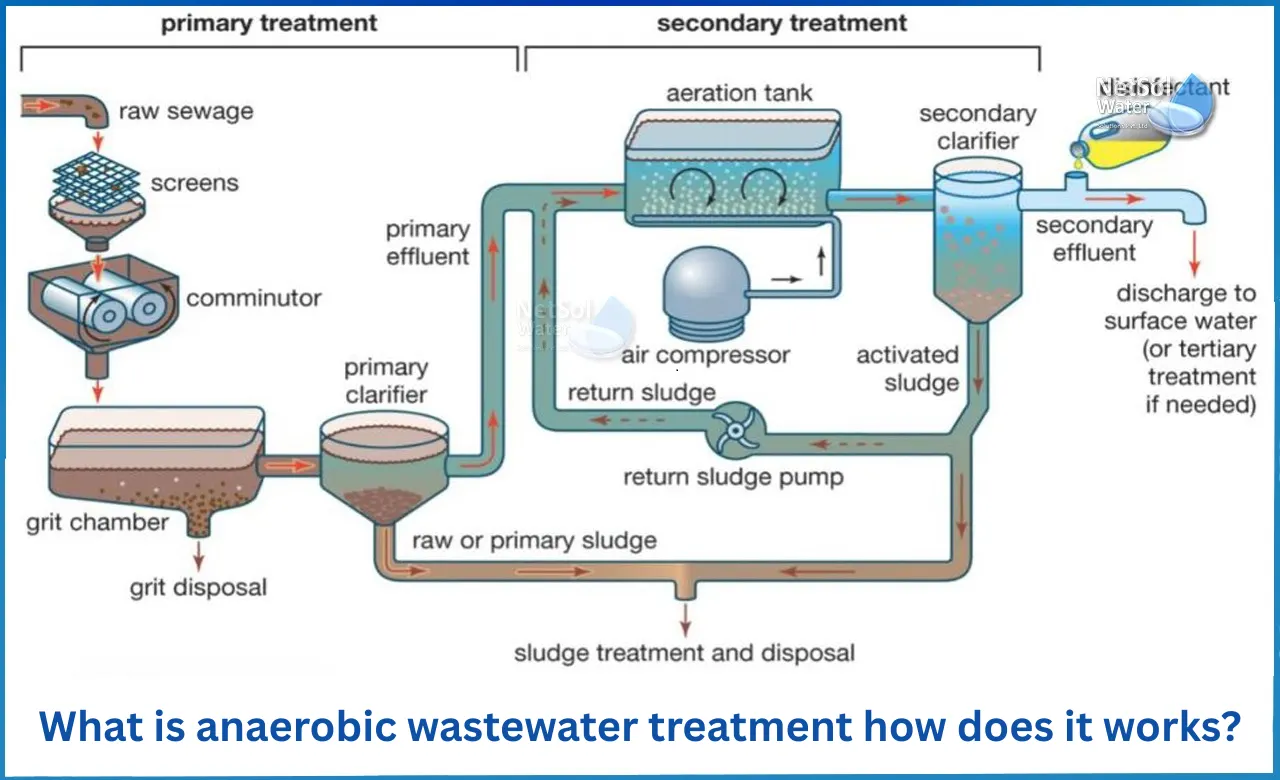
Anaerobic treatment plays a strong role in modern water cleaning because it handles heavy waste in a simple way. Its importance also grows because it supports both pollution control and resource recovery. Instead of treating waste only as a problem, this process turns part of it into biogas. The gas can support heating or power use in some plants.

One of the biggest benefits of anaerobic systems is their low energy demand. Since they do not need oxygen input in the same way as aerobic systems, they use less power during operation. This helps industries lower running costs and manage treatment more easily. Many plant owners look for systems that work well without creating high utility bills. Anaerobic wastewater treatment fits that need because it gives solid performance with less mechanical support. It is a practical choice for sites that want steady treatment without high daily energy use.

Another key point is biogas production. When bacteria break down waste in an oxygen-free tank, they release methane-rich gas. This gas can be collected and used as fuel. In some plants, it helps support boilers or energy systems. This gives the treatment process an extra value beyond water cleaning. It also makes the whole operation more efficient. Instead of only spending money on disposal, the plant can recover useful energy from the waste itself. That is one reason many industries now see this method as a smart long-term solution.

How the Process Works

The working of this system is based on natural microbial action inside a closed tank. Wastewater enters the reactor and stays there for enough time so the bacteria can act on the organic matter. These bacteria do not need oxygen. They feed on the waste and change it into simpler compounds. Over time, the solids break down and the water becomes much cleaner. The process is stable when the right temperature, flow rate and loading are maintained.

Anaerobic wastewater treatment works through a series of biological steps. Each step helps move the waste from complex organic material to gas and treated water. The process may look simple from outside but it depends on balance and proper control. Let’s have a look at some of the important stages that make it work well.

1. Hydrolysis

Hydrolysis is the first step. In this stage, large organic particles break into smaller parts. This step is important because later bacteria can only work on small enough pieces. If hydrolysis does not happen well then the whole system slows down. That is why the wastewater must stay in the tank long enough and the feed must remain balanced. This first stage sets the base for the rest of the treatment.

2. Acid Formation

After hydrolysis, the smaller compounds move into acid formation. Here, different bacteria change the broken-down material into volatile fatty acids and other simple substances. This step makes the waste even easier for the next group of microbes to handle. It also creates the right conditions for methane-forming bacteria to do their work. The process must stay stable because too much acid can upset the system. A good design keeps the tank conditions under control so the bacteria remain active and the treatment stays smooth.

3. Methane Formation

This is the final biological stage and it is where gas forms. Methane-producing bacteria use the acids and other simple compounds to create biogas. This gas mainly contains methane and carbon dioxide. It can be collected and used in useful ways. At this stage, a large part of the organic waste has already been reduced. The remaining water is much cleaner than before. This makes the process highly useful for industries that want both treatment and energy recovery in one system.

Where It Is Used and Why It Fits So Many Industries

Anaerobic treatment is not only for one type of wastewater. It works well in many sectors where the water has high organic strength. These industries need a process that can manage heavy load and still stay cost-friendly. This is where anaerobic wastewater treatment becomes a strong option.

Its value comes from its ability to handle strong waste with a compact system size and lower running demand. Many factories have limited space and need a system that fits into a planned layout. Anaerobic reactors can often do this better than large open systems. They also reduce sludge generation in many cases, which makes disposal easier. Let’s have a look at some of the main reasons this method is a good fit for so many industrial sites.

1. Suitable for High Organic Load

This process performs best when the wastewater has a high amount of organic matter. That is why it works well in many food-based and process-based industries. The bacteria inside the tank can digest rich waste streams and lower the pollution level before final discharge or further treatment. A system that can handle strong waste saves time and improves treatment flow. It also helps reduce pressure on the next treatment stage.

2. Good for Space-Limited Sites

Many industrial units do not have much free land for treatment plants. Anaerobic systems often need less space than some other methods because they work in closed reactors with strong biological activity. This makes them useful for sites where land use must stay controlled. A compact design can still support strong treatment performance when it is built and operated well.

Read some interesting information for the Sewage Treatment Plant Manufacturer in Faridabad

Conclusion

Anaerobic wastewater treatment offers a practical path for industries that need efficient waste management. It cleans water through natural biological action and also gives back useful biogas. The process saves energy, handles strong waste and supports better environmental care. With the right design and expert support, it can become a dependable part of a plant’s water treatment plan. Anaerobic wastewater treatment also helps industries move toward cleaner operations without making the system too complex.

Contact Netsol Water at:
Phone: +91-9650608473
Email: enquiry@netsolwater.com

What-is-the-energy-recovery-system-in-water-treatment.webp

July 2, 2026by Netsol Water

What is the Energy Recovery System in Water Treatment?

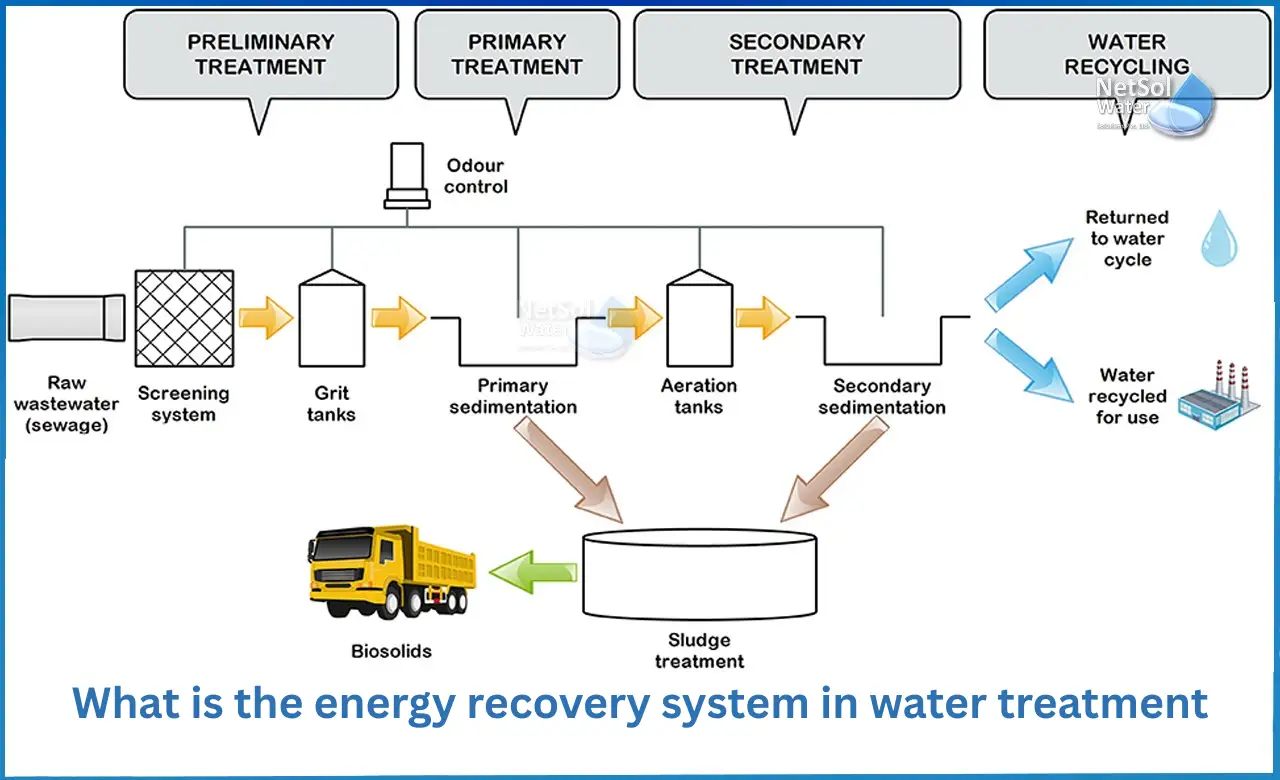
Clean water systems need steady power and careful planning. Many treatment plants now look for ways to save energy while they clean water for homes and industries. That is where energy recovery comes in. It helps a plant take back part of the energy that would otherwise get lost during treatment. This makes the whole process more practical and more affordable over time.

In a fast-growing city or an industrial area, the demand for treated water keeps rising. A strong wastewater plan helps both the environment and the local economy. That is why experts such as us play an important role as a leading wastewater treatment plant manufacturers. They design systems that support better water use and lower operating stress.

Why Energy Recovery Matters in Water Treatment

Energy recovery is important because water treatment uses a lot of power. Pumps move water. Filters push against pressure. Machines run for long hours. If a plant can save even part of that energy, it can lower its cost and work in a more stable way.

1. Saving Power During Heavy Treatment Work

A treatment plant does not stop working once water enters the system. It must move water through many stages and each stage needs energy. When pressure builds up in one part of the process, the plant can capture that pressure and use it again. This helps the plant avoid waste.

This idea works well in places where water treatment runs all day. It also helps when a plant treats seawater or reused wastewater. These jobs often need strong pumps and steady pressure. By recovering energy, the plant lowers the load on its machines. That means less strain and better daily performance. A wastewater management plant manufacturer often plans this from the start so the system can work in a smarter way.

2. Turning Waste Into Useful Support

Energy recovery does not only mean saving electricity. It also means using waste heat or gas in a better way. Some plants collect biogas from sludge. Others reuse heat from warm water streams. In both cases, the plant turns a waste stream into support for another process.

This approach helps a plant become more self-sufficient. It does not need to depend on outside power for every task. The system also becomes cleaner because it sends less unused energy out of the process. That is one reason many modern facilities now include recovery units in their design. They see energy as a resource that should move through the plant instead of leaving it behind.

Main Ways Energy Recovery Works

A plant can recover energy in different ways based on the water type and the treatment method. Some systems use pressure devices. Some use turbines. Others use heat recovery or gas-based support. Let’s have a look at some common methods that appear in water treatment plants.

1. Pressure Recovery in Membrane Systems

Membrane systems often work under high pressure. This is common in desalination and advanced water reuse. When the system pushes water through a membrane, it creates pressure on one side. Instead of losing that pressure, a recovery device can capture it and send it back into the process.

This lowers the amount of new energy the plant must add. It also keeps the flow more balanced. In simple terms, the plant gets help from the pressure it already created. This is useful because membrane treatment can be energy heavy. When the system recovers pressure well, it can cut costs and improve efficiency at the same time.

2. Turbines and Flow-Based Recovery

Some plants use small turbines to recover power from moving water. As water leaves a high-pressure line, it can spin the turbine. The turbine then sends part of that force back into the plant. This process works like a small power source inside the treatment line.

This method is helpful when the plant handles large and steady flow. It keeps the process smooth and reduces pressure loss. It also supports long-term plant health because the system does not force every stage to work harder than needed. A wastewater management plant manufacturer may choose this option when the water flow pattern matches the need for steady energy capture.

How Biogas and Heat Recovery Help Plants

Energy recovery in water treatment is not limited to pressure. Many wastewater plants also create biogas during sludge treatment. That gas can become a useful fuel. Heat recovery also plays a role when warm water or warm process streams pass through the system. Let’s have a look at some of the most useful parts of this method.

1. Biogas From Sludge Treatment

When sludge breaks down in a controlled tank, it can release biogas. This gas often contains methane and it can support heating or power generation. Instead of letting the gas go to waste, the plant can collect it and use it inside the facility.

This helps the plant reduce outside fuel use. It also gives value to a waste stream that once created a problem. Many modern wastewater plants use this method because it improves both cost control and environmental performance. It also supports cleaner plant operation since the gas gets used in a useful way.

2. Heat Recovery From Warm Water Streams

Some treatment steps produce warm water or warm process flow. If the plant sends that heat away, it loses a useful energy source. With heat recovery equipment, the plant can transfer some of that warmth to another stage. This saves energy and reduces the need for extra heating.

This method is simple in concept but powerful in practice. It helps the plant work with less waste and more balance. It also supports stable temperatures in the process, which can improve treatment results. Over time, even small heat savings can add up to real value.

Read some interesting information for the Industrial RO Plant Manufacturer in Delhi

Conclusion

Clean water systems need smart design and steady support. Energy recovery gives treatment plants a way to use power more wisely and reduce waste at the same time. It helps lower costs. It supports smoother operation. It also makes water treatment more practical for growing cities and industries. Netsol Water understands these needs and works as a trusted Wastewater Management Plant Manufacturer for modern water projects.

If you need a reliable solution for your water treatment needs, connect with a Wastewater Management Plant Manufacturer that can guide you with the right system. Contact Netsol Water to learn more or request a consultation for your project.

Contact Netsol Water at:
Phone: +91-9650608473
Email: enquiry@netsolwater.com

Which-type-of-pump-is-most-commonly-used-in-water-and-wastewater-systems-1-1.webp

June 25, 2026by Netsol Water

What is the Biggest Challenge in Water Treatment?

Water treatment plays a major role in daily life and in every industry. Every industry needs water in a different way, but all of them face one common issue. They must remove impurities without losing quality or wasting too much water. That is where the biggest challenge begins. We are the leading water treatment plant manufacturer and works with systems that help industries handle these challenges in a practical way. A strong treatment system must give clean output every day and still stay efficient.

Biggest Challenge in Water Treatment

To understand the biggest challenge in water treatment, we must first look at why this process becomes so complex. Water does not enter a plant in the same condition every day. Its quality changes with season, source location, industrial waste, and local use. Some water has mud and sand. Some carries oil, salts, chemicals, or germs. Some water looks clear but still contains harmful dissolved matter. This makes treatment difficult because one fixed system cannot handle every situation well.

Let us have a look at some key reasons behind this problem. Industries need water for cooling, washing, processing, and cleaning. Each use demands a different level of purity. A food plant needs very safe water. A textile unit needs water that will not damage fabric. A power plant needs water that will not form scale in boilers. A pharmaceutical unit needs a very high level of control. Because of these different needs, a water treatment plant manufacturer must design systems with care. The plant must match the source water and the final use. If the design fails, then the whole process suffers.

The biggest challenge is not only removing impurities. It is also keeping the treatment process stable when water quality keeps changing. That is why industries need plants that can adapt. They need good monitoring and regular service. They also need trained staff who understand how the plant works. Without that support, even a good system can lose performance. This is why treatment is not just a technical task. It is also a management challenge.

Changing Water Quality Across Industries

Every industry faces its own water problem. This makes the task of treatment more difficult and more important. A manufacturing unit may deal with heavy metals and oils. A dairy plant may face organic waste and smell. A hospital may need to remove germs with great care. A hotel may use large volumes of water for rooms, kitchens, and laundry. Each one needs a different answer. This is why one standard method rarely solves every problem.

Let us have a look at some common industry needs. In the food and beverage sector, water must stay safe for human use and must not change taste or smell. In the textile sector, treatment must prevent stains and protect machinery. In the chemical sector, water often carries dangerous waste that needs careful handling before discharge. In the power sector, even a small amount of scale can reduce efficiency. In the pharma sector, the water must be treated with very strict control because product quality depends on it.

A skilled Water Treatment Plant Manufacturer studies these differences before building a plant. The manufacturer must understand the source water and the final use. This is not a simple process because the same plant may need pre-treatment, filtration, softening, reverse osmosis, and disinfection in one system. If one part fails, the rest may also stop working well. So the biggest challenge across industries is not only cleaning water. It is giving the right treatment to the right sector at the right time.

Cost Pressure and Energy Use

Water treatment must work well, but it must also stay affordable. This creates another major challenge for industries. Many companies want clean water and safe discharge, but they also want low running cost. These two goals often conflict. A strong system may need more power, more chemicals, and more maintenance. A low-cost system may save money at first, but it may later fail to deliver the needed quality. This balance becomes one of the hardest parts of water treatment.

A reliable water treatment plant manufacturer must make plants that save energy and reduce waste. The goal is not just to treat water. The goal is to treat it in a way that stays useful for the long term. Smart design can lower power use and improve output. Regular maintenance can also reduce failure. When industries ignore these points, they face higher bills and more downtime. So cost pressure is not a small issue.

Handling Wastewater and Safe Discharge

Another major challenge in water treatment is what happens after the water has been used. Industries do not only need fresh water. They also produce wastewater that may contain chemicals, oil, grease, solids, and organic matter. If this wastewater is not treated well, it can harm rivers, soil, and local health. This is why safe discharge is a serious responsibility for every industry.

Let us have a look at some reasons this issue is difficult. Wastewater from one industry may be easy to treat, while wastewater from another may be very complex. Some streams carry high pollution loads. Some have unstable pH. Some may include toxic substances that need special handling. If a plant treats this water poorly, then it can face legal trouble and environmental damage. This puts more pressure on the treatment system and on the team that runs it.

A trusted water treatment plant manufacturer must plan for both inlet and outlet quality. The plant must remove the harmful load and still keep the process stable. In many cases, the treated water can be reused for cooling, flushing, or cleaning. This supports water saving and lowers demand for fresh supply. That makes wastewater treatment more than a legal duty. It becomes a smart business step too. Still, the challenge remains large because every wastewater stream behaves differently. Industries need systems that are flexible, strong, and easy to monitor. Without that, safe discharge becomes hard to achieve.

Read some interesting information for the Industrial RO Plant Manufacturer in Gurgaon

Conclusion

Water treatment will always stay important because every industry depends on clean and safe water. The main challenge lies in managing different water conditions while keeping the system efficient, affordable, and reliable. Businesses that handle this challenge well protect both their operations and the environment. A trusted manufacturer can make that process easier by offering the right design, service, and long-term support. For industries that want better water quality and more stable performance, Netsol Water is the leading Water Treatment Plant Manufacturer and can help with practical solutions. Reach out today to learn more or request a consultation for your specific water treatment needs.

Contact Netsol Water at:

Phone: +91-9650608473

Email: enquiry@netsolwater.com

What-causes-odours-at-wastewater-treatment-plants-3.webp

May 21, 2026by Netsol Water

What Are KLD and MLD in Water and Wastewater Treatment?

Setting up a Wastewater Treatment Plant is an important step for any housing society, commercial site, or industrial unit that wants to manage wastewater in a safe and proper way. In India, this need is growing fast because many places now face water shortage and strict pollution rules. A well-planned STP helps save water, reduce waste, and support clean surroundings. It also helps a project stay compliant with local rules and avoid future problems.

We are the leading Wastewater Treatment Plant Manufacturer and many buyers look for trusted guidance before they invest. The real cost depends on plant size, technology, site condition, and operating needs. Some systems stay within a small budget while larger plants need a much bigger investment. That is why it helps to understand the cost in a clear and simple way before making a decision.

Key Cost Factors and Estimates

Before planning a budget, it is useful to understand how STP cost changes from one project to another. The size of the plant plays the biggest role because a small residential unit and a large industrial setup do not need the same equipment or construction work.

A wastewater treatment plant manufacturer usually studies the daily flow of wastewater first and then suggests the right capacity. This helps the buyer avoid both overspending and undersizing. Let us have a look at some common cost ranges in the Indian market so the picture becomes easier to understand.

1. Small-Scale Plants

Small-scale STPs usually serve housing blocks, small apartments, and compact residential sites. These plants often handle around 5 to 10 KLD and their cost can start from ₹3 lakh and go up to ₹8 lakh depending on design and material choice. At this level, the system stays compact and installation is usually simpler than larger projects. Still, the final price can shift because of civil work, piping, and the space available at the site. A buyer may choose a basic setup for lower upfront spending or a more advanced system for better performance and lower running effort.

2. Medium-Scale Plants

Medium-scale plants work well for mid-sized societies, schools, hotels, and office complexes. These systems often fall in the 20 to 50 KLD range and may cost between ₹8 lakh and ₹20 lakh. The rise in cost comes from larger tanks, stronger pumps, better control systems, and more construction support. At this stage, buyers often compare different technologies because the right choice can reduce future operating cost. A Wastewater Treatment Plant Manufacturer often recommends a design that balances price and daily performance so the plant gives stable output without raising monthly burden too much.

3. Large-Scale and Major Industrial Plants

Large residential projects, commercial towers, and industrial sites need much higher capacity. A 50 to 200 KLD plant may cost ₹20 lakh to ₹50 lakh or more, while major industrial plants of 500 KLD and above can move into several crores. These plants need more land, more civil structure, more automation, and more treatment stages. They also require stronger monitoring because the water load can change often. In such cases, the cost grows not only because of size but also because the project must meet strict discharge standards. That is why buyers should treat the STP as a long-term utility and not only as a one-time purchase.

Key Cost Components

After understanding the size-based cost, it is important to see what actually makes up the total amount. Many buyers only look at the machine cost and forget the rest. In reality, installation and supporting work often take a large share of the budget. A skilled Wastewater Treatment Plant Manufacturer explains each part clearly so the buyer knows where the money goes. Let us have a look at some important cost components that shape the final investment.

1. Construction and Installation

Construction and installation often add a major amount to the total project cost. This includes excavation, civil foundation, tank work, piping, electrical setup, and final site fitting. If the land is uneven or space is tight, then the work becomes more difficult and the cost rises. A plant placed inside an existing building or a crowded campus may need special design changes. That is why two plants of the same capacity can still have different prices. Good installation also matters because poor civil work can create leakage, blockage, and repair issues later. So a careful setup saves money in the long run even if the first bill feels higher.

2. Technology Choice

Technology has a strong impact on both price and performance. Basic systems often cost less at the start but they may need more manual work and higher maintenance later. Advanced systems like SBR and MBR usually need more money in the beginning but they can offer better treated water quality and smoother operation. They also help in sites where space is limited or discharge norms are strict. A buyer should not choose only on the basis of low price. The right system should match the wastewater load, space, and reuse goal. This is where expert advice from a Wastewater Treatment Plant Manufacturer becomes very useful.

3. Operational Costs

Running cost matters almost as much as the purchase cost. A small plant of 2 to 10 KLD may need around ₹10,000 to ₹25,000 per month for electricity, chemicals, manpower, and maintenance. A larger plant of 100 KLD or more may need ₹75,000 to ₹1.5 lakh per month or even more depending on the process. These costs continue for many years so buyers should check them before finalizing a plant. A system with lower energy use and better automation can reduce this burden. That is why a low-priced plant is not always the cheapest option over time.

Factors Affecting Price

Once the basic components are clear, it becomes easier to see why the same plant size can still come with different quotes. Site condition, water quality, discharge needs, and automation level all affect the total investment. Many people ask only for the purchase cost but a complete quote should include how the plant will work on day one and how it will perform after months of use. This is why planning with a trusted Wastewater Treatment Plant Manufacturer helps avoid hidden costs. Let us have a look at some major factors that affect price in real projects.

1. Space Requirements

Space plays a big role in STP cost. If a project has enough open area, then a standard design may work well and construction stays simple. But when space is limited, the manufacturer may need a compact design or a special layout. Such systems often cost more because they use advanced equipment and tighter engineering. Even so, they can still save money during installation because they fit better into the available area. This becomes important in urban buildings where land is costly and every square foot matters. So the site size should always guide the plant design from the very beginning.

2. Regulatory Compliance

Every STP must meet pollution control standards and treated water quality norms. These rules can change the design and raise the cost because the plant may need extra treatment stages, monitoring units, and better control systems. If the project plans to reuse water for gardening, flushing, or cooling, then the output quality must be even better. Compliance adds cost but it also protects the owner from penalties and future redesign. A project that ignores standards may save money at first but it can face much higher trouble later. So regulation should be seen as a protection rather than a burden.

3. Automation

Automation improves control and reduces manual work. It can include sensors, timers, alarms, remote monitoring, and automatic pumping systems. A high-automation setup costs more at the start but it can lower labour need and reduce human error. This is useful for large societies, hotels, and industries where regular monitoring matters a lot. Automation also helps operators notice faults early before they become major repairs. That means the plant stays stable and the owner gets better long-term value. In many cases, the added cost of automation pays back over time through smoother performance and lower operating stress.

Read some interesting information for the Sewage Treatment Plant Manufacturer

Conclusion

Setting up a Wastewater Treatment Plant needs careful planning because the total cost depends on size, technology, site conditions, and running needs. Small systems may fit a modest budget while larger and more advanced plants need a stronger investment. The right choice should support compliance, reliable performance, and long-term savings. A trusted Wastewater Treatment Plant Manufacturer can help you understand the best design for your project and guide you through each stage from planning to installation. If you are looking for clear advice or a detailed project estimate for a Wastewater Treatment Plant, then Netsol Water is ready to help. Reach out today to request a consultation and get the right solution for your site.

Contact Netsol Water at:

Phone: +91-9650608473

Email: enquiry@netsolwater.com

How-to-remove-smell-from-sewage-treatment-plant-1.webp

May 19, 2026by Netsol Water

What is the Difference Between KLD and MLD?

A water treatment plant must match the exact amount of water that a project needs each day. That is why KLD and MLD matter so much in planning and operation. These two terms help people understand plant capacity in a simple way. KLD suits smaller systems while MLD suits much larger ones. The difference may look small at first glance but it affects design, cost, space, and daily performance in a major way. We stand as a leading water treatment plant manufacturer and supports projects that need the right capacity from the beginning.

KLD and MLD

Before we compare both units in detail, we should first understand what each one means. Let us have a look at each unit and see how it works in real projects.

1. What KLD Means

KLD stands for Kilolitres per Day. One kilolitre equals one thousand litres. So when a plant has a capacity of 50 KLD, it can treat 50 thousand litres of water in one day. This unit fits small and medium projects very well. You will often see it in apartments, hotels, schools, small factories, and housing colonies. These places need a dependable treatment system but they do not handle city-level demand.

A KLD-based system usually needs less space and less civil work. It also takes less time to install than a larger setup. Many project owners choose KLD systems because they want a practical solution for a limited area. A wastewater treatment plant with KLD capacity can still deliver strong results when the demand stays local and controlled. It helps the plant avoid overload and keeps the output steady. That makes KLD a useful unit for compact treatment needs.

2. What MLD Means

MLD stands for Megalitres per Day. One megalitre equals one million litres. This means 1 MLD equals 1000 KLD. A plant with this capacity works on a much larger scale. Municipal bodies, large cities, industrial zones, thermal power stations, and major facilities often use this unit. These places need to treat huge volumes every day so they require a much stronger system.

An MLD plant is not just a larger KLD plant. It often needs more land, more tanks, more pumps, and more control systems. It also needs careful engineering because even a small failure can affect a very large number of people or a major industrial process. A Water Treatment Plant at MLD level must perform with high reliability since the demand stays constant and large. This is why such projects need detailed planning and long-term support.

3. Comparison Between Both

The main difference between KLD and MLD lies in scale. KLD handles thousands of litres per day while MLD handles millions of litres per day. KLD suits places where the water demand remains limited. MLD suits places where the demand rises to industrial or city level. The gap between them is wide yet the conversion is simple. One MLD equals one thousand KLD. This simple relation helps engineers and planners compare small and large systems without confusion.

This comparison also affects cost, space, and operation. A KLD system may fit inside a compact plant room or a small industrial site. An MLD system needs a large area and heavy-duty equipment. Both are useful but both serve different needs. A Water Treatment Plant must match the correct unit to the correct project. When that happens, the system performs better and the client avoids unnecessary cost.

Relationship and Conversion

The link between KLD and MLD becomes very easy to understand once the basic values are clear. This part matters because many people first hear these units during project planning and do not know how to compare them. Let us have a look at some important points that make the conversion simple and useful.

1. How the Conversion Works

The conversion follows one direct rule. One MLD equals 1000 KLD. One KLD equals 0.001 MLD. So you can move between the two by multiplying or dividing by 1000. This rule is simple but very important. It helps consultants, contractors, engineers, and buyers speak the same language when they talk about treatment capacity.

For example, a 25 KLD plant equals 0.025 MLD. A 2 MLD plant equals 2000 KLD. These numbers help when you compare a small project with a large one. They also help when you read a project report or prepare a technical proposal for a Water Treatment Plant. Without this conversion, many people may misunderstand the true size of a system. That can lead to poor design or the wrong purchase decision.

2. Why the Same Numbers Matter in Planning

Capacity numbers shape every stage of planning. They decide the size of tanks, the flow rate, the pump selection, and the amount of space required. When the capacity appears in KLD or MLD, the project team can estimate the full setup more accurately. A small mistake in capacity can create major problems later. If the plant is too small, it will not manage the full load. If it is too large, it will cost more than needed.

That is why professionals always check the conversion carefully. The right unit helps everyone stay aligned. It also improves communication between the client and the water treatment plant manufacturer. When both sides understand the required scale, the plant design becomes more practical and efficient.

Why the Distinction Matters

The difference between KLD and MLD does not stop at numbers. It changes how the plant gets designed, how it receives approval, and how it works every day. This is why the distinction holds real value in both technical and business settings. Let us have a look at some important areas where it matters most.

1. Planning and Design

Planning always begins with demand. A small apartment may need only 50 KLD while a large city may need many MLD. This difference changes the full design of the system. A KLD plant often comes as a compact unit that fits into a smaller space. It may use packaged equipment and simpler civil work. An MLD plant needs large basins, bigger pumps, advanced piping, and stronger automation.

Design teams must also think about future growth. A plant should meet current demand and still leave room for expansion. This matters even more for a water treatment plant in a growing area. If the design ignores future need, the plant may fail to serve the site after a few years. That is why capacity selection remains one of the most important first steps in planning.

2. Regulatory Compliance

In many regions, including India, authorities ask projects to report daily water use and waste generation in clear units. KLD and MLD help them do that. Government bodies and pollution control agencies use these figures to check whether a project follows environmental rules. So capacity reporting is not only a technical detail. It also becomes part of legal compliance.

A business that knows its capacity can prepare better documents and avoid mistakes during approval. This also helps during inspections and regular reporting. A water treatment plant that meets the correct capacity standard has a better chance of running smoothly within the law. That saves time and lowers future problems.

3. Infrastructure Needs

Infrastructure changes greatly when the scale changes. A KLD plant may use a small building or a limited utility area. It may also need fewer operators. An MLD plant needs a large reservoir, more powerful pumps, and advanced monitoring systems. It often uses SCADA systems to track performance and control operations from one place.

This difference changes cost, maintenance, and staffing. It also changes how often the plant needs checks and repairs. A large facility must stay stable every day because even a short failure can affect many users. That is why MLD plants use stronger systems and added safety support. In both cases, the purpose stays the same.

Read some interesting information for the Effluent Treatment Plant Manufacturer in Faridabad

Conclusion

KLD and MLD may seem like simple units but they define the full structure of a treatment project. KLD fits smaller sites while MLD fits large public and industrial systems. The correct choice depends on demand, space, cost, and future growth. When the capacity matches the need, the plant works better and lasts longer. It also becomes easier to manage and easier to approve.

If you are planning a Water Treatment Plant, then the first step is to choose the correct capacity. Netsol Water can guide you with practical advice and reliable design support. Contact the team today to discuss your project and request a consultation for a system that suits your exact needs.

Contact Netsol Water at:

Phone: +91-9650608473

Email: enquiry@netsolwater.com

What-causes-odours-at-wastewater-treatment-plants.webp

May 15, 2026by Netsol Water

What Causes Odours at Wastewater Treatment Plants?

Wastewater treatment plants play a major role in keeping cities and industries clean. They treat used water before it returns to the environment. This work protects public health and supports safe water use. We are the leading wastewater treatment plant manufacturer, and it helps industries and communities manage wastewater in a better way. Even with modern treatment systems, many plants still face odour problems. These smells can affect workers, nearby residents, and the overall image of the plant. That is why it is important to understand where these odours come from and how they grow stronger.

Odour at a wastewater treatment plant is not just a comfort issue. It can point to poor process control, sludge buildup, or low oxygen conditions inside the system. When plant operators understand the cause, they can take the right action at the right time.

Organic Waste Breakdown and Sludge Build-Up

Odour often starts when organic waste begins to break down inside the plant. This is one of the most common reasons for smell in wastewater systems. Wastewater carries food particles, human waste, grease, soap, and other materials. Once these materials enter tanks and channels, they begin to decompose. During this process, gases form and some of them have a very strong smell. When the plant does not remove solids in time or when sludge stays in one place for too long, the odour becomes worse. This is why sludge handling is such an important part of plant management.

1. Sludge Storage and Decay

Sludge is the thick solid material that settles after treatment. If operators store it for a long time without proper handling, it starts to rot. This decay creates bad-smelling gases that spread through the plant. Warm weather makes the problem even stronger because heat speeds up bacterial activity. A plant that keeps sludge moving and removes it on time can reduce this smell a lot. Good sludge handling also helps a plant keep its working area cleaner and safer for staff.

2. Grease and Solid Waste Accumulation

Grease and solid waste also add to odour when they collect in pipes, tanks, or chambers. These materials block normal flow and create dirty pockets where waste sits still. Once this happens, bacteria grow quickly and release foul gases. A good Wastewater Treatment Plant Manufacturer designs systems that reduce dead zones and support smooth flow. This makes it easier to stop waste from staying in one place for too long. Regular cleaning also helps prevent this odour source from getting worse.

Low Oxygen Conditions Inside the Plant

Another major cause of odour is low oxygen inside the treatment process. Wastewater treatment works well when helpful bacteria have enough oxygen to break down waste in a clean way. When oxygen drops, the system changes. Harmful bacteria begin to grow and they produce gases with a rotten egg smell and other strong odours. This is why oxygen control matters so much in treatment tanks and aeration units. A plant that loses oxygen balance can quickly become a source of bad smell.

1. Anaerobic Reactions

When waste breaks down without oxygen, it enters anaerobic conditions. In these conditions, bacteria create gases such as hydrogen sulfide and methane. Hydrogen sulfide is one of the main smell sources in wastewater plants. It smells sharp and unpleasant even at low levels. This gas can form in sewer lines, pumping stations, and sludge tanks. If a plant allows waste to stay too long without movement, then anaerobic reactions become more common. Proper aeration and regular flow control help reduce this problem before it spreads.

2. Poor Aeration and Mixing

Aeration keeps oxygen moving through wastewater. Mixing helps stop waste from settling in one place. When either of these systems works badly, the plant can start to smell. A weak aeration unit may not give enough air to support healthy treatment. Poor mixing can also leave corners of the tank with still water and trapped solids. These areas become a strong source of odour. A well-planned system from a trusted wastewater treatment plant manufacturer can improve airflow and keep treatment zones active. That makes odour control much easier for the plant team.

Chemical Reactions and Gas Release

Odour does not come only from waste breakdown. Some smells also form when chemicals react inside the plant. Wastewater contains many different substances from homes and industries. These substances can react with one another during treatment. Some reactions release gases that smell bad. Others make existing odours stronger. This is why chemical balance matters in every stage of treatment. A plant that ignores this part may find that the smell gets worse even if the solid waste load looks normal.

1. Hydrogen Sulfide Formation

Hydrogen sulfide is one of the most common gases linked to wastewater odour. It forms when sulfur-rich material breaks down under low oxygen conditions. This gas often builds up in collection systems, wet wells, and closed tanks. It is dangerous in high amounts and also very noticeable to smell. Even a small release can create a wide odour problem around the plant. Good venting, regular cleaning, and proper treatment steps help control this gas. A strong plant design also keeps it from collecting in hidden areas.

2. Chemical Imbalance in Treatment

If the plant adds too much or too little of certain chemicals, then odour can increase. Some chemicals help treatment but wrong dosing can disturb the process. When balance fails, the bacteria inside the system work less effectively and waste starts to decay in a less controlled way. That often leads to more smell. This is why regular testing and proper operator training are necessary. A skilled team can detect early changes and fix them before odour becomes severe.

Equipment Issues and Maintenance Gaps

Odour problems can also grow when equipment does not work as it should. Pumps, valves, pipes, blowers, and screens all play a role in treatment. If one part fails, then waste may remain trapped or untreated for longer than needed. This can create smell very quickly. Maintenance is not only about keeping equipment alive. It is also about stopping odour before it begins. Well-maintained systems support better treatment and cleaner air around the plant.

1. Blocked Pipes and Stagnant Water

Blocked pipes stop smooth movement of wastewater. When water stays still, it begins to decay and gives off a bad smell. This happens often in areas where solids collect or where the pipe slope is not proper. Stagnant water also gives bacteria more time to grow. Clearing blockages and checking flow paths can reduce these issues. A plant with strong design and regular service can avoid many of these odour problems.

2. Faulty Covers and Ventilation

Tanks and channels often need covers and ventilation systems to keep smells under control. When covers break or vents fail, odours spread into open air. This affects workers and nearby areas. Good ventilation keeps gases moving to safe treatment points instead of letting them escape randomly. A wastewater treatment plant manufacturer that focuses on odour control usually includes better cover systems and air handling options in the design. This makes a real difference in daily plant operation.

Why Proper Design and Operation Matter

Odour control starts long before a plant becomes active. It starts with good planning, good design, and proper operation. A well-built plant reduces dead zones, keeps wastewater moving, and supports strong oxygen levels. It also makes cleaning easier and helps operators manage sludge and gas release in a better way. This is why choosing an experienced wastewater treatment plant manufacturer matters so much. Good engineering can prevent many odour issues before they appear.

Regular monitoring is just as important as design. Operators need to watch tank levels, flow rates, sludge condition, and air quality. Small changes can show early warning signs of smell. When the team responds quickly, it can stop a small issue from turning into a bigger one. In this way, odour control becomes part of daily plant care and not just an emergency fix.

Read some interesting information for the Sewage Treatment Plant Manufacturer in Faridabad

Conclusion

Odour at a wastewater treatment plant comes from several sources. Waste breakdown, low oxygen, chemical reactions, and poor equipment maintenance all play a part. When these factors combine, the smell can become stronger and harder to control. A well-planned system with proper operation can reduce these problems and keep the plant cleaner and safer. Netsol Water is the leading wastewater treatment plant manufacturer, and it supports better treatment solutions that help manage odour in a practical way.

If you want to improve plant performance and reduce odour-related problems, then expert guidance can make a big difference. Reach out today to learn more or request a consultation for a cleaner and more efficient wastewater treatment solution.

Contact Netsol Water at:

Phone: +91-9650608473

Email: enquiry@netsolwater.com