Commercial RO Plant - Sewage Treatment Plant Manufacturers

Add-a-heading.webp

July 30, 2026by Netsol Water

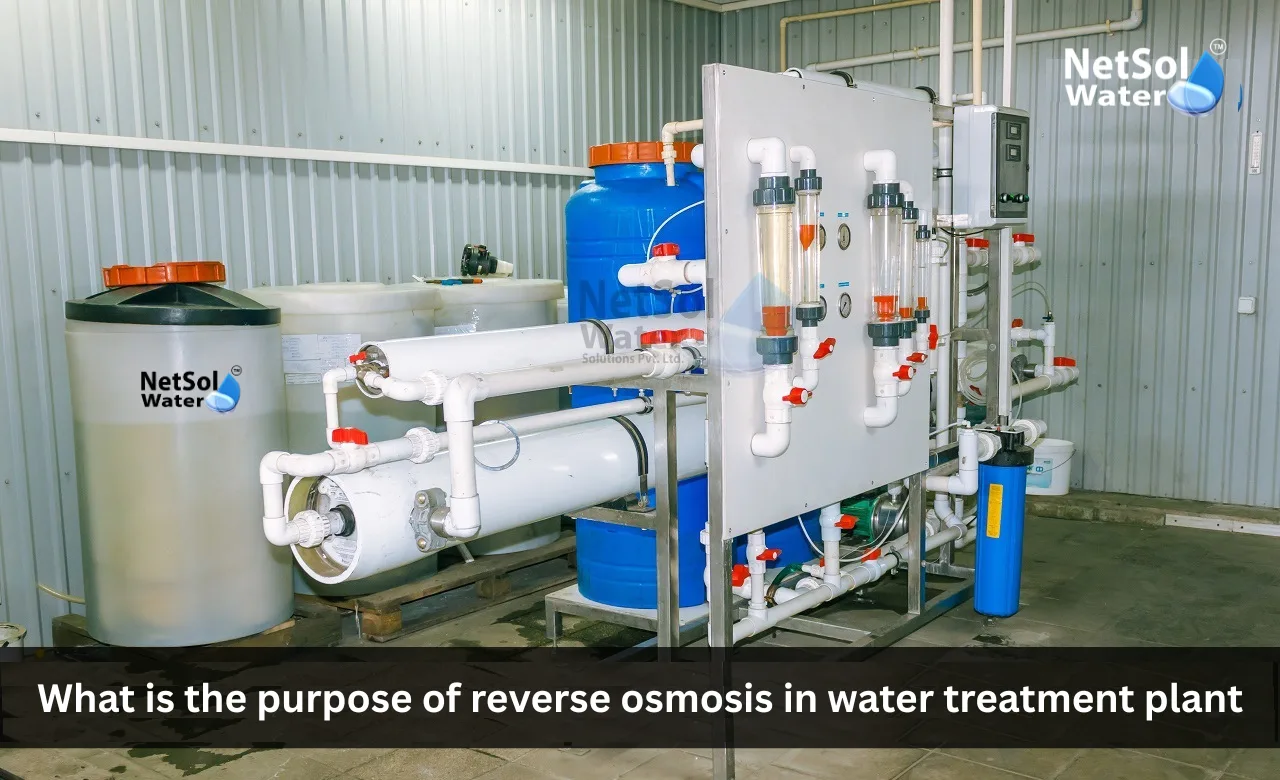
What Is the Purpose of Reverse Osmosis in a Water Treatment Plant?

Water plays an important role in every commercial and industrial activity. Many businesses need clean water for production, processes, cooling systems, food preparation, and daily operations. When water contains dissolved salts, chemicals, and other unwanted substances, it can affect product quality and equipment performance. This is why many industries use reverse osmosis technology in their water treatment plants.

Reverse osmosis is a membrane filtration process that removes impurities from water by passing it through a special membrane. This process enables industries to receive water of good quality for various purposes. Many organizations continue to invest in advanced treatment plants to ensure smooth operations as water quality issues grow.

We are the leading commercial RO plant manufacturer and offer the best water treatment plants for various industries. By understanding the purpose of reverse osmosis in a water treatment plant, businesses can select the appropriate plant for their requirements and ensure they get better water quality for the long term.

Removing Dissolved Salts and Impurities

Purity of water is essential for industries, owing to the fact that impurities can harm equipment and end products alike. Reverse osmosis addresses this issue by removing dissolved substances that traditional filters cannot. Let’s take a look at some of the important factors regarding how impure water is treated by reverse osmosis.

1. Removal of Dissolved Salts

Dissolved salts are present in many water sources, causing the water to be hard and therefore unsuitable for industrial use. Reverse osmosis membranes reject these salts from the water and yield cleaner output water. This process enhances water quality and renders it fit for manufacturing and processing purposes.

2. Removing Harmful Contaminants

Heavy metals, chemicals, and undesirable minerals may be present in water. These substances are blocked by reverse osmosis membranes and cannot enter the treated water stream. This results in industries getting cleaner water and, hence, improved operational performance.

3. Enhancing Water Quality

Significant improvement in water quality is achieved when salts and contaminants are removed. With improved water quality, industries can ensure product uniformity and minimize problems associated with poor water quality. As a result, reverse osmosis has become a key component of today’s state-of-the-art water treatment facilities.

Reverse osmosis removes dissolved impurities and produces water suitable for industry. This process ensures smooth operations and helps companies uphold quality standards during production.

Protecting Industrial Equipment

Quality water is needed for the smooth and efficient operation of industrial equipment. Poor water quality can bring about issues such as scaling, corrosion, and other maintenance problems. Reverse osmosis is a key factor in alleviating these problems. Let’s take a look at some of the ways reverse osmosis benefits equipment protection.

1. Prevention of Scale Formation

Water with high mineral content can cause mineral deposits in pipes, boilers, and heat exchangers. These deposits decrease efficiency and cause energy loss. Reverse osmosis filters out minerals before they enter the system, thus preventing scale formation.

2. Elimination of Corrosion Hazards

Some contaminants in water may lead to corrosion problems in industrial equipment. Corrosion damages metal surfaces and reduces the lifetime of equipment. These harmful compounds are eliminated by reverse osmosis, and the resulting water is more resistant to corrosion.

3. Lower Maintenance Requirements

Equipment runs more smoothly when supplied with cleaner water, which reduces equipment failures and maintenance problems. This benefits industries by cutting down on repair costs and boosting productivity. Cleaner systems, of course, operate reliably for a longer period.

Reverse osmosis supports the long-term health of industrial equipment. Businesses that invest in quality water treatment facilities experience enhanced operational efficiency and lower maintenance costs.

Supporting Product Quality in Different Industries

Many factors affect product quality, and water quality is one of the most significant. Industries that use water as a raw material must ensure the water they receive aligns with necessary standards. Reverse osmosis is part of the solution. Let’s take a look at some areas where reverse osmosis helps maintain product quality.

1. Food and Beverage Production

Food and beverage manufacturers demand water that is safe and has a good taste. RO can remove impurities that could affect flavour, appearance, or quality. This process helps manufacturers make products that are consistent for consumers.

2. Pharmaceutical and Manufacturing

In the pharmaceutical industry, water used for manufacturing must be of high quality. Reverse osmosis can be used to treat the water and deliver purified water that meets these needs. Good water quality leads to better and safer pharmaceutical products.

3. Industrial and Manufacturing Processes

Water is involved in many manufacturing processes. Impurities can be troublesome and may negatively impact the quality of the end product. RO delivers higher quality water for stable and efficient manufacturing processes.

RO technology is used across various industries to ensure quality standards. Maintaining good water quality helps businesses build a better reputation in the market and satisfy their customers.

Promoting Water Conservation and Sustainable Operations

Adopting water conservation measures is now a major concern for industries worldwide. Organizations are looking for ways to save water and use it more efficiently. Reverse osmosis is also part of these efforts, contributing to better resource management and water reuse. Let’s take a look at some of the ways reverse osmosis contributes to sustainability.

1. Water Recovery and Reuse

Many reverse osmosis systems make it possible to recover and reuse treated water for industrial purposes. This helps conserve fresh water resources and promotes sustainable water use.

2. Reduced Environmental Impact

Manufacturers and users of treated water can reduce their environmental footprint through more efficient use of treated water in industry. Industries with greater efficiency in treated water use gain environmental benefits. Reverse osmosis can minimize the release of pollutants into the environment and promote more environmentally friendly operations.

3. Support for Long-Term Sustainability

The demand for water is growing, and industries must find sustainable solutions. By using RO, businesses can optimize water use and prepare for future water challenges.

Reverse osmosis is a significant technology for present-day industries because it supports both water conservation and quality maintenance. Operational efficiency and environmental benefits are both advantages for businesses.

Read some interesting information for the Commercial RO Plant Manufacturer in Delhi

Conclusion

RO is important in water treatment plants, as it removes dissolved salts, contaminants, and unwanted minerals from water. It not only helps improve water quality but also protects industrial equipment, ensures product consistency, and promotes sustainable water management. These benefits help industries operate efficiently while maintaining quality and environmental standards.

Netsol Water is the leading commercial RO plant manufacturer and supplier of advanced solutions tailored to various industrial and commercial requirements. Partnering with Netsol Water ensures businesses can expect consistent water treatment results and long-term benefits. For more information about reverse osmosis technologies, or if you need professional advice to help determine the right reverse osmosis plant for your project, reach out to a reliable Commercial RO Plant Manufacturer today and schedule a consultation.

Contact Netsol Water at: Phone: +91-9650608473 Email: enquiry@netsolwater.com

Why-is-reverse-osmosis-used-in-water-treatment.webp

July 28, 2026by Netsol Water

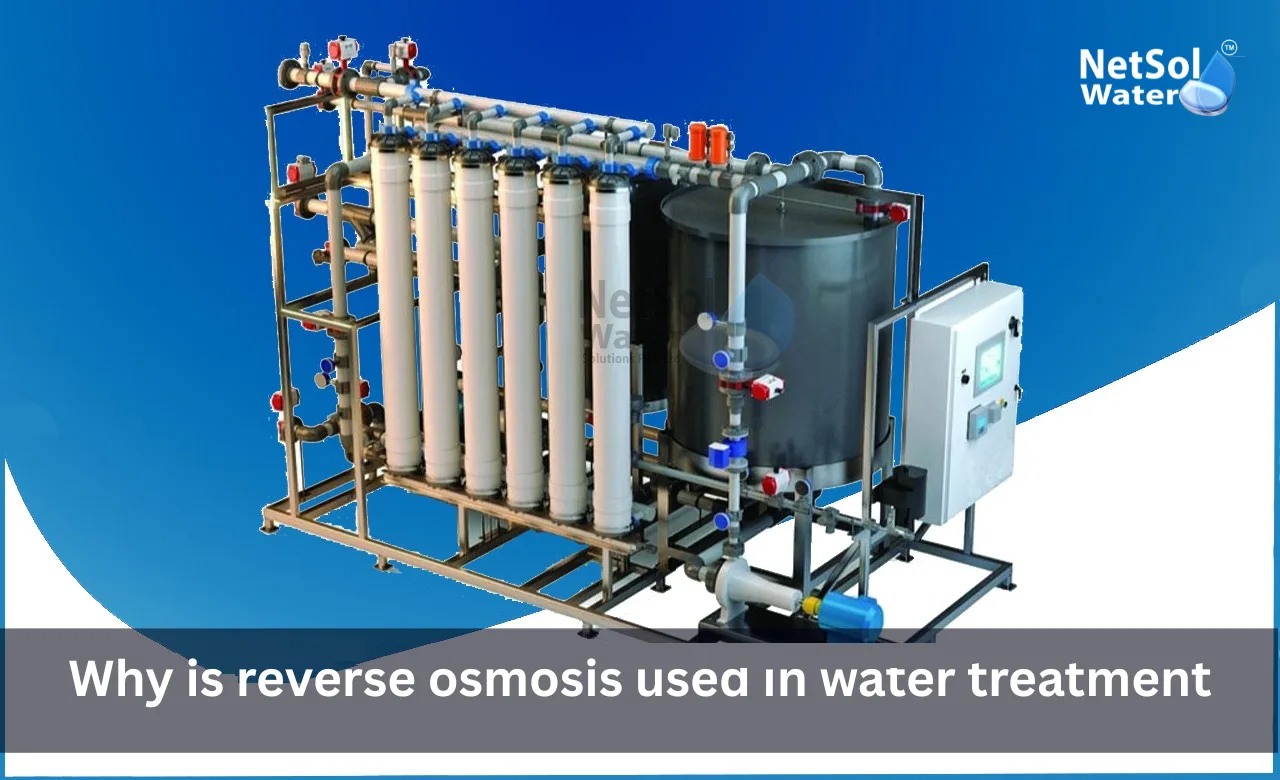
Why Is Reverse Osmosis Used in Water Treatment?

Clean water is essential for good health and easy industrial activities. Water must be free from undesirable impurities and safe for use in the home, business, or industry. Dissolved salts, chemicals, bacteria, and other harmful particles are present in many water sources. These impurities lower water quality and present difficulties in use and industrial applications. For this reason, many industries and commercial buildings opt for reverse osmosis technology in water purification.

RO water treatment technology has emerged as one of the most trusted water purification processes, given its ability to effectively and efficiently eliminate many contaminants from water. It helps increase the quality of water, which can be used for drinking, manufacturing, healthcare, food processing, and many other applications. A commercial RO plant manufacturer can assist businesses in choosing the right RO plant as per their water quality and water requirements. We are the leading commercial RO plant manufacturer, providing high-performance and dependable RO water plants for various industries and commercial applications.

Why Reverse Osmosis Is Used in Water Treatment

RO offers a reliable means of decontamination and enhances the quality of water. Specific industries have specific requirements for water quality, and these standards can be consistently met by reverse osmosis. Let’s take a look at some of the key reasons why reverse osmosis is utilized in water treatment.

1. Removes Dissolved Salts

Underground water may be high in salt content. These salts make the water harder and damage industrial equipment. Reverse osmosis forces water through a special membrane, which separates dissolved salts from pure water. This process softens the water and enhances water quality. This means industries can benefit from a supply of purified water that enables efficient running and lower maintenance costs.

2. Eliminates Harmful Contaminants

Bacteria, viruses, heavy metals, and harmful chemicals are found in many water sources. Industries can be exposed to these contaminants, which pose health hazards and diminish product quality. A significant amount of these unwanted substances is removed by reverse osmosis. The treated water can be used in a wide variety of applications, including drinking water, food production, and healthcare facilities. This process can also help ensure that a business can be confident it is meeting water quality standards.

3. Enhances Water Taste and Quality

Excessive minerals and chemicals in water can cause it to taste or smell bad. Reverse osmosis can remove many of these unwanted elements while increasing water quality. Improved water taste boosts satisfaction in restaurants, hotels, offices, and educational facilities. It also provides clean water for industries that need it to produce quality products.

Benefits of Reverse Osmosis in Commercial and Industrial Applications

Reverse osmosis has several practical applications for commercial buildings and industries: it safeguards equipment, enhances efficiency, and supports long-term business growth. Each business has unique needs for its water treatment system, and these needs can be addressed by designing and installing a reverse osmosis plant correctly. Let’s take a look at some of the significant advantages of RO in commercial and industrial applications.

1. Protects Industrial Equipment

Scaling occurs in boiler pipelines, cooling towers, and production equipment due to hard water. These deposits cause inefficiency and higher repair costs. The minerals that cause scaling are removed by reverse osmosis. Clean water keeps costly machinery running and wards off business interruptions. This enhances operational efficiency and prolongs the life of the equipment.

2. Reduces Operating Costs

Purer water means better performance of industrial systems. Using purified water eliminates the need for excessive equipment cleaning and reduces equipment repair requirements. Businesses also save energy due to cleaner, more efficient equipment. While an initial investment is necessary for installing the RO system, it helps companies save money in the long run through reduced maintenance and operating costs.

3. Supports Environmental Responsibility

The reverse osmosis process can help industries optimize their water use. Many companies reuse treated water for various purposes. This minimizes water usage and contributes to sustainability. Improved water management also helps industries adhere to environmental regulations and preserve natural water resources for future generations.

Choosing the Right Commercial RO Plant Manufacturer

Choosing the right manufacturer is an important step, since the quality of the RO plant is directly related to water treatment efficacy. A good plant will produce uniform results and function efficiently for many years. Experienced manufacturers understand various applications and offer solutions suitable for each one. Let’s take a look at some of the important factors to consider when choosing the right manufacturer.

1. Experience and Technical Knowledge

An experienced manufacturer is familiar with a variety of water conditions and water treatment problems. The company studies water quality prior to designing the system. This approach enables companies to get what they need for their daily activities. Good engineering also enables better plant performance and minimizes future maintenance problems.

2. Quality Products and Reliable Components

A good manufacturer uses durable membranes, pumps, pressure vessels, and control systems. High-quality components improve system performance and increase equipment life. Reliable products also reduce maintenance requirements and ensure uninterrupted water treatment for commercial and industrial operations.

3. Strong Service and Customer Support

Water treatment systems require regular maintenance for smooth operation. A responsible manufacturer provides technical support, installation assistance, and maintenance services whenever required. Quick customer support helps businesses resolve technical issues without long production delays, which improves confidence and ensures continuous water availability.

Read some interesting information for the Industrial RO Plant Manufacturer in Gurgaon

Conclusion

Reverse osmosis has become one of the most effective methods for producing clean and safe water for commercial and industrial use. It removes dissolved salts, harmful chemicals, bacteria, and many other impurities while improving water quality and protecting valuable equipment. A properly designed RO plant supports better productivity, lower maintenance costs, and responsible water management.

Choosing an experienced Commercial RO Plant Manufacturer makes the entire process simple and dependable. Netsol Water is the leading Commercial RO Plant Manufacturer, delivering efficient water treatment solutions for different industries and commercial sectors. If you want a reliable water treatment plant or need expert guidance for your project, get in touch with Netsol Water today and request a consultation to find the right solution for your water treatment needs.

Contact Netsol Water at:

Phone: +91-9650608473

Email: enquiry@netsolwater.com

Commercial-RO-Plant-Installation-Steps.webp

July 22, 2026by Netsol Water

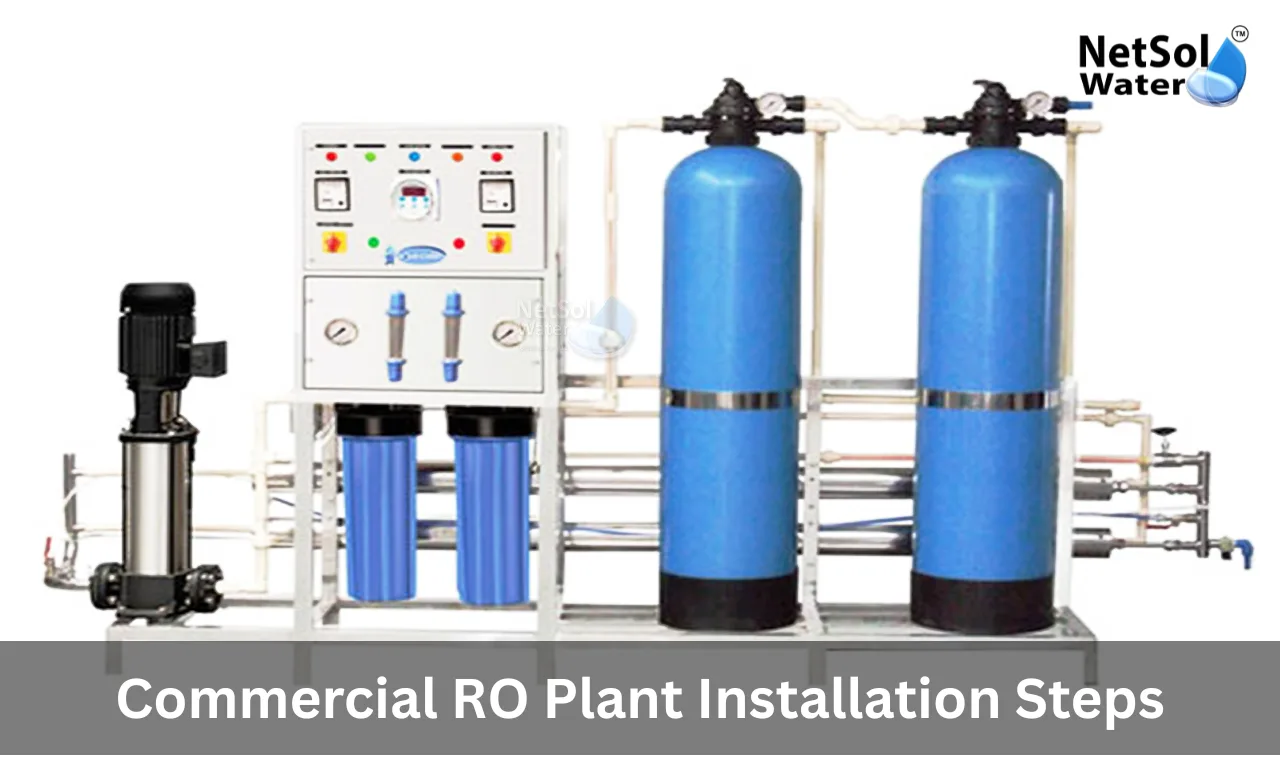
Commercial RO Plant Installation Steps

Many industries and even commercial places require clean water. A commercial RO plant purifies impurities and provides safe water for drinking. This technology is crucial to the production of food for many industries in India, including manufacturing units, hospitals, and hotels. Other areas in India also suffer from water quality issues related to the presence of minerals and the season. Therefore, water treatment systems are crucial to ensure seamless operations.

We are one such leading company that offers complete solutions for water purification systems. To set up an RO system, it should be done with proper planning and correct execution. All stages impact the overall system performance.

Site Assessment and Requirement Analysis

In order to create a successful installation, it is important to have a proper requirement analysis and site assessment. This is a critical step because the system may not represent the actual water demand or working conditions without it. This stage guarantees proper placement of the plant and proper function. The first step in commercial RO plant installation is to perform a detailed study of the water quality and usage requirements. Let’s take a look at some of the key points in this stage.

1. Water Quality Analysis

Water quality analysis is used to gain an understanding of the level of impurities in the source water. The engineers take samples and test for salts, hardness, and other undesirable material. This information is useful for selecting the appropriate level of filtration. If the water being fed to the system is highly contaminated, a more powerful RO system will be needed. This ensures that the plant design is in line with actual conditions and that there are no future performance problems.

2. Space and Utility Evaluation

Space evaluation is also crucial for seamless installation. Engineers check the available area for placing equipment, tanks, and pipelines. They also inspect the electricity supply and drainage. Good spacing eases maintenance and safe operation. If the utilities are arranged properly, the system will operate continuously without interruptions and help produce water continuously.

Design and Engineering Planning for a System

The system is designed and engineered to determine how the plant will operate following installation. During this phase, collected data is transformed into a usable system plan. This is an important part of the process, since a well-designed commercial RO plant installation will help reduce operational problems and ensure optimal performance.

Let’s take a closer look at some of the key elements of this phase.

1. Capacity and Flow Design

The amount of water produced by the plant in a day is determined by capacity planning. The engineer determines the amount of water demanded based on the needs of the industry. They determine flow rates to ensure that the system can accommodate maximum use without a drop in pressure. This enables the output to remain consistent throughout working hours. Energy savings and balanced performance are other advantages of proper capacity design.

2. Technical Layout Planning

Technical layout planning involves the positioning and connections for each unit. Filters, pumps, membranes, and storage tanks are designed by the engineers. They also design routes for pipe installations to minimize pressure loss. A clean design helps minimize installation mistakes and simplifies future maintenance. This ensures the system is organized and efficient.

Equipment Procurement and Installation Process

The procurement and installation process is an important phase where the design materializes. Quality equipment guarantees stable production and long-term performance. Commercial RO plant installation relies on the right selection and correct installation of all the components. Let’s take a look at some of the key points of this stage.

1. Selection of RO Components

The membranes, pumps, filters, and control systems are among the RO components selected. The parts need to be chosen according to the design of the system and the water needs. High-quality components help improve efficiency and reduce the chances of breakdown. Engineers make sure that all parts will fit together. This step directly impacts water purity and system durability.

2. Physical Installation and Assembly

Physical installation refers to the process of installing equipment in the designed layout. Technicians connect pipes, wires, and control panels. All connections should be firm and secure to prevent leakage or pressure drop. Smooth flow of water is achieved by ensuring proper alignment of machines. A high level of skill is required for this stage, as even minor mistakes may impact the performance of the system.

Testing, Commissioning, and Maintenance Setup

Testing, commissioning, and maintenance setup allow the system to be verified as functioning properly prior to operation. In this stage, it is confirmed that all components are working as intended. Proper testing and final adjustments are an essential part of the steps involved in commercial RO plant installation.

Let’s take a look at some of the key elements of this stage.

1. System Testing and Performance Check

In system testing, water flow, pressure, and water purity are tested. The plant is operated by engineers for a few hours to check performance. They detect any leaks or imbalances in pressure. Adjustments are made to increase efficiency. This step helps ensure a continuous, safe, and clean water supply from the system.

2. Maintenance Planning and Support Setup

After installation, maintenance planning is used to ensure the plant maintains good condition. Filters and membranes are cleaned on a regular basis. Engineers also provide training for operators to monitor the system day to day. Good maintenance minimises breakdown and maximises system life. A healthy support network will help the system run smoothly and solve problems quickly.

Read some interesting information for the Sewage Treatment Plant Manufacturer

Conclusion

The installation of a commercial RO plant is a crucial step in creating a dependable water treatment unit that can be used in commercial buildings and industrial facilities. From the site study to the final test, performance and safe water output stay smooth and reliable. With proper planning and execution, long-term efficiency and minimization of operational problems can be achieved.

For businesses aiming for a consistent water supply, it’s crucial to emphasize correct installation practices and expert advice. Netsol Water offers complete support for designing and installing RO systems for advanced usage in different industries. Contact us today to request a consultation and get a water solution and expert advice on commercial RO plant installation steps, to ensure you have a system that works for you.

Contact Netsol Water at:

Phone: +91-9650608473

Email: enquiry@netsolwater.com

Can-Commercial-RO-Plant-Treat-Seawater.webp

July 18, 2026by Netsol Water

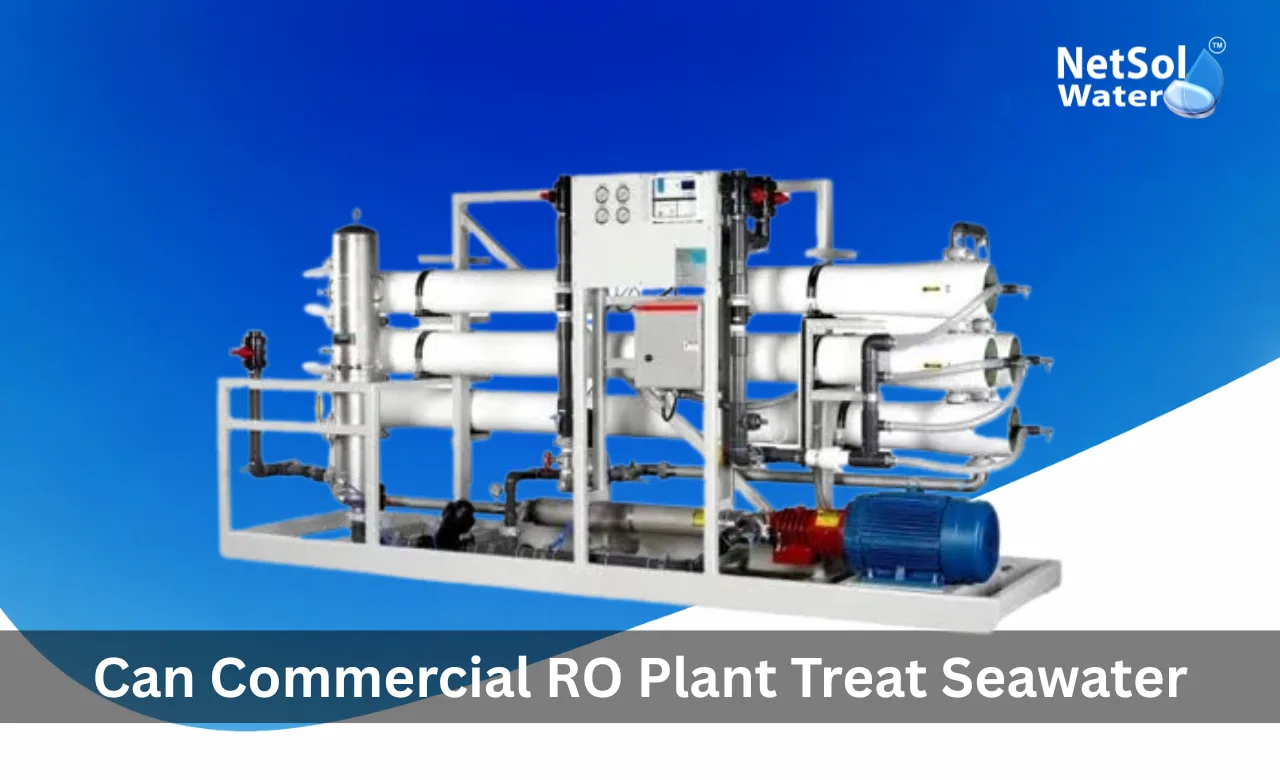
Can Commercial RO Plant Treat Seawater?

In coastal areas, water is a key ingredient of various industries and everyday life. Low availability of fresh water is a serious issue in coastal cities. When seawater is available, it cannot be used as is, because of the impurities and salt that it contains. For industries in coastal regions such as Gujarat, Tamil Nadu, and other coastal areas of India, the search for dependable water treatment solutions becomes important, aiming to transform seawater into potable water. This generates a high demand for knowledge on the ability of advanced treatment systems to treat such high-salinity water.

A large number of industries are looking for the answer to the question, “Can a commercial RO plant be used to treat seawater in a practical and economical manner?” The need for clean water is still increasing with the development of industrial activities in coastal areas. Under these circumstances, companies such as Netsol Water are top suppliers of water treatment solutions, which are helpful for industrial water applications. The use of a commercial RO system significantly contributes to salt and impurity removal; however, a better understanding of technology and system design is needed for seawater treatment.

Seawater Treatment in Commercial RO Systems

It is crucial to understand the interaction between seawater and reverse osmosis systems before assessing performance. Seawater is saltier and has more minerals dissolved in it, making it unsuitable for direct use. The commercial RO system works with high pressure and special membranes to isolate clean water from dissolved solids. But seawater treatment is not so easy due to its high salinity.

1. High-Pressure Requirement for Seawater Filtration

Seawater requires much more pressure than normal groundwater or surface water. This is because there is high resistance to membrane filtration due to the salt concentration. The commercial RO system used for seawater needs to have high enough pressure to force water through special membranes. This pressure is necessary to effectively separate the salt in the system. A continuous flow with stable filtration is maintained by means of high-pressure pumps. This increases the energy requirement of the seawater treatment process, but it is possible with proper system design. Pressure control in a continuous process is crucial to process efficiency.

2. Special Membranes for Salt Removal

Another important factor is the use of seawater-grade RO membranes. These membranes are specially manufactured for greater salt and pressure resistance. They are used to desalinate seawater to produce potable water. Such high salt content could damage standard membranes in a short amount of time. These seawater membranes are designed to have a longer lifetime in extreme conditions and to maintain filtration performance. This is particularly important for industries that rely on coastal water supplies. Choosing the right membranes is crucial for the effective treatment of seawater in a real industrial setting.

Role of Pretreatment in Seawater RO Systems

Pretreatment is a key factor in improving the quality of seawater for reverse osmosis filtration. If not pretreated appropriately, the RO system can suffer from frequent damage and inefficiency. Suspended particles, organic matter, and microorganisms in the seawater have to be removed before reaching the RO membrane. Let’s take a look at some of the important pretreatment processes that can make the system more effective and help a commercial RO plant treat seawater.

1. Filtration and Sediment Removal

The first step in pretreatment is to eliminate sand, dust, and suspended particles in seawater. This is achieved by using filtration systems which ensure that RO membranes do not clog. Unless these particles are removed, they can clog the water flow and make the system less efficient. Good sediment removal provides smooth operation and minimises maintenance requirements. It also helps improve the lifespan of the membrane system by reducing physical damage. This is critical to ensure constant water quality production in commercial systems.

2. Chemical Treatment for Organic Control

Seawater may contain organic matter and biological growth which may impact the membranes’ performance. These impurities are controlled by chemical treatment prior to the water entering the RO unit. This helps inhibit biological fouling and scaling inside the system. It also helps enhance water quality and keep the process in stable operation for long periods of time. The chemical dosing should be optimized to prevent damage to membranes and to be effective in purification. This is an important step to make seawater suitable for the commercial RO process.

Efficiency and Limitations of Commercial RO for Seawater

It is essential to understand the efficiency of the system when assessing seawater treatment systems. A commercial RO system can be used to treat seawater, but there are some disadvantages. These restrictions are primarily connected with energy consumption and maintenance requirements. Let’s take a look at some of the key considerations that make a commercial RO plant suitable, and difficult, for the desalination of seawater for industrial use.

Maintenance and System Durability

The components of seawater are extremely corrosive and can impact system life in the long term. The system must be maintained regularly in order to keep it running smoothly. Depending on usage, membranes must be cleaned and replaced periodically. Maintenance activities help ensure long-term performance and minimize system breakdowns. A clean system can run efficiently for many years even in harsh seawater environments. This shows how crucial service support is for commercial installations.

Industrial RO Systems Using Seawater

Industries in coastal areas have widely used seawater RO systems. These systems assist industries in coping with water scarcity and aid in their operational requirements. Let’s take a look at some of the important applications where treating seawater with a commercial RO plant is an effective solution to industrial requirements.

1. Energy Generation and Production Facilities

Cooling and production processes in power plants and large manufacturing units require a continuous supply of water. Seawater RO systems contribute to this need by converting seawater into potable water. This saves on freshwater consumption and promotes sustainability. These industries are the ones most affected by stable water availability, which allows production to be carried out more efficiently.

2. Coastal Hotels and Resorts

Coastal hotels and resorts rely on seawater treatment systems as well. They need clean water to serve their guests and for their daily activities. RO systems can be used to make seawater potable for general use. This means good hospitality services even in regions with limited freshwater. It also lowers the expenses of transporting water.

Read some interesting information for the Commercial RO Plant Manufacturer

Conclusion

A commercial RO plant can treat seawater effectively if it is designed with the correct technology and the right pretreatment system. It can turn high-salinity water into potable water for industry and commerce. It also needs high pressure and regular maintenance over time to work efficiently. Knowing these factors can help industries make informed decisions prior to installation.

Expert support makes final decision-making easier. So if you are looking to know more about whether a commercial RO plant can treat seawater, or need guidance to select the right RO plant, Netsol Water is the trusted partner you can turn to. Call our staff for professional advice and quality industrial water treatment systems.

Contact Netsol Water at:

Phone: +91-9650608473

Email: enquiry@netsolwater.com

How-many-Types-of-High-Pressure-Pumps-Used-in-Commercial-RO-Plant-1.webp

July 18, 2026by Netsol Water

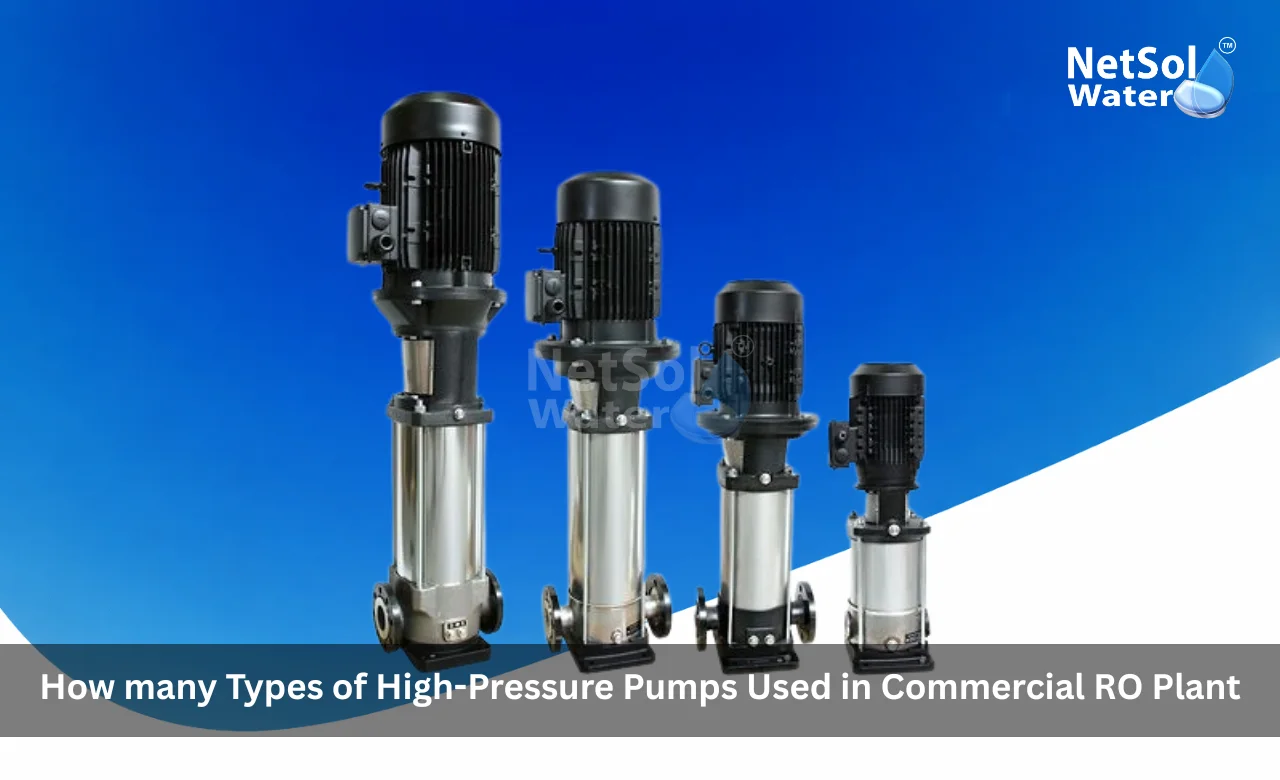
How Many Types of High-Pressure Pumps Are Used in Commercial RO Plants?

Industries such as hotels, hospitals, and commercial buildings, which require a large amount of clean water, are the most common applications of water treatment systems. This is why advanced filtration systems are important for everyday functions. A commercial RO plant is useful in removing salts and impurities from water and provides clean water for various applications. The high-pressure pump that forces the water through membranes is one of the most crucial components of this system.

We are a top commercial RO plant manufacturer and offer cutting-edge solutions for various industrial applications. Understanding the types of high-pressure pumps used in commercial RO plants helps in selecting the right system for better performance and long life. These pumps determine the effectiveness of water flow through the RO membrane and the energy consumption of the system. Industries can ensure smooth operations and minimize downtime due to pump failures by understanding the different types of pumps.

Importance of High-Pressure Pumps in RO Systems

High-pressure pumps are a crucial component of commercial RO plants. They develop the force needed to push water through membranes to remove impurities. If there is insufficient operating pressure, the RO system will not perform well. Let’s take a look at some of the key elements of this phase.

1. Role in Water Filtration Process

High-pressure pumps drive water at sufficient pressure to propel it through the very fine pores in the membrane. These pores help prevent the passage of salts, bacteria, and undesirable minerals. The pump is engineered to apply constant pressure for a constant filtration process. With the pressure down, the water quality is down as well. If the pump is working properly, it will deliver a steady flow and a clean product. This keeps it a key component of every RO system.

2. Impact on System Efficiency

Pump performance greatly influences the efficiency of a commercial RO plant. The processing time is shorter and the output volume of water is higher with a strong pump. It also promotes a balance in the use of energy. When the pump is weak, the system will use more power and produce less water. This results in greater running expenses. If the pump is selected appropriately, the operation of the system stays smooth and stable in the long term.

Centrifugal High-Pressure Pumps

One of the most popular types used in commercial RO plants is the centrifugal pump. They are popular for their ease of use and durability. To understand the types of high-pressure pumps used in commercial RO plants, one must have a proper idea of centrifugal pumps, as they are used in a number of medium-scale systems.

Let’s take a look at some of the key elements of this stage.

1. Working Mechanism of Centrifugal Pumps

In centrifugal pumps, water is forced under pressure using a rotating impeller. As the impeller rotates, the water is pushed outwards, resulting in higher speed and pressure of the water. This pressure aids the flow of water through RO membranes. The design is simple and easily maintained and operated. These pumps can be used for systems with moderate pressure requirements for filtration.

2. What Are the Benefits of Using This as a Commercial Product?

Centrifugal pumps are cost-effective and easy to install. They need less maintenance than other types of pumps. They are simple and work well in continuous water treatment processes. They are also capable of processing large volumes of water. These pumps are commonly used in various industries due to their reliability and durability. This is a reason they are used in commercial RO systems.

Positive Displacement High-Pressure Pumps

Another significant class of pumps used in commercial RO plants is positive displacement pumps. They are built with pressure control in mind and also supply steady water circulation. As a result, they play an important role in commercial RO plants, particularly where accurate pressure management is essential. Let’s take a look at some important aspects of this stage.

1. Working Principle of Positive Displacement Pumps

The operation of these pumps is based on trapping a certain volume of water and pumping it through the system during each cycle. This provides constant pressure, even if there is a change in flow. Unlike centrifugal pumps, they deliver constant output under different conditions. This makes them highly efficient for high-pressure RO applications, especially those requiring stable pressure for membrane protection.

2. Applications in High-Demand Systems

In industries where controlling water quality and pressure is of utmost importance, positive displacement pumps are used. They can be used in systems that demand constant high pressure over a lengthy period. In large-scale RO plants, accuracy and dependability play an important role, and for such applications, these pumps are frequently employed. They can operate at a steady rate and are therefore well suited for critical industrial applications.

Multi-Stage High-Pressure Pumps

Multi-stage pumps are specially designed for very high-pressure commercial RO systems. They have more than one impeller to slowly build up water pressure. When learning about the types of high-pressure pumps used in commercial RO plants, it’s important to understand this type, as many large systems rely on it. Let’s take a look at some of the essential elements of this stage.

1. Structure and Operation

Multi-stage pumps consist of a series of impellers in one casing. Each stage increases the pressure of the water as it passes through. In this way, the pump can deliver very high pressure without stressing a single part. The uniform pressure rise helps protect the RO membrane and increase system efficiency. These pumps are suitable for high-capacity water treatment plants.

2. The Following Benefits Are Offered for Large-Scale RO Plants

Multi-stage pumps are very efficient when used in large industrial systems. They ensure a high level of stable pressure for the deep filtration process. Their design minimises wear and tear on individual parts, increasing their durability. These pumps can also help with energy conservation by distributing the load across multiple stages. This makes them ideal for use in commercial settings and for continuous running.

High-Pressure Pumps: Vertical and Horizontal

Vertical and horizontal pumps are chosen based on installation, design, and space requirements. These are commonly employed in various commercial RO systems. Knowing these structural variations is part of understanding the types of high-pressure pumps used in commercial RO plants. Let’s check out a few of the key aspects of this stage.

1. Vertical High-Pressure Pumps

Vertical pumps are for installations where space is limited. They are set up upright, saving space and making it easy to integrate into confined systems. Such pumps are typically installed in high-rise buildings or in industrial units with limited space. They offer good pressure and consistent performance in small systems.

2. Horizontal High-Pressure Pumps

Horizontal pumps are used in a straight configuration and are typically used for larger plants. They are easily maintained and stable in operation. They are designed for use in heavy-duty applications where there is a need for continuous water flow. Horizontal pumps are popular in several industries because they are simple in design and can be easily serviced.

Read some interesting information for the Industrial RO Plant Manufacturer

Conclusion

The question of “How many types of high-pressure pumps are used in commercial RO plants?” is crucial for industries relying on clean water systems. There are various types of pumps used in commercial RO plants for particular purposes, such as centrifugal, positive displacement, multi-stage, vertical, and horizontal pumps. The right pump choice will increase efficiency, decrease energy consumption, and help maintain long-term system stability.

Netsol Water is a top water treatment solutions provider that assists industries in selecting equipment that suits their requirements. Proper system design and correct pump selection maximise smooth system operation and a clean water product every day. Contact us today to get professional advice.

Contact Netsol Water at:

Phone: +91-9650608473

Email: enquiry@netsolwater.com

Add-a-subheading-1-1.webp

July 16, 2026by Netsol Water

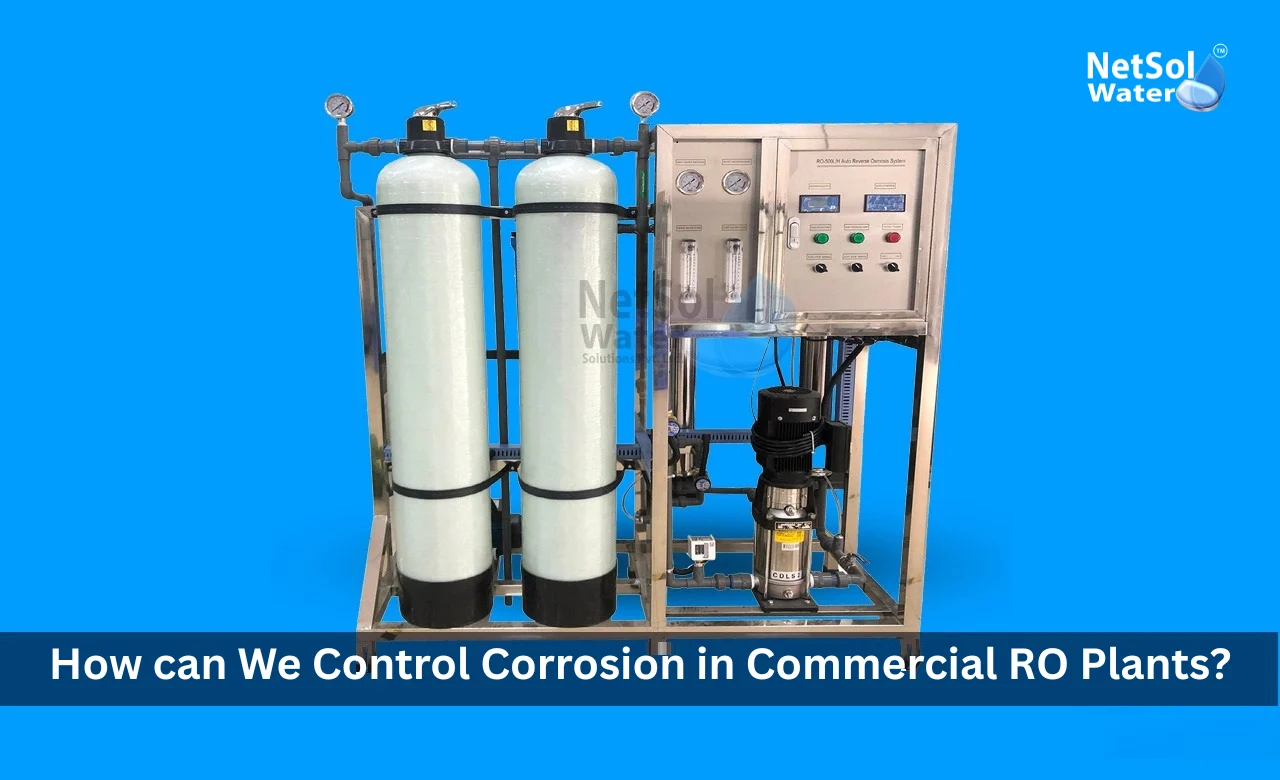
How Can We Control Corrosion in Commercial RO Plants?

In industrial or commercial facilities where there is a daily requirement for clean water, water treatment plants are a key component. As observed in India, water quality varies based on different seasons, and this can pose additional stress on treatment systems. If not handled properly, a commercial RO plant can also suffer internal damage over time when used to remove salts and impurities. The main problem in these systems is the corrosion that affects the pipes, membranes, and metal parts slowly over time.

We are the leading water treatment solution provider and is oriented towards constructing a water treatment system that works in various water conditions. It is crucial that every plant owner understands how to control corrosion in commercial RO plants. Maintenance costs and system life may be decreased, and efficiency may be lost due to corrosion. When managed well, the plant performs well and supplies safe water for many, many years.

Corrosion in RO Systems

The key to solving corrosion problems is understanding corrosion. If the cause and the spread of the issue are not known, it can be hard to control in a commercial RO system. Over time, corrosion hinders the operation of internal components and impacts water quality.

Let’s take a look at some key features of this stage.

1. Causes of Corrosion in RO Plants

RO plants suffer from corrosion because of the chemical composition of water and continuous contact between the metal and water. Reactions within pipes and tanks are higher at high levels of dissolved salts and oxygen. Poor pre-treatment can also let harmful particles into the system. These gradually begin to corrode metal surfaces and form rust or scaling. Over time, this leads to decreased flow efficiency and higher energy consumption. Once operators are aware of these causes, they can take early action to minimise damage.

2. Impact of Corrosion on System Performance

In addition to the damage caused to parts, corrosion also has an effect on the performance of the system. It results in lower pipe flow but higher pipe pressure drop. This causes pumps to exert more force and consume more electricity. In cases of serious corrosion, it may result in leakage and system failure. Corrosion particles will also cause damage to membranes if they make it through to the filtration stage. This results in poorer water quality and higher replacement costs. When a good understanding is developed of these impacts, a good control plan can be built.

Proper Material Selection and System Design

Prevention of corrosion is a key element in material selection and the design of the system. The system is more resistant to chemical reaction if the right materials are used. Let’s take a look at some of the key points of this stage.

1. Use of Corrosion-Resistant Materials

Damage due to water contact can be minimised by using corrosion-resistant materials. RO systems are usually made from stainless steel or high-grade plastics. These materials do not readily react chemically with water chemicals. This helps to minimize rust and extend the life of the system. The material selected depends on water quality and operating conditions, based on engineering decisions. The selection process ensures that the product will be stable for a long time and will require less maintenance.

2. Smart System Layout Design

System layout design also helps in controlling corrosion. There will be less pressure build-up and stagnation if pipelines are designed to have smooth flow paths. Water flow continues without variation and minimizes the potential for sediment buildup. There are also appropriate drainage connections to prevent water from becoming trapped in pipes. This design strategy ensures the internal surfaces remain clean and decreases the likelihood of corrosion in the long term.

Water Pre-Treatment and Chemical Balance

Pre-treatment of water is the first step that can be taken to minimize corrosion. Water that is not treated properly has the potential to cause serious damage to the system in no time. Let’s take a look at some key aspects of this stage.

1. Removal of Harmful Particles

Suspended solids and harmful particles are taken out of the water using pre-treatment. The water is cleaned prior to reaching the RO membrane with the use of filters and softeners. This decreases direct contact between aggressive particles and metal surfaces. The cleaner the water, the fewer chemical reactions will occur within the system, and the more stable the system will be. This is the key factor in preserving protection of the membranes and pipelines.

2. Maintaining Chemical Balance

Proper chemical balance of the water is also important. If pH is too high or too low, corrosion will escalate rapidly. Water chemistry is monitored on a regular basis and treated with safe water chemistry chemicals. This balance minimizes the risk of metal reaction and stabilizes the system components. Appropriate chemical control can ensure a longer plant life for the RO plant.

Regular Maintenance and Monitoring Practices

Regular maintenance and monitoring are important for long-term corrosion control. Even a well-designed system can face damage if it is not maintained properly. Let’s look at some important parts of this stage.

1. Routine Inspection of Components

Routine inspection helps identify early signs of corrosion. Technicians check pipes, valves, and tanks for rust or leakage. Early detection allows quick repair and prevents major damage. Regular cleaning also removes deposits that may cause corrosion. This simple practice helps maintain smooth system performance and reduces repair costs over time.

2. Continuous Performance Monitoring

Continuous monitoring helps track system behaviour during operation. Pressure, flow rate, and water quality are checked regularly. Any sudden change indicates a possible issue inside the system. Operators can take quick action before damage spreads. Monitoring tools help maintain stability and ensure that corrosion does not affect production efficiency.

Use of Protective Measures and Advanced Technology

Protective measures and modern technology provide extra safety against corrosion. These solutions are used to strengthen system durability and improve long-term performance. Let’s look at some important parts of this stage.

1. Application of Protective Coatings

Protective coatings are applied to metal surfaces to reduce direct contact with water. These coatings act as a barrier and prevent chemical reactions. They are especially useful in pipelines and storage tanks. When applied properly, they reduce rust formation and increase system life. This simple method provides strong protection without changing the system design.

2. Use of Advanced Monitoring Technology

Modern RO plants use digital monitoring systems to track corrosion risk. Sensors detect changes in pressure, temperature, and water quality. These systems give early warnings if any imbalance is found. Operators can take immediate action to prevent damage. This technology improves control and ensures that the system runs safely and efficiently.

Read some interesting information for the Effluent Treatment Plant Manufacturer

Conclusion

How can we control corrosion in commercial RO plants? This is an important question for every industry that depends on a clean and safe water supply. Corrosion can slowly reduce system efficiency and increase operating cost if it is ignored. When proper materials, water treatment methods, maintenance practices, and modern protection techniques are used, the system stays stable and performs well for a long time.

Netsol Water is a leading expert in designing and maintaining reliable RO plants for commercial and industrial use. Businesses that want long-term performance and reduced maintenance challenges should focus on proper corrosion control methods. Reach out today to get expert guidance or request a consultation on corrosion control for commercial RO plants, and build a system that delivers consistent and safe water every day.

Contact Netsol Water at:

Phone: +91-9650608473

Email: enquiry@netsolwater.com

How-to-Maintain-Commercial-RO-Plant-Storage-Tank-2.webp

June 20, 2026by Netsol Water

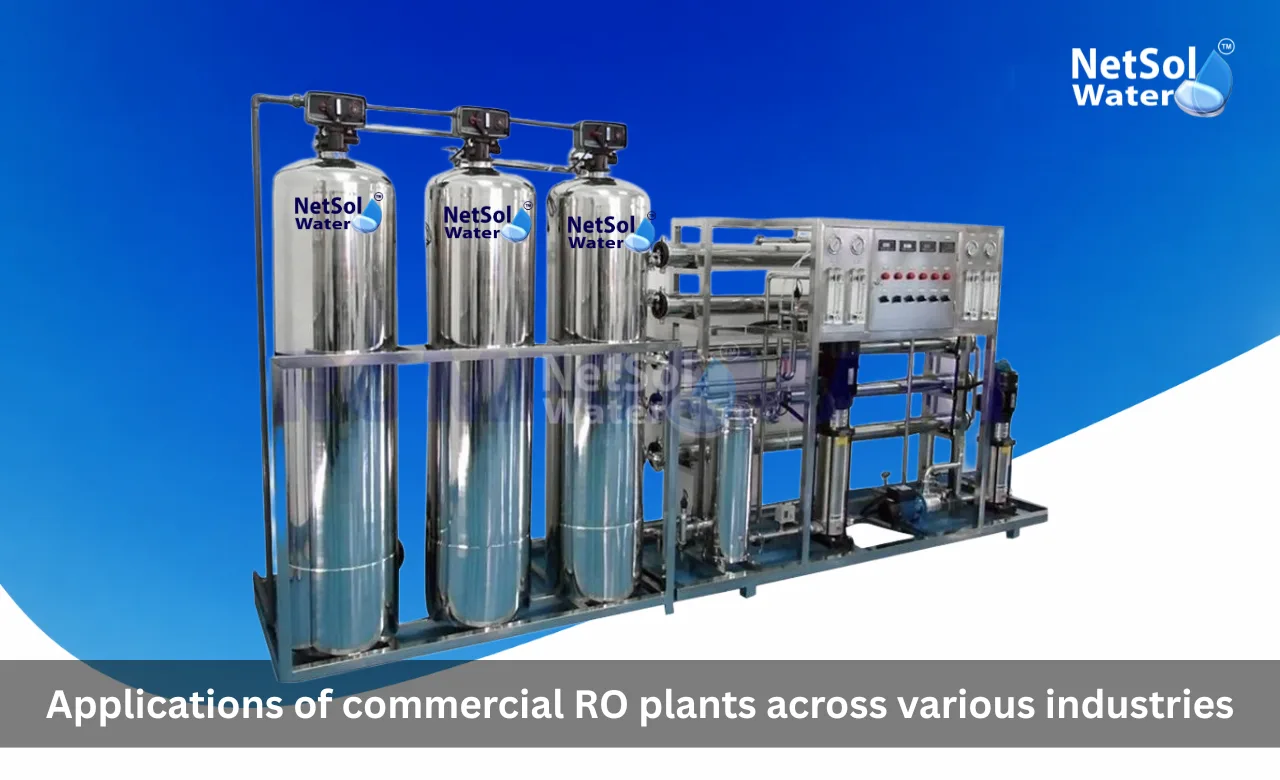
Applications of Commercial RO Plants Across Various Industries

Clean water supports every kind of business. It keeps people safe. It protects product quality. That is why many companies now use commercial RO plants in daily operations. These plants remove dissolved salts and other unwanted particles from water. They give a steady supply of clean water for work that needs care and control.

Many industries cannot depend on normal water alone. They face problems like hard water. They also face high mineral content and changes in water quality. A commercial RO plant manufacturer helps solve these problems by designing plants that suit different uses.

We are the leading commercial RO plant manufacturer, and it serves businesses that need reliable water treatment solutions. From hotels to factories, and from hospitals to food units, the need for clean water keeps growing. In many cases, water quality affects safety, service life, and output. That makes RO plants a practical choice for modern industry.

Why Food and Beverage Units Depend on RO Water

Food and beverage businesses need water that stays clean and consistent. Water touches almost every stage of production. It enters washing, cooking, mixing, and packaging. Even a small change in water quality can affect taste, colour, and shelf life. That is why this industry values RO treatment so much. It helps units maintain hygiene and keep products stable.

1. Water for Processing and Ingredient Use

In food processing, clean water is not optional. It becomes part of the product in many cases. It also helps wash fruits, vegetables, grains, and other raw materials. When a business uses filtered water, it lowers the chance of unwanted taste or smell. It also reduces mineral deposits in equipment. This improves product quality and lowers repair needs.

2. Water for Bottling and Packaging

Beverage plants need pure water for drinks, juice, and packaged water. They cannot allow high salt or dirt levels in the final product. A commercial RO plant helps them meet this need with better control. It supports smooth operation and stable output. That is one reason a trusted commercial RO plant manufacturer often works closely with beverage units that want reliable daily production.

Why Hotels and Hospitality Businesses Use RO Plants

Hotels depend on water all day long. Guests use it for drinking, bathing, cleaning, and food service. The hotel industry also needs water for laundry, kitchens, and housekeeping. If water quality drops, then service quality drops too. This can affect guest comfort and the image of the property. RO plants help hotels keep water safe and pleasant for many uses.

1. Drinking Water for Guests

Guests expect safe drinking water in rooms, restaurants, and common areas. RO plants help hotels provide water that looks clear and tastes better. This builds trust and improves the guest experience. It also helps hotel staff avoid repeated water complaints. A steady water supply matters in busy properties where hundreds of people may use the same system each day.

2. Support for Kitchens and Laundry

Hotel kitchens need water for food prep and cleaning. Laundry sections also need good water for washing clothes and linens. Hard water can leave stains and reduce the life of fabric. It can also create scale inside machines. RO-treated water helps avoid these issues. It keeps cleaning work better and protects equipment from early wear.

Why Healthcare Facilities Need Reliable RO Treatment

Hospitals and clinics must maintain very high water standards. They use water in patient care, cleaning, lab work, and equipment support. In such places, even small impurities can create risk. That is why RO plants play an important role in healthcare. They support safe daily operations and help staff work with more confidence.

1. Water for Patient Safety and Hygiene

Hospitals use water for general cleaning, hand washing, and many support tasks. Clean water helps reduce contamination risk in busy areas. It also supports better hygiene in wards, operation areas, and support rooms. When a healthcare facility maintains good water quality, it strengthens its safety system. This is one of the major reasons a commercial RO plant manufacturer often designs systems for medical sites with strong filtration needs.

2. Water for Medical Equipment and Laboratory Use

Many medical machines need pure water to work well. Labs also need stable water quality for testing and sample work. Hard water can damage devices and affect test results. RO treatment helps provide water that meets these needs more reliably. It protects equipment and helps keep results consistent. For hospitals that depend on precision, this matters a great deal.

Why Pharmaceutical and Laboratory Units Need Purified Water

Pharmaceutical production asks for strict control. It cannot accept random water quality. Tablets, syrups, ointments, and many other products need clean water during preparation. Labs also need pure water for accurate results. This makes RO systems a key part of the sector. They help businesses follow better process control and reduce quality issues.

1. Water in Drug Production

Drug makers use water in mixing, cleaning, and formulation. If the water carries extra salts or unwanted matter, then product quality may suffer. RO plants help remove many of these problems before water enters production. This gives the company more control over its process. It also supports quality checks and better compliance in daily work.

2. Water in Testing and Research

Laboratories need water that does not disturb test results. Even slight impurities can affect samples. That is why RO plants are common in research centres and testing units. They help labs create a cleaner work base. They also reduce the risk of errors in sensitive tests. A skilled commercial RO plant manufacturer usually offers plants that suit these exact needs and support long-term reliability.

Why Manufacturing Plants and Commercial Buildings Need RO Water

Many factories and large buildings use a great deal of water every day. They need it for machines, cooling, cleaning, and staff use. Poor water quality can cause scale, corrosion, and downtime. RO plants help solve these problems. They support better machine life and cleaner operation across the site.

1. Water for Machines and Process Lines

Industrial machines often suffer when hard water enters the system. Minerals collect on surfaces and reduce efficiency. This can raise energy use and create more maintenance work. RO treatment lowers these risks. It gives cleaner water to support cooling systems, boilers, and process lines. This improves performance and helps businesses save time and cost.

2. Water for Staff Areas and Building Services

Offices, malls, schools, and other commercial spaces also need safe water for staff and visitors. They use it in pantries, toilets, canteens, and cleaning work. A commercial RO plant gives them a dependable supply that supports daily comfort. It also reduces stress on plumbing and appliances. Netsol Water works as a leading commercial RO plant manufacturer for businesses that want better water care across their buildings and operations.

Read some interesting information for the Sewage Treatment Plant Manufacturer in Gurgaon

Conclusion

Clean water is no longer a small support need. It plays a direct role in safety, product quality, machine life, and customer satisfaction. That is why commercial RO plants have become so important across many industries. They help businesses work with more confidence and less disruption. From food production to healthcare, and from hotels to factories, the demand for pure water keeps growing. A reliable system can make a real difference in daily performance.

Netsol Water stands as a trusted commercial RO plant manufacturer for businesses that want practical and long-lasting water treatment solutions. Reach out today to learn more or request a consultation for your business needs.

Contact Netsol Water at:

Phone: +91-9650608473

Email: enquiry@netsolwater.com

Applications-and-Benefits-of-Installing-Commercial-RO-Plant.webp

June 19, 2026by Netsol Water

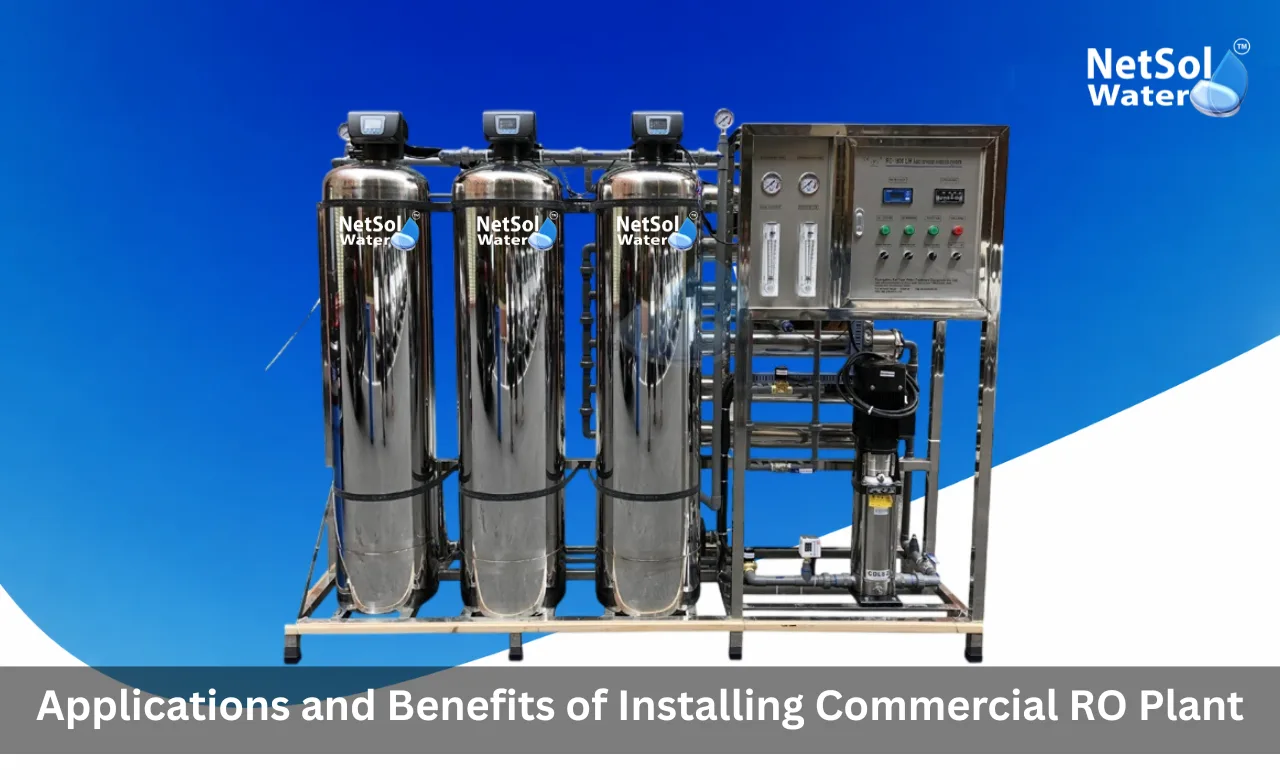
Applications and Benefits of Installing a Commercial RO Plant

Clean water supports smooth work in every business place. Hotels need it for guests. Hospitals need it for care. Schools need it for daily use. Offices need it for staff. Many commercial places face water that carries salt, dust, dirt, and other unwanted content. That is why many businesses now install a commercial RO plant to improve water quality and keep their work steady.

A commercial RO plant manufacturer helps companies choose the right plant for their needs. We are the leading commercial RO plant manufacturer, and it supports many business spaces with water treatment solutions that fit their use. When a commercial place gets safe and clear water, it can improve service quality and reduce problems in machines, pipes, and daily operations. This makes RO plants a smart choice for many sectors.

Applications of a Commercial RO Plant

A Commercial RO Plant serves many places because water quality matters in almost every business. Different sectors use clean water in different ways. Some need it for direct use, while others need it to protect machines and improve product quality. Let us take a look at some major applications that show why this system matters so much.

1. Hotels and Restaurants

Hotels and restaurants use large amounts of water every day. They need it for cooking, drinking, washing, and guest service. If the water carries a bad taste or smell, it can affect food quality and customer comfort. A Commercial RO Plant helps remove unwanted impurities and gives clean water for kitchen use and guest needs. It also supports dishwashing and other cleaning tasks. Since hotels work around the clock, they need a steady water supply that stays safe and fresh.

2. Hospitals and Healthcare Centers

Hospitals need pure water because healthcare depends on hygiene and safety. Clean water supports patient care, lab work, cleaning, and some medical uses. A small change in water quality can affect daily operations in a healthcare unit. With RO treatment, hospitals can reduce salts and dissolved particles that may harm equipment or affect cleaning standards. The system also helps maintain better sanitation in wards and service areas. In this field, even a simple water issue can create a big problem. So a reliable RO plant becomes an important part of the facility.

3. Schools, Colleges and Offices

Educational and office buildings use water for drinking, cooking, hand washing, and cleaning. Many students and staff members depend on the same source each day. If the water quality drops, then people may face health issues and work may slow down. A Commercial RO Plant gives safe water to support a healthy environment. It helps reduce the load on bottled water use and builds confidence among users. Schools and offices also benefit because the system runs on a regular process and needs less manual effort after setup. This makes water management much easier for large buildings.

4. Manufacturing Units and Industrial Sites

Many manufacturing units need clean water for processing, cooling, and equipment care. If water has too many dissolved solids, it can affect products and damage machines. A commercial RO plant helps industries keep their process water clean and stable. It also supports longer machine life and better output quality. Many plants use it to manage water for boilers, washing lines, and production support.

Benefits of Installing a Commercial RO Plant

A commercial water system does more than remove impurities. It also brings daily support to the business. Clean water helps people work better, and machines last longer. Let us take a look at some key benefits that make this system valuable for many commercial spaces.

1. Better Water Quality for Daily Use

The biggest benefit of a Commercial RO Plant is better water quality. It removes many unwanted dissolved salts and particles from the water. This improves taste, smell, and clarity. In a commercial place, good water quality creates a better experience for workers, customers, and visitors. It also lowers the chance of water-related discomfort or complaints. When a business uses clean water every day, it shows care for health and service. That matters in every sector. This is one reason why businesses prefer guidance from an experienced commercial RO plant manufacturer.

2. Protection for Machines and Plumbing

Hard water can leave scale inside pipes and machines. This buildup can reduce flow and cause damage over time. A Commercial RO Plant helps control this issue by lowering mineral content in water. As a result, machines run more smoothly and pipes stay cleaner for longer. This can reduce repair costs and downtime. For businesses that depend on equipment every day, this benefit is very important. It helps them avoid sudden breaks in work and supports long-term performance. Clean water keeps the system healthier and also reduces pressure on maintenance teams.

3. Better Health and Hygiene

Safe water helps protect the health of staff, customers, and visitors. Poor water can spread discomfort and affect hygiene. A Commercial RO Plant supports a cleaner environment by improving water quality at the source. It helps businesses maintain better standards in kitchens, washrooms, and service areas. Health and hygiene are not separate from business success. They support trust and comfort. When people feel safe, they are more likely to return and stay satisfied. That makes water treatment a useful part of daily business care.

4. Long Term Value for Business

A RO plant may seem like a simple water solution at first. But over time, it gives strong value. It supports machine life, lowers cleaning problems, and improves water use. It can also reduce the risk of quality complaints in places that serve food or care for people. This long-term value makes the system useful for many sectors. A trusted commercial RO plant manufacturer can help a business choose the right size and model so the plant works well for years. That kind of support helps the owner make a better decision from the start.

Why Businesses Choose Netsol Water

When businesses look for a water treatment system, they want quality, support, and a design that fits their needs. Netsol Water is the leading commercial RO plant manufacturer because it focuses on practical solutions for commercial places. It helps clients get a system that matches their water quality and daily demand. The company supports hotels, hospitals, offices, schools, and industrial units with dependable treatment systems. This makes it easier for businesses to manage water. Strong service and clear planning also help users feel confident in their choice.

Read some interesting information for the Industrial RO Plant Manufacturer

Conclusion

A Commercial RO Plant brings real value to business spaces that need safe and steady water every day. It supports better hygiene, protects machines, and improves daily work in many sectors. It also helps create a better experience for the people who use the place. For business owners who want a reliable solution, the right system can make a lasting difference.

Netsol Water is the leading commercial RO plant manufacturer, and it offers solutions that fit different commercial needs. Reach out today to learn more or request a consultation for your water treatment requirement.

Contact Netsol Water at:

Phone: +91-9650608473

Email: enquiry@netsolwater.com

Are-Stainless-Steel-pipes-used-in-Commercial-RO-Plants.webp

June 18, 2026by Netsol Water

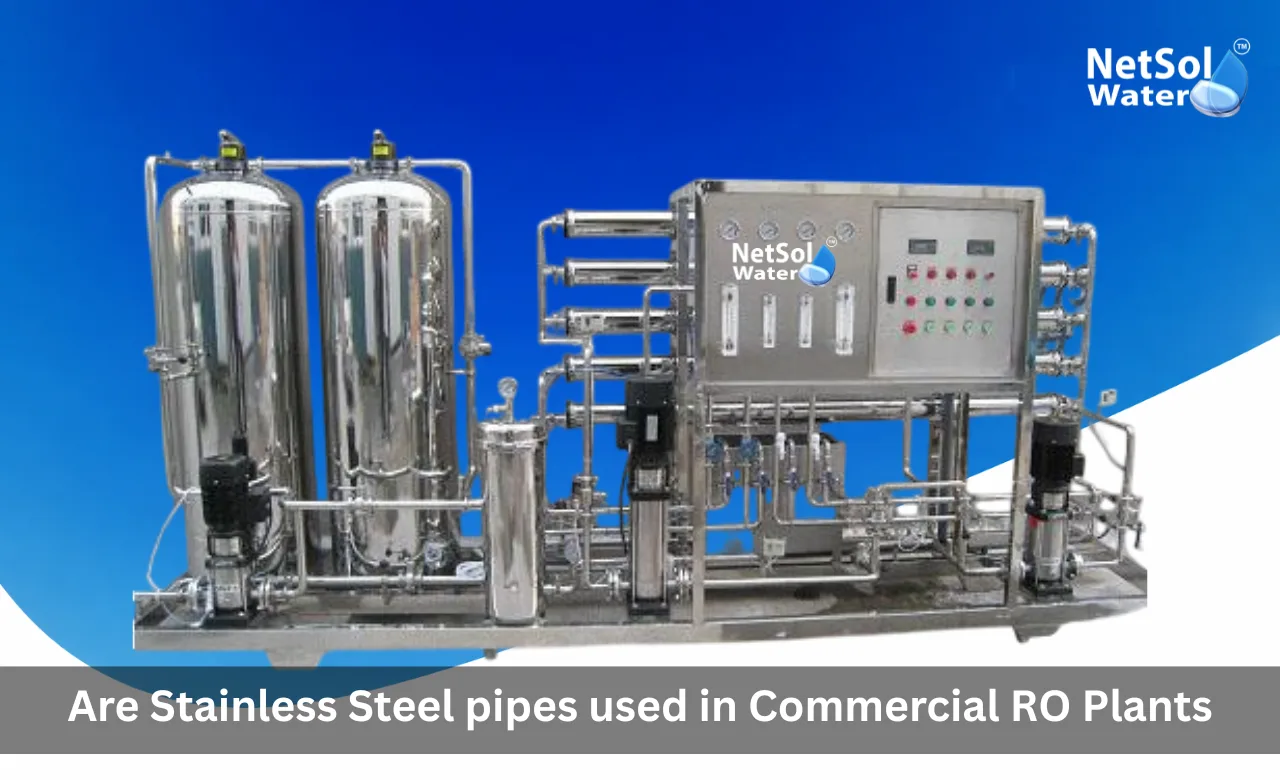
Are stainless steel pipes used in commercial RO plants?

Commercial RO plants work in places where clean water matters every day. Hotels need safe water for guests. Food units need pure water for production. Hospitals need water that supports hygiene. Factories also need steady water quality for different processes. In all these cases, the design of the plant plays a big role in performance. One of the most asked questions is whether stainless steel pipes are used in commercial RO plants.

Stainless steel pipes are widely used in many parts of a commercial RO system. A trusted commercial RO plant manufacturer like Netsol Water often uses them in high-pressure sections because they stay strong and clean under tough working conditions. They also help the plant run safely for a long time. At the same time, not every part of the system needs stainless steel. A smart design uses different materials in different sections so the plant stays efficient and cost-effective. That balance is what makes a good RO system work well in daily use.

Why Stainless Steel Is Used

Stainless steel has earned an important place in commercial RO plants because it gives strength and protection at the same time. When water moves through a plant under pressure, the piping system must stay stable. It should not rust easily. It should not leak. It should also support clean water flow without adding unwanted contamination. That is why a commercial RO plant manufacturer often chooses stainless steel for the most demanding parts of the system. Let us have a look at some important reasons.

1. High Pressure Resistance

Commercial RO plants do not work with light pressure. They push water through membranes at high force so that salts and other unwanted particles stay behind. In this process, the piping must handle strong pressure every day. Stainless steel performs well in such conditions because it keeps its shape and strength. It does not crack easily under load. It also handles vibration and long operation better than many low-cost materials.

This strength matters because a plant must work without interruption. If the piping weakens then the system loses efficiency and may suffer damage. Stainless steel gives peace of mind to plant owners because it supports stable flow. That is why many commercial and industrial units prefer it in the high-pressure side of the system.

2. Corrosion and Chemical Resistance

Water treatment systems face constant exposure to moisture and treatment chemicals. Over time, ordinary metal can rust or wear out. When that happens, the water quality may drop and the plant may need more repairs. Stainless steel helps reduce this risk because it resists corrosion very well.

This feature is important in RO plants because clean water must stay clean from start to finish. If the pipe rusts then the system can pick up unwanted particles. That can affect the membranes and lower plant performance. Stainless steel protects the flow path and supports a longer service life. It also works well in systems that deal with tough water conditions. For that reason, a commercial RO plant manufacturer often suggests it when the client needs better durability.

3. Hygiene and Safety

Clean water systems must support hygiene. This is one of the strongest reasons behind the use of stainless steel. Its smooth surface makes it easier to clean. It does not allow dirt to settle easily. It also lowers the chance of bacterial growth when the plant is maintained properly.

This quality is especially useful in food processing units, hotels, hospitals, and pharmaceutical facilities. These places need safe water for people and products. Stainless steel helps create a cleaner path for water movement. It supports better plant safety and makes regular cleaning easier. That is why it remains one of the most trusted choices in modern RO design.

When and Where They Are Used

Stainless steel pipes are not used everywhere in the same way. A good plant design uses them where strength and safety matter most. Other sections may use different materials to keep the project affordable. This mix helps the plant perform well while controlling cost. A skilled commercial RO plant manufacturer studies the water source, pressure level, and usage area before choosing the pipe material. Let us have a look at some important areas where stainless steel plays a major role.

1. High-Pressure Piping

The high-pressure section is one of the most important parts of a commercial RO plant. This is the zone where the high-pressure pump sends water toward the membrane housings. The pressure in this line is much higher than in the rest of the system. So the piping must stay strong and safe.

Stainless steel fits this job very well. It handles pressure without bending or failing. It also supports a stable flow which helps the membranes work properly. If this section becomes weak then the whole plant can face trouble. That is why stainless steel is often the first choice in this part of the system. It adds safety and reliability in a place where failure would create major problems.

2. Membrane Housings

Membrane housings hold the RO membranes in place. These housings must stay firm because they work under pressure and constant water flow. In many commercial systems, stainless steel is used for these housings because it gives long life and strong support.

The housing must protect the membrane and keep the system sealed. If it becomes weak then water may leak or pressure may drop. Stainless steel keeps the housing stable and helps the plant work smoothly. It also supports a cleaner internal surface which is useful for maintenance. This is one reason many industries trust stainless steel in the core section of the plant.

3. TDS and Desalination Systems

Water with very high Total Dissolved Solids needs stronger treatment. Seawater and brackish water systems often face more pressure and more wear than normal plants. In such cases, stainless steel becomes even more useful. It can stand up to tough working conditions and gives better service life in demanding environments.

Desalination plants also need materials that resist corrosion because salt water is harsh on many metals. Stainless steel is a safer choice in these situations. It helps the plant keep running with better control and less damage. That is why many engineers recommend it for high TDS and desalination projects. It brings confidence to the design when the water source is difficult.

Common Alternatives

Stainless steel is a strong choice but it is not always used in every section of the RO plant. A smart design also looks at cost, weight, and the type of water line. That is why other materials are also used in commercial systems. A good commercial RO plant manufacturer knows how to combine these materials in the right way so the plant stays effective and practical. Let us have a look at some common alternatives.

1. UPVC and CPVC

UPVC and CPVC are widely used in low-pressure sections of commercial RO plants. These include raw water feed lines, permeate lines, and drain lines. They are popular because they cost less and they do not rust. They also work well in many water treatment setups where pressure is not too high.

These materials are easy to install and maintain. They make the system more economical without reducing basic performance. When the water does not face extreme pressure then UPVC or CPVC can do the job well. That is why they often appear in many parts of a commercial RO plant. They help balance the overall project cost and still support reliable operation.

2. FRP Vessels and Housings

FRP means fiberglass reinforced plastic. It is another common material in water treatment systems. Many filter housings and large vessels use FRP because it is light, strong, and resistant to many chemicals. It also helps when the plant needs a large structure that is easier to move and install.

FRP does not replace stainless steel in high-pressure zones. Still, it serves a useful role in other parts of the system. It gives good value where chemical resistance and lower weight matter more than metal strength. This makes it a practical choice in many commercial RO plants. Its flexibility in design also supports different plant sizes and working conditions.

Read some interesting information for the Effluent Treatment Plant Manufacturer

Conclusion

Commercial RO plants need materials that can handle pressure, protect water quality, and support long-term use. Stainless steel pipes meet these needs very well, which is why they remain a major part of many systems. They work best in high-pressure sections, membrane housings, and challenging water conditions. At the same time, other materials still play an important role in a complete plant design.

Netsol Water is a leading commercial RO plant manufacturer that makes plants with the right mix of strength, hygiene, and practical value. If you need more details about stainless steel piping or want help planning a new RO plant, then reach out for expert advice and consultation today.

Contact Netsol Water at:

Phone: +91-9650608473

Email: enquiry@netsolwater.com

What-are-the-Applications-of-Commercial-Water-Softeners.webp

June 16, 2026by Netsol Water

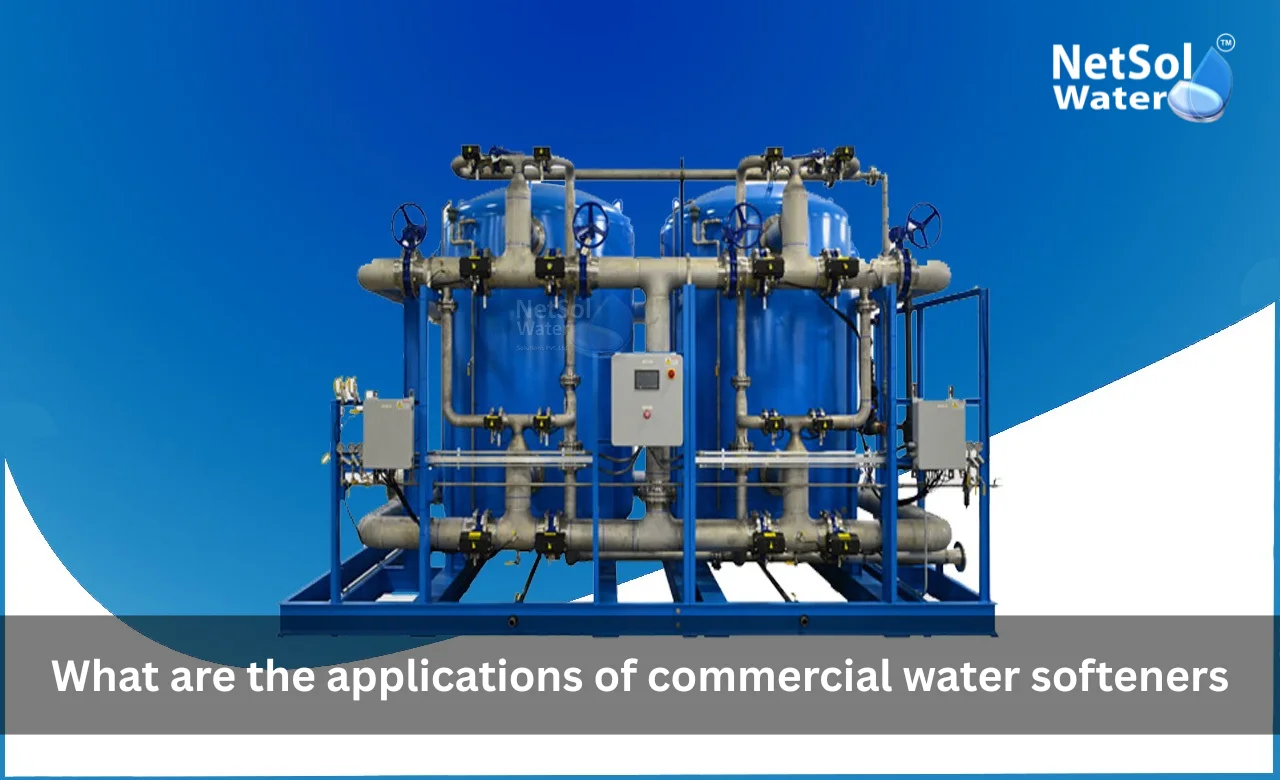
What are the applications of commercial water softeners?

Hard water creates many daily problems for businesses. It leaves scale in pipes. It reduces the life of machines. It also affects cleaning and comfort in many commercial spaces. That is why water treatment plants matter so much in cities and business hubs where water hardness is common. A commercial water softener removes extra calcium and magnesium from water. As a result, it helps businesses save money and keep work smooth.

We are the leading commercial RO plant manufacturer and also provide water treatment solutions that support many industries. Commercial water softeners are not used in just one place. They serve hotels, hospitals, laundries, offices, and many more businesses. They protect equipment and improve water quality at the same time.

Applications in Hotels and Restaurants

Hotels and restaurants use a huge amount of water every day. They need clean water for cooking, washing dishes, laundry, guest rooms, and kitchens. Hard water creates many problems in these places. It leaves marks on glassware. It blocks appliances. It also affects the look and feel of the customer experience. That is why soft water support is important in hospitality spaces.

Let us have a look at some ways commercial water softeners help this sector. They improve kitchen performance and make cleaning easier. They also support laundry systems and help keep bathrooms and fixtures in better condition. In a business where guest satisfaction matters, every small detail counts. Soft water helps staff work faster and gives guests a better impression.

1. Better Kitchen and Dishwashing Results

In hotels and restaurants, kitchen work never stops. Dishes, pans, and cooking tools must stay clean all day. Hard water leaves spots on glass and a cloudy layer on metal. It also reduces the effect of detergents. A commercial water softener solves this issue by giving better water for washing and rinsing.

This makes dishwashing faster and more effective. It also protects dishwashers and hot water systems from scale. Kitchen staff can focus on service instead of dealing with repeated cleaning issues. Food preparation also benefits because water quality stays more stable. That creates a cleaner and more efficient kitchen environment.

2. Laundry and Guest Comfort

Many hotels run large laundry operations. They wash towels, sheets, and uniforms every day. Hard water can make fabric feel rough and dull. It can also shorten the life of cloth. Soft water helps detergents work better and keeps fabrics in better shape.

Guest comfort also improves when bathrooms and taps stay cleaner. Water spots on fittings become less common. Shower systems work better and fixtures look brighter. These small things shape the guest experience. When a hotel uses a water softener, it supports both service quality and brand image. That is why many hospitality businesses choose guidance from a Commercial RO Plant Manufacturer before setting up their treatment system.

Applications in Hospitals and Healthcare Facilities

Hospitals and healthcare spaces need very clean and reliable water conditions. They use water for cleaning, sterilization, laundry, patient care, and equipment support. Hard water can create hidden problems in such places. It can damage machines and affect cleaning quality. It can also cause extra strain on systems that must run without failure.

Let us have a look at some important uses in healthcare settings. Soft water supports hygiene and protects sensitive equipment. It also helps maintain steady operation in busy departments. In a hospital, every small system matters because the whole space depends on safety and cleanliness. That is why water softeners have a strong role in healthcare planning.

1. Support for Cleaning and Sterilization

Hospitals need strong cleaning routines every day. Soft water helps cleaners and sterilization teams get better results. It removes the mineral problem that often leaves stains on surfaces and tools. This improves washing quality and supports a more controlled environment.

Sterilization equipment also works better when scale does not block its parts. Hard water can interfere with heat transfer and slow down performance. Soft water reduces this problem and helps systems stay efficient. That means fewer interruptions and better reliability for staff who need stable water support.

2. Protection for Medical Equipment and Plumbing

Medical spaces use many machines that depend on clean water flow. Boilers, washers, and other units can suffer when scale builds up. A water softener helps protect these systems from early wear. It also supports plumbing lines that must stay open and efficient.

This protection matters because repairs in a healthcare setting can create stress and delay. Soft water lowers that risk. It helps the facility keep operations smooth and consistent. A trusted commercial RO plant manufacturer can help hospitals design a setup that fits both hygiene needs and equipment demands.

Applications in Laundries and Textile Units

Laundries and textile units depend on water for nearly every stage of work. They wash, rinse, and treat large amounts of fabric each day. Hard water can reduce fabric quality and increase detergent use. It can also create scale in machines that run for long hours. This makes water softeners very useful in this sector.

Let us have a look at some of the main benefits here. Soft water improves fabric care and supports machine health. It also helps businesses save on chemical use and maintenance. In a laundry where time and quality both matter, water softening can bring clear value.

1. Better Fabric Care and Wash Quality

Soft water helps detergents dissolve and spread well. That means clothes and linen get cleaned more evenly. Hard water often makes fabrics stiff and dull. It can also leave residue that customers notice right away. Soft water reduces these issues and improves the final look and feel.

For textile units, this is very important. Fabric quality affects customer trust and business reputation. When water stays soft, the washing process becomes more controlled. Staff can produce better results with less effort. That makes operations more efficient and more professional.

2. Longer Machine Life and Lower Cost

Laundry machines work hard and need steady water flow. Hard water leaves deposits that build up in drums, lines, and heaters. This can reduce efficiency and cause damage over time. A water softener helps avoid this problem and keeps systems running better for longer.

The benefit is not only technical. It also saves money. Businesses spend less on repairs and less on detergent. They also reduce downtime. This is one more reason why a Commercial RO Plant Manufacturer often includes water softening in a complete water plan for commercial laundry units.

Applications in Offices, Schools, and Commercial Buildings

Offices, schools, shopping centers, and other commercial buildings also use water softeners. These places may not wash fabric or cook food on the same scale as hotels. Still, they face hard water problems in washrooms, pantry areas, heating systems, and plumbing lines. Clean and soft water helps keep the building in better shape.

Let us have a look at some common uses in these spaces. Soft water improves daily comfort and supports building maintenance. It also reduces the strain on shared systems. In large properties, even a small-scale problem can become expensive if it spreads across many floors and units.

1. Better Washroom and Pantry Use

Washrooms and pantry areas need regular cleaning. Hard water often leaves stains on taps, basins, and tiles. It also makes soaps less effective. With softened water, these areas stay cleaner for longer and need less effort to maintain.

This helps office managers and facility teams save time. It also improves the look of the building for visitors and staff. In schools and offices that receive many users every day, this makes a real difference. Clean water support also improves the comfort of the people who use the space.

2. Safer Heating Systems and Lower Maintenance

Commercial buildings often use boilers, heaters, and other water-based systems. Hard water can damage these units by creating scale. That lowers performance and raises energy bills. A water softener helps prevent that damage and keeps systems efficient.

As a result, building managers face fewer service calls and lower repair costs. The systems also last longer. This makes water softening a practical choice for long-term maintenance. Many property owners discuss these needs with a commercial RO plant manufacturer when they plan a new water treatment setup.

Read some interesting information for the Sewage Treatment Plant Manufacturer

Conclusion

Commercial water softeners help businesses in many ways. They protect machines, improve cleaning, support better fabric care, and reduce maintenance problems. They also save money over time by lowering scale damage and improving system life. From hotels and hospitals to laundries and office buildings, the value is clear. Soft water supports smooth daily work and better results.

Netsol Water is the leading commercial RO plant manufacturer and can help businesses choose the right water treatment solution for their needs. If your business faces hard water issues, then now is the right time to explore a reliable system. Contact Netsol Water to discuss your water treatment needs or request a consultation for expert guidance.

Contact Netsol Water at:

Phone: +91-9650608473

Email: enquiry@netsolwater.com