
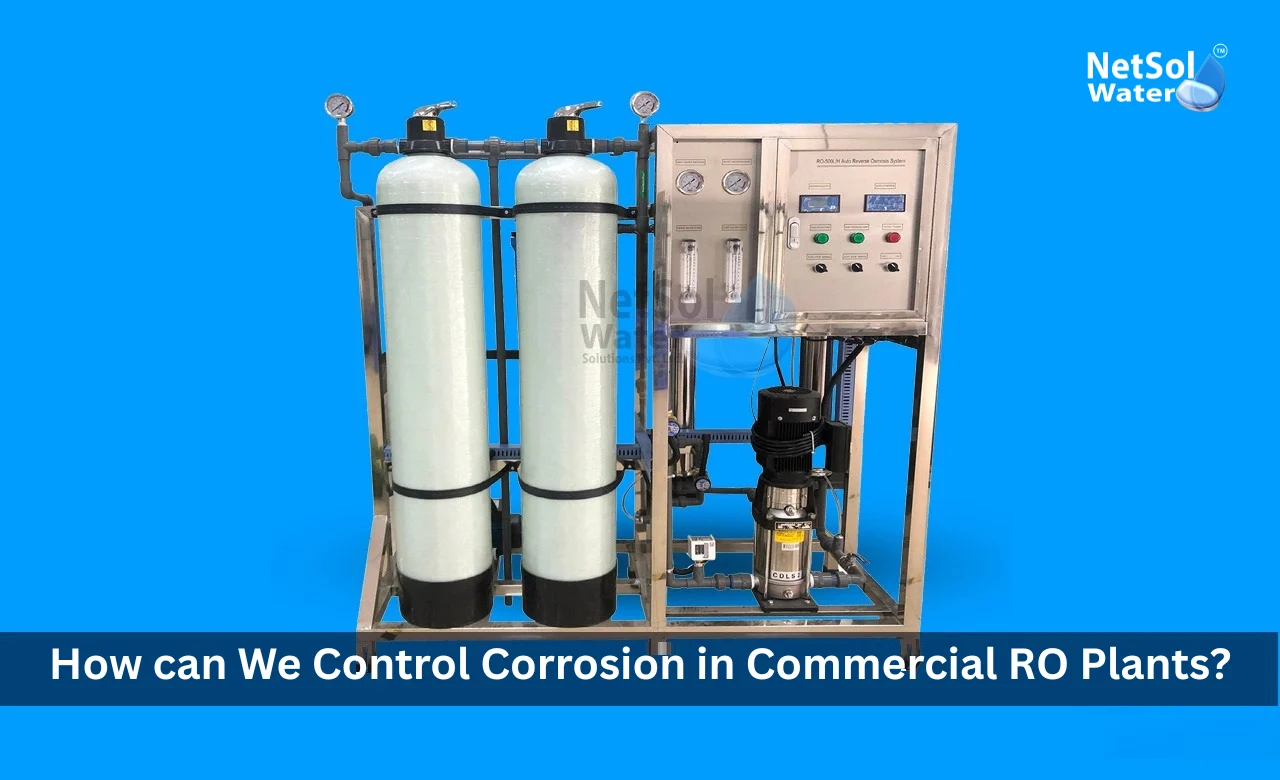
How Can We Control Corrosion in Commercial RO Plants?
In industrial or commercial facilities where there is a daily requirement for clean water, water treatment plants are a key component. As observed in India, water quality varies based on different seasons, and this can pose additional stress on treatment systems. If not handled properly, a commercial RO plant can also suffer internal damage over time when used to remove salts and impurities. The main problem in these systems is the corrosion that affects the pipes, membranes, and metal parts slowly over time.
We are the leading water treatment solution provider and is oriented towards constructing a water treatment system that works in various water conditions. It is crucial that every plant owner understands how to control corrosion in commercial RO plants. Maintenance costs and system life may be decreased, and efficiency may be lost due to corrosion. When managed well, the plant performs well and supplies safe water for many, many years.
Corrosion in RO Systems
The key to solving corrosion problems is understanding corrosion. If the cause and the spread of the issue are not known, it can be hard to control in a commercial RO system. Over time, corrosion hinders the operation of internal components and impacts water quality.
Let’s take a look at some key features of this stage.
1. Causes of Corrosion in RO Plants
RO plants suffer from corrosion because of the chemical composition of water and continuous contact between the metal and water. Reactions within pipes and tanks are higher at high levels of dissolved salts and oxygen. Poor pre-treatment can also let harmful particles into the system. These gradually begin to corrode metal surfaces and form rust or scaling. Over time, this leads to decreased flow efficiency and higher energy consumption. Once operators are aware of these causes, they can take early action to minimise damage.
2. Impact of Corrosion on System Performance
In addition to the damage caused to parts, corrosion also has an effect on the performance of the system. It results in lower pipe flow but higher pipe pressure drop. This causes pumps to exert more force and consume more electricity. In cases of serious corrosion, it may result in leakage and system failure. Corrosion particles will also cause damage to membranes if they make it through to the filtration stage. This results in poorer water quality and higher replacement costs. When a good understanding is developed of these impacts, a good control plan can be built.
Proper Material Selection and System Design
Prevention of corrosion is a key element in material selection and the design of the system. The system is more resistant to chemical reaction if the right materials are used. Let’s take a look at some of the key points of this stage.
1. Use of Corrosion-Resistant Materials
Damage due to water contact can be minimised by using corrosion-resistant materials. RO systems are usually made from stainless steel or high-grade plastics. These materials do not readily react chemically with water chemicals. This helps to minimize rust and extend the life of the system. The material selected depends on water quality and operating conditions, based on engineering decisions. The selection process ensures that the product will be stable for a long time and will require less maintenance.
2. Smart System Layout Design
System layout design also helps in controlling corrosion. There will be less pressure build-up and stagnation if pipelines are designed to have smooth flow paths. Water flow continues without variation and minimizes the potential for sediment buildup. There are also appropriate drainage connections to prevent water from becoming trapped in pipes. This design strategy ensures the internal surfaces remain clean and decreases the likelihood of corrosion in the long term.
Water Pre-Treatment and Chemical Balance
Pre-treatment of water is the first step that can be taken to minimize corrosion. Water that is not treated properly has the potential to cause serious damage to the system in no time. Let’s take a look at some key aspects of this stage.
1. Removal of Harmful Particles
Suspended solids and harmful particles are taken out of the water using pre-treatment. The water is cleaned prior to reaching the RO membrane with the use of filters and softeners. This decreases direct contact between aggressive particles and metal surfaces. The cleaner the water, the fewer chemical reactions will occur within the system, and the more stable the system will be. This is the key factor in preserving protection of the membranes and pipelines.
2. Maintaining Chemical Balance
Proper chemical balance of the water is also important. If pH is too high or too low, corrosion will escalate rapidly. Water chemistry is monitored on a regular basis and treated with safe water chemistry chemicals. This balance minimizes the risk of metal reaction and stabilizes the system components. Appropriate chemical control can ensure a longer plant life for the RO plant.
Regular Maintenance and Monitoring Practices
Regular maintenance and monitoring are important for long-term corrosion control. Even a well-designed system can face damage if it is not maintained properly. Let’s look at some important parts of this stage.
1. Routine Inspection of Components
Routine inspection helps identify early signs of corrosion. Technicians check pipes, valves, and tanks for rust or leakage. Early detection allows quick repair and prevents major damage. Regular cleaning also removes deposits that may cause corrosion. This simple practice helps maintain smooth system performance and reduces repair costs over time.
2. Continuous Performance Monitoring
Continuous monitoring helps track system behaviour during operation. Pressure, flow rate, and water quality are checked regularly. Any sudden change indicates a possible issue inside the system. Operators can take quick action before damage spreads. Monitoring tools help maintain stability and ensure that corrosion does not affect production efficiency.
Use of Protective Measures and Advanced Technology
Protective measures and modern technology provide extra safety against corrosion. These solutions are used to strengthen system durability and improve long-term performance. Let’s look at some important parts of this stage.
1. Application of Protective Coatings
Protective coatings are applied to metal surfaces to reduce direct contact with water. These coatings act as a barrier and prevent chemical reactions. They are especially useful in pipelines and storage tanks. When applied properly, they reduce rust formation and increase system life. This simple method provides strong protection without changing the system design.
2. Use of Advanced Monitoring Technology
Modern RO plants use digital monitoring systems to track corrosion risk. Sensors detect changes in pressure, temperature, and water quality. These systems give early warnings if any imbalance is found. Operators can take immediate action to prevent damage. This technology improves control and ensures that the system runs safely and efficiently.
Read some interesting information for the Effluent Treatment Plant Manufacturer
Conclusion
How can we control corrosion in commercial RO plants? This is an important question for every industry that depends on a clean and safe water supply. Corrosion can slowly reduce system efficiency and increase operating cost if it is ignored. When proper materials, water treatment methods, maintenance practices, and modern protection techniques are used, the system stays stable and performs well for a long time.
Netsol Water is a leading expert in designing and maintaining reliable RO plants for commercial and industrial use. Businesses that want long-term performance and reduced maintenance challenges should focus on proper corrosion control methods. Reach out today to get expert guidance or request a consultation on corrosion control for commercial RO plants, and build a system that delivers consistent and safe water every day.
Contact Netsol Water at:
Phone: +91-9650608473
Email: enquiry@netsolwater.com