
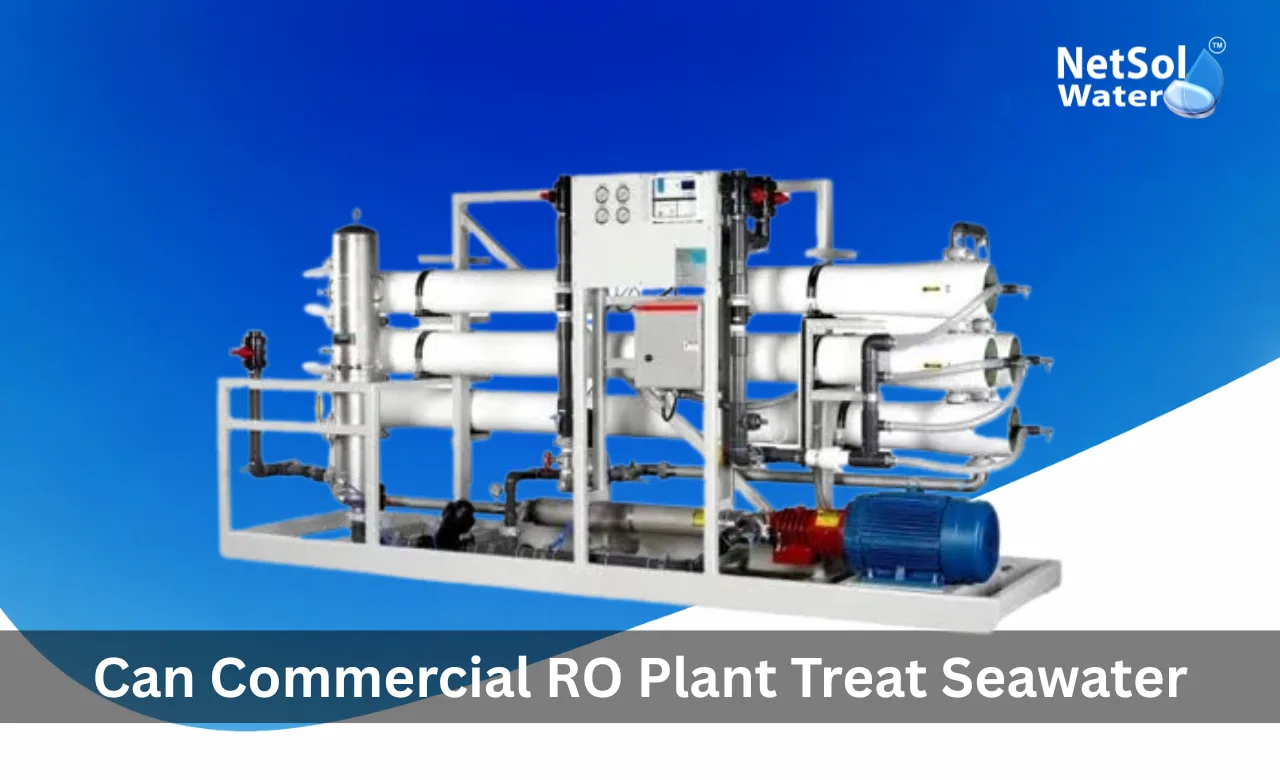
Can Commercial RO Plant Treat Seawater?
In coastal areas, water is a key ingredient of various industries and everyday life. Low availability of fresh water is a serious issue in coastal cities. When seawater is available, it cannot be used as is, because of the impurities and salt that it contains. For industries in coastal regions such as Gujarat, Tamil Nadu, and other coastal areas of India, the search for dependable water treatment solutions becomes important, aiming to transform seawater into potable water. This generates a high demand for knowledge on the ability of advanced treatment systems to treat such high-salinity water.
A large number of industries are looking for the answer to the question, “Can a commercial RO plant be used to treat seawater in a practical and economical manner?” The need for clean water is still increasing with the development of industrial activities in coastal areas. Under these circumstances, companies such as Netsol Water are top suppliers of water treatment solutions, which are helpful for industrial water applications. The use of a commercial RO system significantly contributes to salt and impurity removal; however, a better understanding of technology and system design is needed for seawater treatment.
Seawater Treatment in Commercial RO Systems
It is crucial to understand the interaction between seawater and reverse osmosis systems before assessing performance. Seawater is saltier and has more minerals dissolved in it, making it unsuitable for direct use. The commercial RO system works with high pressure and special membranes to isolate clean water from dissolved solids. But seawater treatment is not so easy due to its high salinity.
1. High-Pressure Requirement for Seawater Filtration
Seawater requires much more pressure than normal groundwater or surface water. This is because there is high resistance to membrane filtration due to the salt concentration. The commercial RO system used for seawater needs to have high enough pressure to force water through special membranes. This pressure is necessary to effectively separate the salt in the system. A continuous flow with stable filtration is maintained by means of high-pressure pumps. This increases the energy requirement of the seawater treatment process, but it is possible with proper system design. Pressure control in a continuous process is crucial to process efficiency.
2. Special Membranes for Salt Removal
Another important factor is the use of seawater-grade RO membranes. These membranes are specially manufactured for greater salt and pressure resistance. They are used to desalinate seawater to produce potable water. Such high salt content could damage standard membranes in a short amount of time. These seawater membranes are designed to have a longer lifetime in extreme conditions and to maintain filtration performance. This is particularly important for industries that rely on coastal water supplies. Choosing the right membranes is crucial for the effective treatment of seawater in a real industrial setting.
Role of Pretreatment in Seawater RO Systems
Pretreatment is a key factor in improving the quality of seawater for reverse osmosis filtration. If not pretreated appropriately, the RO system can suffer from frequent damage and inefficiency. Suspended particles, organic matter, and microorganisms in the seawater have to be removed before reaching the RO membrane. Let’s take a look at some of the important pretreatment processes that can make the system more effective and help a commercial RO plant treat seawater.
1. Filtration and Sediment Removal
The first step in pretreatment is to eliminate sand, dust, and suspended particles in seawater. This is achieved by using filtration systems which ensure that RO membranes do not clog. Unless these particles are removed, they can clog the water flow and make the system less efficient. Good sediment removal provides smooth operation and minimises maintenance requirements. It also helps improve the lifespan of the membrane system by reducing physical damage. This is critical to ensure constant water quality production in commercial systems.
2. Chemical Treatment for Organic Control
Seawater may contain organic matter and biological growth which may impact the membranes’ performance. These impurities are controlled by chemical treatment prior to the water entering the RO unit. This helps inhibit biological fouling and scaling inside the system. It also helps enhance water quality and keep the process in stable operation for long periods of time. The chemical dosing should be optimized to prevent damage to membranes and to be effective in purification. This is an important step to make seawater suitable for the commercial RO process.
Efficiency and Limitations of Commercial RO for Seawater
It is essential to understand the efficiency of the system when assessing seawater treatment systems. A commercial RO system can be used to treat seawater, but there are some disadvantages. These restrictions are primarily connected with energy consumption and maintenance requirements. Let’s take a look at some of the key considerations that make a commercial RO plant suitable, and difficult, for the desalination of seawater for industrial use.
Maintenance and System Durability
The components of seawater are extremely corrosive and can impact system life in the long term. The system must be maintained regularly in order to keep it running smoothly. Depending on usage, membranes must be cleaned and replaced periodically. Maintenance activities help ensure long-term performance and minimize system breakdowns. A clean system can run efficiently for many years even in harsh seawater environments. This shows how crucial service support is for commercial installations.
Industrial RO Systems Using Seawater
Industries in coastal areas have widely used seawater RO systems. These systems assist industries in coping with water scarcity and aid in their operational requirements. Let’s take a look at some of the important applications where treating seawater with a commercial RO plant is an effective solution to industrial requirements.
1. Energy Generation and Production Facilities
Cooling and production processes in power plants and large manufacturing units require a continuous supply of water. Seawater RO systems contribute to this need by converting seawater into potable water. This saves on freshwater consumption and promotes sustainability. These industries are the ones most affected by stable water availability, which allows production to be carried out more efficiently.
2. Coastal Hotels and Resorts
Coastal hotels and resorts rely on seawater treatment systems as well. They need clean water to serve their guests and for their daily activities. RO systems can be used to make seawater potable for general use. This means good hospitality services even in regions with limited freshwater. It also lowers the expenses of transporting water.
Read some interesting information for the Commercial RO Plant Manufacturer
Conclusion
A commercial RO plant can treat seawater effectively if it is designed with the correct technology and the right pretreatment system. It can turn high-salinity water into potable water for industry and commerce. It also needs high pressure and regular maintenance over time to work efficiently. Knowing these factors can help industries make informed decisions prior to installation.
Expert support makes final decision-making easier. So if you are looking to know more about whether a commercial RO plant can treat seawater, or need guidance to select the right RO plant, Netsol Water is the trusted partner you can turn to. Call our staff for professional advice and quality industrial water treatment systems.
Contact Netsol Water at:
Phone: +91-9650608473
Email: enquiry@netsolwater.com