
How Many Types of Sewage Are There?
Sewage affects every town and city and it shapes how people plan water services. We will explain the main types of sewage and why engineers and planners must treat each type with care. We are the leading sewage treatment plant manufacturer, and it offers plants that match each sewage type. Knowing the kinds of sewage helps local authorities and companies choose the right plant and reduce environmental harm.
Domestic Sewage (Sanitary Sewage)
Domestic sewage comes from homes, schools, and small businesses. It carries organic matter and household chemicals. This type of sewage forms the core of what many sewage treatment plant manufacturers designs must handle. Treating domestic sewage protects public health and keeps rivers and lakes safe.
Domestic sewage splits into two clear sub-categories. One sub-part covers water from sinks, showers, and laundry. The other sub-part covers toilet wastes and items flushed down the toilet. Each of these needs a focused approach in the plant design. Systems that work well for one sub-part may need changes to treat the other.
1. Greywater
Greywater comes from sinks, showers, bathtubs, and washing machines. This water contains soap, oils, hair, food scraps, and non-human bodily wastes. Greywater has lower pathogen levels than toilet waste so designers can use simpler treatment steps for many cases. Many households reuse treated greywater to wash floors or to water gardens. A Sewage Treatment Plant Manufacturer must ensure that filters and biological steps remove grease and suspended solids. Next, the plant must reduce organic load so reuse does not harm soil or plants. Greywater systems often include screens, sedimentation tanks, and biofilters. These parts keep solids from clogging pumps and drains. Proper design also keeps odours low and maintenance simple.
2. Blackwater
Blackwater contains toilet wastes that include faeces, urine, and toilet paper. This stream carries more pathogens and more organic load than greywater. Treatment for blackwater aims to remove pathogens and to lower nutrient and organic content before discharge or reuse. A Sewage Treatment Plant Manufacturer uses stronger biological processes and sometimes disinfection to meet health rules. Primary settling tanks remove heavy solids. Secondary biological reactors break down dissolved organics. Final steps focus on disinfection and sludge handling. Sludge must then be treated or handled in safe ways. Blackwater treatment must meet strict limits so public health stays protected. Plant design will include safe access for sludge removal and clear steps to prevent exposure.
Industrial Sewage
Industrial sewage comes from factories and production units and it varies with the industry. Some factories release mainly organic waste that machines and ovens produce. Other plants discharge strong chemicals, heavy metals, or oily wastes. Let us have a look at some common features.
Industrial sewage may contain high suspended solids and high chemical oxygen demand. It may also include toxic compounds that harm simple biological systems. Before sending this water to a municipal plant, many industries apply on-site pretreatment. Pretreatment may remove heavy solids, settle oil, and adjust pH. Some factories use advanced chemical steps to remove heavy metals. Biological reactors then handle the remaining organics when safe. A Sewage Treatment Plant Manufacturer may design equalization tanks to balance flow and load. Equalization helps the biological system to run steadily and safely. In many cases, the plant will include skid-mounted chemical dosing units and clarifiers. For highly toxic streams, the manufacturer will add advanced oxidation or membrane steps. These units reduce hazardous materials to safe levels or prepare them for recovery. The design must also include safe handling of the concentrated residues. Proper monitoring and controls help keep the system within discharge rules and protect worker safety.
Stormwater Sewage (Stormwater Runoff)
Stormwater starts as rain or melting snow and flows over roofs, roads, and pavements. This water does not begin as sewage. It changes into polluted runoff as it picks up oil, road dust, pesticides, and litter. Stormwater can then carry large loads of solids and pollutants into drains and rivers. Cities must plan for heavy pulses of stormwater and for its seasonal patterns. Let us have a look at handling and control methods.
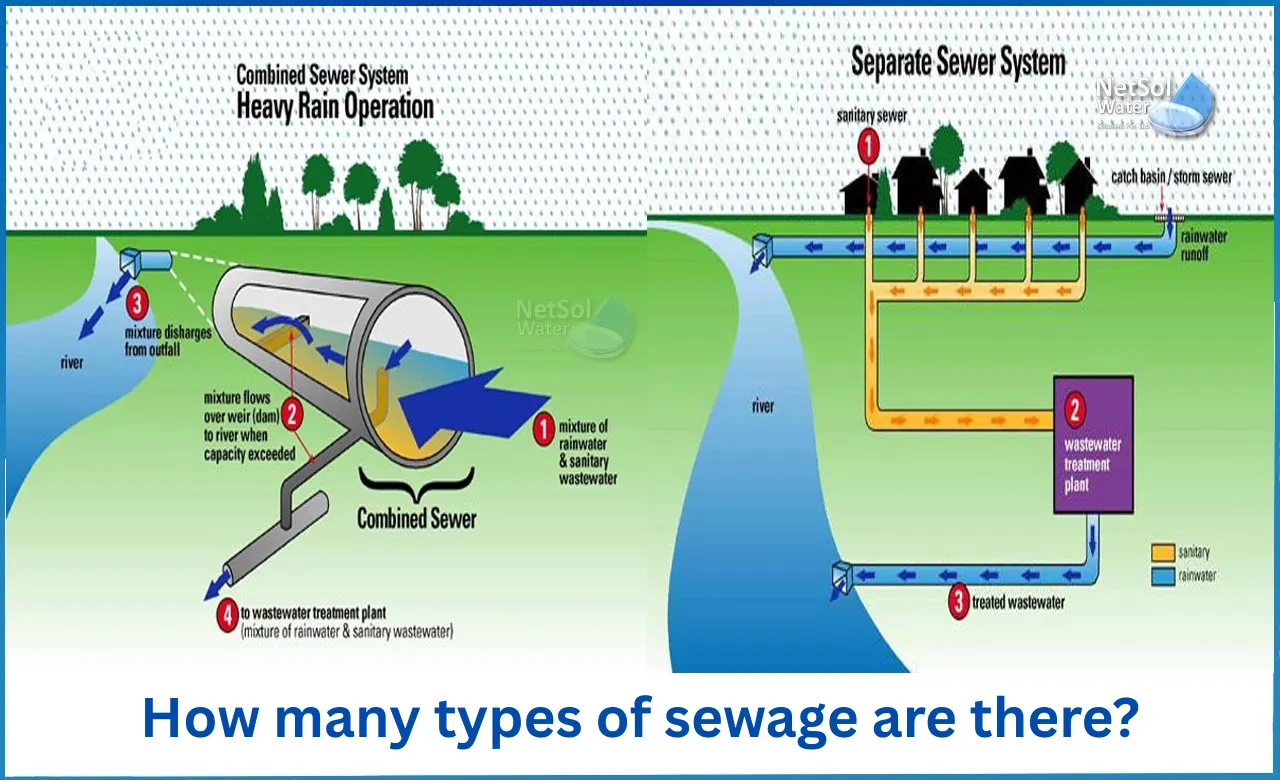
When rain runs off impervious surfaces, it may overwhelm pipes and pumps. A Sewage Treatment Plant Manufacturer may offer stormwater management units that slow runoff and remove solids. These units include basins, filters, swales, and retention ponds. They store water and let sediments settle. They also allow plants to take up some pollutants. For combined sewer systems, the stormwater flows into the same pipes as domestic sewage. That can create overflow events that push untreated sewage into rivers. In that case, cities need combined sewer overflow controls or separate systems to reduce risk. For separate systems, stormwater still needs treatment before it reaches sensitive areas. Designers will use sediment traps, screens, and simple biofilters to cut pollution. The aim is to protect water bodies and to lower the load that reaches the main treatment plant.
Management Systems for Sewage
Cities and towns use different sewer systems to carry sewage to the treatment plant. The choice affects plant design and costs. A sewage treatment plant manufacturer must know which sewer network the client uses.
The separate system uses two pipe networks. One set carries sanitary and industrial sewage. The other set carries stormwater. This design limits how much stormwater reaches the treatment plant. It lowers the risk of overflow during heavy rain. A manufacturer can then size the plant for regular flows. For combined systems, one network carries both sewage and stormwater together. This choice reduces the pipe network but increases peak flows to the plant. Plants in this setup need storage or overflow controls to prevent untreated discharge. The partially separate option mixes some runoff with sanitary sewage while other runoff stays separate. Each approach requires different inlet works, screening, and equalization measures in the plant.
Read some interesting information for the Effluent Treatment Plant Manufacturer in Noida
Conclusion
Knowing the types of sewage helps planners choose the right technology and operation method. Sewage Treatment Plant Manufacturer expertise ensures that each waste stream gets proper handling and that the final discharge meets environmental rules. Netsol Water offers personalized plants to treat domestic, industrial, and stormwater streams and to match local sewer networks. Contact Netsol Water for a site review and a consultation on the best plant for your needs. Request a consultation to secure safe treatment and long-term performance.
Contact Netsol Water at:
Phone: +91-9650608473
Email: enquiry@netsolwater.com