
Which Is the Most Effective Type of Wastewater Treatment?
Water is one of the most significant resources for human life and the growth of industries. All homes and commercial units generate wastewater each day. Untreated discharge of this water can contaminate rivers, lakes, and groundwater. It can also lead to health issues and impact the environment. This is the reason that the treatment of wastewater has become an important aspect of modern development.
A treatment plant removes harmful materials from water and makes it safe to dispose of or reuse. The treatment process varies according to industry and city owing to differences in the quality and quantity of wastewater. To manage water safely and efficiently, a wastewater treatment plant has been installed in most companies. The most successful treatment method will depend on the kind of wastewater and the desired results.
Need for Wastewater Treatment Facilities
Wastewater treatment is an important component in ensuring human health and environmental protection. Water that is not treated chemically contains organic matter, heavy metals, and harmful microorganisms. These pollutants can enter water bodies and impact aquatic life and the humans who rely on those water bodies. That’s the reason correct treatment is crucial for all industries and municipalities.
Let’s take a look at some of the important reasons why wastewater treatment is needed.
1. Water Resources Protection
Fresh water resources are limited, and people have to ensure their preservation for future generations. Untreated wastewater contaminating rivers and lakes degrades water quality and renders the water unsafe. Treatment processes eliminate contamination and help maintain clean water resources.
2. Public Health Protection
Bacteria, viruses, and other disease-causing organisms are commonly found in wastewater. When people drink contaminated water, they may develop a variety of health problems. When treated properly, these harmful substances can be eliminated and health risks minimized.
3. Compliance with Environmental Standards
Discharge standards are very strict and are set by governments to ensure environmental protection. Wastewater from industries and municipalities needs to be treated before it is disposed of. An adequately sized and designed wastewater treatment plant can assist a company in complying with these standards without causing damage to the environment.
Methods of Wastewater Treatment
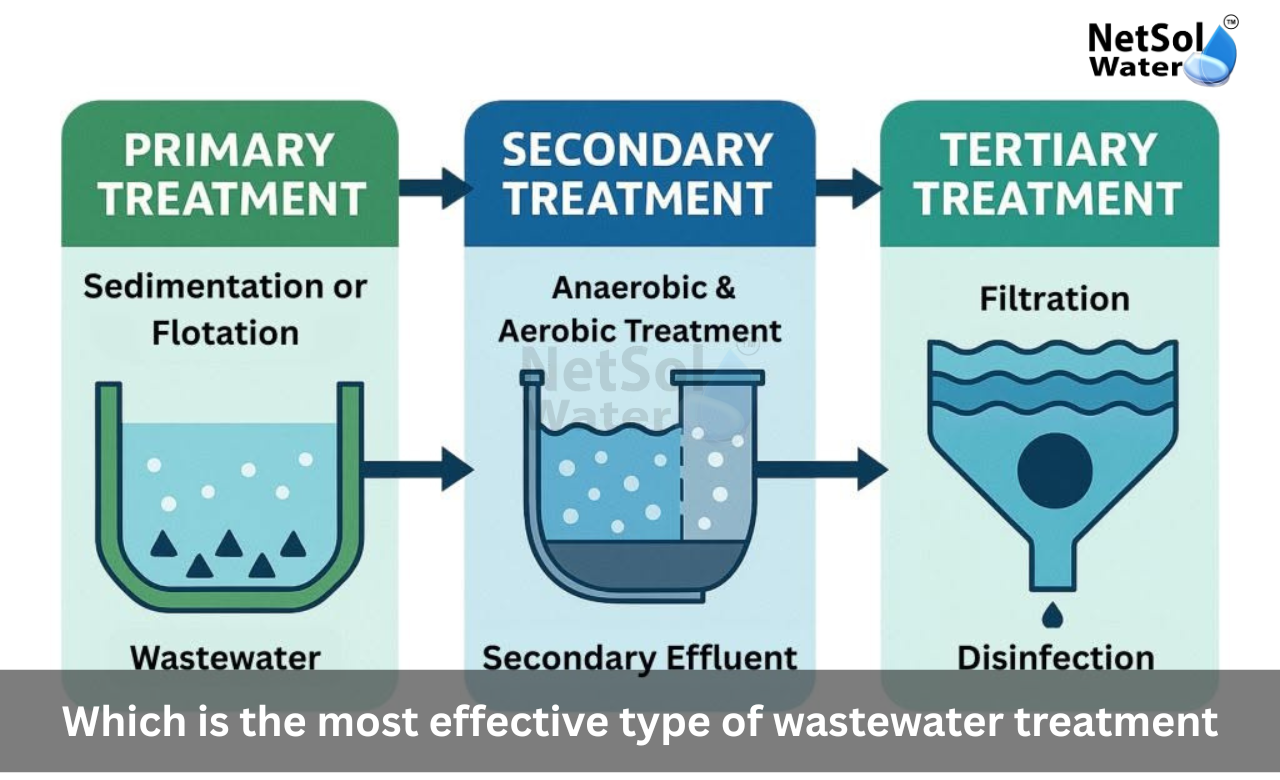
There are three main types of wastewater treatment methods. Each serves a particular purpose, and a treatment method can be more or less effective depending on the pollutants present in the water. For organic wastes, some methods are more effective than others suited to chemical and dissolved materials.
Let’s take a look at these wastewater treatment methods.
1. Primary Treatment
Primary treatment is the first of the series of treatment processes. It is used to filter out large solid objects from wastewater. Typically, screening and sedimentation are part of the process. Heavy particles sink, and floating particles are removed from the surface.
Primary treatment reduces the amount of suspended solids in wastewater. However, it cannot remove dissolved pollutants and microorganisms. Due to this limitation, industries and municipalities employ other treatment technologies after this point.
2. Secondary Treatment
Secondary treatment deals with the removal of organic matter from wastewater. This process basically involves the degradation of pollutants by microorganisms, which remove pollutants naturally. This treatment is often achieved in an activated sludge system or trickling filter.
This process consumes a great quantity of organic contaminants and enhances water quality. This is the method employed by many municipal treatment plants, where it provides good performance and reduced operating costs. Even at this stage, some of the contaminants in the water may not be completely removed.
3. Tertiary Treatment
Tertiary treatment is used to remove the last of the contaminants. This process can eliminate nutrients, dissolved solids, and harmful microorganisms. In this step, filtration membrane systems and chemical treatment methods are used.
Tertiary treatment yields high-quality water which can be utilized for industries, irrigation, and other uses. Many modern facilities have adopted such water treatment systems due to the need for water reuse.
Which Treatment Method Is the Best?
When selecting the most suitable treatment process for wastewater, it is essential to consider the treatment objectives and wastewater properties. There is no single treatment that will address all types of wastewater. Different industries emit different pollutants, and there is a different solution for each scenario.
Let’s take a look at some of the factors that affect the effectiveness of a treatment method.
1. Nature of Wastewater
Chemicals, oils, and heavy metals are frequently found in industrial wastewater. Domestic wastewater contains organic matter and microorganisms. Even a successful treatment process for one type of wastewater could be unsuccessful for another. Knowledge of the characteristics of wastewater assists in choosing an appropriate system.
2. Treatment Objectives
Some facilities require water for safe discharge, while others require water to be reused. For water reuse, more advanced treatment methods are required which produce better-quality water. In many cases, this makes tertiary treatment more effective.
3. Operating and Maintenance Requirements
High operational difficulty should be avoided when using a treatment system. Certain sophisticated systems can only be operated and maintained by trained operators. Long-term performance and efficiency are achieved through proper planning.
Importance of Advanced Wastewater Treatment Technologies
Saving water and protecting the environment is a growing demand for modern industries. Current circumstances have spurred the development of new treatment technologies. These technologies are more effective and promote sustainable water use.
Let’s take a look at some of the advanced technologies that have transformed the wastewater treatment industry.
1. Membrane Filtration Systems
Membrane filtration uses special barriers to separate contaminants from water. Some of the most common applications of this technology are RO and ultrafiltration. These systems are used to eliminate dissolved salts, bacteria, and fine particles from wastewater.
Membrane systems are used in many industries due to the very high quality of water they produce. Treated water can often be reused in production processes, which reduces freshwater consumption.
2. Biological Nutrient Removal
This process eliminates nitrogen and phosphorus from wastewater. Excessively high levels of nutrients can create a serious environmental problem. These compounds can be removed by biological processes that utilize microorganisms, enhancing water quality.
3. Disinfection Technologies
Disinfection eliminates any microorganisms that survive the treatment. Common disinfection processes include chlorination, UV, and ozone treatment. These processes make water safer for reuse and discharge.
Many wastewater treatment plants have adopted advanced technologies to improve performance, allowing industries to implement sustainable water management.
Read some interesting information for the Sewage Treatment Plant Manufacturer in Gurgaon
Conclusion
Effective water treatment is a solution that protects water resources and public health while helping industries comply with water standards. Wastewater problems have no single solution, as there are several ways of treating different types of wastewater.
When it comes to picking the right wastewater treatment plant, it is essential to plan and understand the technical aspects. When it comes to water treatment solutions, it’s important to partner with professionals who have the expertise to deliver efficient and sustainable results.
Netsol Water is a top name in the industry for supplying advanced wastewater treatment solutions for various industries and applications. Don’t wait — reach out to the team today to understand how they can help you get the wastewater treatment plant you need, and take a significant step towards improved water management.
Contact Netsol Water at:
Phone: +91-9650608473
Email: enquiry@netsolwater.com