
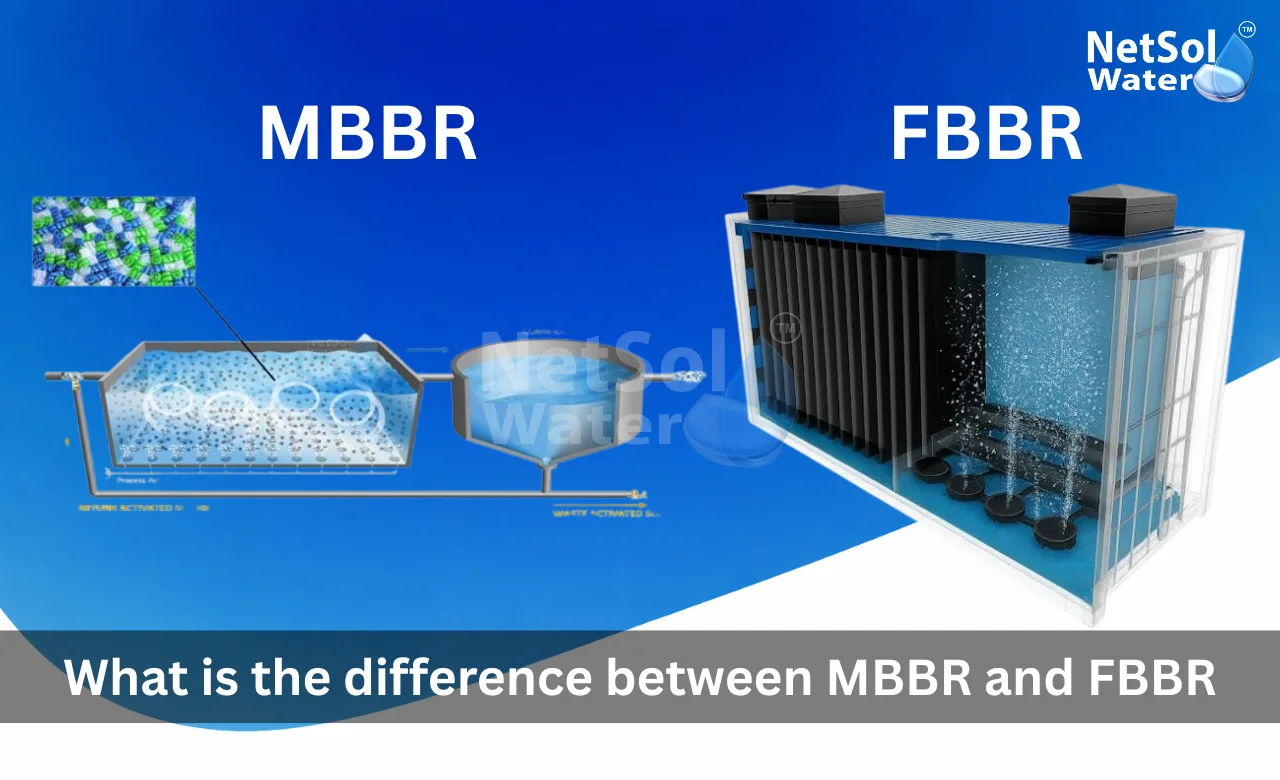
What Is the Difference Between MBBR and FBBR?
Industries and cities produce large amounts of wastewater every day. This wastewater contains harmful materials that can damage rivers, lakes, and underground water if people do not treat it properly. Because of this, many industries and municipal bodies use advanced biological treatment systems to clean water before discharge or reuse. Two of the most common treatment technologies are MBBR and FBBR.
Understanding the difference between these two technologies helps industries select the right treatment plant for their needs. The choice of a suitable treatment process affects operating cost, treatment efficiency, and maintenance requirements. We are the leading company in water and wastewater treatment solutions and provide advanced systems for different industrial requirements.
Working Principle of MBBR and FBBR
Wastewater treatment systems depend on microorganisms that break down organic pollutants. Both technologies use biological activity, but they work in different ways. Let’s take a look at some important aspects of their working principles.
1. How MBBR Works
The Moving Bed Biofilm Reactor, or MBBR, uses specially designed plastic carriers that move freely inside the treatment tank. These carriers provide a large surface area where microorganisms grow and form a biofilm. Air or mechanical mixing keeps the carriers in continuous motion. This movement allows microorganisms to come into contact with wastewater and remove organic pollutants.
The process provides stable treatment because the biofilm remains attached to the carriers. It also reduces the need for sludge recycling and makes the operation simpler. MBBR systems can handle changes in wastewater load and maintain treatment efficiency even when the incoming wastewater quantity changes.
2. How FBBR Works
The Fluidized Bed Biofilm Reactor, or FBBR, also uses media for microbial growth, but the media remain suspended through an upward flow of water and air. The small particles move in a fluidized condition and create a large area for bacterial activity.
The continuous movement improves the contact between wastewater and microorganisms. This process allows the reactor to achieve high treatment efficiency within a smaller tank size. FBBR systems often treat wastewater with high organic loading because they can support a large population of microorganisms.
Design and Operational Differences Between MBBR and FBBR
The design of a wastewater treatment plant plays a major role in its performance and operating cost. Industries should understand these differences before making an investment decision. Let’s take a look at some important design and operational factors.
1. Reactor Configuration
An MBBR system uses floating plastic media that occupy a portion of the treatment tank. Aeration keeps these carriers moving and prevents clogging. The design remains simple and easy to manage.
An FBBR system uses smaller media particles that stay suspended by the upward flow of wastewater and air. This arrangement requires better hydraulic control because the media must remain fluidized during operation.
2. Energy Requirement
MBBR systems consume moderate energy because aeration mainly keeps the carriers moving and provides oxygen to microorganisms. The process remains energy-efficient for many industrial applications.
FBBR systems may consume slightly higher energy because maintaining the fluidized condition needs proper water flow and aeration. The energy requirement depends on the type of wastewater and reactor design.
3. Maintenance Requirement
MBBR systems need less maintenance because the media do not clog easily and the process remains stable. Operators can manage the system without frequent adjustments.
FBBR systems require more process monitoring because improper flow conditions can affect media suspension and treatment efficiency. Regular monitoring helps maintain stable performance.
Treatment Efficiency and Application Areas
Treatment efficiency is one of the most important factors when selecting a biological treatment process. Different industries produce different types of wastewater, and each process offers certain advantages. Let’s take a look at some important treatment applications.
1. Organic Load Handling Capacity
MBBR systems perform very well in municipal sewage treatment and in industries that experience changing wastewater loads. The biofilm on the moving carriers provides good resistance against shock loading conditions.
FBBR systems can handle very high organic loads because the fluidized media support a larger concentration of microorganisms. This makes them suitable for industries that generate highly concentrated wastewater.
2. Space Requirement
MBBR systems require moderate space because the treatment tanks are larger than FBBR reactors in some applications. However, the system remains compact compared with conventional activated sludge systems.
FBBR systems usually require less space because they achieve high treatment efficiency within a smaller reactor volume. Industries with limited land often prefer this technology.
3. Industrial Applications
MBBR technology is widely used in municipal sewage treatment plants, food processing industries, pharmaceutical industries, and commercial complexes. The system offers flexibility and stable operation.
FBBR technology is commonly used in chemical industries, petrochemical plants, and industries with high-strength wastewater. The process provides high treatment performance in demanding conditions.
Which Technology Should You Choose?
Selecting the correct wastewater treatment technology depends on several factors. Industries should examine wastewater characteristics, available space, operating cost, and treatment objectives before making a final decision. Let’s take a look at some important considerations.
1. When to Choose MBBR
Industries that need a simple and flexible treatment process often select MBBR technology. The system performs well under changing conditions and requires less operational attention. It also suits facilities that want easy expansion in the future.
2. When to Choose FBBR
Industries with high organic loading and limited installation space may prefer FBBR technology. The system offers high treatment efficiency and supports a large microbial population. However, it requires proper process control and experienced operation.
Both systems provide excellent biological treatment, and the final choice depends on the specific requirements of the wastewater treatment plant.
Read some interesting information for the Commercial RO Plant Manufacturer in Gurgaon
Conclusion
Understanding the difference between MBBR and FBBR helps industries make better decisions for wastewater management. Both technologies use biological treatment methods, and both deliver excellent results when designed properly. MBBR offers operational simplicity and flexibility, while FBBR provides high treatment efficiency in compact spaces. The selection of a suitable process should depend on wastewater characteristics, treatment goals, and operating conditions.
Netsol Water is a leading provider of advanced water treatment solutions and offers expert guidance in selecting the right system for every industry. If you want to know more about MBBR and FBBR, or need a suitable wastewater treatment solution for your facility, you can get in touch with our experts and request a consultation for the best treatment plant.
Contact Netsol Water at:
Phone: +91-9650608473
Email: enquiry@netsolwater.com