
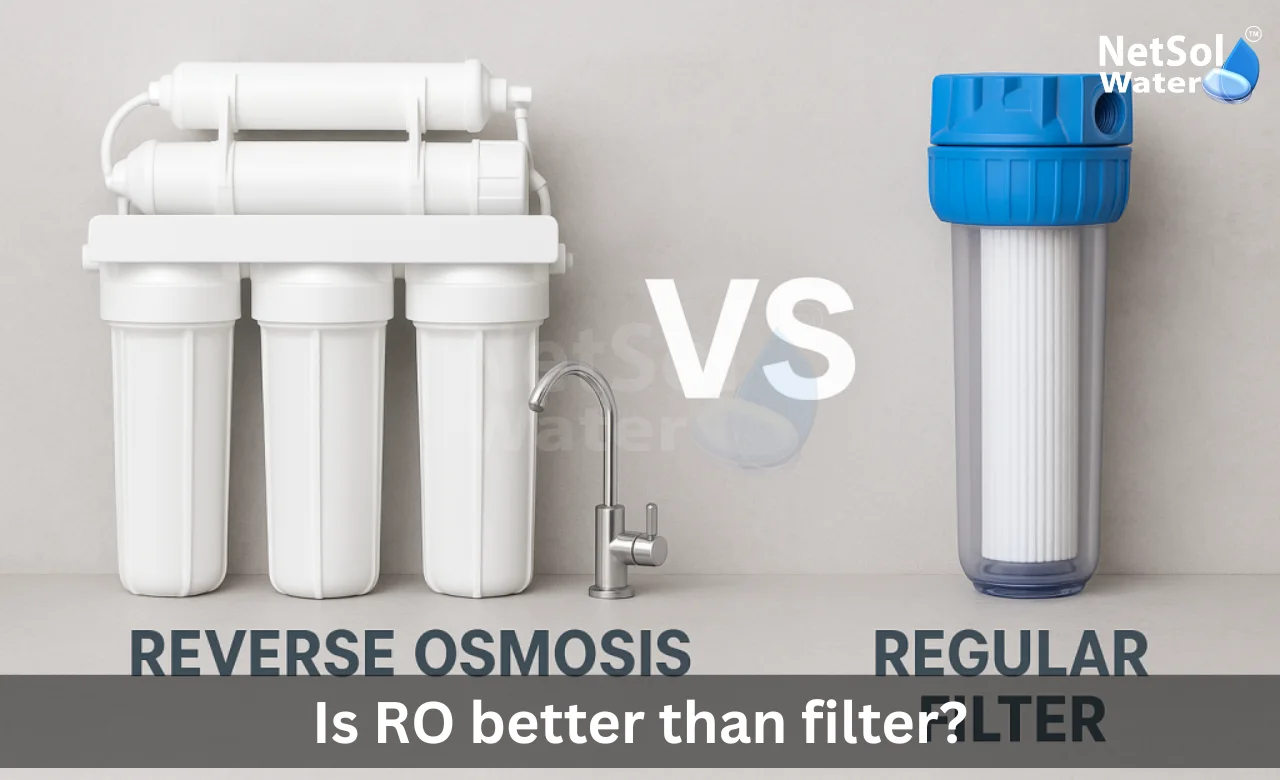
Is RO better than a filter?
Water is not the same in every place. Some water looks clear but still carries salts and dissolved impurities. Some water only needs germ control. That is why the answer to “Is RO better than a filter?” depends on the source water and on the level of treatment you need. We are the leading industrial RO plant manufacturer, and we often see that people choose a system only by name and not by water quality. That can lead to poor taste, low output, or even extra cost.
RO or reverse osmosis, gives deep purification. A normal filter such as UF or UV works in a simpler way and suits cleaner water. One is not always better than the other. The right choice depends on TDS, hardness, bacteria, and the kind of water source you use.
When RO Is Better
RO becomes the better choice when water carries a heavy load of dissolved solids. This is common in borewell water, tanker water, and water affected by industrial runoff. In such cases, a simple filter cannot do the full job because it only treats a limited type of impurity. RO uses a semi-permeable membrane that blocks dissolved salts, heavy metals, and many harmful chemicals. That makes it a stronger and more complete solution for difficult water conditions.
1. High TDS and Hard Water
High TDS means the water contains a large amount of dissolved matter. This may include salts, minerals, and other unwanted substances. When TDS rises above 300 ppm, RO usually becomes more useful. Hard water also creates issues because it carries more calcium and magnesium. These minerals can cause scale on pipes, kettles, and machines. In homes, they affect taste and in industries, they can disturb operations and damage equipment.
RO helps in such cases because it removes a large share of these dissolved substances. The water becomes cleaner, lighter, and safer for regular use. This is why many commercial units and factories prefer RO for process water. An experienced industrial RO plant manufacturer studies the source water first and then selects the right membrane and stage design. That approach gives better results than a general water filter. When water is too hard or too salty, a basic filter may only improve taste while RO actually improves water quality at the source.
2. Deep Purification for Mixed Contaminants
RO does more than remove visible dirt. It works on dissolved contaminants that ordinary filters cannot catch. It can reduce heavy metals such as lead, arsenic, and mercury. It can also reduce fluoride, nitrates, and several other dissolved chemicals. That is a major reason why RO is often chosen for borewell water and areas where water quality changes often.
The membrane in RO has very tiny pores. It allows water molecules to pass while blocking most unwanted dissolved material. This creates a deeper level of purification than UV or UF alone. UV can kill germs and UF can trap larger particles. But neither one removes dissolved salts in the same way RO does. That is the key difference. So when water quality is poor or unknown, RO gives more control and better safety. For families and businesses that depend on dependable water quality, this extra purification can matter a lot.
When a Filter Is Better
A standard filter can be the better choice when the water is already fairly clean and only needs disinfection or light purification. This is common with pre-treated municipal water that has low TDS and a decent taste already. In such cases, RO may remove more than needed. It may also waste water and take away useful minerals that the water already contains. A UV or UF system can keep the process simple and effective.
1. Best for Low TDS Water
When water has TDS below 300 ppm, a standard filter often gives enough protection. If the main problem is germs, then UV works well because it kills bacteria and viruses. UF also helps by blocking fine particles and microbes without changing the mineral content too much. That is useful when the water already tastes good and does not carry heavy dissolved salts.
In these conditions, RO can be more than required. It may make the system more costly to run without giving a clear extra benefit. A filter can do the job more efficiently and keep the water closer to its natural form. That is why many users in cities choose UV or UF for regular tap water. They want safe water without unnecessary treatment. In this way, the simpler system can actually be the smarter one.
2. Less Waste and Better Mineral Retention
One of the biggest differences between RO and a standard filter is water wastage. RO systems usually waste a portion of incoming water during the purification process. In many cases, two to four gallons may go to drain for every one gallon of purified water. That is a major point to consider when water shortage matters.
Standard filters do not waste water in the same way. They also do not remove healthy minerals like calcium and magnesium. That makes them attractive for people who want disinfection without changing the natural balance of the water too much. UF systems also work without electricity while UV systems need power only for the light source. So the running cost can stay lower than RO. For this reason, filters suit homes and buildings that receive treated municipal water and only need a final safety step. In such cases, a filter may be the better and more practical answer.
Comparison
The difference between RO and a filter becomes clear when you compare their core function. RO removes dissolved salts and many chemical impurities. A UV or UF filter mainly handles germs and suspended particles. RO needs electricity and creates wastewater. A standard filter uses less power and does not waste water. RO works better when TDS is high. A filter works better when TDS is already low.
This is why the right choice depends on water quality and not on brand name alone. A system that suits one home may not suit another. An industrial RO plant manufacturer usually begins with a water test because that is the only way to know whether RO is needed or whether a simpler filter will do enough. In many modern setups, people use RO plus UV plus UF together with a TDS controller. That gives deeper purification while keeping some useful minerals in the final water. It is a balanced solution when source water is mixed or inconsistent.
Read some interesting information for the Effluent Treatment Plant Manufacturer in Gurgaon
Conclusion
The right water system should match the water you actually use. RO is better when the water carries high TDS, hardness, heavy metals, or chemical contamination. A standard filter is better when the water is already clean enough and only needs germ control. Both systems have a place and both can serve well when chosen for the right reason.
Netsol Water supports users who need clear guidance before they invest in a system. As a trusted industrial RO plant manufacturer, we help clients choose a solution based on water quality, use pattern, and long-term performance. If you are comparing RO and filter options for your home, business, or plant, then the best next step is to study your water first. For more details or to request a consultation, please get in touch with Netsol Water and choose the plant that fits your real need.
Contact Netsol Water at:
Phone: +91-9650608473
Email: enquiry@netsolwater.com