
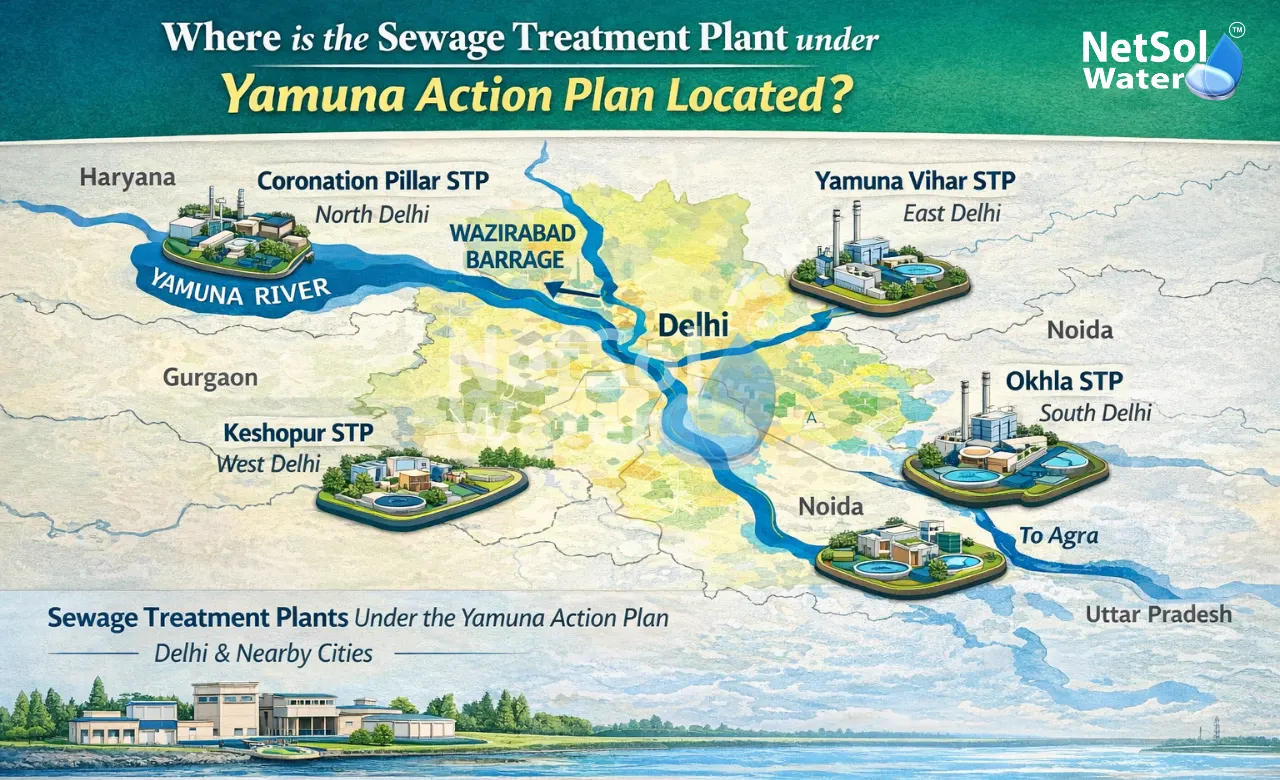
Where is the Sewage Treatment Plant Under Yamuna Action Plan Located?
The Yamuna Action Plan aims to reduce pollution in the Yamuna River and to improve water quality for people along its banks. Under this plan, several large sewage treatment plants operate to catch and treat wastewater before it reaches the river. The main concentration of new work sits in Delhi under Phase III. This work includes big projects that serve millions of residents and that set new standards for treated water quality. We stand as a leading name in the market as a sewage treatment plant manufacturer and as a supplier that many public and private clients consider for custom solutions.
Primary YAP-III Locations in Delhi
The YAP Phase III design targets three key drainage zones in the capital to intercept sewage before it flows into the Yamuna. The plan brings together large-scale plants and smaller local plants to balance capacity with local access. Authorities aimed to meet strict effluent standards so treated water can cause less harm downstream. The work on these sites includes new construction, upgrades, and pipeline links that move treated water away from the river. Below we look at the main plants and the role each one plays in keeping the Yamuna cleaner.
1. Okhla Sewage Treatment Plant
The Okhla plant serves a large part of the city and it stands as the biggest single package in the Phase III works. The combined new capacity at Okhla reaches into the hundreds of millions of litres per day. This scale allows the plant to treat wastewater from south, central, and old parts of the capital. The upgrade brings modern membrane and biological systems that aim to get BOD and TSS down to the strict limits set by regulators. The project also ties into energy recovery from sludge and into reuse projects that supply treated water for non-potable uses. The Okhla scale and its role in flow augmentation make it a keystone in the effort to improve river health.
2. Kondli Sewage Treatment Plant
Kondli handles sewage from east sectors of the city and from older settlements that drain into the Kondli channel. The plant capacity sits in the low hundreds of million litres per day range. Its role covers both treatment and diversion to keep untreated flows from reaching the river. Kondli uses a mix of biological and mechanical treatment steps that can adapt to changing loads. The site links to monitoring systems that report treated quality in near real time. This setup helps managers spot problems quickly and protect downstream water users. The Kondli works form a key defence against raw sewage entering the Yamuna from east Delhi drains.
3. Rithala Sewage Treatment Plant
Rithala serves the north and north-west parts of the city, including major residential and industrial catchments. The plant has moved through upgraded phases to meet tighter standards for effluent quality. The upgrades aim for very low BOD and suspended solids so treated water does less harm when it enters natural channels. Rithala also helps cut the load on downstream systems by taking treatment capacity closer to where the sewage originates. The plant plays an important role in the network that prevents pollution from the Najafgarh drain and from other major drains that feed the Yamuna.
4. Coronation Pillar Sewage Treatment Plant
This new plant stands as one of the large, modern additions in the northern part of the city. The Coronation Pillar facility treats hundreds of million litres per day and it uses advanced filtration systems. Its design includes membrane filtration and automated controls so operators can maintain steady treated quality. The treated outflow travels in rising mains to release points that keep raw sewage away from the river bank. Coronation Pillar combines treatment scale with technical controls to meet regulatory targets and to reduce foul events in the river.
Historical and Regional Locations Along the Yamuna
The Yamuna Action Plan must work across states. Pollution comes from many towns and cities along the stream. Authorities therefore placed plants in upstream and downstream towns to cut the load in stages. The project mixes large central plants with decentralised plants to reach smaller drains and to treat local flows close to the source. This approach aims to reduce pollution in the lower reaches and to protect culturally important sites that sit on the river banks. We will look at the main state-level clusters and the rollout of small, decentralised plants in fringe areas.
1. Haryana Towns and STP Work
Several towns in the Haryana stretch of the Yamuna now host treatment works. Places such as Sonepat and Panipat have projects that treat urban wastewater before it reaches the main river. The work in this state focuses on reducing the raw load from industrial and domestic sources. Local plants also help towns meet public health goals by improving local sanitation. The regional plants in Haryana link to larger networks so treated water does not return to the river in an untreated form. These projects reflect the multi-state nature of the river problem and they support the capital-level upgrades by cutting flow that would otherwise increase pollution.
2. Uttar Pradesh Towns and Downstream Action
Downstream of the capital, the lower reaches pass by cities like Agra, Mathura, and Vrindavan. These towns sit at important cultural sites and they draw tourists who depend on cleaner river conditions. STPs in these areas focus on both sewage and on flows from pilgrimage and tourist activity. The aim is to limit untreated discharge that harms bathing ghats and local fish stocks. Authorities also plan reuse where treated water assists local needs so less fresh water is withdrawn from the river. These steps work with the northern and central projects to give the river a better chance to recover.
3. Decentralised STPs in Southwest City Pockets
Alongside the large plants, the plan supports smaller, decentralised plants in local areas such as Jaffarpur, Galibpur, Khera, Dabar, and Hasanpur. These smaller units treat wastewater close to where it starts so raw sewage does not travel long distances in open drains. The decentralised plants use compact technologies that suit local space and load conditions. They allow fast deployment and local control. The presence of these plants reduces load on the big central plants and gives managers more options to meet quality limits across the whole system.
Read some interesting information for the Industrial RO Plant Manufacturer in Gurgaon
Conclusion
Clean river work needs both large central plants and smaller local plants. A balanced network gives managers the capacity to treat very large flows while also closing gaps where local drains send raw sewage into the river. Netsol Water stands out as a sewage treatment plant manufacturer that can provide both large solutions and custom decentralised units. If you need help choosing a sewage treatment plant, or if you want a consultation about a custom STP design, please get in touch. We can review your needs and propose a plant that fits your site and your targets. Contact us to request a consultation and to learn more about options for treated water reuse and for meeting regulatory limits.
Contact Netsol Water at:
Phone: +91-9650608473
Email: enquiry@netsolwater.com