
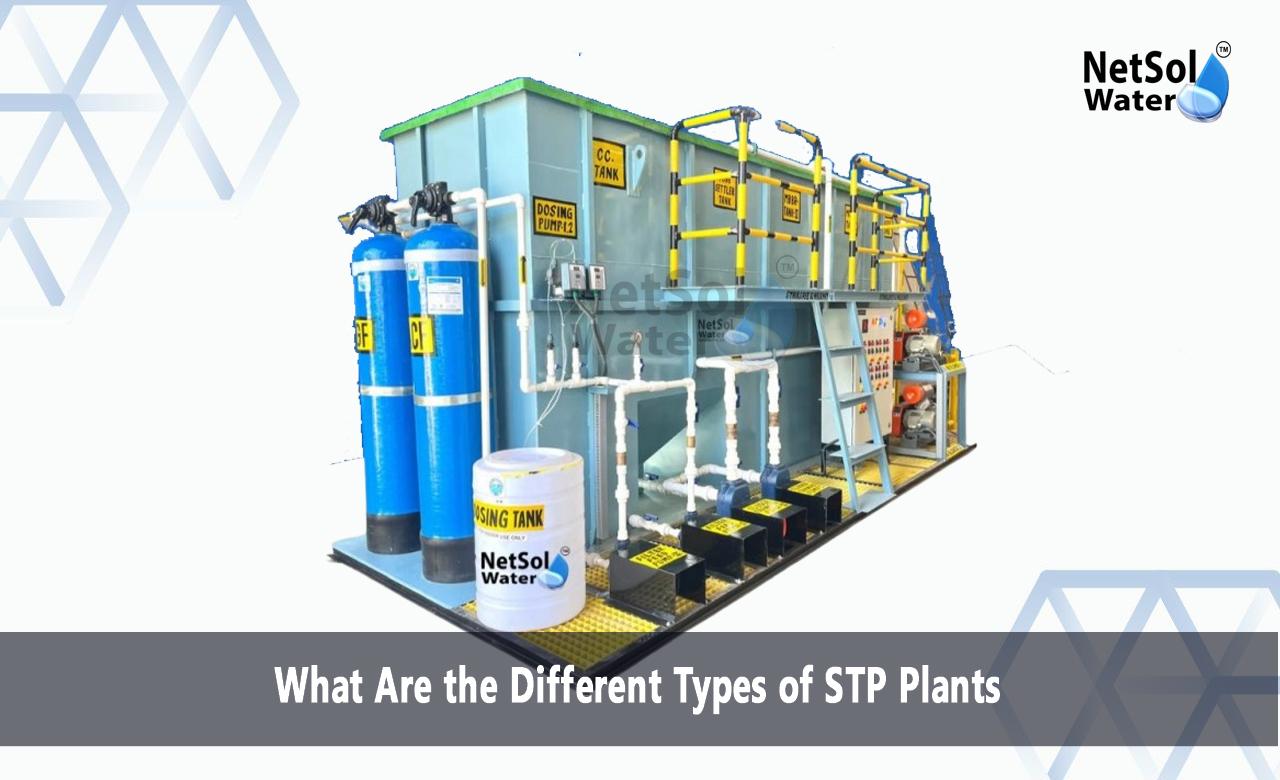
What are the different types of STP plants?
Sewage affects health and environment in equal measure, and good treatment makes a strong difference. We will explain the main types of sewage treatment plants. For industries and cities that must manage wastewater, the choice of plants determines costs, space, and future reuse options. As a reliable partner in design and delivery, we stand as a leading sewage treatment plant manufacturer and offer solutions across technologies.
Activated Sludge Process (ASP)
The activated sludge process offers a standard route for biological removal of organic matter. This approach uses aeration and a mix of microbes that form flocks to digest pollutants. Facilities choose this process when they have steady flow and space for tanks and blowers. Let us have a look at some key points and the operation of this method.
1. How it works
In this system, wastewater moves to an aeration tank where oxygen enters the water and microbes feed on organic matter. The mixed liquor then flows to a settling tank where the microbial flocks settle as sludge. The settled sludge returns in part to the aeration tank to keep the microbial population steady, while the excess sludge leaves the plant for further handling. This cycle removes organic load and reduces biochemical oxygen demand so the final water meets required standards.
2. Advantages and applications
The ASP works well for municipal plants and for industries that have constant wastewater strength and flow. The method handles fluctuations to some degree and scales from small to very large systems. Operators can tune aeration time and sludge return to meet effluent targets. The system also allows nutrient removal steps to be added when nitrogen or phosphorus limits apply. The capital cost remains moderate, while the operating cost depends on energy use for aeration and on sludge disposal needs.
Moving Bed Biofilm Reactor (MBBR)
The MBBR brings efficiency in a compact format by using carrier media that float in the tank and support biofilm growth. This method fits sites that need a small footprint and stable performance. Let us have a look at some core features.
1. How it works
MBBR tanks hold millions of small plastic carriers that provide surface area for bacteria to attach and form biofilm. The wastewater flows through the tank while aeration or mixing keeps the carriers moving. Biofilm on the carriers digests organic matter, and the treated water then proceeds to a clarifier or to a membrane step for polishing. The carriers avoid clogging, and they maintain treatment even when flows vary.
2. Advantages and applications
MBBR suits retrofit projects and plants with limited land. The system reduces the need for large clarifiers, and it offers resilience when the load varies. Maintenance focuses on keeping carriers in good condition and on controlling solids that leave the system. MBBR works well for municipal plants, for hotels, and for small industrial units that want low-footprint solutions.
Sequential Batch Reactor (SBR)
SBR treats wastewater in a single tank by running a sequence of steps in time. The system handles changes in flow with less space than continuous flow plants. Let us have a look at where SBR fits best.
1. How it works
An SBR runs in cycles that include fill, react, settle, decant, and idle periods. Operators control the length of each phase to shape treatment outcomes. During react, the microbes act on organics, during settle, solids separate, and during decant, the clear supernatant moves out. The same tank does all steps, so the plant design stays simple and flexible.
2. Advantages and applications
SBR works best where flow varies by hour or by day. The batch mode allows the operator to change cycles for stronger or weaker wastewater without physical changes to equipment. The plant needs fewer tanks, and it fits sites that must meet strict effluent targets with changing loads. Maintenance stays straightforward, and control systems can automate the cycle to reduce the need for constant supervision.
Membrane Bioreactor (MBR)
MBR merges biological treatment with membrane filtration to produce very clean effluent that can be reused. This approach suits projects that must meet high water quality or that plan to recycle treated water. Let us have a look at some key design points and typical uses.
1. How it works
An MBR places membranes after or within the biological reactor so that solids and most pathogens remain behind. The membranes act as a barrier, and the treated water passes through the pores. The membrane step replaces or trims the need for large clarifiers, and it yields low-turbidity water that stands ready for reuse in irrigation, cooling, or some industrial processes.
2. Advantages and applications
MBR gives high-quality effluent in a relatively small footprint. The system costs more in capital and needs careful operation to avoid fouling. Operators perform regular cleaning and monitoring of transmembrane pressure. For hospitals, hotels, and industrial plants that want high reuse potential, MBR often proves the best choice even when the initial cost sits higher than simpler systems.
Rotating Biological Contactor (RBC)
RBC uses a series of rotating discs that host a biological film and that pass through wastewater as they turn. This method offers gentle energy use and steady treatment for small to medium flows. Let us have a look at some mechanical and performance aspects.
1. How it works
RBC units mount discs on a shaft and submerge part of each disc in wastewater. The discs rotate slowly so biofilm grows on the wet surface and gains access to oxygen when the film emerges from the water. The rotation balances exposure to air and to wastewater so the microbes digest organic matter in a stable way. Spent biofilm sheds off, and the solids move to a settling step.
2. Advantages and applications
RBC suits municipal plants in small towns and light industry streams. The equipment uses less energy than full aeration systems, and it needs less operator attention. The system handles steady flows well, and it keeps maintenance simple when accewaterss to discs and to bearings remains clear.
Upflow Anaerobic Sludge Blanket (UASB)
UASB provides an anaerobic route that treats high-strength wastewater while creating biogas. The process reduces sludge output, and it can offset energy needs with methane. Let us have a look at its anaerobic reaction and common uses.
1. How it works
Wastewater enters the UASB from the bottom and passes upward through a dense sludge bed. Microbes in the bed work without oxygen, and they break down organic matter to biogas while forming granular sludge. Gas lifts and carries particles to separators, and the clarified liquid leaves the top of the reactor. The produced biogas moves to a flare or to a generator for energy use.
2. Advantages and applications
UASB fits high-strength industrial waste from food and beverage or from some chemical processes. The method reduces sludge volume, and it creates energy as a byproduct. The reactor needs warm conditions for high performance, and it requires downstream polishing when strict discharge standards apply.
Read some interesting information for the Sewage Treatment Plant Manufacturer in Gurgaon
Conclusion
Choosing the right plant needs clear goals and a view of future use for treated water. The design must match the flow profile, pollutant strength, space, and reuse plans. A good sewage treatment plant manufacturer will guide the choice and deliver a plant that fits budget and performance needs. If you want to explore options or to get a detailed consultation, contact a trusted sewage treatment plant manufacturer to discuss your site and your goals. Reach out to learn more and to request a consultation.
Contact Netsol Water at:
Phone: +91-9650608473
Email: enquiry@netsolwater.com