
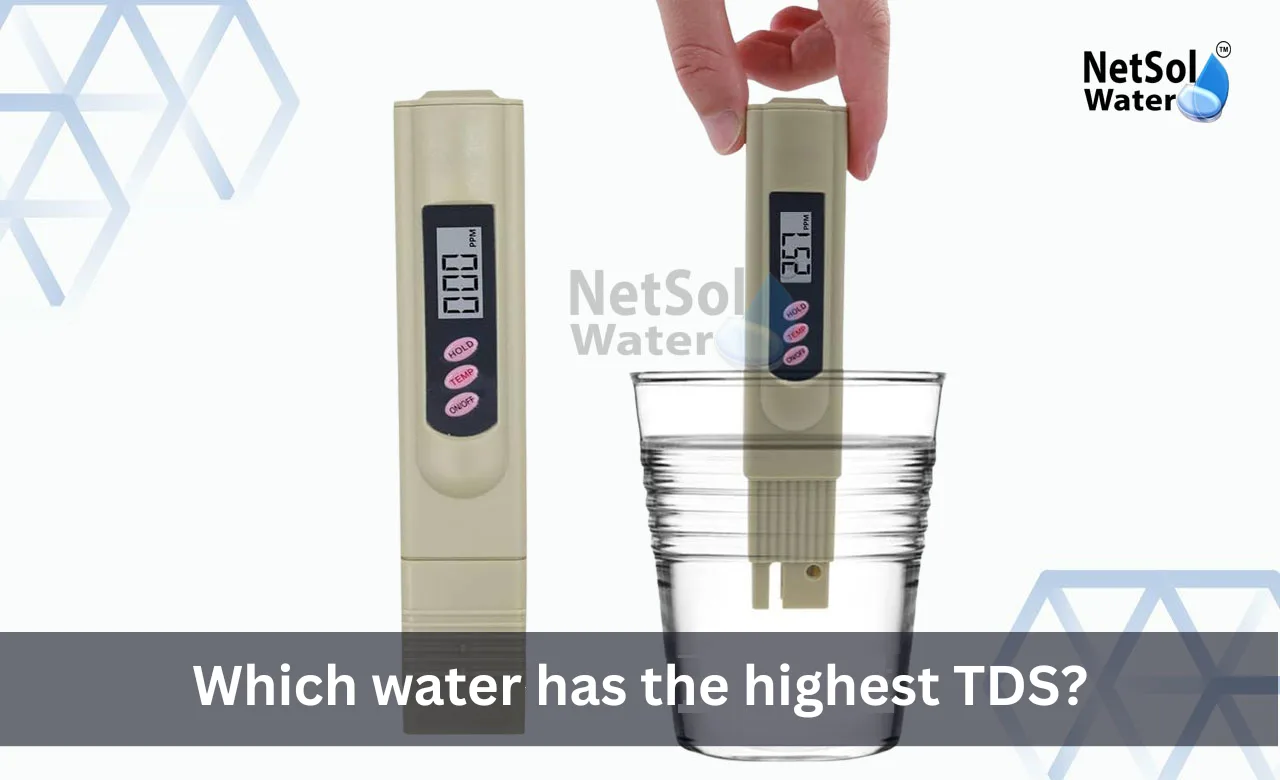
Which Water Has the Highest TDS?
Water contains minerals and salts that affect its quality. TDS tells us how much dissolved material sits in one liter of water. Places near the sea often show high TDS. Areas with dry soil and deep wells can also show high TDS. Industrial zones can give rise to water with many dissolved chemicals. This question matters for homes, farms, and industries. High TDS can change the taste of water and harm machines and pipes. It can also affect health when certain elements appear in high amounts. A commercial RO plant manufacturer helps to treat water with high TDS. We lead the field in designing plants for tough water.
Sources of High TDS Water
Let us have a look at some common sources. We will explore each source and see why the TDS level grows.
- Seawater and Saline Water
Seawater contains a large amount of dissolved salt. Oceans use salt from rivers and from rock weathering. Seawater can contain about thirty-five grams of salt per liter. This level puts its TDS at a value far above what we see in most fresh sources. When seawater seeps into coastal aquifers, it makes groundwater saline. Farmers who work near the coast can find their wells salty. Desalination of seawater thus becomes necessary in many coastal towns. Making fresh water from this source uses energy. That energy comes in forms such as pressure and heat. An RO plant manufacturer designs plans that use pressure to push water through thin membranes. These membranes block salt and let water pass. This process gives clean water from salty sources. When seawater mixes with river water, the TDS can change. The mixing can create brackish water with lower TDS than the ocean but higher TDS than pure freshwater. The design must match the feed water to work well.
- Brackish Groundwater and Mineral Springs
Some groundwater sits in rock layers that contain many minerals. As water moves through these rocks, it dissolves salts and minerals. The result can be brackish water or very hard water. Mineral springs often have high TDS because they travel a long path underground and pick up dissolved elements. Wells drilled into such aquifers can show a range of TDS values. Some wells will show low TDS, while others will show very high values. People who draw water for towns or for irrigation must test it first. Treatment for this water can need several steps. First, remove large particles and organics. Next, remove dissolved salts with membranes or ion exchange. Commercial RO plant manufacturers will modify the system to the feed water. Netsol Water can test the water and then choose the right membrane and pumps. This step keeps the system running well while keeping waste under control.
Health and Practical Effects of High TDS Water
Knowing the health and practical effects helps users pick the correct treatment. Let us have a look at some key effects of high TDS water.
- Health Impacts of Certain Dissolved Elements
TDS itself is a sum value and not a direct measure of harm. The danger comes from what makes the TDS high. High TDS can include minerals that humans need. This mix can also include elements that harm health when present in high amounts. For example, high sodium can affect blood pressure for some people. High nitrate may harm infants. Excess fluoride can affect teeth and bones over long time spans. High levels of heavy metals can pose serious risk. Testing lets us find the exact makeup of the dissolved solids. Treatment then targets the harmful parts while keeping useful minerals if needed. Commercial RO plant manufacturers will help by offering testing and by designing a plant that removes the harmful parts. Netsol Water will advise on what to remove and what to retain so that the water meets safety standards.
- Taste, Scale, and Equipment Damage
Water with high TDS often tastes bitter or salty. This change affects user acceptability. High TDS can also cause scale to form on pipes, boilers, and heat exchangers. Scale lowers efficiency and increases repair cost. Machines that use water in cooling or in process steps will suffer when scale grows. This outcome raises energy cost and lowers output. Removing dissolved solids reduces scale and extends the life of the plant. Treatment also keeps product quality steady for food and for chemical industries. An RO plant manufacturer designs pretreatment and membrane stages that protect downstream equipment. Netsol Water can add steps that reduce scale-forming ions before the main membrane. This design choice keeps membranes safe and lowers maintenance needs.
Treatment Options and Role of Manufacturer
Treatment selection matters for cost and for the final water quality. Let us have a look at some standard treatment choices.
- Reverse Osmosis and Advanced Membranes
Reverse osmosis uses pressure to force water through a semipermeable membrane. The membrane stops most dissolved salts and passes water molecules. RO can remove the highest share of TDS from feed water. For seawater, the system needs high-pressure pumps and robust membranes. For brackish water, the pressure need falls and the cost drops. Membrane systems often use pretreatment to remove sand, organics, and chlorine that can damage the membrane. Post-treatment can add minerals back if needed. RO plants also produce a concentrate stream that needs safe disposal. The design must balance recovery rate, energy use, and waste volume. A commercial RO plant manufacturer will size the membranes, choose the feed pumps, and provide control systems that match the site needs. Netsol Water builds systems that aim for high recovery and low energy use. The company will work on an on-site assessment and follow up with a system plan that meets local rules for discharge.
- Commercial Factors and Maintenance Needs
Building a plant that runs well for years needs attention to detail. The manufacturers must consider feed water quality and site space. The maker must also set up a program for routine checks and for membrane swaps. Pumps, valves, and controls must match the duty cycle. A commercial RO plant manufacturer will train the local staff and will provide spare parts. Warranties and service agreements reduce downtime. The system must also meet local regulations on where to send concentrate. Netsol Water offers service plans and remote support for many installations. The company also helps clients plan for future load increases. Good planning keeps costs low over the life of the plant.
Read some interesting information for the Industrial RO Plant Manufacturer in Delhi
Conclusion
Water with the highest TDS usually comes from the sea and from deep mineral-rich sources, and from heavy industrial discharge. The exact danger depends on which dissolved parts raise the TDS. Removal demands careful testing and a match between the feed water and the chosen method. For many cases, reverse osmosis gives the best removal of dissolved solids. If you look for a reliable partner to build and to service large systems, choose a proven commercial RO plant manufacturer. Netsol Water leads in design and in service for commercial-scale RO plants. Contact Netsol Water to get a water test or to request a consultation about your site needs.
Contact Netsol Water at:
Phone: +91-9650608473
Email: enquiry@netsolwater.com