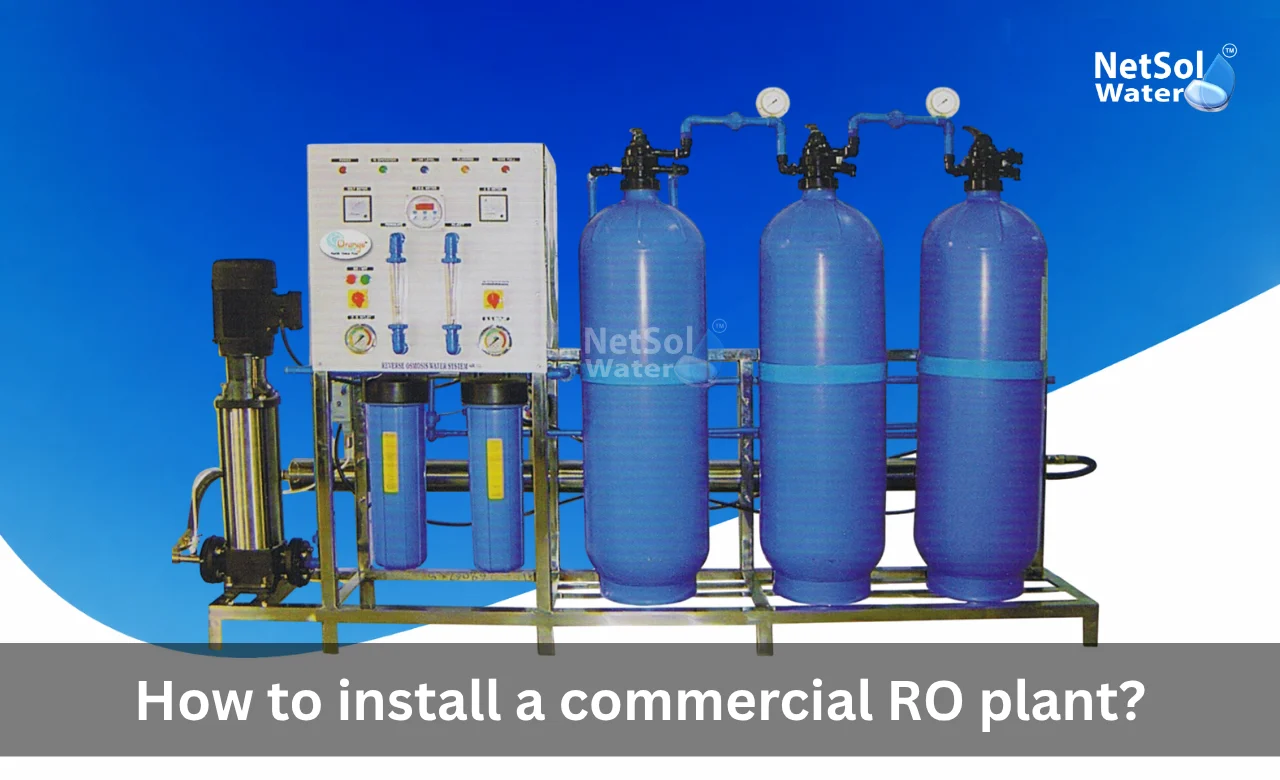
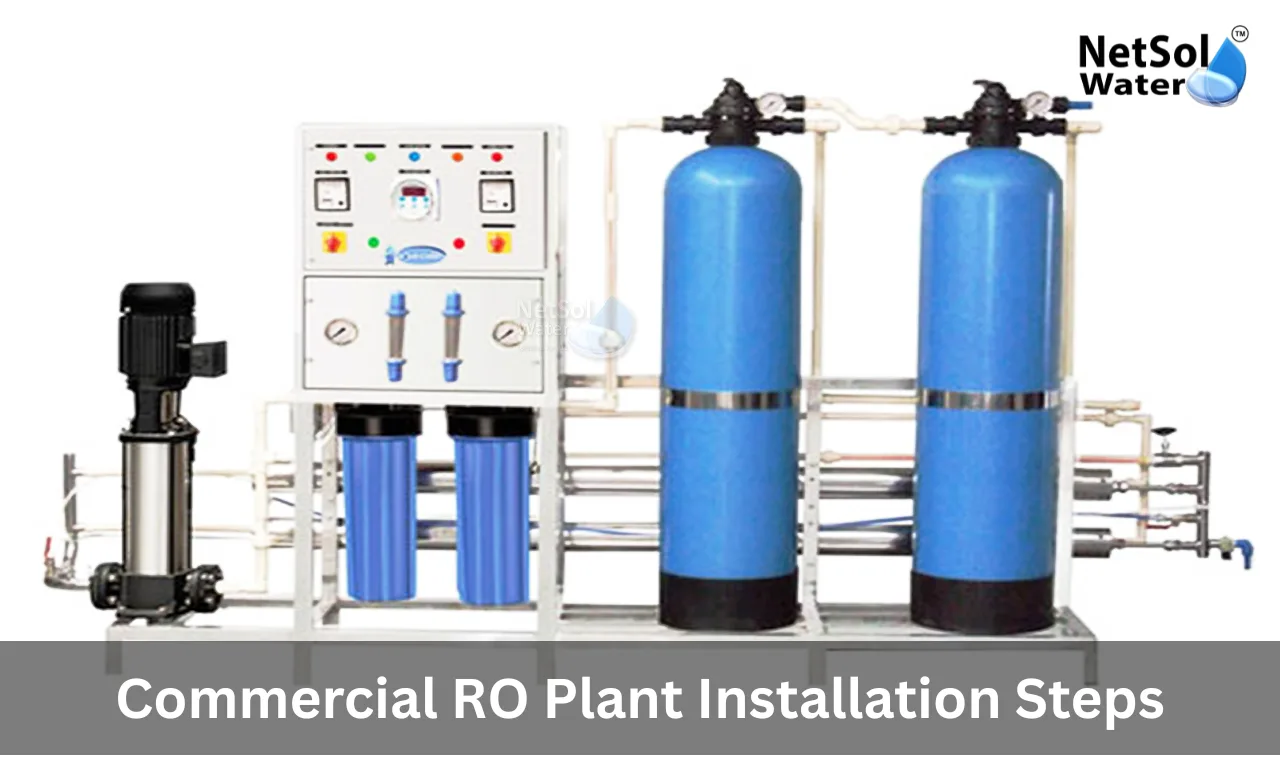
Clean water supports every business that depends on production quality and smooth daily operations. Industries such as food processing, pharmaceuticals, hotels, hospitals, and manufacturing units need a dependable water treatment system to maintain product quality and protect equipment. A commercial RO plant removes dissolved salts, harmful minerals, and other unwanted particles from water. This process helps businesses receive safe water for different industrial and commercial uses.
India is known for its fast industrial growth and increasing demand for water treatment systems. As more businesses expand, they need reliable water purification solutions that can handle different water sources. Installing a commercial RO plant in the right way helps the system perform well for many years. It also lowers maintenance needs and improves water quality. We are the leading commercial RO plant manufacturer that designs and installs quality systems for different industries. Understanding the installation process helps every business make better decisions and achieve the best results from its investment.
Site Preparation Before Installation
Every successful installation begins with proper planning. A well-prepared site helps the commercial RO plant perform without interruption. It also prevents future operating problems. Let us have a look at some important aspects of site preparation.
1. Selecting the Right Installation Location
The first step is choosing a suitable place for the plant. The location should provide enough space for the RO system and allow operators to move around easily during inspection and maintenance. The floor should remain strong and level so that it supports the full weight of the equipment. The area should stay clean and protected from direct sunlight, heavy rain, and excessive dust. Good ventilation also helps maintain the proper working condition of electrical parts and pumps.
2. Arranging Utility Connections
The next requirement is preparing all utility connections before installation starts. The plant needs a stable electricity supply along with proper water inlet and outlet connections. A suitable drainage line should also be available because the RO process releases reject water during operation. When these facilities remain ready in advance, the installation team can complete the work smoothly without unnecessary delays.
Installing the Main Components of the RO Plant
Correct installation of every component allows the plant to deliver high-quality water. Each part works together to complete the purification process. Proper positioning and secure connections improve system efficiency and increase equipment life. Let us have a look at some important stages of installing the main components.
1. Installing the Pretreatment System
Pretreatment protects the RO membranes from damage. This stage removes suspended particles, chlorine, hardness, and other impurities before water enters the membranes. Sand filters, activated carbon filters, and water softeners should be installed according to the system design. Every unit must connect properly to maintain steady water flow. Good pretreatment improves membrane life and keeps the purification process stable for a longer period.
2. Installing RO Membranes and Pressure Vessels
RO membranes form the heart of the complete system. The installation team places the membranes carefully inside pressure vessels according to the manufacturer’s instructions. Proper sealing prevents leakage and supports smooth water movement through the membranes. Pressure vessels should remain firmly fixed to avoid vibration during operation. Correct installation ensures that the system removes dissolved impurities with high efficiency.
3. Connecting Pumps and Piping
High-pressure pumps move water through the complete purification process. These pumps should be installed securely to maintain stable pressure during operation. The piping network should connect all units without leakage. Every joint must remain tight because even a small leak can affect system performance. Proper pipe alignment also helps maintain smooth water flow throughout the plant.
Electrical Connection and System Testing
Electrical installation and performance testing confirm that the commercial RO plant operates safely and efficiently. This stage ensures that every part works according to the design before regular operation begins. Let us have a look at some important activities performed during this phase.
1. Completing Electrical Installation
Qualified professionals should complete all electrical work. The control panel should connect correctly with pumps, sensors, and other electrical equipment. Proper earthing protects both the equipment and plant operators from electrical hazards. All wiring should follow recommended safety standards. A stable electrical supply helps maintain smooth plant performance and prevents unexpected shutdowns.
2. Testing System Performance
After completing installation, the entire system should undergo detailed testing. The installation team checks water pressure, flow rate, and water quality at different stages. They inspect every connection for possible leakage and verify that all valves function correctly. The team also measures the quality of purified water to confirm that the plant meets the required standards. Careful testing helps identify small issues before the plant begins regular production.
Commissioning and Operator Training
The final stage prepares the plant for long-term operation. Proper commissioning ensures that every system performs according to design. At the same time, operator training allows staff members to manage daily operations with confidence. Let us have a look at some important activities completed during commissioning.
1. Starting the Plant for Regular Operation
Commissioning begins with gradual startup of the complete system. The installation team monitors pressure, water recovery, and membrane performance during the first operating cycles. They make necessary adjustments whenever required. This careful approach allows the plant to reach stable operating conditions while protecting sensitive components from sudden pressure changes.
2. Training Plant Operators
Operator training remains equally important after installation. Staff members learn how to start and stop the system safely. They also understand routine inspections, filter replacement, membrane cleaning, and basic troubleshooting methods. Proper training allows operators to identify small problems early before they become major repairs. Regular maintenance performed by trained operators keeps the system running efficiently and extends the life of every component.
Proper installation creates the foundation for dependable water treatment and long service life. Every stage, from site preparation to commissioning, plays an important role in achieving stable performance and consistent water quality. Careful planning, professional installation, and regular maintenance help businesses receive the full benefit of their investment.
Choosing an experienced commercial RO plant manufacturer also ensures expert guidance throughout the installation process and beyond. Netsol Water is a trusted commercial RO plant manufacturer that delivers complete solutions for different industries with quality products and professional support. If you are planning to install a commercial RO system or need expert advice, contact Netsol Water today to request a consultation and find the right solution for your water treatment needs.
India has become one of the fastest-growing markets for water treatment because industries and cities need clean water every day. The country is famous for its large manufacturing sector and its strong demand for advanced water treatment plants. As industries expand and the population grows, clean water has become more important than ever before. This growing need has also increased the demand for high-quality RO membranes that can remove dissolved salts, impurities, and harmful substances from water.
Choosing the right membrane manufacturer helps industries improve water quality and keep treatment plants working for a long time. A trusted manufacturer also provides technical support and products that meet different treatment needs. Among the companies working in this field, we have built a strong name as a leading RO membrane manufacturer in India. The company offers dependable membrane solutions for industrial, commercial, and municipal applications. Understanding what makes a manufacturer dependable helps businesses make the right investment for long-term water treatment success.
Importance of Choosing the Right RO Membrane Manufacturer
Selecting the right manufacturer is the first step toward building an efficient water treatment system. Every RO membrane performs an important job because it removes unwanted particles and produces clean water. A good manufacturer not only supplies quality products but also supports customers throughout the life of the system. Let us have a look at some important factors that help identify a dependable manufacturer.
1. Quality Standards and Manufacturing Process
A trusted manufacturer follows strict quality standards during production. Every membrane goes through several testing stages before reaching customers. This process ensures that each membrane performs well under different operating conditions. High-quality raw materials also improve membrane strength and increase its working life. A company that focuses on quality delivers products that maintain stable performance for a longer period. This gives industries confidence in their investment and helps them achieve consistent water purification results.
2. Technical Support and Product Range
Manufacturers should also provide strong technical guidance after the sale. Different industries need different membrane sizes and performance levels. A dependable company understands these requirements and recommends suitable products. Good technical support helps customers install membranes correctly and maintain them in the right way. This support also prevents unnecessary operational problems. A wide product range allows industries to select membranes that match their treatment capacity and water quality requirements without difficulty.
Why Netsol Water Is the Leading RO Membrane Manufacturer in India
Many companies manufacture RO membranes in India, but only a few have earned customer trust through consistent quality and service. Experience, innovation, and customer satisfaction make a significant difference when selecting a manufacturer. Let us have a look at some reasons why Netsol Water has become a preferred choice for many industries.
1. Advanced Manufacturing and Quality Assurance
Netsol Water follows advanced manufacturing methods to produce high-performance RO membranes. The company uses modern production techniques and carefully selected materials to ensure dependable results. Every membrane passes through detailed quality inspections before delivery. These inspections help maintain product consistency and improve customer confidence. The company continues to improve its manufacturing process so customers receive products that perform efficiently under different operating conditions. This commitment to quality has helped the company build a strong reputation across India.
2. Wide Industry Applications and Customer Support
Netsol Water serves many industries, including food processing, pharmaceuticals, textiles, hospitals, hotels, and commercial buildings. Each industry has different water treatment needs, and the company provides suitable membrane solutions for every application. The experienced technical team helps customers choose the right membrane according to feed water quality and production requirements. The company also offers guidance during installation, maintenance, and replacement. This complete support allows customers to operate their systems smoothly and improve overall plant performance. Because of this customer-focused approach, Netsol Water is widely recognised as a leading RO membrane manufacturer in India.
Applications of RO Membranes across Different Industries
RO membranes are used in many industries because clean water supports both production and environmental protection. Every industry has different treatment goals, but all of them require efficient water purification. Let us have a look at some major industries where RO membranes play an important role.
1. Industrial Water Treatment
Water is used up extensively in manufacturing industries on a daily basis. Salts and impurities in the water can cause equipment problems and reduce the quality of the product. These undesirable components are rejected by RO membranes and result in clean process water. RO units are employed in industries like power plants, chemical plants, and textile factories to enhance efficiency and to prevent damage to costly machinery. Correct water treatment also ensures that industries are compliant with environmental legislation and will enhance the performance of their operations in the long term.
2. Commercial and Municipal Applications
RO membranes are also used in commercial buildings such as hotels, hospitals, schools, and municipal water treatment plants for clean water production. Clean water is vital for people’s health and well-being. RO systems are used by municipal authorities to treat water prior to its distribution. RO plants are also installed in commercial facilities to ensure that the employees, customers, and guests have safe water. Membranes are reliable, and they allow for continuous operation with uniform water quality throughout treatment.
How to Select the Best RO Membrane Manufacturer in India
Each project will be different, and the choice of manufacturer needs to be carefully considered. When selecting a product, buyers will want to look at the quality of the product, as well as their service experience and long-term support. Let us check some of the important points that assist in the selection process.
1. Experience and Product Performance
A knowledgeable manufacturer knows the various water treatment problems and creates solutions to address them appropriately. Having years of experience, the companies still strive to enhance their membrane technology to meet customer demands and industry advancements. When the product has proven performance, buyers know that it is reliable and can be confident when it is installed. Performance records should always be taken into consideration by customers when buying RO membranes.
2. Service Network and Long-Term Value
A robust service network helps to deliver high customer satisfaction, as technical support is available when required. Quick response helps minimise interruptions and keeps treatment plants running. The overall value is another factor to take into account, not just the price tag. Maintenance and replacement costs are reduced in the long term with a high-quality membrane, due to its longer life and better performance. It’s better to deal with a reliable RO membrane manufacturer in India than to opt for products due to their low prices.
Choosing the correct membrane manufacturer is an important part of ensuring that you have clean water and an efficient plant operation. Long-term success comes from product quality, manufacturing standards, technical support, as well as industry experience. These should be carefully considered before a business invests in a system, as they will lead to higher efficiency in operation and a longer lifespan of the treatment plant.
Netsol Water has established a good reputation by offering quality products, reliable service, and customer-centric solutions. Netsol Water, as a trusted RO membrane manufacturer in India, can help you get expert advice and an appropriate RO membrane solution to address your water treatment requirements. The professional team will ensure that you select the most suitable product and offer you support with your project from beginning to end.
India has a fast-growing industrial sector that depends on clean water for daily production. Industries such as food processing, pharmaceuticals, chemicals, textiles, power plants, and manufacturing need pure water to maintain product quality and machine performance. This has increased the demand for high-quality RO membranes across the country. A good RO membrane helps remove unwanted salts, minerals, and impurities from water. It also improves the efficiency of the complete RO system and supports long-term operation.
Netsol Water has earned a strong name in this field because it provides dependable RO membranes and complete water treatment systems for different industries. As a leading Industrial RO Plant Manufacturer, the company delivers solutions that match the needs of many industrial applications.
Why RO Membrane Quality Matters
Every industrial RO system performs according to the quality of its membrane. A well-designed membrane improves water quality and keeps the complete treatment process stable for a long time. It also helps industries lower operating costs and maintain consistent production. Let us have a look at some important points that explain why RO membrane quality should always receive proper attention.
1. Better Water Purification
A high-quality RO membrane removes dissolved salts, bacteria, organic matter, and other unwanted particles from water. This process produces clean water that industries can use safely for production, cooling, and cleaning purposes. Good purification also protects equipment from scaling and unwanted deposits. As a result, industries enjoy smooth operations and better product quality.
2. Longer Membrane Life
A durable membrane continues to perform well for many years when industries follow proper maintenance practices. Strong membrane material resists wear and supports stable filtration even under demanding operating conditions. This helps companies avoid frequent replacements and lowers maintenance expenses over time.
3. Improved System Performance
The membrane controls the overall efficiency of the RO plant. When it works properly, the plant consumes less energy and delivers steady water output. Industries also experience fewer breakdowns, which saves both time and operating costs. This is why experienced companies always choose membranes from trusted manufacturers who understand industrial water treatment.
Which Company RO Membrane Is Best in India?
Many companies supply RO membranes in India, but only a few provide complete support from product selection to installation and maintenance. Choosing the right manufacturer is important because industries need more than just a membrane. They also require technical guidance, quality assurance, and dependable customer service. Let us have a look at some reasons why Netsol Water stands out in the Indian market.
1. High Quality Manufacturing Standards
Netsol Water follows strict quality standards while designing and supplying RO membranes for industrial applications. Every membrane undergoes careful testing before reaching customers. This process ensures stable performance, high rejection rates, and dependable water purification for different industries.
2. Complete Industrial Solutions
The company does not only supply membranes. It also designs complete industrial RO systems that suit different water conditions and production requirements. This approach allows industries to receive one complete solution instead of purchasing separate components from different suppliers.
3. Strong Technical Support
Technical support plays a major role in the success of every RO plant. Netsol Water provides expert guidance during system selection, installation, maintenance, and troubleshooting. Customers receive practical solutions whenever they face operational challenges. This support helps industries maintain continuous production without unnecessary delays.
Because of these strengths, many industries consider Netsol Water the answer to the question “Which company RO membrane is best in India?” The company continues to build trust through quality products, dependable service, and practical water treatment solutions.
Why Netsol Water Leads as an Industrial RO Plant Manufacturer
Selecting the right manufacturer is as important as choosing the right membrane. Industries expect long-term performance, reliable service, and customized solutions that match their production goals. Let us have a look at some qualities that make Netsol Water a trusted name across India.
1. Customized Plant Design
Every industry faces different water quality challenges. Netsol Water studies water characteristics before designing each RO plant. This careful planning allows the company to deliver systems that perform efficiently under different operating conditions. Customers receive plants that match their actual production requirements instead of standard designs.
2. Advanced Engineering
The company combines quality membranes with efficient pumps, pressure vessels, and control systems. This balanced engineering improves overall plant performance and supports smooth daily operation. Industries benefit from stable water production while lowering energy use and maintenance needs.
3. Focus on Customer Satisfaction
Customer relationships continue even after installation. Netsol Water provides maintenance support, membrane replacement guidance, and technical assistance whenever required. This commitment helps industries maintain consistent plant performance throughout the system’s life.
These strengths have helped the company become a respected Industrial RO Plant Manufacturer that serves industries across India with dependable water treatment solutions.
Factors to Consider Before Choosing an RO Membrane Company
Every business should evaluate several factors before investing in an RO membrane supplier. A careful decision protects the investment and ensures better long-term performance. Let us have a look at some important points that every industry should examine before making a final choice.
1. Product Quality
The first step is checking membrane quality and manufacturing standards. High-quality membranes deliver better filtration, stable performance, and longer operating life. They also help maintain water quality throughout industrial operations.
2. Industry Experience
Experienced manufacturers understand different industrial processes and water conditions. Their knowledge allows them to recommend suitable membranes and complete treatment systems for each application. This experience often prevents costly design mistakes.
3. Service and Maintenance
Good after-sales service supports uninterrupted plant operation. Industries should choose companies that provide installation support, maintenance guidance, and quick technical assistance whenever needed. Strong customer service builds confidence and improves long-term plant performance.
4. Complete Water Treatment Expertise
Companies that design complete RO plants understand how every component works together. Their expertise helps customers receive balanced systems that deliver better efficiency and dependable results. This is one reason why many industries choose Netsol Water as their preferred Industrial RO Plant Manufacturer for complete water treatment solutions.
Choosing the best RO membrane company in India requires careful attention to product quality, technical knowledge, customer support, and complete water treatment experience. A dependable membrane improves water purity, extends equipment life, and supports smooth industrial operations. At the same time, a trusted manufacturer helps industries receive the right solution for their specific requirements.
Netsol Water has built a strong reputation by delivering quality RO membranes, complete industrial water treatment systems, and dependable technical support. As a leading Industrial RO Plant Manufacturer, the company continues to help industries achieve efficient water purification with confidence. If your business is planning a new RO system or wants to upgrade an existing plant, you can contact Netsol Water for expert guidance and a customized consultation that matches your industrial water treatment needs.
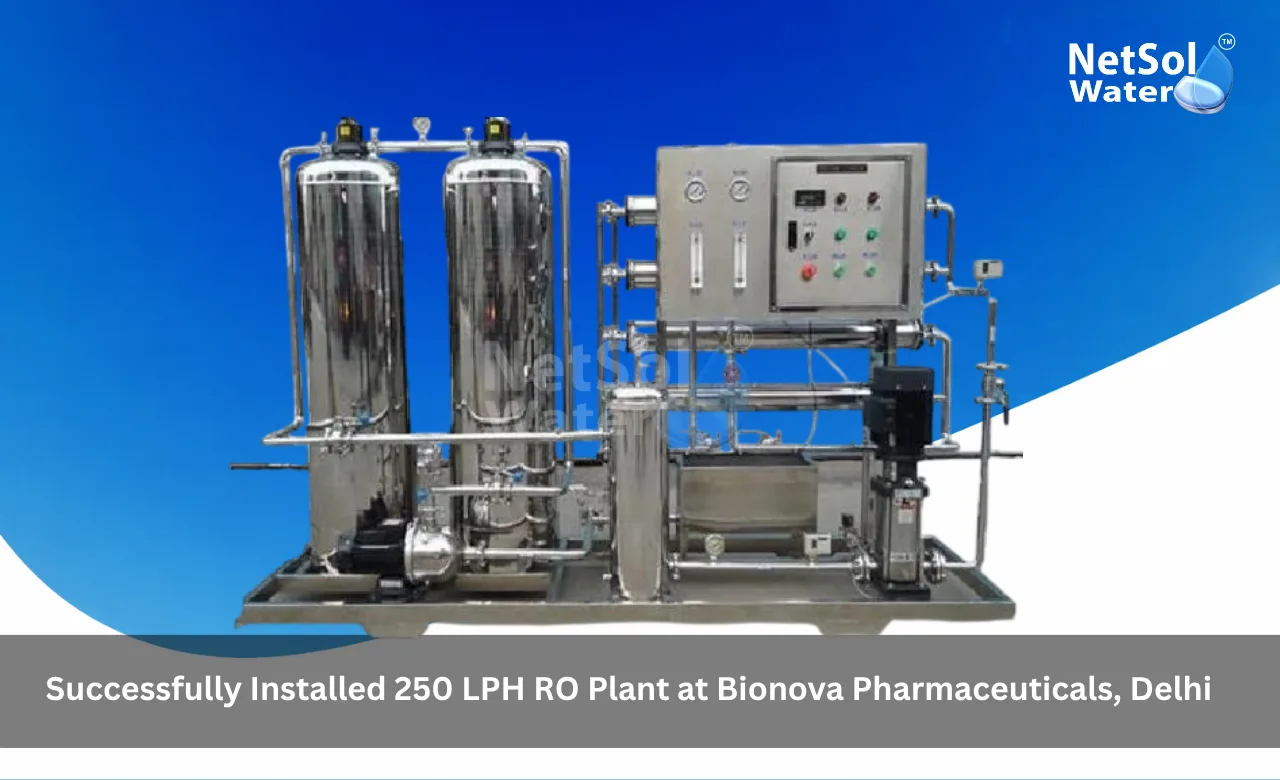
Successfully Installed 250 LPH RO Plant at Bionova Pharmaceuticals, Delhi
Reliable water quality plays an important role in facilities where water forms part of regular operations. This becomes especially important for pharmaceutical facilities because the water used within the premises needs to meet the purpose for which it is intended. When incoming water requires treatment, a suitable treatment plant can help the facility produce water with improved quality and support more controlled water use.
Bionova Pharmaceuticals in Delhi required a suitable water treatment solution for its facility. To address this requirement, Netsol Water successfully installed a 250 LPH RO plant at the site. The project focused on providing a practical RO-based treatment plant that could support the client’s intended water requirement.
The installation also reflects the role of us as a Commercial RO Plant Manufacturer in Delhi. By providing an RO plant that matches the stated capacity requirement, the project created a dedicated treatment arrangement for the client’s premises. The installed system gives the facility an organized method for treating incoming water instead of depending on untreated water for applications where better water quality is required.
Project Overview
A water treatment project needs to begin with a clear understanding of the client’s requirement. The treatment system should match the intended water demand and provide a process that is suitable for the quality of the incoming water. The 250 LPH RO plant installed at Bionova Pharmaceuticals was undertaken with this objective in mind. The project involved supplying and installing an RO-based water treatment solution with a stated production capacity of 250 litres per hour.
The main requirement was to establish an RO treatment facility within the client’s premises. RO provides a widely used method for reducing dissolved substances present in water through membrane-based separation. For a facility that needs treated water for defined operational purposes, an RO plant can provide a dedicated treatment stage between the incoming water source and the point where treated water is used.
The project scope therefore centred on the installation of the 250 LPH RO plant at Bionova Pharmaceuticals in Delhi. The work required the treatment system to be placed at the site and connected so that the plant could operate as intended. The objective was not simply to place the equipment at the facility. It was also to establish a functional treatment arrangement that could produce RO-treated water at the specified plant capacity.
This approach created a direct connection between the client’s requirement and the selected treatment technology. The capacity defined the expected treatment rate while the RO process provided the purification mechanism. The next important consideration was the nature of the client and the reason a dedicated water treatment system was required.
Client Details
Bionova Pharmaceuticals is the client for this project, and the available project information identifies it as a pharmaceutical organisation. Pharmaceutical facilities operate in an environment where process requirements can place greater attention on water quality. Water may be needed for different operational purposes within a facility and the suitability of that water depends on the application.
Bionova Pharmaceuticals required an RO plant and that a 250 LPH system was installed to address the stated treatment requirement. A dedicated treatment plant also provides a more structured method of handling water at the facility. Rather than treating water through an undefined arrangement, the client receives a defined treatment system with a stated output capacity. This gives the project a clear operational purpose and makes it easier to relate the plant size to the intended water requirement.
The requirement becomes particularly relevant in a pharmaceutical setting because water quality can influence how water is selected for different uses. With the client requirement established, the project location also becomes an important part of understanding the installation.
Detail
Information
Client
Bionova Pharmaceuticals
Facility Type
Pharmaceutical organisation
Location
Delhi
Solution Provided
250 LPH RO Plant
Installed By
Netsol Water
Project Location
The plant was installed at Bionova Pharmaceuticals in Delhi. Project location matters because the treatment plant must be installed within the operating environment of the client. The site must provide an appropriate arrangement for placing the treatment plant and allowing the treated water to move toward its intended point of use.
Bionova Pharmaceuticals is the location where the treatment solution had to be integrated into the client’s facility. The installation needed to suit the available site conditions and support normal operation after commissioning.
The location also highlights the relevance of local water treatment service capability. For organisations seeking a Commercial RO Plant Manufacturer in Delhi, access to a supplier that can handle the installation at the client’s premises can simplify the transition from equipment supply to plant operation. In this project, the treatment system was installed directly at the client’s Delhi facility.
Plant Capacity
Plant capacity determines how much treated water a system can produce over a given operating period. Selecting an appropriate capacity helps align the treatment system with the client’s expected requirement. A plant that does not match the intended demand may create operational limitations, while an appropriately selected capacity provides a clearer basis for planning water production.
For Bionova Pharmaceuticals, the installed RO plant has a capacity of 250 LPH, which means 250 litres per hour. The stated 250 LPH capacity gives the client a defined production rate for the installed RO system. At the specified operating rate, the plant is designed around a treatment output of 250 litres per hour. The actual daily quantity produced would depend on the plant’s operating hours and operating conditions.
Capacity also provides an important reference during operation and maintenance. The client and service team can use the rated 250 LPH figure as a basic reference when assessing plant operation. Any assessment of actual production would still require operating data collected from the plant.
The capacity requirement led directly to the selection of an RO treatment system designed around the specified output.
Parameter
Specification
Installed Capacity
250 LPH (Litres Per Hour)
Treatment Technology
Reverse Osmosis (RO)
Project Site
Bionova Pharmaceuticals, Delhi
Plant Type
Industrial / Pharmaceutical RO Plant
Design Basis
Defined production rate matched to client’s requirement
Treatment Technology
The treatment technology selected for the project is Reverse Osmosis. RO is a membrane-based water treatment process that separates water from many dissolved substances. It works by applying pressure to feed water so that water passes through a semi-permeable membrane while a significant portion of dissolved impurities is retained in the reject stream.
For the Bionova Pharmaceuticals installation, the 250 LPH RO plant uses this principle to produce treated water from the incoming feed water. The process provides a defined purification stage and allows the plant to handle water treatment through a controlled membrane system.
1. How Reverse Osmosis Works
An RO system uses pressure to move water through a membrane. The membrane allows water molecules to pass through more easily than many dissolved materials. As a result, the treated side receives permeate water while the concentrated stream carries away a portion of the substances separated from the feed.
The quality of the final treated water depends on factors such as the quality of the feed water, membrane condition, operating conditions and overall system design. For this reason, an RO plant must be operated within the conditions for which it was designed.
2. Relevance to the Project
The use of RO gave Bionova Pharmaceuticals a dedicated treatment process with a defined output capacity of 250 LPH. It also created a clear separation between incoming water and treated water. This arrangement can support better management of water quality for the applications that require RO-treated water.
Understanding the incoming water is equally important because RO treatment performance depends strongly on feed water conditions.
Influent Characteristics
Before any water treatment system is selected and operated, the characteristics of the incoming water need to be understood. Parameters such as total dissolved solids, hardness, turbidity, iron and microbial content can affect the treatment approach, membrane condition and overall plant performance.
Importance of Influent Assessment
Knowing the incoming water characteristics allows the treatment system to be matched more accurately to the water being handled. It can also help the operating team understand changes in plant performance over time. When raw water quality changes, the treatment response may also change.
The next stage is the treatment journey itself, where the incoming water moves through the RO system toward treated water production.
Treatment Process
A treatment system performs effectively when water moves through each stage in the intended sequence. Every stage has a purpose and the overall process depends on the proper interaction of those stages. In the Bionova Pharmaceuticals project, the central treatment technology is Reverse Osmosis and the installed plant has a rated capacity of 250 LPH.
1. Raw Water Entry
The treatment process begins when incoming water is directed to the RO plant. At this stage, the plant receives the feed water that requires treatment. The condition of this feed water affects the performance of the downstream membrane system.
2. Feed Water Preparation
RO membranes perform best when the incoming water reaches the membrane system under suitable operating conditions. Depending on the source water characteristics, an RO system may require suitable preparation before water reaches the membrane.
3. Reverse Osmosis Stage
Once the feed water reaches the RO membrane section, pressure drives the separation process. Water passes through the semi-permeable membrane and forms the treated permeate stream. Dissolved substances that do not pass through the membrane remain concentrated in the reject stream.
The RO stage therefore creates two streams from the feed water. One stream becomes treated water while the other carries the concentrated portion of the rejected material.
4. Treated Water Collection
The permeate generated through the RO process is collected as treated water. From there, it can be directed toward the intended point of use or storage arrangement provided at the facility. The important project outcome is that the RO plant was installed to produce treated water at the stated 250 LPH capacity.
This treatment sequence connects directly with the plant equipment. The equipment enables the feed water to move through the treatment process and supports the production of treated water.
Stage
Function
Raw Water Entry
Incoming feed water is directed to the RO plant
Feed Water Preparation
Prepares water so it reaches the membrane under suitable conditions
Reverse Osmosis Stage
Pressure drives separation into treated permeate and concentrated reject streams
Treated Water Collection
Permeate is collected and directed to the intended point of use or storage
Major Equipment
Correct equipment selection supports the stable operation of a water treatment plant. Each component in an RO system has a defined role, from moving water through the system to carrying out the membrane separation process. The equipment arrangement must also work together as one treatment unit. For the Bionova Pharmaceuticals project, the installation of a 250 LPH RO plant was done.
1. RO Plant Assembly
The principal equipment installed at the site is the 250 LPHReverse Osmosis plant itself. The plant provides the treatment framework through which the feed water passes and the RO membrane process takes place.
The system brings the treatment components together in a coordinated arrangement. Its primary purpose is to receive the incoming water and produce RO-treated water at the specified plant capacity.
2. Membrane Treatment Section
The membrane section represents the core of the RO process. Here, pressure enables water to pass through the semi-permeable membrane while a portion of dissolved material remains in the concentrated stream.
The equipment supports the process, but successful installation also depends on proper site execution. That brings the project to the installation stage.
Equipment
Role in the System
RO Plant Assembly (250 LPH)
Principal treatment framework through which feed water passes
Membrane Treatment Section
Core of the RO process; performs the separation under pressure
Installation Process
Installation requires more than placing a treatment unit at the client’s premises. The plant must be positioned correctly and connected so that the treatment system can function as intended. Careful execution at the site also helps prepare the system for testing and commissioning.
For the Bionova Pharmaceuticals project, the installation work focused on establishing the 250 LPH RO plant at the client’s Delhi facility. The process began with preparing the site for placement of the treatment system.
Once the site was ready, the RO plant was positioned in its designated area. Proper placement is important because the treatment system needs a suitable connection arrangement for feed water, treated water and reject water. The plant also requires an operating arrangement that allows access for routine observation and maintenance.
The next stage involved making the required system connections. These connections establish the path through which water enters the plant, moves through the RO treatment stage and leaves as treated water and reject water.
After the physical connections were established, the installed system could be prepared for functional testing. This stage links the installation activity with commissioning because a newly installed treatment plant must be checked before it enters regular service.
Plant Commissioning
Commissioning is necessary because installation alone does not confirm that a water treatment plant is ready for operation. The commissioning stage provides an opportunity to check the system after installation and verify that the treatment plant responds correctly when operated.
For the 250 LPH RO plant at Bionova Pharmaceuticals, commissioning followed the installation of the treatment system. The team checked the plant as part of the start-up process and prepared it for operational use.
A commissioning exercise for an RO plant generally involves checking the system connections, starting the treatment process, observing plant operation and confirming that water moves through the intended treatment path. The plant can then be assessed against the required operating conditions.
250 LPH RO plant was successfully installed and commissioned for the client’s facility. This completed the transition from equipment installation to an operational water treatment system.
Treated Water Reuse
Treating water creates value when the resulting water is used appropriately within the facility. The purpose of an RO plant is not limited to the treatment stage itself. The treated water must also be directed toward applications for which its quality is suitable.
At Bionova Pharmaceuticals, the installed system provides RO-treated water at a stated capacity of 250 LPH. The client can use the treated water for the purposes defined by its internal operational requirements and water quality criteria. The appropriate application should depend on the quality of the treated water and the requirements of the specific process in which it is used.
A controlled treated water stream can also make water handling more structured at the facility. Instead of treating water only at the point of use, the RO plant creates a central treatment stage that produces water through a defined process.
This provides a logical connection between treatment and operation. The plant treats the incoming water while the facility determines how the resulting water should be used based on its own requirements.
Results and Performance
Project results provide the clearest indication of whether a treatment system has addressed the requirement for which it was installed. In this project, the successful installation of a 250 LPH RO plant at Bionova Pharmaceuticals in Delhi has been done.
The completed installation provided the client with an RO-based treatment system with a defined production capacity. The plant establishes a dedicated method for treating incoming water and producing RO-treated water within the facility.
1. Successful Installation
The project was successfully completed with the installation of the specified 250 LPH RO plant. This means the client’s requirement for the installation of an RO treatment system was addressed through the completed project.
2. Defined Treatment Capacity
The installed system has a rated capacity of 250 LPH. This gives the client a clear reference for the plant’s intended treatment output. It also provides a basis for planning water production around the facility’s operating schedule.
3. Operational Water Treatment
The RO plant creates a dedicated water treatment process at the client’s premises. The system allows the facility to process incoming water through Reverse Osmosis and obtain treated water for appropriate uses.
From a project delivery perspective, the successful installation demonstrates the practical ability to provide an RO treatment solution for a defined industrial requirement. It also reflects the role of a Commercial RO Plant Manufacturer in Delhi in delivering and installing treatment systems at client facilities.
Confirmed Outcome
Status
Installation of 250 LPH RO Plant
Completed
System Connections & Testing
Completed
Plant Commissioning
Completed
Laboratory/TDS Data
Not provided — not included in this case study
Customer Feedback/Testimonial
Customer feedback is valuable because it provides a direct view of how the completed installation was received by the client. It can also help show whether the delivered system addressed the original requirement from the user’s perspective.
We are pleased with the successful installation of the 250 LPH RO plant at our facility in Delhi. The Netsol Water team understood our requirement and provided a suitable water treatment solution for our facility. The installation was carried out professionally and the system was commissioned successfully. We appreciate the team’s support throughout the installation process and are satisfied with the overall project execution. The RO plant has provided us with a dedicated solution for producing treated water as required at our facility.
A well-planned water treatment system can provide a facility with a defined method for managing the quality of its incoming water. The installation of the 250 LPH RO plant at Bionova Pharmaceuticals in Delhi addressed the client’s stated requirement for an RO-based treatment solution. The completed plant provides a treatment capacity of 250 LPH and establishes a dedicated RO process at the facility.
The project also demonstrates how treatment technology can be matched with a defined operational requirement. Reverse Osmosis provides the central purification process while the installed plant brings the treatment arrangement into the client’s premises. The successful installation itself represents a completed water treatment solution based on the specified capacity.
Netsol Water serves as a Commercial RO Plant Manufacturer in Delhi and provides water treatment solutions for organisations with different treatment requirements. Businesses that need a suitable RO system can discuss their water quality, capacity requirement and site conditions with the technical team before selecting a plant.
For more information about RO water treatment solutions or to discuss a similar requirement, contact Netsol Water for a consultation and project discussion personalized to your facility.
Successfully Installed 24,000 LPH RO Plant at MES BUILDERS ASSOCIATION OF INDIA
Reliable water treatment plays an important role wherever a facility requires a steady supply of treated water for its operations. Water quality can vary depending on the source and local conditions. A suitable treatment system therefore needs to match the required capacity and the intended use of treated water. The installation completed for MES BUILDERS ASSOCIATION OF INDIA demonstrates how a planned RO solution can address a defined water treatment requirement with an installed capacity of 24000 litres per hour.
Netsol Water completed the installation of a 24000 LPH RO plant for MES BUILDERS ASSOCIATION OF INDIA. The project focused on providing a treatment system with sufficient processing capacity for the client’s requirement.
The project also reflects the practical role of Netsol Water as a Commercial RO Plant Manufacturer in Delhi. By matching the treatment system with the specified capacity, the installation created a dedicated water treatment arrangement for the client’s facility.
Project Overview
A commercial water treatment project requires more than simply installing a treatment unit. The selected plant must match the required treatment capacity and support the intended use of the treated water. The 24000 LPH installation for MES BUILDERS ASSOCIATION OF INDIA was planned around this basic requirement. The project provided the client with a dedicated RO treatment system capable of processing water at a rated capacity of 24000 litres per hour.
The main objective was to install a suitable RO plant that could address the client’s water treatment requirement through a defined and organised treatment system. Reverse Osmosis remains widely used where dissolved substances in water need to be reduced through membrane-based treatment. For a commercial installation, the system must also be arranged in a way that allows the treatment process to operate in a controlled and practical manner.
Netsol Water handled the project as a complete installation assignment rather than treating the RO plant as an isolated piece of equipment. The work centred on establishing the plant at the client facility and preparing the system for operation. This included the installation of the specified 24000 LPH RO plant and the necessary site-level execution associated with commissioning the treatment system.
The project scope is important because treatment capacity directly affects how a plant supports an organisation’s water requirement. An undersized system may not provide sufficient treatment output while an unnecessarily large system may create avoidable capital and operating considerations. The 24000 LPH capacity therefore formed the central design reference for the project and guided the installation work.
With the project objective established, the next consideration is the client for whom the treatment plant was installed and the requirement that led to the project.
Client Details
MES BUILDERS ASSOCIATION OF INDIA is the client identified for this RO plant installation. The need for a commercial RO plant indicates a requirement for treated water with a defined processing capacity. Water treatment becomes particularly relevant when an organisation must manage the quality of its available water before using it for its intended purpose. The role of the RO plant in this project was to provide a dedicated treatment stage rather than depending on untreated source water alone.
For the client, the selection of a 24000 LPH plant established a clear treatment capacity. This gave the project a measurable operational reference and provided a system around which water treatment activities could be organised. The installation also helped convert the requirement for treated water into a dedicated treatment infrastructure at the facility.
Since the project was carried out at a client facility, location forms another important part of understanding the installation.
Detail
Information
Client
MES Builders Association of India
Requirement
High-capacity dedicated RO treatment stage
Solution Provided
24,000 LPH RO Plant
Installed By
Netsol Water
Project Location
Project location influences the practical planning of any water treatment installation because the available site determines how equipment can be placed and connected. Access to the treatment area, available installation space and the arrangement of the facility can affect execution work. These considerations become especially relevant when a commercial RO plant is installed at an existing site.
For the MES BUILDERS ASSOCIATION OF INDIA project, the exact project address is Sahyog Building, 807,808 58, Nehru Place, New Delhi, Delhi 110019. The location matters from an installation perspective because the plant had to be positioned within the client’s facility in a way that supported its intended operation. The installation team needed to execute the work according to the physical conditions of the site. Proper placement helps create a practical connection between the water source, treatment system and treated water arrangement.
The project location also connects directly with the next consideration, which is the treatment capacity selected for the facility. Once the installation site is established, the capacity of the treatment plant becomes the main reference for the system’s intended performance.
Detail
Information
Project Address
Sahyog Building, 807,808 58, Nehru Place, New Delhi, Delhi 110019
City
New Delhi
Plant Capacity
Plant capacity determines how much water a treatment system can process over a given operating period. Choosing the correct capacity is therefore an essential part of planning a commercial RO installation. The capacity needs to correspond with the intended treatment requirement so that the plant can provide an appropriate volume of treated water during operation.
For this project, Netsol Water installed a 24000 LPH RO plant for MES BUILDERS ASSOCIATION OF INDIA. The notation LPH means litres per hour and identifies the rated water treatment capacity of the installed RO system. At the specified capacity, the plant is designed around the client’s requirement for a high-volume commercial water treatment arrangement.
The selected 24000 LPH capacity gives the client a clearly defined treatment rate. It also provides a practical reference for operating the plant and planning treated water availability. Capacity is particularly important in larger installations because water requirements need to be considered in relation to the treatment rate rather than only the storage volume.
This capacity also establishes the technical context for the selected treatment technology. The system uses Reverse Osmosis as the principal treatment process, making the membrane stage central to the project’s water treatment function.
Parameter
Specification
Installed Capacity
24,000 LPH (Litres Per Hour)
Treatment Technology
Reverse Osmosis (RO)
Project Site
Nehru Place, New Delhi
Plant Type
High-Capacity Commercial RO Plant
Design Basis
Rated treatment capacity matched to client’s requirement
Treatment Technology
The treatment technology determines how the plant handles the incoming water and what kind of treatment performance it can provide. Reverse Osmosis was selected for this installation and forms the central treatment process within the 24,000 LPH plant.
1. Reverse Osmosis
Reverse Osmosis is a membrane-based water treatment process. In an RO system, water is supplied to a semi-permeable membrane under pressure. The membrane allows water molecules to pass through while restricting many dissolved salts and other unwanted substances. The treated stream that passes through the membrane is known as permeate or RO product water. The concentrated stream carries the rejected dissolved material away from the membrane side.
The process works by applying pressure to overcome the natural movement of water through the membrane. Under normal conditions, water tends to move from a region of lower dissolved concentration toward a region of higher dissolved concentration through a semi-permeable membrane. Reverse Osmosis applies pressure in the opposite direction so that water moves through the membrane while a significant portion of dissolved material remains behind.
For a commercial installation such as the one completed for MES BUILDERS ASSOCIATION OF INDIA, the RO membrane stage provides the main treatment barrier. It allows the plant to process a large water flow while applying a controlled membrane-based separation process.
2. Importance of Pretreatment
RO membranes require suitable feed water conditions because suspended material and certain contaminants can interfere with membrane operation. Pretreatment is normally selected according to the characteristics of the incoming water. It can help reduce substances that may otherwise affect membrane performance.
The specific pretreatment equipment and treatment stages used in this project have not been provided. The project information only confirms the installation of the 24,000 LPH RO plant.
3. Membrane Treatment and Water Separation
The main RO stage receives pressurised feed water and separates it into treated water and a concentrated reject stream. The treatment technology provides the basic framework for the project. Its purpose is to process the available feed water through a membrane-based system so that the client receives treated water from the RO stage at the specified plant capacity.
Understanding the incoming water is equally important because water characteristics influence treatment requirements and membrane operation. The next section therefore focuses on the influent information available for this project.
Influent Characteristics
Understanding the quality of incoming water is an essential step in water treatment planning. Raw water may contain dissolved salts, hardness, suspended matter, microorganisms or other substances that influence the selection and operation of a treatment system. Proper water analysis helps determine what treatment stages are needed and provides a basis for monitoring system performance.
Role of Water Quality Testing
Water quality testing helps identify the treatment challenges that the RO plant needs to manage. TDS can indicate the level of dissolved substances in water. Hardness can affect scaling potential. Turbidity reflects suspended particles that may interfere with downstream treatment. Iron can create fouling concerns under certain conditions. Microbial testing can provide information about biological quality.
These parameters normally help engineers determine the treatment arrangement and operating requirements. With the plant capacity and treatment technology established, it is possible to explain the treatment journey from incoming water to RO-treated water.
Parameter
Relevance to Treatment
TDS
Indicates the level of dissolved substances in water
Hardness
Can affect scaling potential
Turbidity
Reflects suspended particles that may interfere with downstream treatment
Iron
Can create fouling concerns under certain conditions
Microbial Content
Provides information about biological quality
Treatment Process
A proper treatment sequence allows each stage of a water treatment plant to support the next stage. In an RO-based system, raw water enters the treatment arrangement and is prepared for membrane treatment before it reaches the RO stage. The membrane system then separates the treated water from the concentrated stream.
1. Raw Water Entry
The treatment journey begins when incoming water is brought into the treatment system. At this stage, the water represents the source condition that requires treatment. The source water quality determines the treatment load and influences how the RO stage should be operated.
A commercial RO plant needs controlled feed flow because the membrane system depends on a steady and suitable supply of water. Proper handling of the incoming stream helps maintain consistency as the plant moves into the treatment stage.
2. Feed Water Preparation
Before water reaches the RO membranes, the feed normally requires conditions suitable for membrane operation. The exact preparation stage depends on the quality of the incoming water and the plant design. The purpose is to make the feed appropriate for the membrane stage and reduce conditions that could negatively affect its operation.
Because the project records supplied here do not identify specific pretreatment units, this section does not name individual filters or dosing systems as project equipment.
3. Pressure and Membrane Treatment
The prepared feed enters the RO system where pressure drives water through the semi-permeable membranes. The membranes allow a portion of the water to pass through while restricting many dissolved substances.
This stage creates two water streams. The first is the treated permeate stream. The second is the concentrated reject stream containing a higher proportion of the rejected dissolved material.
4. Treated Water Collection
The RO permeate becomes the treated water output of the membrane system. The treated stream can then move into the client’s designated treated water arrangement according to the facility’s requirements. The collection and use of treated water depend on the site layout and intended application.
5. Reject Stream Handling
RO treatment also produces a reject stream because the membrane does not convert all feed water into permeate. The reject contains the material retained by the membrane and must be handled according to the site’s water management arrangement.
The process demonstrates how the different treatment stages fit together around the RO membrane. Equipment selection supports these stages and provides the physical framework required for plant operation.
Stage
Function
Raw Water Entry
Incoming water is brought into the treatment system; represents the source condition
Feed Water Preparation
Conditions the feed to suit membrane operation
Pressure and Membrane Treatment
Pressure drives water through the membrane, producing permeate and reject streams
Treated Water Collection
Permeate becomes the treated water output for the client’s designated arrangement
Reject Stream Handling
Concentrated reject stream is handled per the site’s water management arrangement
Major Equipment
Equipment selection plays an important role in ensuring that a commercial treatment plant can perform its intended function. Each component must support the water flow, pressure requirements and treatment sequence of the system. In an RO plant, the membrane system forms the core treatment stage while associated equipment helps move and control the water.
1. RO Membrane System
The RO membrane system is the central treatment component. It receives pressurised feed water and performs the membrane separation that produces treated permeate and concentrated reject.
The membrane stage defines the core function of the installed RO plant. Its operation needs suitable feed conditions and controlled pressure so that water can pass through the membrane as intended.
2. Flow and Pressure Arrangement
An RO plant also requires a controlled method for moving water through the treatment system. Water must reach the membrane stage at the pressure required for Reverse Osmosis operation.
3. Control and Monitoring
Commercial RO systems also require operating controls and monitoring arrangements so that water flow and treatment conditions can be observed during operation.
Once the plant components are brought to the site, careful installation becomes necessary to turn the treatment design into an operating system.
Equipment
Role in the System
RO Membrane System
Central treatment component; produces treated permeate and concentrated reject
Flow and Pressure Arrangement
Moves water through the system and delivers pressure required for RO operation
Control and Monitoring
Allows water flow and treatment conditions to be observed during operation
Installation Process
Plant installation requires proper planning because treatment equipment must be positioned and connected in a logical sequence. The installation team needs to consider the site arrangement while ensuring that the treatment system can receive feed water and deliver treated water as intended.
For the MES BUILDERS ASSOCIATION OF INDIA project, Netsol Water carried out the installation of the specified 24,000 LPH RO plant at the client facility. The work began with preparing the installation area and organising the site for placement of the treatment system. Proper site readiness helps create the conditions required for equipment placement and system assembly.
Equipment placement then formed the next stage of execution. The treatment system needed to be positioned within the available facility area so that the water treatment arrangement could function as a connected system. Correct placement is important because the physical arrangement of equipment affects access, piping and operational convenience.
After positioning the plant, the installation work moved into the connection stage. Water lines and system connections needed to be arranged so that incoming water could reach the treatment system and treated water could move toward the designated outlet or storage arrangement.
The installation also required attention to the relationship between the different treatment stages. A commercial RO plant cannot operate effectively as disconnected individual units. Water must move through the treatment sequence in the correct direction and at suitable operating conditions.
Once the physical installation and connections were completed, the system moved into testing and commissioning. This final stage allowed the team to check the plant before regular operation.
Plant Commissioning
Commissioning provides the transition between installation and routine plant operation. A newly installed RO plant needs to be checked under operating conditions so that the installation team can confirm that the system functions as intended.
After completing the installation of the 24,000 LPH RO plant, the system was prepared for commissioning. The commissioning stage involved checking the installed treatment arrangement and ensuring that the system was ready for operation. A proper commissioning process generally includes verification of connections, water flow and operating conditions before regular use begins.
The treatment flow also needs to follow the intended path from feed water entry through the RO membrane stage and toward the treated water outlet. These checks help identify installation issues before the plant enters normal operation.
Commissioning formed part of the successful installation of the 24,000 LPH RO plant. The process provided the necessary step between completing physical installation work and placing the treatment system into use.
Once the treatment plant was ready to operate, the value of the system depended on how the treated water could support the client’s requirements.
Treated Water Reuse
Treated water becomes most useful when the facility can use it according to its intended application. A water treatment plant is therefore not only about producing treated water. It also needs to provide an output that fits into the client’s overall water management arrangement.
For MES BUILDERS ASSOCIATION OF INDIA, the installed RO plant provides treated water through the RO process at a rated capacity of 24,000 LPH.
The treated water output can support the client’s water management requirement according to the actual use planned at the facility. Efficient use of the output also helps ensure that the value of the installed treatment system extends beyond the plant itself and into daily facility operations.
The practical significance of the project becomes clearer when the available results and measurable outcomes are considered.
Results and Performance
Project results provide the clearest way to evaluate whether an installed treatment solution addressed the defined requirement. In this installation, the most clearly documented result is the successful completion of a 24,000 LPH RO plant installation for MES BUILDERS ASSOCIATION OF INDIA.
The first major outcome is the establishment of dedicated RO treatment capacity at the client’s facility. The installed plant provides a rated processing capacity of 24,000 litres per hour. This creates a defined treatment resource for the client’s water requirement.
The second outcome is the implementation of Reverse Osmosis as the principal treatment technology. The membrane-based process provides a structured method for separating treated water from a concentrated reject stream.
Another important result is the completion of the installation and commissioning sequence. Bringing the plant from site installation to a commissioned treatment system converts the project from an equipment supply requirement into an operational treatment arrangement.
The strongest measurable project result remains the confirmed 24,000 LPH treatment capacity and the successful installation of the RO plant for the client. These documented outcomes show that the project delivered the specified treatment infrastructure without introducing unsupported performance claims.
The client’s perspective provides another useful way to describe the completed project while staying within the available information.
Confirmed Outcome
Status
Installation of 24,000 LPH RO Plant
Completed
Implementation of Reverse Osmosis Treatment
Completed
Installation & Commissioning Sequence
Completed
Laboratory/TDS Data
Not provided — not included in this case study
Customer Feedback/Testimonial
Customer feedback helps show how a completed installation is viewed from the client’s side. It can also indicate whether the delivered system addressed the requirement for which it was installed.
“We required a high-capacity RO treatment system for our facility and the installation of the 24,000 LPH RO plant provided us with a defined water treatment capacity. The plant was installed for our requirement and gave us a dedicated Reverse Osmosis treatment system for managing the required water treatment process. The completed installation provides a clear treatment arrangement with a rated capacity of 24,000 litres per hour.”
A successful water treatment installation begins with a clear understanding of the required capacity and the purpose of treatment. The 24,000 LPH RO plant installed for MES BUILDERS ASSOCIATION OF INDIA shows how a defined commercial water treatment requirement can be addressed through a dedicated Reverse Osmosis system. The project delivered a treatment plant with the required 24,000 LPH capacity and established a structured treatment arrangement at the client’s facility.
Netsol Water works as a Commercial RO Plant Manufacturer in Delhi and provides water treatment solutions for commercial requirements based on the capacity and treatment needs of the site. Proper system selection helps organisations avoid mismatched treatment capacity and supports a more practical approach to water management.
For businesses and institutions evaluating a commercial RO installation, the right starting point is a clear assessment of water requirements, source water quality and expected treatment capacity. Netsol Water can assist in evaluating similar requirements and identifying an appropriate RO treatment solution.
For more information about commercial RO plants or to discuss a water treatment requirement, contact Netsol Water for a consultation and project discussion. A suitable treatment system can help create a structured and dependable approach to managing treated water at commercial facilities.
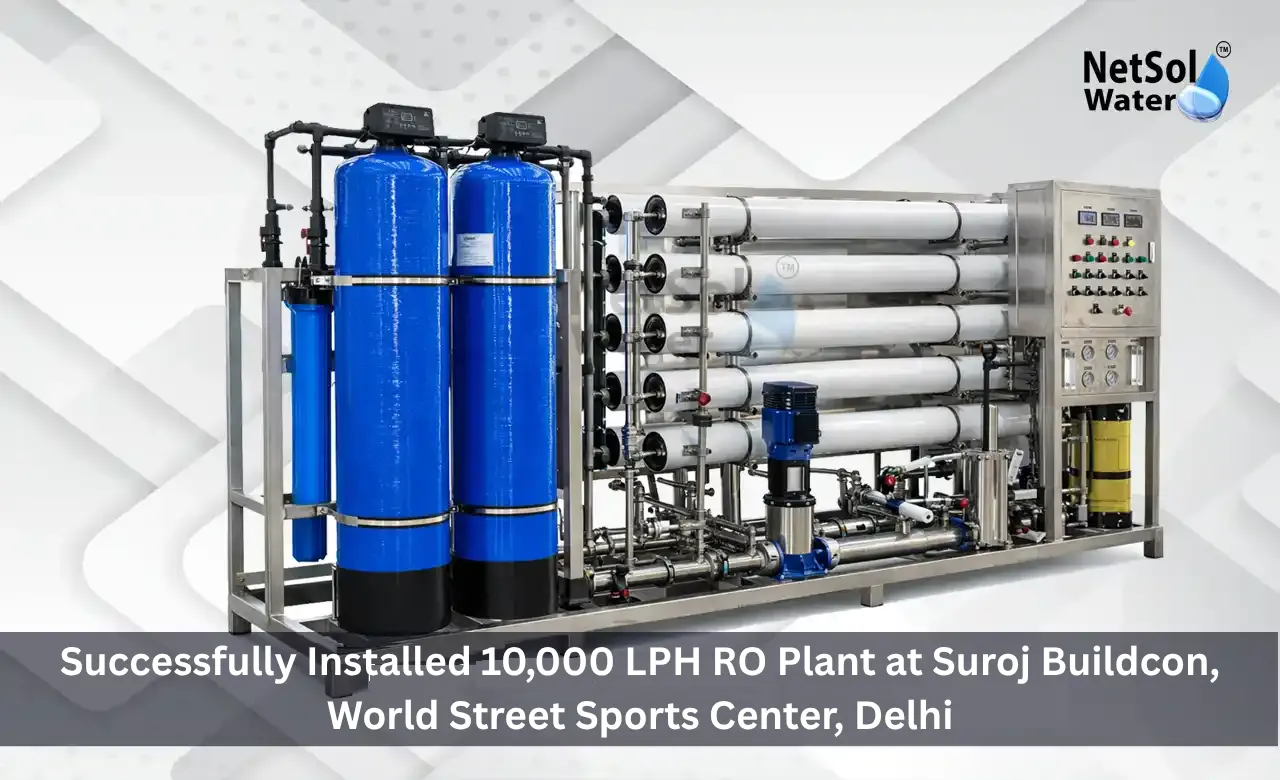
Successfully Installed 10,000 LPH RO Plant at Suroj Buildcon, World Street Sports Center, Delhi
Suroj Buildcon at World Street Sports Center in Delhi required a dependable water treatment solution to meet its operational water needs. For such a facility, the quality and availability of treated water can affect daily activities and the overall management of water resources. The project therefore called for a treatment system that could process the available water and provide a suitable source of treated water for intended use.
We completed the installation of a 10,000 LPHReverse Osmosis plant at the site. The project focused on providing a practical treatment system that could support the client’s water requirement through a structured purification process. Reverse Osmosis offers a suitable method for reducing dissolved impurities in feed water. It works by pushing water through a semi-permeable membrane under pressure while separating a large part of the dissolved salts and other unwanted substances.
The successful completion of the installation added a dedicated water treatment system to the facility. It also demonstrated the importance of selecting the right plant capacity and arranging the treatment stages in a suitable sequence.
Project Overview
A commercial water treatment project needs more than the installation of a single purification unit. It requires an understanding of the site requirement and a treatment arrangement that can support regular operation. The project at Suroj Buildcon, World Street Sports Center, Delhi was planned around this need. The main objective was to install a suitable RO system with sufficient treatment capacity for the intended application.
The scope of the project included the installation of a 10,000 LPH RO plant. The treatment system was selected to address the need for treated water through membrane-based purification. The project also involved arranging the plant components in a practical sequence so that incoming water could move through the required treatment stages before reaching the final treated water section.
The installation had to suit the project site and provide an organised treatment setup. Proper equipment placement and system connection were important because the treatment process depends on coordination between different components. A well-planned arrangement also supports easier operation and maintenance.
With these requirements in mind, the project moved from planning to installation at the client’s facility. The next section looks at the client and explains the project requirement in relation to the site.
Client Details
Suroj Buildcon was the client for this project. The installation took place at its World Street Sports Center facility in Delhi. The need for an RO plant indicates that the facility required a controlled source of treated water for its intended operations. In a commercial setting, water treatment helps provide better control over water quality when the incoming water contains dissolved substances that need to be reduced. The treatment system can also help create a more consistent source of processed water than relying only on untreated feed water.
For this project, the client selected a system with a 10,000 LPH treatment capacity. That choice established a clear treatment scale for the installation and allowed the plant to be designed around the required output.
The project was carried out at a specific commercial facility in Delhi. Its location was an important part of the installation because the treatment system had to fit the available site conditions and work within the operational setting of the facility.
Detail
Information
Client
Suroj Buildcon
Facility
World Street Sports Center
Location
Delhi
Solution Provided
10,000 LPH RO Plant
Installed By
Netsol Water
Project Location
The location of a water treatment plant influences how the equipment is arranged and how the system is connected. Commercial facilities often have existing infrastructure and space limitations that must be considered before equipment installation begins. The RO plant at Suroj Buildcon was installed at World Street Sports Center in Delhi.
Delhi is a large urban environment where commercial sites can have varied water sources and different treatment requirements. For a project like this, the treatment system must fit the actual site rather than follow a fixed arrangement. The plant therefore needed to be positioned in a manner that allowed the treatment stages and related connections to function properly.
The World Street Sports Center site provided the setting for the installation of the 10,000 LPH system. The project team had to consider the available installation area and the practical arrangement of the treatment equipment. This helped create a setup that could support the intended treatment process without unnecessary complications.
Once the location and site needs were considered, the next major factor was plant capacity. The treatment output had to match the purpose for which the system was installed.
Plant Capacity
Selecting the right plant capacity is important because an RO system must process enough water to serve the intended requirement. A plant with insufficient capacity may not meet demand when treated water is needed. A suitable capacity provides a defined treatment output and creates a clear operating basis for the facility.
For Suroj Buildcon, Netsol Water installed a 10,000 LPH RO plant. LPH stands for litres per hour. This means the plant has a designed treatment capacity of 10,000 litres of feed water per hour under the relevant operating conditions.
The installed capacity gives the project a substantial treatment scale for commercial use. It provides a clear flow rate for planning the treated water supply within the facility. At the same time, actual production can depend on operating conditions and feed water characteristics. Factors such as membrane performance, pressure, water temperature and feed quality can influence real output.
The 10,000 LPH capacity formed the basis of the treatment system. To achieve effective purification, the plant also needed the right treatment technology. Reverse Osmosis was selected as the main purification process for the project.
Parameter
Specification
Installed Capacity
10,000 LPH (Litres Per Hour)
Treatment Technology
Reverse Osmosis (RO)
Project Site
World Street Sports Center, Delhi
Plant Type
Commercial / Industrial RO Plant
Influencing Factors
Membrane performance, pressure, water temperature, feed quality
Treatment Technology
The treatment technology determines how the plant removes unwanted substances from water. For this project, Reverse Osmosis served as the primary purification method. RO is widely used in water treatment where the objective is to reduce dissolved salts and other impurities from feed water.
1. Reverse Osmosis Process
Reverse Osmosis works by applying pressure to water and directing it through a semi-permeable membrane. The membrane allows water molecules to pass through while restricting many dissolved salts and other dissolved contaminants. The process produces two streams. One is the treated water that passes through the membrane and the other is the reject or concentrate stream that carries a higher level of rejected dissolved substances.
The performance of an RO plant depends on preparing the feed water before it reaches the membranes. Suspended particles and other substances can affect membrane operation if the water enters the RO section without suitable pre-treatment. Pre-treatment therefore supports the main membrane stage by improving the quality of water entering the RO unit.
2. Role of Membrane Treatment
The RO membrane acts as the central separation stage in the plant. Water passes across the membrane under pressure. The membrane separation process reduces the concentration of dissolved substances in the permeate stream. This makes RO useful when a facility needs a more controlled treated water source.
The technology selected for the Suroj Buildcon project was therefore aligned with the need for membrane-based purification. However, the exact feed water chemistry remains important because RO design depends on incoming water quality. This brings the discussion to the influent characteristics considered for the project.
Influent Characteristics
Understanding the incoming water quality is an important part of designing and operating an RO plant. Feed water characteristics determine the treatment burden placed on the system and influence the level of pre-treatment required before membrane filtration. Parameters such as TDS, hardness, turbidity, iron, suspended matter and microbial content can affect treatment performance.
The importance of feed water quality remains clear. Dissolved salts can increase the load on the RO membrane. Hardness-forming substances can contribute to scaling under unsuitable operating conditions. Turbidity and suspended particles can affect upstream filtration. Iron and other unwanted substances may also need attention depending on the source water.
The treatment system must therefore address the feed water in stages. Pre-treatment prepares the incoming water, while the RO section carries out the primary dissolved impurity reduction. The following section explains how this treatment sequence works.
Treatment Process
A successful RO plant follows a treatment sequence in which each stage prepares the water for the next. This sequence helps protect the major treatment components and improves the overall functioning of the system. At the Suroj Buildcon site, the 10,000 LPH RO plant was arranged around the basic principle of controlled feed water movement followed by membrane purification.
1. Raw Water Entry and Pre-Treatment
The process begins when raw water enters the treatment system. Before the water reaches the RO membrane, it needs appropriate conditioning and filtration. Pre-treatment helps reduce the load caused by particles and other substances that may interfere with downstream equipment.
Depending on the actual feed water condition, pre-treatment can include filtration and other conditioning stages. The purpose is to provide water of a more suitable quality for the RO membrane.
2. Pressure and RO Feed
After the required pre-treatment, the water moves towards the RO section. The RO membrane needs pressure to perform the separation process. A high-pressure arrangement pushes water through the membrane while the membrane restricts many dissolved impurities.
This stage produces the treated permeate stream. It also generates reject water that contains a higher concentration of the substances removed by the membrane. Managing these two streams is an important part of RO operation.
3. Treated Water Collection
The permeate produced by the RO membrane moves into the treated water section for collection and use. The final water quality depends on feed water quality and plant operating conditions. The treatment sequence therefore creates a controlled path from raw water entry to purified water output.
Every stage supports the next. Good pre-treatment helps protect the membrane. Proper membrane operation supports the desired separation. Controlled collection ensures that the treated stream remains available for its intended application.
The treatment process can perform effectively only when the equipment supporting each stage is selected and installed correctly. This makes the major equipment an important part of the project.
Stage
Function
Raw Water Entry & Pre-Treatment
Conditions and filters incoming water to reduce the load reaching the RO membrane
Pressure and RO Feed
High-pressure arrangement pushes water through the membrane, producing permeate and reject streams
Treated Water Collection
Permeate moves into the treated water section for collection and use
Major Equipment
Equipment selection has a direct effect on the working of a water treatment plant. Each component performs a specific role and must work in coordination with the other stages. At the Suroj Buildcon project, the equipment arrangement supported the 10,000 LPH RO treatment process.
1. RO Membrane System
The RO membrane system forms the main purification section of the plant. Its function is to separate a large share of dissolved substances from the feed water by using pressure-driven membrane filtration. The permeate becomes the treated water stream while the concentrate leaves as reject water.
2. Feed and Pressure Arrangement
An RO plant needs controlled water flow and pressure so that the membrane can operate within its required conditions. The feed arrangement supplies water to the treatment line and the pressure system supports membrane filtration.
3. Pre-Treatment Equipment
Pre-treatment equipment prepares the feed water before it reaches the RO membrane. Its role is to reduce the effect of suspended matter and other feed water conditions that could interfere with membrane performance.
4. Piping and Interconnections
Piping forms the connection between the different treatment stages. Correct routing is important because the system depends on controlled movement of raw water, treated water and reject water. Proper connections also help reduce the risk of leakage or incorrect flow during operation.
Together, these components create the functional treatment system. Their correct installation was the next step in completing the project.
Equipment
Role in the System
RO Membrane System
Main purification section; separates dissolved substances from feed water
Feed and Pressure Arrangement
Supplies water to the treatment line and supports membrane filtration
Pre-Treatment Equipment
Reduces suspended matter and conditions that could interfere with membrane performance
Piping and Interconnections
Connects treatment stages and controls movement of raw, treated and reject water
Installation Process
Plant installation requires careful planning because water treatment equipment must work as one connected system. The installation process at the Suroj Buildcon site involved arranging the treatment system so that the major components could function in the required sequence.
The first stage involved preparing the site for equipment placement. The installation area needed to provide sufficient space for the plant and its connections. Equipment was then positioned according to the planned treatment flow. This arrangement helped maintain a logical path from raw water entry through the treatment section to treated water collection.
After placement, the different system components were connected to form the complete treatment line. The required piping connections were arranged between the relevant stages. Electrical and operational connections were also completed as part of the installation process.
Attention to connection and alignment was important because even a properly selected treatment unit can perform poorly when the installation does not support the required flow and operating conditions. The installation team therefore completed the system as an integrated setup rather than treating each component as a separate unit.
After the physical installation was completed, the system moved to the testing and commissioning stage. This step was necessary before regular operation could begin.
Plant Commissioning
Commissioning confirms that an installed water treatment plant is ready for operation. It allows the team to test the system and identify issues that may not be visible during physical installation. For the 10,000 LPH RO plant, commissioning formed the final technical stage before the system could be placed into regular service.
The commissioning process involved checking the installed treatment arrangement and verifying that the equipment and connections worked together correctly. The team assessed water movement through the treatment stages and checked the operating behaviour of the RO section. The system also needed to demonstrate that it could function according to the intended project capacity and treatment arrangement.
Commissioning is particularly important for RO plants because membrane treatment depends on controlled flow and pressure. The team must therefore ensure that the treatment sequence operates correctly before the plant is handed over for regular use.
Once the system passed the required checks, the plant could move into operation. This provided the client with a dedicated treatment system for the intended use of treated water.
Treated Water Reuse
Treating water is most useful when the facility can make effective use of the treated output. An RO plant does not simply improve water quality at the treatment point. It creates a processed water stream that can support the applications for which the system was installed.
At Suroj Buildcon‘s World Street Sports Center facility, the 10,000 LPH RO plant provides treated water for the client’s intended requirement. The practical value of the system comes from providing a dedicated source of treated water that the facility can manage according to its operational needs. The plant capacity and treatment process establish a structured way to produce treated water rather than leaving the facility dependent only on incoming raw water quality.
This treatment arrangement also connects directly with the project’s overall performance. A successful result depends on the plant providing the required treatment capacity while operating as an integrated system.
Results and Performance
Project results help show whether an installed treatment system has met its intended purpose. In this project, the main measurable fact provided is the successful installation of a 10,000 LPH RO plant at the client’s facility.
The completed installation gave Suroj Buildcon a dedicated commercial RO treatment system designed for a capacity of 10,000 litres per hour. This provides the facility with a defined treatment output and a structured process for producing treated water.
The project also established a complete treatment route from feed water entry to RO-based purification and treated water collection. The value of this arrangement lies in its ability to bring water treatment into a dedicated plant system that can be managed and operated for the facility’s requirements.
The successful completion of the installation is itself an important project outcome. It shows that the planned treatment capacity and RO technology were implemented at the specified site. The next measure of project value comes from the client’s response.
Confirmed Outcome
Status
Installation of 10,000 LPH RO Plant
Completed
Treatment System Connections (piping, electrical)
Completed
Plant Commissioning
Completed
Laboratory/TDS Data
Not provided — not included in this case study
Customer Feedback or Testimonial
Customer feedback provides useful insight into how a completed installation performs from the client’s perspective. It can confirm whether the project met the expected requirement and whether the client was satisfied with the installation and treatment solution.
We are pleased with the installation of the 10,000 LPH RO plant at our World Street Sports Center facility in Delhi. Netsol Water understood our requirement and provided a suitable water treatment solution for the site. The installation was completed professionally and the system was commissioned as planned.
The overall installation process was handled in an organised manner. The team supported us during equipment installation, system connections and commissioning. We appreciate the professional approach taken by Netsol Water and the attention given to completing the project according to our requirement.
The 10,000 LPH RO plant has provided us with a dedicated water treatment system for our facility. We are satisfied with the successful completion of the project and the support provided by the Netsol Water team.
The installation of the 10,000 LPH RO plant at Suroj Buildcon‘s World Street Sports Center in Delhi created a dedicated water treatment solution suited to the project’s stated requirement. The system uses Reverse Osmosis as its main purification technology and provides a defined treatment capacity of 10,000 litres per hour. From site preparation and equipment placement to system connections and commissioning, each stage contributed to the successful completion of the project.
The project also highlights the importance of choosing the right treatment capacity and arranging the treatment process in a clear sequence. Proper pre-treatment supports membrane operation while the RO stage helps reduce dissolved impurities from the feed water. The completed installation gives the client a structured source of treated water for its intended commercial requirement.
Netsol Water is the leading Commercial RO Plant Manufacturer in Delhi and provides water treatment solutions for commercial and industrial requirements. Businesses looking for a suitable RO plant can discuss their water source, treatment needs and required capacity with the Netsol Water team.
For information about RO plant solutions or to discuss a similar requirement, contact Netsol Water for a consultation.
Successfully Installed 3000 LPH RO Plant at SMC Corporation Noida
Reliable water treatment plays an important role in facilities where a regular supply of suitable-quality water is needed for day-to-day operations. For SMC Corporation in Noida, the requirement was to install a commercial RO plant that could provide treated water at a suitable operating capacity. To meet this need, Netsol Water completed the installation of a 3000 LPH RO plant at the client’s Noida facility.
Netsol Water is a leading water and wastewater treatment company in the Noida region. The company manufactures commercial and industrial RO plants in different capacities and provides design, installation and commissioning support for water treatment projects.
The project focused on providing SMC Corporation with an RO-based water treatment solution that could support its operational water requirements. A properly selected RO system helps reduce dissolved impurities from feed water and produces treated water for suitable applications. The 3000 LPH capacity also provided a defined treatment rate for the facility. This project shows how a Commercial RO Plant Manufacturer in Noida can support a commercial facility through planned system selection, installation and commissioning.
Project Overview
A commercial water treatment project requires more than the supply of an RO machine. The treatment capacity must match the intended demand and the system must fit the available facility and operating conditions. The installation at SMC Corporation was planned around these basic requirements.
The project involved the installation of a 3000 LPHReverse Osmosis plant at SMC Corporation in Noida. The main objective was to provide a dedicated water treatment system that could process incoming water and produce treated water through the RO process. The selected capacity gave the facility a treatment output of up to 3,000 litres per hour under the rated operating conditions of the plant.
The scope of the project centred on the installation of the RO treatment plant and the activities required to bring the plant into operation. This included positioning the treatment equipment, completing the required connections and carrying out testing before regular operation. Since water treatment performance depends on correct installation as well as the treatment process itself, the project required attention to both equipment setup and commissioning.
Netsol Water‘s commercial RO systems are offered across a wide range of capacities. Its published commercial RO range includes systems from small commercial units to much larger installations. The 3000 LPH plant selected for this project therefore formed part of a broader commercial water treatment capability.
Client Details
SMC Corporation is the Indian subsidiary of SMC Corporation Japan and operates in the field of pneumatic and automation technology. SMC India was incorporated in 1995 and has its head office at A-4, Sector-88, Noida. The company operates manufacturing facilities in India and maintains a network that supports its industrial customers.
The Noida facility provides an industrial setting where a dependable utility water supply can support normal facility operations. In such an environment, water quality must be considered when selecting a treatment system because untreated water may contain dissolved salts, suspended matter or other impurities that make it unsuitable for a specific application.
The project information available for this installation does not provide detailed information about SMC Corporation‘s exact end use of the RO water. Therefore, it would not be correct to assign a specific application such as drinking, process water, boiler feed or cleaning water without supporting documentation. The confirmed requirement was the installation of a 3000 LPH RO plant at the client’s Noida facility.
With the client requirement established, the location became an important part of the project planning and execution.
Project Location
The project was carried out at SMC Corporation, A-4, Sector-88, Noida. SMC Corporation‘s official corporate information identifies this address as its Noida head office and factory location.
Noida is a major industrial and commercial area within the Delhi-NCR region. An industrial facility in this setting may have continuous utility requirements and limited tolerance for interruptions in essential services. Water treatment equipment must therefore be installed in a way that suits the available site and allows the system to operate as intended.
The project location also offered a practical advantage for Netsol Water because the company operates in Noida and the wider Delhi-NCR region. Netsol Water is a water and wastewater treatment company and provides commercial RO solutions for customers in the region.
With the site and facility requirements understood, the next consideration was choosing a treatment capacity that matched the intended demand.
Plant Capacity
Plant capacity determines how much water a treatment system can process within a given period. Selecting an appropriate capacity helps ensure that the system can support the required water demand without being significantly undersized or unnecessarily oversized.
For this project, Netsol Water installed a 3000 LPH RO plant, where LPH means litres per hour. At its rated capacity, the system is designed to treat up to 3,000 litres of feed water per hour. If operated continuously at its rated flow, this corresponds to a theoretical gross treatment throughput of 72,000 litres over 24 hours. Actual daily production can vary according to operating hours, feed-water conditions, recovery, membrane performance, cleaning cycles and other plant conditions.
Parameter
Value
Rated Capacity
3000 LPH (Litres Per Hour)
Theoretical Gross Throughput (24 hrs continuous)
72,000 litres
The 3000 LPH specification provided SMC Corporation with a defined treatment capacity for its facility. It also established a clear operating benchmark for the installed equipment.
Netsol Water‘s published commercial RO range includes capacities from 50 LPH to 10,000 LPH and beyond for larger requirements, showing that commercial systems can be selected according to the expected water demand.
Capacity alone, however, does not determine treatment performance. The quality of the incoming water and the selected treatment technology also influence the design.
Treatment Technology
Reverse Osmosis is widely used when a water treatment system needs to reduce dissolved salts and other impurities from water. The process uses pressure to push feed water through a semi-permeable membrane. Water passes through the membrane while a significant portion of dissolved substances and other contaminants remains in the reject stream.
For the SMC Corporation project, the selected technology was Reverse Osmosis. The basic purpose of the RO stage was to convert incoming feed water into treated water through membrane-based separation.
1. Reverse Osmosis Working Principle
The RO process starts when feed water reaches the membrane under pressure. The pressure must be sufficient to overcome the natural osmotic pressure of the feed water. As the pressurised water moves across the membrane surface, water molecules pass through the membrane while many dissolved salts and other unwanted substances are retained.
This process makes RO different from simple filtration. A conventional filter mainly removes suspended particles based on their physical size. RO also addresses many dissolved impurities that cannot be removed through ordinary mechanical filtration.
Netsol Water explains that its RO plants use membrane treatment to reduce impurities from incoming water and produce purified water.
2. Importance of Pretreatment
RO membranes need suitable feed-water conditions to maintain performance. Suspended particles, excess turbidity, chlorine and other substances can affect membrane life and operating efficiency. For this reason, commercial RO plants commonly use suitable pretreatment before water reaches the RO membrane.
The exact pretreatment arrangement installed at SMC Corporation has not been provided in the available project information. Therefore, specific filter models, dosing arrangements, membrane models or chemical treatment values cannot be confirmed for this project. The treatment discussion remains focused on the confirmed RO technology and the normal role of pretreatment in protecting the membrane.
Influent Characteristics
Understanding the incoming water quality is an important part of RO system planning. Water sources can contain different levels of dissolved solids, hardness, turbidity, iron, organic matter and microbial content. The treatment design should consider these characteristics before the equipment is selected and commissioned.
For this project, no detailed feed-water laboratory report or exact influent values have been provided. There are therefore no confirmed project-specific figures for TDS, hardness, turbidity, iron, pH or microbial load that can be reported.
The absence of these figures does not change the purpose of the installed RO system. Rather, it means that the case study should not assign numerical values that have not been documented. In a normal RO design process, these parameters help determine pretreatment requirements, membrane selection, operating pressure and expected performance.
The incoming water first needs suitable conditioning so that it can enter the membrane stage under appropriate conditions. From there, the treatment process can continue toward the production of treated water.
Treatment Process
A successful RO installation depends on a properly arranged treatment sequence. Each stage supports the next by preparing the water for the following treatment step. This reduces the load placed on the RO membrane and supports stable operation.
1. Raw Water Entry and Pretreatment
The treatment journey begins when raw or feed water enters the treatment system. Before the water reaches the RO membrane, the system normally prepares the feed through pretreatment. This stage can remove suspended matter and reduce substances that may create problems for the membrane.
The exact pretreatment equipment used at SMC Corporation has not been specified in the project details. However, the principle remains the same. Water must reach the membrane in a condition suitable for RO operation.
2. Pressure and Membrane Treatment
After the necessary pretreatment, feed water moves toward the high-pressure section of the RO system. The pump provides the pressure needed to drive water through the semi-permeable RO membrane.
The membrane separates the incoming stream into two paths. The permeate contains the water that passes through the membrane. The reject stream carries a higher concentration of retained dissolved substances and does not form part of the treated-water output.
3. Treated Water Collection
The permeate then moves toward the treated-water collection or subsequent use point. The final arrangement depends on the site’s piping and storage configuration.
This sequence provides a clear connection between the raw water source and the treated-water output. Proper operation of each stage helps the plant maintain the intended treatment function.
Major Equipment
Proper equipment selection supports consistent plant operation. An RO plant needs several components to move water, condition the feed, apply pressure and carry out membrane separation.
For this project, the confirmed major treatment equipment is the 3000 LPH RO plant itself. The plant includes the RO treatment assembly required to process feed water at its rated capacity. Netsol Water‘s commercial RO systems commonly use components such as membranes, high-pressure pumps, pressure vessels, control panels and dosing pumps, depending on the plant configuration.
Equipment
Function
RO Membrane Assembly
Performs the main separation process. It allows water to pass through under pressure while retaining a substantial portion of dissolved impurities.
High-Pressure Pump
Provides the pressure needed for membrane separation. Its operation is directly linked to maintaining the pressure conditions required by the RO process.
Control Panel
Helps the operator manage the plant and monitor its operating sequence. The exact control philosophy and automation level installed at SMC Corporation have not been provided.
Pretreatment and Supporting Components
Protects the RO membrane and helps prepare the feed water. The specific filter vessels, dosing units, valves and instruments used for this project are not documented in the information available.
As a result, no unverified equipment list is presented as a project fact.
Installation Process
Plant installation requires careful planning because the equipment must fit the site while maintaining proper connections between the different treatment stages. The work should also allow operators to access the system for normal inspection and maintenance.
The installation at SMC Corporation involved placing the 3000 LPH RO system at the client’s Noida facility and preparing it for operation. The equipment had to be positioned appropriately before the required piping, water connections and electrical connections could be completed.
Once the equipment position was established, the installation team could connect the treatment sections so that water could move through the intended process. Electrical and control connections were also required to prepare the plant for testing.
The final stage of installation involved checking the physical setup and confirming that the system was ready for commissioning. This step was important because a treatment plant must be mechanically and electrically prepared before performance testing can begin.
Plant Commissioning
Commissioning confirms whether an installed treatment system is ready for regular operation. It provides an opportunity to check the plant under operating conditions and identify installation issues before the system enters normal service.
After installation, the RO plant was prepared for testing and commissioning. The commissioning process involved checking the operating sequence and confirming that the equipment could function as intended. Water movement through the treatment system had to be verified along with the operation of the principal components.
The commissioning stage also provided an opportunity to observe the plant’s treatment behaviour at its intended operating capacity. A proper commissioning process helps confirm that the system is connected correctly and that the plant can move from installation into routine operation.
The available project information does not include detailed commissioning readings such as recovery percentage, feed pressure, permeate TDS or hourly production records. These figures have therefore not been added to the project results.
Treated Water Reuse
Treating water becomes more useful when the resulting water can support an appropriate application within the facility. RO-treated water can be directed to a designated use point depending on the quality requirement and the site’s internal water management arrangement.
For the SMC Corporation project, the confirmed scope establishes the installation of a 3000 LPH RO plant but does not specify the exact final use of the treated water. It would therefore be inappropriate to state that the water was used for a particular process without supporting information.
The practical value of the system lies in creating a dedicated source of treated water for the client’s identified requirement. When used appropriately, such a system can help provide greater control over the quality of water supplied to the intended application.
Results and Performance
Project results provide a practical measure of whether the installed system met its intended purpose. In this installation, the major confirmed outcome was the successful installation and commissioning of a 3000 LPH RO plant at SMC Corporation‘s Noida facility.
The system established a dedicated RO-based treatment capacity of 3,000 litres per hour. This provided the client with a defined water treatment system rather than depending only on untreated incoming water for the relevant requirement.
The treatment technology also created a process for reducing dissolved impurities through membrane separation. Netsol Water identifies RO as one of its core commercial water treatment solutions and offers commercial systems in different capacities for varied applications.
No project-specific laboratory figures, before-and-after water quality results or long-term operating data were provided. The performance discussion is therefore limited to the confirmed installation, capacity and successful movement of the plant into operation. This approach keeps the project record factual and avoids presenting unverified performance claims.
Customer Feedback/Testimonial
Customer feedback helps demonstrate how a completed project performs from the client’s perspective. It can also provide useful information about installation quality, plant operation and overall project satisfaction. The 3000 LPH RO plant was successfully installed at the specified Noida facility and taken through the required commissioning stage.
Netsol Water‘s completed installation at SMC Corporation shows how a properly selected RO system can provide a dedicated water treatment solution for a commercial facility. The project combined a defined treatment capacity with membrane-based purification and onsite installation support. Netsol Water operates from the Noida region and provides commercial RO systems in a range of capacities for different water treatment requirements.
Businesses looking for a Commercial RO Plant Manufacturer in Noida can consult Netsol Water to discuss their feed-water source, treatment capacity and application requirements. A suitable system should always be selected after understanding the site’s water quality and expected demand rather than simply choosing a standard capacity.
Netsol Water is the leading commercial RO plant manufacturer, supplier and exporter based in Noida, according to its published company information, and provides commercial RO systems across a broad capacity range.
For organisations planning a new RO installation or upgrading an existing water treatment system, professional consultation can help define the right treatment approach. Contact Netsol Water to discuss your requirement and request a suitable commercial RO plant solution for your facility.
What Is the Purpose of Reverse Osmosis in a Water Treatment Plant?
Water plays an important role in every commercial and industrial activity. Many businesses need clean water for production, processes, cooling systems, food preparation, and daily operations. When water contains dissolved salts, chemicals, and other unwanted substances, it can affect product quality and equipment performance. This is why many industries use reverse osmosis technology in their water treatment plants.
Reverse osmosis is a membrane filtration process that removes impurities from water by passing it through a special membrane. This process enables industries to receive water of good quality for various purposes. Many organizations continue to invest in advanced treatment plants to ensure smooth operations as water quality issues grow.
We are the leading commercial RO plant manufacturer and offer the best water treatment plants for various industries. By understanding the purpose of reverse osmosis in a water treatment plant, businesses can select the appropriate plant for their requirements and ensure they get better water quality for the long term.
Removing Dissolved Salts and Impurities
Purity of water is essential for industries, owing to the fact that impurities can harm equipment and end products alike. Reverse osmosis addresses this issue by removing dissolved substances that traditional filters cannot. Let’s take a look at some of the important factors regarding how impure water is treated by reverse osmosis.
1. Removal of Dissolved Salts
Dissolved salts are present in many water sources, causing the water to be hard and therefore unsuitable for industrial use. Reverse osmosis membranes reject these salts from the water and yield cleaner output water. This process enhances water quality and renders it fit for manufacturing and processing purposes.
2. Removing Harmful Contaminants
Heavy metals, chemicals, and undesirable minerals may be present in water. These substances are blocked by reverse osmosis membranes and cannot enter the treated water stream. This results in industries getting cleaner water and, hence, improved operational performance.
3. Enhancing Water Quality
Significant improvement in water quality is achieved when salts and contaminants are removed. With improved water quality, industries can ensure product uniformity and minimize problems associated with poor water quality. As a result, reverse osmosis has become a key component of today’s state-of-the-art water treatment facilities.
Reverse osmosis removes dissolved impurities and produces water suitable for industry. This process ensures smooth operations and helps companies uphold quality standards during production.
Protecting Industrial Equipment
Quality water is needed for the smooth and efficient operation of industrial equipment. Poor water quality can bring about issues such as scaling, corrosion, and other maintenance problems. Reverse osmosis is a key factor in alleviating these problems. Let’s take a look at some of the ways reverse osmosis benefits equipment protection.
1. Prevention of Scale Formation
Water with high mineral content can cause mineral deposits in pipes, boilers, and heat exchangers. These deposits decrease efficiency and cause energy loss. Reverse osmosis filters out minerals before they enter the system, thus preventing scale formation.
2. Elimination of Corrosion Hazards
Some contaminants in water may lead to corrosion problems in industrial equipment. Corrosion damages metal surfaces and reduces the lifetime of equipment. These harmful compounds are eliminated by reverse osmosis, and the resulting water is more resistant to corrosion.
3. Lower Maintenance Requirements
Equipment runs more smoothly when supplied with cleaner water, which reduces equipment failures and maintenance problems. This benefits industries by cutting down on repair costs and boosting productivity. Cleaner systems, of course, operate reliably for a longer period.
Reverse osmosis supports the long-term health of industrial equipment. Businesses that invest in quality water treatment facilities experience enhanced operational efficiency and lower maintenance costs.
Supporting Product Quality in Different Industries
Many factors affect product quality, and water quality is one of the most significant. Industries that use water as a raw material must ensure the water they receive aligns with necessary standards. Reverse osmosis is part of the solution. Let’s take a look at some areas where reverse osmosis helps maintain product quality.
1. Food and Beverage Production
Food and beverage manufacturers demand water that is safe and has a good taste. RO can remove impurities that could affect flavour, appearance, or quality. This process helps manufacturers make products that are consistent for consumers.
2. Pharmaceutical and Manufacturing
In the pharmaceutical industry, water used for manufacturing must be of high quality. Reverse osmosis can be used to treat the water and deliver purified water that meets these needs. Good water quality leads to better and safer pharmaceutical products.
3. Industrial and Manufacturing Processes
Water is involved in many manufacturing processes. Impurities can be troublesome and may negatively impact the quality of the end product. RO delivers higher quality water for stable and efficient manufacturing processes.
RO technology is used across various industries to ensure quality standards. Maintaining good water quality helps businesses build a better reputation in the market and satisfy their customers.
Promoting Water Conservation and Sustainable Operations
Adopting water conservation measures is now a major concern for industries worldwide. Organizations are looking for ways to save water and use it more efficiently. Reverse osmosis is also part of these efforts, contributing to better resource management and water reuse. Let’s take a look at some of the ways reverse osmosis contributes to sustainability.
1. Water Recovery and Reuse
Many reverse osmosis systems make it possible to recover and reuse treated water for industrial purposes. This helps conserve fresh water resources and promotes sustainable water use.
2. Reduced Environmental Impact
Manufacturers and users of treated water can reduce their environmental footprint through more efficient use of treated water in industry. Industries with greater efficiency in treated water use gain environmental benefits. Reverse osmosis can minimize the release of pollutants into the environment and promote more environmentally friendly operations.
3. Support for Long-Term Sustainability
The demand for water is growing, and industries must find sustainable solutions. By using RO, businesses can optimize water use and prepare for future water challenges.
Reverse osmosis is a significant technology for present-day industries because it supports both water conservation and quality maintenance. Operational efficiency and environmental benefits are both advantages for businesses.
RO is important in water treatment plants, as it removes dissolved salts, contaminants, and unwanted minerals from water. It not only helps improve water quality but also protects industrial equipment, ensures product consistency, and promotes sustainable water management. These benefits help industries operate efficiently while maintaining quality and environmental standards.
Netsol Water is the leading commercial RO plant manufacturer and supplier of advanced solutions tailored to various industrial and commercial requirements. Partnering with Netsol Water ensures businesses can expect consistent water treatment results and long-term benefits. For more information about reverse osmosis technologies, or if you need professional advice to help determine the right reverse osmosis plant for your project, reach out to a reliable Commercial RO Plant Manufacturer today and schedule a consultation.
Clean water is essential for good health and easy industrial activities. Water must be free from undesirable impurities and safe for use in the home, business, or industry. Dissolved salts, chemicals, bacteria, and other harmful particles are present in many water sources. These impurities lower water quality and present difficulties in use and industrial applications. For this reason, many industries and commercial buildings opt for reverse osmosis technology in water purification.
RO water treatment technology has emerged as one of the most trusted water purification processes, given its ability to effectively and efficiently eliminate many contaminants from water. It helps increase the quality of water, which can be used for drinking, manufacturing, healthcare, food processing, and many other applications. A commercial RO plant manufacturer can assist businesses in choosing the right RO plant as per their water quality and water requirements. We are the leading commercial RO plant manufacturer, providing high-performance and dependable RO water plants for various industries and commercial applications.
Why Reverse Osmosis Is Used in Water Treatment
RO offers a reliable means of decontamination and enhances the quality of water. Specific industries have specific requirements for water quality, and these standards can be consistently met by reverse osmosis. Let’s take a look at some of the key reasons why reverse osmosis is utilized in water treatment.
1. Removes Dissolved Salts
Underground water may be high in salt content. These salts make the water harder and damage industrial equipment. Reverse osmosis forces water through a special membrane, which separates dissolved salts from pure water. This process softens the water and enhances water quality. This means industries can benefit from a supply of purified water that enables efficient running and lower maintenance costs.
2. Eliminates Harmful Contaminants
Bacteria, viruses, heavy metals, and harmful chemicals are found in many water sources. Industries can be exposed to these contaminants, which pose health hazards and diminish product quality. A significant amount of these unwanted substances is removed by reverse osmosis. The treated water can be used in a wide variety of applications, including drinking water, food production, and healthcare facilities. This process can also help ensure that a business can be confident it is meeting water quality standards.
3. Enhances Water Taste and Quality
Excessive minerals and chemicals in water can cause it to taste or smell bad. Reverse osmosis can remove many of these unwanted elements while increasing water quality. Improved water taste boosts satisfaction in restaurants, hotels, offices, and educational facilities. It also provides clean water for industries that need it to produce quality products.
Benefits of Reverse Osmosis in Commercial and Industrial Applications
Reverse osmosis has several practical applications for commercial buildings and industries: it safeguards equipment, enhances efficiency, and supports long-term business growth. Each business has unique needs for its water treatment system, and these needs can be addressed by designing and installing a reverse osmosis plant correctly. Let’s take a look at some of the significant advantages of RO in commercial and industrial applications.
1. Protects Industrial Equipment
Scaling occurs in boiler pipelines, cooling towers, and production equipment due to hard water. These deposits cause inefficiency and higher repair costs. The minerals that cause scaling are removed by reverse osmosis. Clean water keeps costly machinery running and wards off business interruptions. This enhances operational efficiency and prolongs the life of the equipment.
2. Reduces Operating Costs
Purer water means better performance of industrial systems. Using purified water eliminates the need for excessive equipment cleaning and reduces equipment repair requirements. Businesses also save energy due to cleaner, more efficient equipment. While an initial investment is necessary for installing the RO system, it helps companies save money in the long run through reduced maintenance and operating costs.
3. Supports Environmental Responsibility
The reverse osmosis process can help industries optimize their water use. Many companies reuse treated water for various purposes. This minimizes water usage and contributes to sustainability. Improved water management also helps industries adhere to environmental regulations and preserve natural water resources for future generations.
Choosing the Right Commercial RO Plant Manufacturer
Choosing the right manufacturer is an important step, since the quality of the RO plant is directly related to water treatment efficacy. A good plant will produce uniform results and function efficiently for many years. Experienced manufacturers understand various applications and offer solutions suitable for each one. Let’s take a look at some of the important factors to consider when choosing the right manufacturer.
1. Experience and Technical Knowledge
An experienced manufacturer is familiar with a variety of water conditions and water treatment problems. The company studies water quality prior to designing the system. This approach enables companies to get what they need for their daily activities. Good engineering also enables better plant performance and minimizes future maintenance problems.
2. Quality Products and Reliable Components
A good manufacturer uses durable membranes, pumps, pressure vessels, and control systems. High-quality components improve system performance and increase equipment life. Reliable products also reduce maintenance requirements and ensure uninterrupted water treatment for commercial and industrial operations.
3. Strong Service and Customer Support
Water treatment systems require regular maintenance for smooth operation. A responsible manufacturer provides technical support, installation assistance, and maintenance services whenever required. Quick customer support helps businesses resolve technical issues without long production delays, which improves confidence and ensures continuous water availability.
Reverse osmosis has become one of the most effective methods for producing clean and safe water for commercial and industrial use. It removes dissolved salts, harmful chemicals, bacteria, and many other impurities while improving water quality and protecting valuable equipment. A properly designed RO plant supports better productivity, lower maintenance costs, and responsible water management.
Choosing an experienced Commercial RO Plant Manufacturer makes the entire process simple and dependable. Netsol Water is the leading Commercial RO Plant Manufacturer, delivering efficient water treatment solutions for different industries and commercial sectors. If you want a reliable water treatment plant or need expert guidance for your project, get in touch with Netsol Water today and request a consultation to find the right solution for your water treatment needs.
Many industries and even commercial places require clean water. A commercial RO plant purifies impurities and provides safe water for drinking. This technology is crucial to the production of food for many industries in India, including manufacturing units, hospitals, and hotels. Other areas in India also suffer from water quality issues related to the presence of minerals and the season. Therefore, water treatment systems are crucial to ensure seamless operations.
We are one such leading company that offers complete solutions for water purification systems. To set up an RO system, it should be done with proper planning and correct execution. All stages impact the overall system performance.
Site Assessment and Requirement Analysis
In order to create a successful installation, it is important to have a proper requirement analysis and site assessment. This is a critical step because the system may not represent the actual water demand or working conditions without it. This stage guarantees proper placement of the plant and proper function. The first step in commercial RO plant installation is to perform a detailed study of the water quality and usage requirements. Let’s take a look at some of the key points in this stage.
1. Water Quality Analysis
Water quality analysis is used to gain an understanding of the level of impurities in the source water. The engineers take samples and test for salts, hardness, and other undesirable material. This information is useful for selecting the appropriate level of filtration. If the water being fed to the system is highly contaminated, a more powerful RO system will be needed. This ensures that the plant design is in line with actual conditions and that there are no future performance problems.
2. Space and Utility Evaluation
Space evaluation is also crucial for seamless installation. Engineers check the available area for placing equipment, tanks, and pipelines. They also inspect the electricity supply and drainage. Good spacing eases maintenance and safe operation. If the utilities are arranged properly, the system will operate continuously without interruptions and help produce water continuously.
Design and Engineering Planning for a System
The system is designed and engineered to determine how the plant will operate following installation. During this phase, collected data is transformed into a usable system plan. This is an important part of the process, since a well-designed commercial RO plant installation will help reduce operational problems and ensure optimal performance.
Let’s take a closer look at some of the key elements of this phase.
1. Capacity and Flow Design
The amount of water produced by the plant in a day is determined by capacity planning. The engineer determines the amount of water demanded based on the needs of the industry. They determine flow rates to ensure that the system can accommodate maximum use without a drop in pressure. This enables the output to remain consistent throughout working hours. Energy savings and balanced performance are other advantages of proper capacity design.
2. Technical Layout Planning
Technical layout planning involves the positioning and connections for each unit. Filters, pumps, membranes, and storage tanks are designed by the engineers. They also design routes for pipe installations to minimize pressure loss. A clean design helps minimize installation mistakes and simplifies future maintenance. This ensures the system is organized and efficient.
Equipment Procurement and Installation Process
The procurement and installation process is an important phase where the design materializes. Quality equipment guarantees stable production and long-term performance. Commercial RO plant installation relies on the right selection and correct installation of all the components. Let’s take a look at some of the key points of this stage.
1. Selection of RO Components
The membranes, pumps, filters, and control systems are among the RO components selected. The parts need to be chosen according to the design of the system and the water needs. High-quality components help improve efficiency and reduce the chances of breakdown. Engineers make sure that all parts will fit together. This step directly impacts water purity and system durability.
2. Physical Installation and Assembly
Physical installation refers to the process of installing equipment in the designed layout. Technicians connect pipes, wires, and control panels. All connections should be firm and secure to prevent leakage or pressure drop. Smooth flow of water is achieved by ensuring proper alignment of machines. A high level of skill is required for this stage, as even minor mistakes may impact the performance of the system.
Testing, Commissioning, and Maintenance Setup
Testing, commissioning, and maintenance setup allow the system to be verified as functioning properly prior to operation. In this stage, it is confirmed that all components are working as intended. Proper testing and final adjustments are an essential part of the steps involved in commercial RO plant installation.
Let’s take a look at some of the key elements of this stage.
1. System Testing and Performance Check
In system testing, water flow, pressure, and water purity are tested. The plant is operated by engineers for a few hours to check performance. They detect any leaks or imbalances in pressure. Adjustments are made to increase efficiency. This step helps ensure a continuous, safe, and clean water supply from the system.
2. Maintenance Planning and Support Setup
After installation, maintenance planning is used to ensure the plant maintains good condition. Filters and membranes are cleaned on a regular basis. Engineers also provide training for operators to monitor the system day to day. Good maintenance minimises breakdown and maximises system life. A healthy support network will help the system run smoothly and solve problems quickly.
The installation of a commercial RO plant is a crucial step in creating a dependable water treatment unit that can be used in commercial buildings and industrial facilities. From the site study to the final test, performance and safe water output stay smooth and reliable. With proper planning and execution, long-term efficiency and minimization of operational problems can be achieved.
For businesses aiming for a consistent water supply, it’s crucial to emphasize correct installation practices and expert advice. Netsol Water offers complete support for designing and installing RO systems for advanced usage in different industries. Contact us today to request a consultation and get a water solution and expert advice on commercial RO plant installation steps, to ensure you have a system that works for you.