
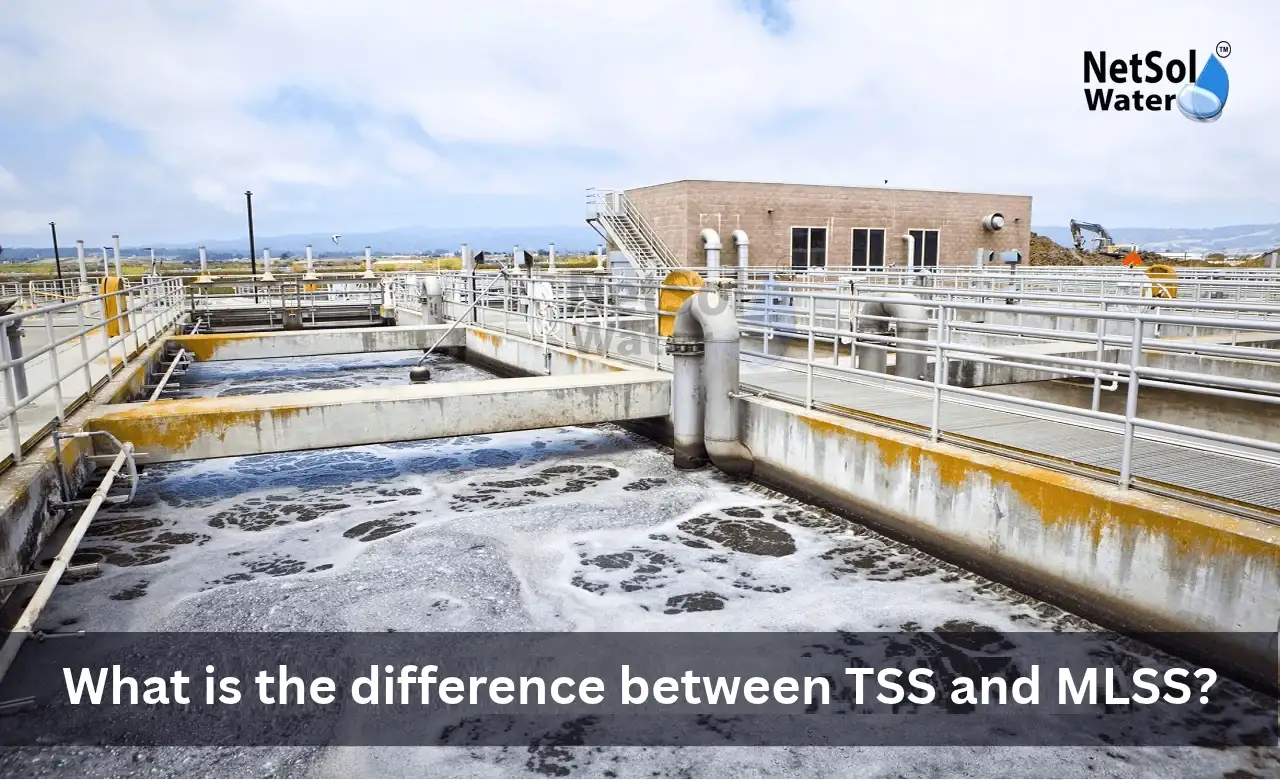
What is the difference between TSS and MLSS?
Water treatment has become an important part of modern industries and cities because clean water supports public health and protects the environment. Every wastewater treatment plant uses different testing methods to check the quality of water during the treatment process. These tests help operators understand how well the plant is working and whether the treated water meets the required standards. Among these important measurements, TSS and MLSS are commonly used in sewage treatment and industrial wastewater treatment.
Many people confuse these terms because both deal with suspended particles. However, they serve different purposes and give different information about the treatment process. Understanding the difference between TSS and MLSS helps plant operators improve treatment efficiency and maintain stable system performance. Netsol Water is the leading manufacturer of water and wastewater treatment solutions that help industries and municipalities achieve better treatment results through advanced and reliable systems.
TSS and Its Importance
Every wastewater treatment process begins with proper monitoring because good monitoring leads to better treatment performance. TSS plays an important role because it shows the amount of suspended particles present in water. This value helps treatment plant operators know whether the water contains excess solid materials before or after treatment. Let us have a look at some important aspects of TSS.
1. What is TSS?
TSS is an acronym for the amount of solid particles that do not completely dissolve in water. These particles can consist of sand, dirt, organic matter, algae, food waste, and other small particles. The TSS is typically determined by filtering a sample of water and drying and weighing the solids that are filtered out. The outcome is given in mg/l. A TSS with a high reading is usually a sign of poor water quality, as there are more suspended particles in the water.
2. Why TSS Matters in Water Treatment
TSS is one of the most widely used water quality parameters, as it directly influences water appearance and quality. Dust and silt in the water can limit sunlight penetration and decrease the amount of oxygen in the water. These solids may also be carriers of potentially hazardous bacteria and pollutants, causing environmental issues. TSS is routinely measured at treatment plants to help assess the quality of the water that they discharge in compliance with the requirements. TSS is also tracked in industries, as government regulations frequently include maximum allowable TSS levels as a condition to discharging wastewater into rivers and lakes. Routine checks enable operators to detect problems and correct them in time, before they become major.
MLSS and Its Importance
Careful monitoring of biological treatment systems is essential since the bulk of the treatment is accomplished by living microorganisms. When the measurement of MLSS is taken, it is important, as it shows the amount of microorganisms in the aeration tank. This information is used to maintain a healthy biological treatment process for operators. Let’s take a look at some key points of MLSS.
1. What is MLSS?
Mixed Liquor Suspended Solids is the total suspended solids in the aeration tank of an activated sludge process. These solids are made up of living microorganisms, dead microbial cells, organic matter, and other suspended particles. The microorganisms are able to decompose organic pollutants and turn them into harmless substances. The MLSS is also measured in mg/l. Maintaining a proper MLSS level is important to ensure biological activity and efficient wastewater treatment.
2. Why MLSS Is Important in Wastewater Treatment
The organism is directly affected by MLSS, and in biological treatment systems, proper MLSS is important for efficient removal of pollutants. When the MLSS level gets too low, the bacteria may not be sufficient to properly treat the wastewater. If the MLSS is too great, oxygen transfer will be affected, and sludge handling problems may arise. As such, plant operators will routinely check the MLSS and adjust the sludge wasting or return sludge rates to keep the desired level. A balanced MLSS value can help improve plant performance and organic removal while decreasing operational problems.
Difference between TSS and MLSS
TSS and MLSS are both significant measurements, but they’re applied for different purposes in wastewater treatment. Once their differences are understood, treatment plant operators can make more informed decisions on how to operate the plant and ensure it continues to treat effectively. Let us check into some major differences, which clearly explain the difference between TSS and MLSS.
1. Purpose of Measurement
TSS measures the suspended solids present in a water sample from any stage of the treatment process or even from natural water sources. It mainly indicates water quality and helps determine whether the treated water is suitable for discharge. MLSS, on the other hand, measures suspended solids only inside the aeration tank of an activated sludge process. It focuses on biological treatment performance instead of final water quality.
2. Composition of Solids
TSS includes all suspended particles, such as sand, silt, organic waste, algae, and other floating materials. These particles may not always contain living organisms. MLSS includes microorganisms along with organic solids and other suspended materials found in the mixed liquor of the aeration tank. Since microorganisms make up a major part of MLSS, it becomes an important indicator of biological activity.
3. Location of Testing
TSS testing can be carried out at the inlet, outlet, or any other stage of the treatment process. It is also used for rivers, lakes, and industrial wastewater. MLSS testing is limited to the aeration tank because it measures the concentration of mixed liquor during biological treatment. This difference makes each test suitable for different operational purposes.
4. Operational Significance
A high TSS reading may indicate poor removal of suspended particles or insufficient clarification. Operators can use this information to improve sedimentation or filtration processes. A high or low MLSS reading affects biological treatment efficiency because it changes the number of active microorganisms available for pollutant removal. Maintaining the correct MLSS level helps improve treatment stability and supports efficient plant operation.
How Proper Monitoring Improves Treatment Efficiency
Regular monitoring is an important part of every wastewater treatment plant because process conditions change throughout the day. Both TSS and MLSS provide useful information that helps operators maintain efficient treatment performance. Let us have a look at some ways proper monitoring improves plant operation.
1. Better Process Control
Routine testing allows operators to detect changes before they become major operational problems. When TSS increases unexpectedly, operators can inspect clarifiers, filters, or sedimentation units. When MLSS changes, operators can adjust sludge return rates or sludge wasting to restore biological balance. These actions help maintain steady treatment performance.
2. Improved Environmental Compliance
Environmental authorities require wastewater treatment plants to meet strict discharge standards. Regular monitoring of TSS helps ensure that treated water remains within the permitted limits. At the same time, proper MLSS management improves biological treatment, which supports better removal of organic pollutants. Both measurements work together to improve overall treatment quality and reduce the risk of regulatory violations. A clear understanding of the difference between TSS and MLSS allows plant operators to achieve consistent results and protect the surrounding environment.
Read some interesting information for the Effluent Treatment Plant Manufacturer in Faridabad
Conclusion
Wastewater treatment professionals can apply this difference between TSS and MLSS to make better operational decisions and optimize plant performance. TSS is the measurement of suspended solids in the water, and MLSS is the measurement of suspended solids and microorganisms in the aeration tank. Both numbers have different uses and are used in conjunction to paint a complete picture of treatment efficiency. Regular monitoring to support biological treatment and help meet environmental standards helps improve water quality.
Netsol Water is the top supplier of water and wastewater treatment technologies. In case you require expert advice on choosing or upgrading a wastewater treatment plant, reach out to the engineers at Netsol Water for valuable advice and reliable treatment answers.
Contact Netsol Water at:
Phone: +91-9650608473
Email: enquiry@netsolwater.com