
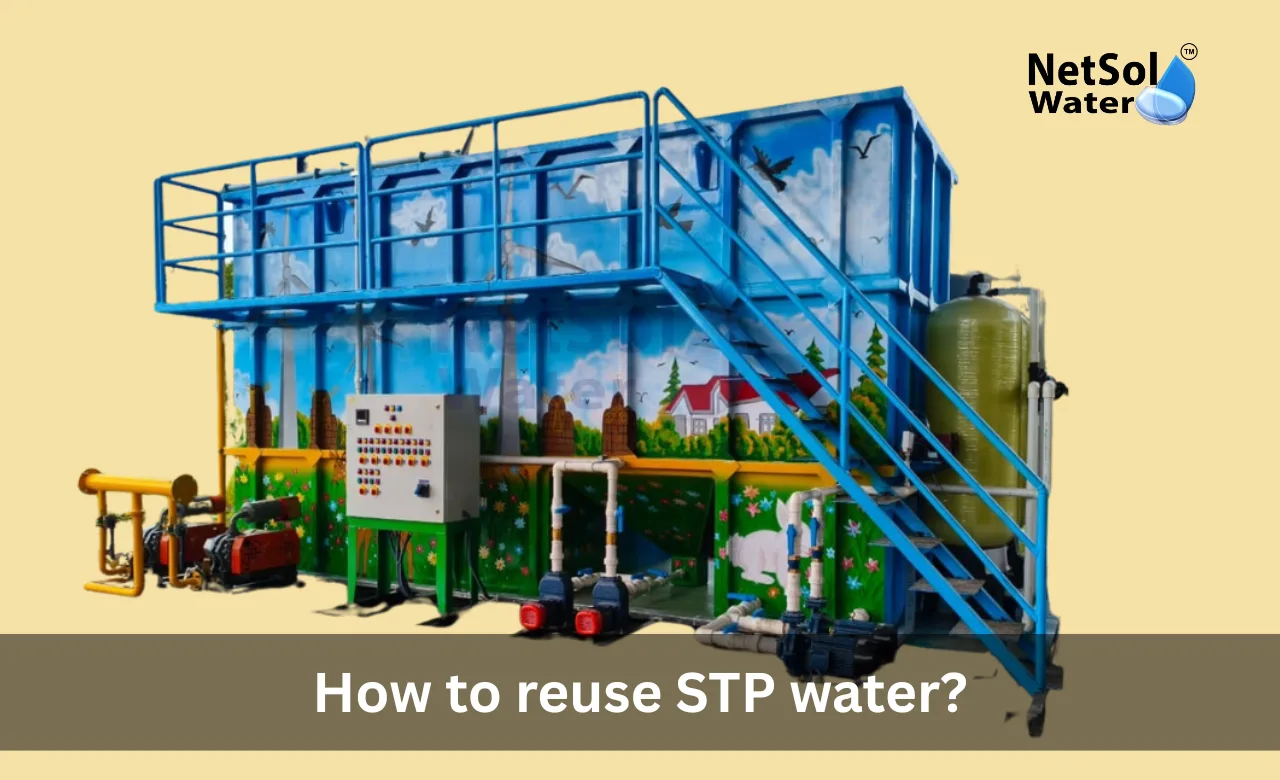
How to reuse STP water?
Water reuse brings many benefits for cities, farms, and businesses. Cities and industrial towns face water stress, and the treatment of sewage helps recover water for safe use. Many places are known for careful water use and smart recycling. Urban centers and industrial hubs use treated water for cooling and landscape irrigation. We are a leading Sewage Treatment Plant Manufacturer, and it helps communities set up systems that turn wastewater into useful water.
STP water and treatment levels
Understanding the quality of treated water matters before reusing it for any purpose. Let us have a look at some treatment stages and their meaning. The first step removes solids and grit, and the second step reduces organic matter and suspended solids. The final step polishes the water and removes pathogens and fine particles. Each stage determines what reuse is safe. Let us examine these stages and see how each one shapes reuse options.
1. Primary treatment and characteristics
Primary treatment starts by removing heavy solids that settle at the bottom. This step changes raw sewage into water that looks clearer. Primary treated water still contains dissolved organic matter and microbes. It needs further cleaning for most reuse types. Operators test clarity, solids, and basic chemistry at this stage. These checks help decide if the water can go to direct reuse or must receive additional treatment. Plants set simple limits for solid content and turbidity at this stage. Meeting these limits makes the next steps easier.
Netsol Water, as a Sewage Treatment Plant Manufacturer, supplies primary setups that fit small and large sites. Their systems use screens and sedimentation tanks to handle solids with low maintenance. Proper primary treatment lowers the load on later units and reduces energy use.
2. Secondary and tertiary treatment
Secondary treatment removes most organic matter through biological processes. Bacteria break down dissolved waste and set the chemistry for safe reuse. This step reduces biochemical oxygen demand and makes water suitable for some industrial and landscaping uses. Secondary treated water still needs polishing for sensitive uses. Tertiary treatment provides this polish. It may include filtration, disinfection, and nutrient removal.
Filtration reduces fine particles. Disinfection uses chlorine or UV to reduce microbes. Nutrient removal lowers nitrogen and phosphorus and prevents algae growth when water is reused for open irrigation. Each tertiary method affects the possible reuse types and the monitoring requirements.
On-site reuse for landscaping and non-potable uses
Using STP water on-site brings clear savings for homes, offices, and parks. Let us have a look at some common on-site reuse routes and how to set them up. On-site reuse often avoids long transport distances and reduces costs. Planning for storage, distribution, and simple safety checks makes reuse effective.
1. Irrigation and landscape watering
Irrigation with treated water helps maintain green areas and limits the use of fresh water. For safe use, you must match the treatment level to the plants and the irrigation method. Subsurface irrigation needs cleaner water than spray irrigation. Tertiary treated water that is disinfected and filtered works well for most landscape uses.
Operators check suspended solids and microbial counts. They also monitor nutrients, since nitrogen and phosphorus affect plant growth. Too much nutrient load can change soil balance and cause odors. Design the irrigation network to avoid backflow into drinking water systems. Use storage tanks with clear labeling to keep systems separate.
Netsol Water, as an STP Plant Manufacturer, can provide packaged systems that include storage, pumping, and simple controls. Proper design lowers risks and extends pump life.
2. Toilet flushing and cleaning uses
Reusing STP water for toilet flushing and cleaning reduces fresh water demand in buildings. This use requires reliable disinfection and a steady supply. Secondary treatment with a final disinfection step works for most non-potable indoor uses. Buildings must maintain separate pipelines and clear markings to avoid cross-connection with potable lines.
Storage tanks must be positioned higher than building drains to avoid siphoning effects. A modest UV or chlorine dosing unit ensures microbial safety. Routine checks for turbidity, residual disinfectant, and microbial counts keep the system working. Operators must inspect valves and float switches regularly to avoid overflow or pump dry-run conditions. Netsol Water, as an STP Plant Manufacturer, offers compact plants that integrate disinfection and dosing.
Industrial and commercial reuse
Industries may use treated sewage in many processes that do not require potable water. Let us have a look at some key industrial reuse options and the steps needed to match water quality to each process. Every industrial application requires its own checks and treatment steps. Proper treatment reduces chemical use, energy consumption, and operating costs for industrial users.
1. Cooling towers and boiler feed
Cooling towers can accept treated water if salts, solids, and microbes are controlled. High salt concentration increases corrosion and scaling. Filtration and softening help when salt levels are high. Disinfection reduces biofilm formation and keeps heat exchange surfaces clean.
Boiler feed requires higher water quality than cooling towers. Boilers suffer from scaling and corrosion when hardness and dissolved solids increase. For boilers, reverse osmosis or demineralization is required after secondary or tertiary treatment. Operators must monitor conductivity and hardness and perform regular blowdown to control salts.
Industrial users save money by using treated sewage for low-pressure boilers and make-up water in closed cooling circuits. Sewage Treatment Plant Manufacturer teams design modular systems that match plant scale. Netsol Water supplies systems that include pre-treatment, filtration, softening, and polishing to meet industrial quality targets.
2. Process water and manufacturing use
Some manufacturing lines use water for washing, mixing, or cooling where potable quality is not required. Matching water quality to the process avoids overtreatment and saves costs. For example, textile mills may use treated water for dye mixing after adding a polishing filter. Food processing plants require stricter checks and may accept only tertiary treated water with disinfection.
Many factories add a small polishing step just before use to remove fine particles or apply final disinfection. Training plant staff to monitor pH, turbidity, and microbial counts keeps operations stable. The right Sewage Treatment Plant Manufacturers assesses industrial needs and builds a tailored system. Netsol Water works with clients to set targets and provides maintenance training and spare parts support.
Read some interesting information for the Industrial RO Plant Manufacturer in Gurgaon
Conclusion
Reusing treated sewage water reduces pressure on freshwater sources and lowers operating costs for many users. Wastewater becomes a resource when treatment design matches intended reuse and monitoring keeps the system safe. Netsol Water stands out as a leading Sewage Treatment Plant Manufacturer that helps plan, build, and maintain reuse systems.
Contact Netsol Water for more information, or request a consultation to see how your site can reuse STP water safely and efficiently.
Contact Netsol Water at:
Phone: +91-9650608473
Email: enquiry@netsolwater.com