
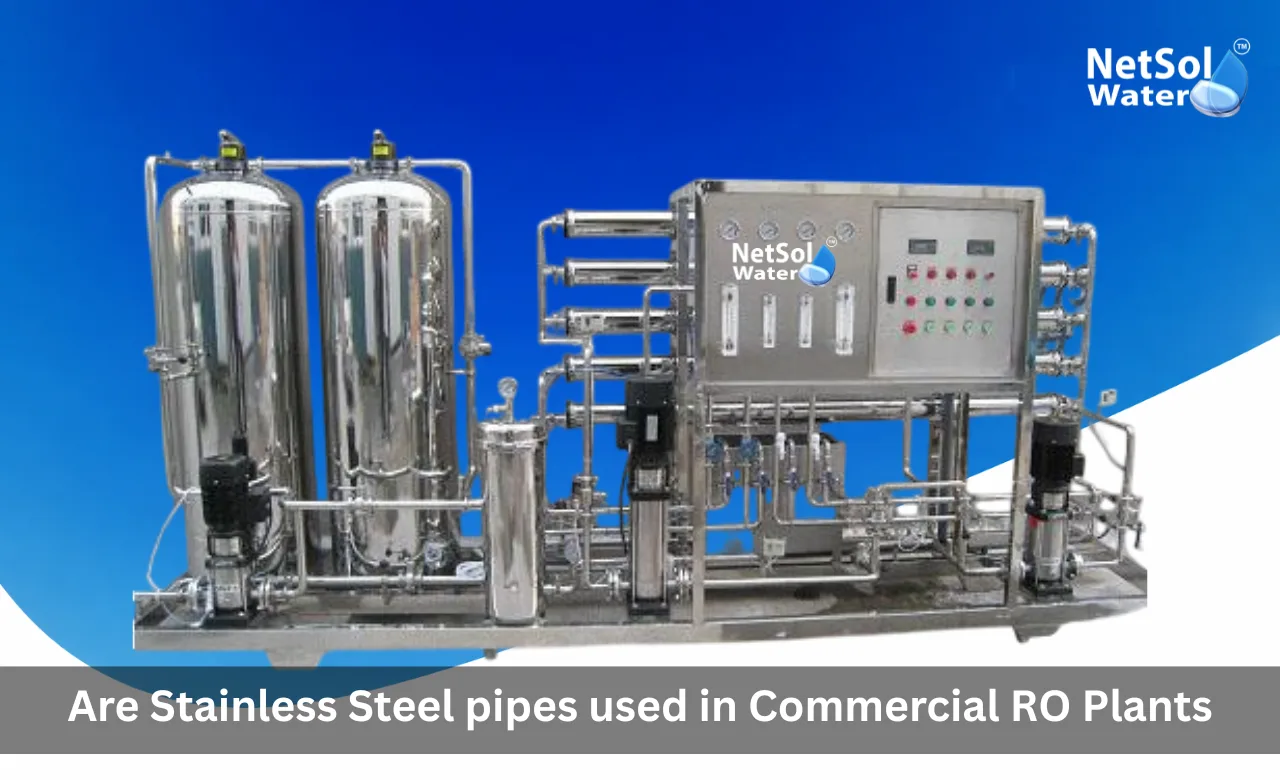
Are stainless steel pipes used in commercial RO plants?
Commercial RO plants work in places where clean water matters every day. Hotels need safe water for guests. Food units need pure water for production. Hospitals need water that supports hygiene. Factories also need steady water quality for different processes. In all these cases, the design of the plant plays a big role in performance. One of the most asked questions is whether stainless steel pipes are used in commercial RO plants.
Stainless steel pipes are widely used in many parts of a commercial RO system. A trusted commercial RO plant manufacturer like Netsol Water often uses them in high-pressure sections because they stay strong and clean under tough working conditions. They also help the plant run safely for a long time. At the same time, not every part of the system needs stainless steel. A smart design uses different materials in different sections so the plant stays efficient and cost-effective. That balance is what makes a good RO system work well in daily use.
Why Stainless Steel Is Used
Stainless steel has earned an important place in commercial RO plants because it gives strength and protection at the same time. When water moves through a plant under pressure, the piping system must stay stable. It should not rust easily. It should not leak. It should also support clean water flow without adding unwanted contamination. That is why a commercial RO plant manufacturer often chooses stainless steel for the most demanding parts of the system. Let us have a look at some important reasons.
1. High Pressure Resistance
Commercial RO plants do not work with light pressure. They push water through membranes at high force so that salts and other unwanted particles stay behind. In this process, the piping must handle strong pressure every day. Stainless steel performs well in such conditions because it keeps its shape and strength. It does not crack easily under load. It also handles vibration and long operation better than many low-cost materials.
This strength matters because a plant must work without interruption. If the piping weakens then the system loses efficiency and may suffer damage. Stainless steel gives peace of mind to plant owners because it supports stable flow. That is why many commercial and industrial units prefer it in the high-pressure side of the system.
2. Corrosion and Chemical Resistance
Water treatment systems face constant exposure to moisture and treatment chemicals. Over time, ordinary metal can rust or wear out. When that happens, the water quality may drop and the plant may need more repairs. Stainless steel helps reduce this risk because it resists corrosion very well.
This feature is important in RO plants because clean water must stay clean from start to finish. If the pipe rusts then the system can pick up unwanted particles. That can affect the membranes and lower plant performance. Stainless steel protects the flow path and supports a longer service life. It also works well in systems that deal with tough water conditions. For that reason, a commercial RO plant manufacturer often suggests it when the client needs better durability.
3. Hygiene and Safety
Clean water systems must support hygiene. This is one of the strongest reasons behind the use of stainless steel. Its smooth surface makes it easier to clean. It does not allow dirt to settle easily. It also lowers the chance of bacterial growth when the plant is maintained properly.
This quality is especially useful in food processing units, hotels, hospitals, and pharmaceutical facilities. These places need safe water for people and products. Stainless steel helps create a cleaner path for water movement. It supports better plant safety and makes regular cleaning easier. That is why it remains one of the most trusted choices in modern RO design.
When and Where They Are Used
Stainless steel pipes are not used everywhere in the same way. A good plant design uses them where strength and safety matter most. Other sections may use different materials to keep the project affordable. This mix helps the plant perform well while controlling cost. A skilled commercial RO plant manufacturer studies the water source, pressure level, and usage area before choosing the pipe material. Let us have a look at some important areas where stainless steel plays a major role.
1. High-Pressure Piping
The high-pressure section is one of the most important parts of a commercial RO plant. This is the zone where the high-pressure pump sends water toward the membrane housings. The pressure in this line is much higher than in the rest of the system. So the piping must stay strong and safe.
Stainless steel fits this job very well. It handles pressure without bending or failing. It also supports a stable flow which helps the membranes work properly. If this section becomes weak then the whole plant can face trouble. That is why stainless steel is often the first choice in this part of the system. It adds safety and reliability in a place where failure would create major problems.
2. Membrane Housings
Membrane housings hold the RO membranes in place. These housings must stay firm because they work under pressure and constant water flow. In many commercial systems, stainless steel is used for these housings because it gives long life and strong support.
The housing must protect the membrane and keep the system sealed. If it becomes weak then water may leak or pressure may drop. Stainless steel keeps the housing stable and helps the plant work smoothly. It also supports a cleaner internal surface which is useful for maintenance. This is one reason many industries trust stainless steel in the core section of the plant.
3. TDS and Desalination Systems
Water with very high Total Dissolved Solids needs stronger treatment. Seawater and brackish water systems often face more pressure and more wear than normal plants. In such cases, stainless steel becomes even more useful. It can stand up to tough working conditions and gives better service life in demanding environments.
Desalination plants also need materials that resist corrosion because salt water is harsh on many metals. Stainless steel is a safer choice in these situations. It helps the plant keep running with better control and less damage. That is why many engineers recommend it for high TDS and desalination projects. It brings confidence to the design when the water source is difficult.
Common Alternatives
Stainless steel is a strong choice but it is not always used in every section of the RO plant. A smart design also looks at cost, weight, and the type of water line. That is why other materials are also used in commercial systems. A good commercial RO plant manufacturer knows how to combine these materials in the right way so the plant stays effective and practical. Let us have a look at some common alternatives.
1. UPVC and CPVC
UPVC and CPVC are widely used in low-pressure sections of commercial RO plants. These include raw water feed lines, permeate lines, and drain lines. They are popular because they cost less and they do not rust. They also work well in many water treatment setups where pressure is not too high.
These materials are easy to install and maintain. They make the system more economical without reducing basic performance. When the water does not face extreme pressure then UPVC or CPVC can do the job well. That is why they often appear in many parts of a commercial RO plant. They help balance the overall project cost and still support reliable operation.
2. FRP Vessels and Housings
FRP means fiberglass reinforced plastic. It is another common material in water treatment systems. Many filter housings and large vessels use FRP because it is light, strong, and resistant to many chemicals. It also helps when the plant needs a large structure that is easier to move and install.
FRP does not replace stainless steel in high-pressure zones. Still, it serves a useful role in other parts of the system. It gives good value where chemical resistance and lower weight matter more than metal strength. This makes it a practical choice in many commercial RO plants. Its flexibility in design also supports different plant sizes and working conditions.
Read some interesting information for the Effluent Treatment Plant Manufacturer
Conclusion
Commercial RO plants need materials that can handle pressure, protect water quality, and support long-term use. Stainless steel pipes meet these needs very well, which is why they remain a major part of many systems. They work best in high-pressure sections, membrane housings, and challenging water conditions. At the same time, other materials still play an important role in a complete plant design.
Netsol Water is a leading commercial RO plant manufacturer that makes plants with the right mix of strength, hygiene, and practical value. If you need more details about stainless steel piping or want help planning a new RO plant, then reach out for expert advice and consultation today.
Contact Netsol Water at:
Phone: +91-9650608473
Email: enquiry@netsolwater.com