
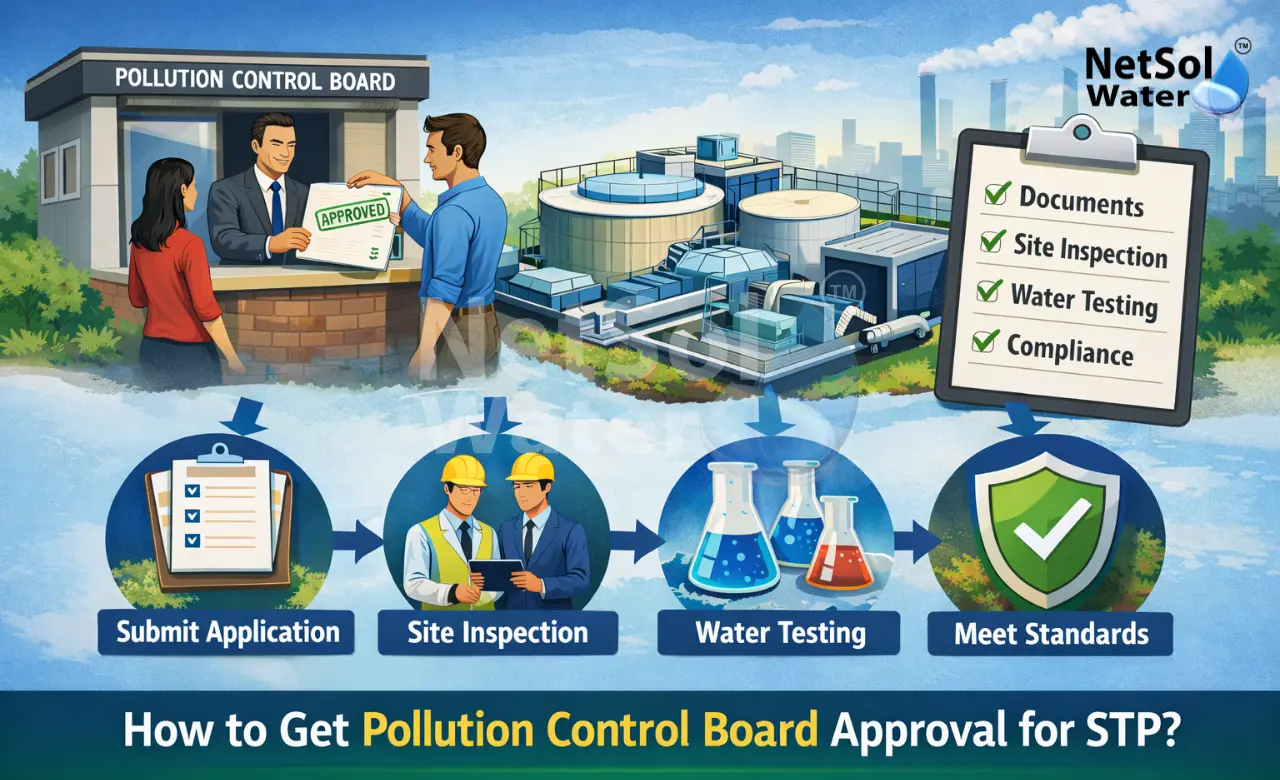
How to Get Pollution Control Board Approval for STP?
Getting approval from the State Pollution Control Board secures the future of any project by a Sewage Treatment Plant Manufacturer who plans to build and operate an STP. This process protects the environment and keeps communities safe. Many developers and facility owners find the rules strict but clear when they follow each step with care. We are the leading Sewage Treatment Plant Manufacturer and it helps clients prepare correct documents and designs that meet board expectations.
Stage 1: Consent to Establish (CTE)
This stage matters because you need permission before you touch the ground or start civil works. The board checks your plan to make sure the plant design meets discharge and safety rules. Let us have a look at some key parts under this stage and how to present them so the application moves smoothly.
1. Preparation and Detailed Project Report
You must prepare a Detailed Project Report, or DPR, that explains the plant design and the expected treated water quality. The DPR should show the treatment train and the capacity of each unit. You should include calculations that show how much sewage the plant will treat every day and what quality the outlet water will meet. The DPR should also state the technology used for primary, secondary, and tertiary treatment and list any chemical dosing or sludge handling processes. A clear DPR helps board staff understand your design and reduces the chance of queries. A good DPR also shows the land layout and how the plant sits within the site.
2. Online Application and Documents
After the DPR, you must register on the state OCMMS portal or a similar single-window system to submit your request. You must upload site and layout plans that show exact plant position and access roads. You must include engineering drawings that match the DPR. You must add a water balance chart that shows source, consumption, and discharge. You must provide proof of land ownership or lease and a CA-certified project cost letter. You must pay the fee that the board sets based on the capital investment of the project. An inspector may visit the site to check the facts. If the board accepts your submission, they grant CTE that lasts from one year to five years depending on the state rules.
Stage 2: Consent to Operate (CTO)
This stage matters because you cannot run the STP without this permit. The board will verify that the built plant follows the approved design and that the treated sewage meets limits. Let us have a look at some actions that help you complete this step quickly.
1. Application and Commissioning Tests
Once construction ends, you must apply online for CTO through the same portal you used for CTE. You should attach a copy of the issued CTE and a completion certificate that shows civil work and equipment installation have finished. You should upload photographs of the installed plant and the control room. You must run trial operations and collect samples of treated sewage for laboratory analysis. Use a board-approved lab for these tests and include the lab report in your application. You must also prepare a compliance report that states how you met each CTE condition. A clear commissioning record makes the final check faster.
2. Final Inspection and Issuance
Board officials will inspect the plant to confirm that equipment and layout match the approved drawings. The inspectors will look at inlet screens, clarifiers, aeration units, and tertiary filters if any. They will check the sludge handling and the discharge outlet. If the plant meets standards, the board will issue CTO and you can operate legally. The CTO may include conditions that you must follow for monitoring and reporting. Keep your lab records and online monitoring ready to show at any time.
Note on Categories
Classification into Orange or Red category shapes the level of oversight that your Sewage Treatment Plant faces. This classification depends on capacity and the nature of the discharge point. Let us have a look at what each category means and how it affects approvals.
Orange and Red Category
Plants that serve small complexes and that discharge to non-sensitive areas may fall in the Orange group. Orange group projects receive regular review but the norms are less strict than those for the Red group. Larger plants and those that discharge to rivers, lakes, or sensitive zones often fall in the Red group. Red group projects face more detailed scrutiny and may require tighter monitoring and faster reporting. The classification also affects the fees and the type of conditions placed in CTE and CTO. Knowing the likely category helps you design the plant so that it meets the stricter limits if needed.
Common Mistakes and Tips for a Smooth Approval
Avoiding common mistakes speeds the approval process and reduces cost. Many applicants face delays because of weak documentation or mismatches between drawings and the built plant. Let us have a look at key mistakes and simple tips to avoid them.
Documentation and Design Matching
Applicants sometimes submit drawings that do not match the DPR, or deliver a plant that differs from the approved design. This mismatch causes re-inspections and delays in CTO. You must keep a single set of final drawings and use those drawings during construction. You must also keep installation records and purchase invoices for major equipment. Choose an approved laboratory for testing and keep the sample chain of custody clear. Hire an experienced project engineer who can coordinate civil work, mechanical installation, and instrumentation. A well-kept file reduces the time for board verification and helps you meet the conditions in both CTE and CTO.
Read some interesting information for the Industrial RO Plant Manufacturer in Delhi
Conclusion
Securing board approval takes care and a clear plan. A Sewage Treatment Plant Manufacturer that prepares a strong DPR and that follows the application steps will gain CTE and CTO more quickly. Netsol Water is the leading Sewage Treatment Plant Manufacturer and it can help with design, documentation, and with portal submissions. If you need help with your application or with preparing the DPR, contact an experienced manufacturer or request a consultation to start the process. A skilled partner will guide you through each step so that your plant begins operation with full approval.
Contact Netsol Water at:
Phone: +91-9650608473
Email: enquiry@netsolwater.com