
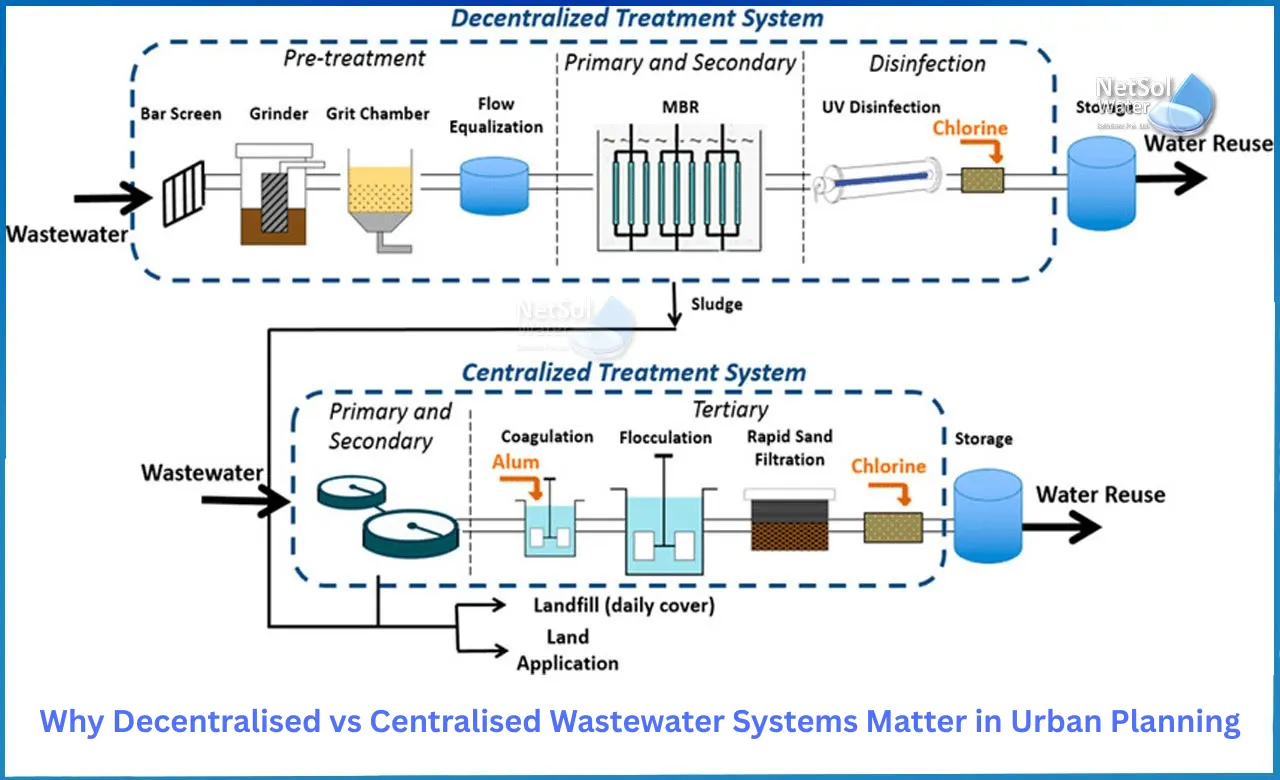
Why Decentralised vs Centralised Wastewater Systems Matter in Urban Planning
Cities in India like Delhi are famous for fast development busy roads and mixed land use. This growth brings pressure on water resources and sanitation systems. Many cities still struggle with wastewater flow treatment and reuse. Because of this planners now focus more on how a Wastewater Treatment Plant fits into city design. The choice between decentralised and centralised systems changes land use cost service quality and environmental impact.
A centralised system collects wastewater from large areas and treats it at one location. A decentralised system treats wastewater near the source like homes colonies or institutions. Both systems serve a purpose but planners must choose carefully. Wrong choices create overload pollution and high costs later. Right choices support clean water reuse and healthy living spaces. Companies like Netsol Water is the leading name and Sewage Treatment Plant Manufacturer in this field and guide planners and developers with practical solutions.
Centralised Wastewater Systems in Urban Planning
Centralised wastewater systems play a major role in traditional city planning. These systems work best in dense urban areas where population stays stable for many years. A large Wastewater Treatment Plant sits at a fixed location and receives sewage through a network of pipelines. Urban planners often choose this model because it looks simple at the planning stage.
Let us have a look on some key aspects of centralised systems.
How Centralised Systems Support Large Urban Areas
Centralised systems handle large volumes of wastewater every day. Cities with high population density benefit from one treatment location. Engineers can control treatment quality easily and maintain standards set by authorities. This approach suits old city cores where space for small plants remains limited. Centralised plants also allow skilled operators to manage treatment in one place which reduces manpower spread.
At the same time these systems need long sewer lines and pumping stations. As cities expand the network grows longer. This increases energy use and maintenance effort. Any failure in one part affects a large area. Urban planners must consider these risks early. When planned well a centralised Wastewater Treatment Plant serves millions and supports reuse for parks industries and groundwater recharge.
Decentralised Wastewater Systems in Urban Planning
Decentralised wastewater systems offer flexibility for modern urban growth. These systems treat wastewater close to where it is generated. New townships smart cities and peri urban areas now prefer this model. A Wastewater Treatment Plant in a decentralised setup serves a limited population like a housing society or commercial complex.
Let us have a look on some important points of decentralised systems.
Why Decentralised Systems Fit Modern City Expansion
Cities no longer grow in one compact shape. Decentralised systems match this pattern well. They reduce the need for long sewer lines and deep excavation. Treatment happens locally and treated water gets reused on site for gardening flushing or cooling.
This approach lowers load on main sewers and central plants. It also cuts energy use and water loss. Maintenance teams handle smaller units which makes fault detection faster. Urban planners see decentralised systems as tools for sustainable growth. When designed properly these systems protect local water bodies and reduce pollution. Netsol Water is the leading provider and Sewage Treatment Plant Manufacturers of such solutions and helps planners integrate them into layouts smoothly.
Comparing Decentralised and Centralised Systems for Urban Planning Decisions
Choosing between decentralised and centralised systems needs careful study. Each option affects cost land use environment and long term operation. A Wastewater Treatment Plant must match city size growth speed and local conditions.
Let us have a look on how planners compare both systems.
Cost Land and Environmental Impact Considerations
Centralised systems need high initial investment in pipelines pumping stations and land for a large plant. They work well when cities already have sewer networks. Decentralised systems cost less to start in new developments. They save land by fitting into basements, rooftops or small plots.
Environmental impact also differs. Centralised plants discharge treated water far from the source. This may not support local reuse. Decentralised plants encourage reuse at the same location. This reduces freshwater demand and supports green spaces. Planners now mix both systems in one city. Core areas use centralised plants while new zones use decentralised units. This balanced approach improves resilience and service quality.
Design in Smart Urban Planning
Design helps how well it serves the city. Urban planners now focus on adaptable designs that support both decentralised and centralised models. Technology choice layout and capacity planning matter a lot.
Let us have a look on how design supports planning goals.
Integrating Treatment Systems with Urban Infrastructure
Modern plants must blend with urban surroundings. Decentralised units often sit near homes offices or schools. Designers focus on low noise low odor and simple operation. Centralised plants need buffer zones and proper access roads.
Smart monitoring also plays a role. Sensors and automation help operators track performance in real time. This suits both system types. A well designed Wastewater Treatment Plant supports city sustainability goals. Netsol Water is the leading expert and Sewage Treatment Plant Manufacturer in designing such systems and works closely with urban planners and developers.
Read some interesting information for the Effluent Treatment Plant Manufacturer in Delhi
Conclusion
Urban planning demands smart wastewater choices. Decentralised and centralised systems both offer value when planners apply them in the right context. Balanced use improves service coverage protects the environment and supports water reuse. A well planned Wastewater Treatment Plant becomes a backbone of healthy cities and future ready infrastructure. Decision makers who understand these systems create cities that manage growth without stress. Reach out to experts who understand planning design and execution. Netsol Water is the leading partner and Sewage Treatment Plant Manufacturers for guidance consultation and reliable solutions in wastewater management.
Contact Netsol Water at:
Phone: +91-9650608473
Email: enquiry@netsolwater.com