
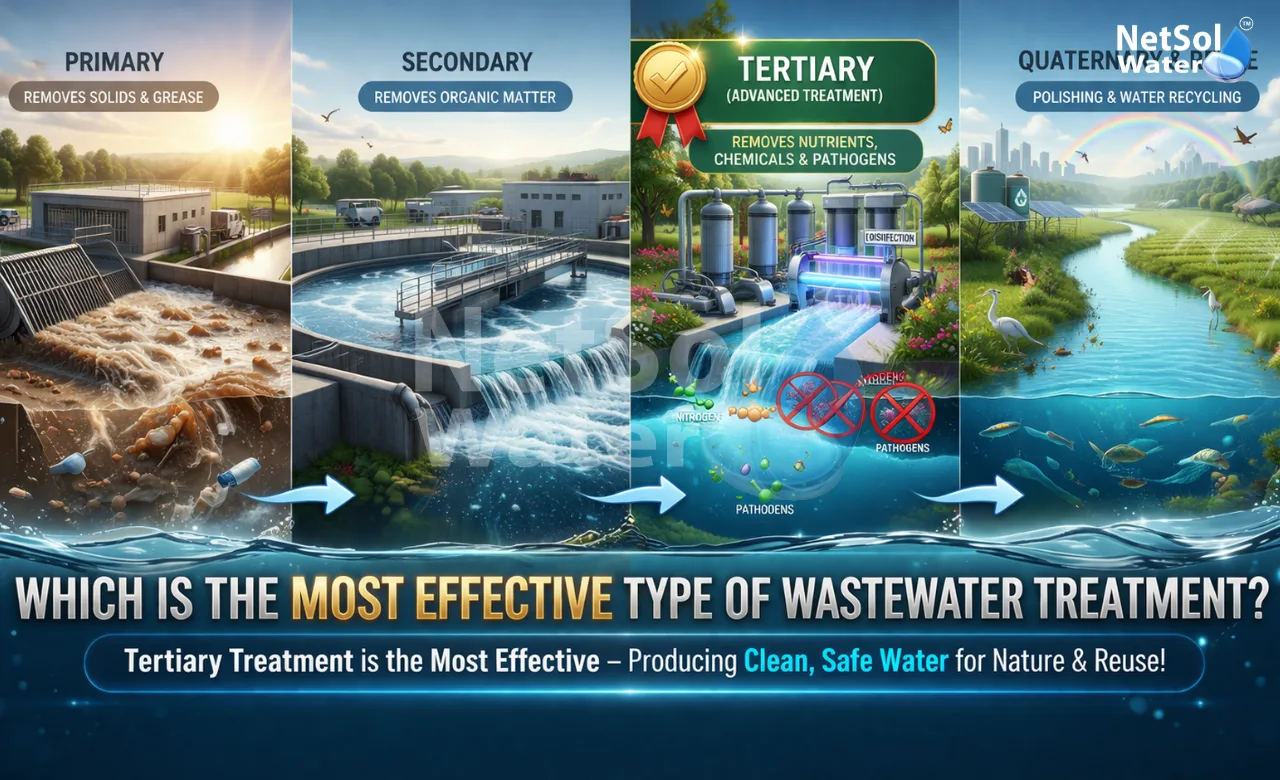
Which is the most effective type of wastewater treatment?
Wastewater treatment plays a major role in keeping water safe for people and the environment. Every home, factory, office, and commercial site produces used water. This water carries dirt, chemicals, grease, organic matter, and harmful germs. If people release it without proper treatment, then it can pollute rivers, lakes, and soil. It can also spread disease and damage natural life. That is why a wastewater treatment plant matters so much in modern life.
Many people ask which treatment method works best. The answer is not always the same for every case because the best choice depends on the type of wastewater, the level of pollution, and the final use of the treated water. Some water needs only basic cleaning, while some needs deep treatment before reuse or release. In general, the most effective solution comes from a proper treatment process that removes solids, breaks down waste, and removes harmful particles in stages. This layered method gives better results than using only one step. It also helps industries and communities meet safety rules and manage water in a smart way.
A wastewater treatment plant can use different methods such as physical treatment, biological treatment, and advanced polishing treatment. Each one has its own value. When these methods work together, the plant can produce clean and safe water in a reliable way.
Why Treatment Choice Matters
The choice of treatment method shapes the full result of the process. A weak method may remove only visible dirt while hidden pollution stays in the water. That can create trouble later during discharge or reuse. A strong method can reduce smell, improve water quality, and protect equipment from clogging and damage. This is why the first step is always to understand the wastewater itself.
Let us have a look at some of the main points that make treatment choice important.
1. Nature of the Wastewater
Different sources create different kinds of wastewater. Domestic water usually carries soap, food waste, and human waste. Industrial water may contain oils, dyes, heavy metals, and chemicals. Some water is full of suspended solids, while some water carries dissolved pollutants that are harder to remove. A wastewater treatment plant must match the treatment method to the waste type. When the plant does this, it performs better and gives a more stable output.
2. Final Use of the Treated Water
The end use also matters. If the treated water will go to a river, then the plant must meet strict discharge limits. If the water will be reused for gardening, flushing, or industrial cooling, then the treatment must reach a higher level of clarity and safety. The more useful the final water needs to be, the more advanced the treatment must become. This is why one fixed method cannot serve every need in the same way.
3. Cost and Operation
A strong system should not only clean water well. It should also run in a practical way. Some methods need less space, while others need more care and energy. Some systems are simple to operate, while others need trained workers and regular checks. So the most effective type is often the one that gives the best balance between cleaning power, cost, and maintenance.
Primary Treatment
Primary treatment is the first cleaning stage and it removes large solids from wastewater. This stage matters because it protects the next stages from extra load. Without this step, the whole process can become slow and less stable. It also helps the plant work with better flow and less clogging.
Let us have a look at some of the main parts of primary treatment.
1. Screening
Screening removes large waste like plastic, cloth, leaves, and other floating material. It works like a barrier that stops unwanted items before they enter deeper units. This simple step may seem small, but it saves equipment from damage and keeps the system clean.
2. Sedimentation
Sedimentation lets heavier particles settle at the bottom of a tank. These solids form sludge, which the plant can remove later. This process clears a good amount of suspended matter from water and prepares it for the next stage. It is a basic but very useful step in any wastewater treatment plant.
3. Grease Removal
Some wastewater carries oil and grease. If the plant does not remove these substances early, then they can block pipes and disturb later treatment. Grease removal improves the flow of water and helps the plant work in a cleaner way.
Secondary Treatment
Secondary treatment often gives the biggest improvement in water quality. It uses biological action to break down organic waste. Tiny organisms feed on the waste and reduce pollution in a natural way. This stage is highly effective for many types of wastewater because it targets dissolved and fine organic material that primary treatment cannot remove fully.
Let us have a look at some of the important secondary treatment methods.
1. Activated Sludge Process
This method uses air and helpful microorganisms. The microorganisms consume organic matter and convert it into simpler forms. The process works well for municipal and industrial wastewater with high organic load. It often gives excellent results when the plant manages aeration and sludge properly.
2. Trickling Filters
Trickling filters use a bed of material where microorganisms grow. Wastewater passes through this bed and the biological layer treats the water as it moves. This method is steady and useful for many plants because it does not need very complex control. It offers a good balance between treatment quality and simple operation.
3. Moving Bed Biofilm Systems
These systems use special carriers where microbes grow and treat the water. They work well in limited space and can handle changing loads more easily. Many modern plants prefer such systems because they support strong treatment in a compact setup.
Tertiary Treatment
Tertiary treatment gives the final polishing to the water. It becomes important when the water must reach a very high standard before reuse or release. This stage removes small particles, remaining nutrients, and some harmful substances. It adds the finishing touch that improves water quality even more.
Let us have a look at some of the main tertiary treatment options.
1. Filtration
Filtration removes fine suspended matter that passes through earlier steps. Sand filters, membrane filters, and other systems can help make water clearer. This step improves appearance and also supports safe reuse.
2. Disinfection
Disinfection destroys harmful germs. Plants may use chlorine, UV light, or ozone for this purpose. This step matters greatly when people may come in contact with the treated water. It adds another level of safety and makes the water more acceptable for many uses.
3. Nutrient Removal
Some wastewater carries too much nitrogen and phosphorus. These nutrients can harm water bodies by causing algae growth. Advanced treatment helps reduce this problem. It protects natural water systems and improves the environmental value of the final discharge.
Which Type Works Best
The most effective type of wastewater treatment is usually not one single method. It is a complete system that combines primary, secondary, and tertiary treatment in the right order. This approach works best because each stage handles a different part of the pollution load. Primary treatment removes large solids. Secondary treatment breaks down organic waste. Tertiary treatment polishes the water and removes the last traces of impurities.
For most cases, this multi-stage method gives the strongest and most dependable result. It offers better water quality and better control over discharge or reuse. A wastewater treatment plant that uses this full process can handle a wide range of wastewater types and provide safer output.
The best treatment still depends on the situation. A small site with light wastewater may need only a simple setup. A large industrial site may need advanced biological and membrane systems. So effectiveness comes from matching the method to the water rather than choosing one option for every case.
Read some interesting information for the Sewage Treatment Plant Manufacturer
Conclusion
Wastewater treatment is not just a technical need. It is a practical step that protects health, saves water, and supports cleaner surroundings. The most effective method is the one that fits the waste source, the treatment goal, and the level of purity needed at the end. In many cases, a combined process gives the best result because it treats the water in stages and leaves less room for error.
If you are planning a wastewater treatment plant, then the right design can make a big difference in long-term performance. A well-planned system can improve water quality, reduce waste, and support reuse in a safe way. For more information or to request a consultation, get in touch and choose a solution that fits your need.
Contact Netsol Water at:
Phone: +91-9650608473
Email: enquiry@netsolwater.com