
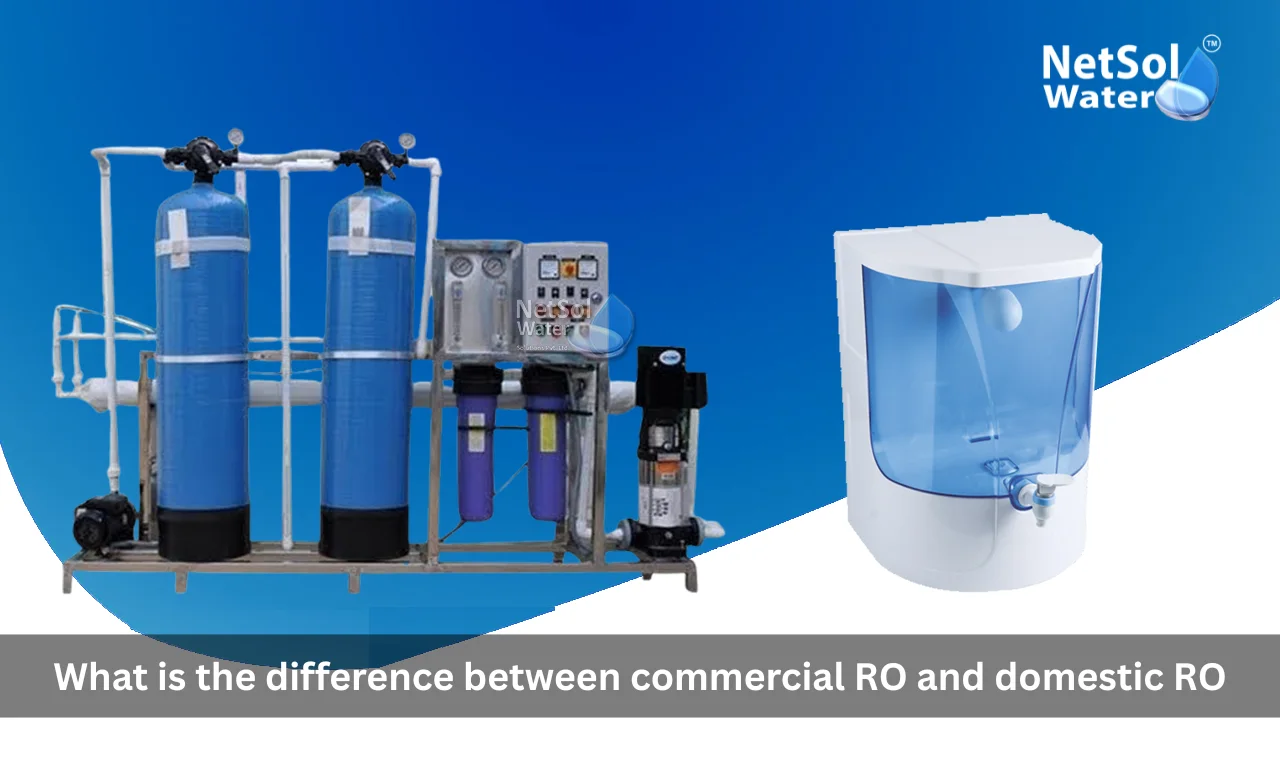
What is the difference between commercial RO and domestic RO?
Clean water supports health, comfort, and smooth daily work. Many people use RO plants at home and in business spaces, but both systems serve different needs. A domestic unit helps a family drink safe water every day. A commercial unit handles a much larger water demand for offices, schools, hotels, hospitals, factories, and other busy places. That is why the design, size, and working method of both systems are not the same. We are the leading commercial RO plant manufacturer and it understands these different needs well. A domestic RO plant suits a small household while a commercial RO plant must deliver steady output for many users at the same time. When people compare the two, they often think both work in the same way. They do not. The difference comes in capacity, flow rate, pressure, parts, and maintenance.
Water Demand and Daily Use
The first and most important difference between a domestic RO and a commercial RO plant is the amount of water they must supply. This point matters because water need changes with the size of the user group. A domestic system serves a few people while a commercial system serves a large crowd throughout the day. Let us have a look at some of the key points that show this difference.
1. Domestic RO for Small Families
A domestic RO system works for a small number of people. It gives filtered water for drinking and cooking at a steady but limited rate. Most domestic units do not need a large storage or a powerful pump because water use stays within a simple range. A family can fill bottles or a small storage tank and use the water during the day. The system works quietly and fits into a kitchen or a small utility area. Its goal is easy daily use. It does not need to run for long hours without rest.
2. Commercial RO for Larger Demand
A commercial RO plant must work for much larger water needs. It may supply water to staff, students, guests, or industrial users. This means the system must keep producing clean water for a long time without a drop in performance. A busy place cannot depend on a small unit because it would fail to meet demand. This is why a Commercial RO Plant Manufacturer designs systems with higher capacity, stronger parts, and stable output. The plant must handle more pressure and more feed water while still giving clean water in a proper flow. That is the biggest practical difference between the two systems.
System Design and Capacity
The second major difference lies in design and capacity. This matters because the machine structure decides how much water it can treat and how long it can work. A small domestic system uses a simple setup. A commercial plant needs a more advanced arrangement so it can support heavy use. Let us have a look at some of the design points that make both systems different.
1. Size of Membranes and Flow Rate
A domestic RO unit uses small membranes that suit low water use. The flow rate stays limited and the unit fills a tank slowly but safely. A commercial RO system uses larger membranes or multiple membranes so it can process a much higher volume of water in less time. The flow rate becomes a key feature because users expect a regular supply all day. This is one reason a Commercial RO Plant Manufacturer focuses on membrane selection with great care. The wrong membrane size can reduce output and increase pressure on the system.
2. Pumps, Pressure, and Control Parts
A domestic RO system uses a smaller pump because it only needs to support household use. A commercial system uses stronger pumps because it must push water through a larger setup. It also needs better control parts such as gauges, valves, sensors, and flow controllers. These parts help the plant stay stable during long operation. Commercial units often include more advanced monitoring so the operator can watch water quality and pressure closely. This helps the plant run safely and avoid sudden failure. The design is not just bigger. It is also more technical and more durable.
Installation, Maintenance, and Cost
The third difference comes from installation, maintenance, and cost. This is important because the buyer does not only pay for the machine. The user also pays for space, service, energy, and future care. Let us have a look at some of the practical points that help people understand the real difference.
1. Space Setup and Installation Needs
A domestic RO plant needs very little space. It can fit under a kitchen sink or on a wall. A commercial RO plant needs a proper room or service area. It may also need a tank area, piping line, and electrical support. The setup takes more planning because the system has to connect with a larger water source and a larger point of use. A skilled commercial RO plant manufacturer usually studies the site before installation so the plant fits the space and works without trouble. Good planning avoids later problems and helps the plant deliver better output.
2. Maintenance and Running Cost
A domestic RO unit needs basic filter changes and routine cleaning. A commercial system needs more regular inspection because it works harder and handles more water. Its membranes, pumps, and filters face more load. This means maintenance must stay on schedule to keep the plant efficient. Running cost also differs. A domestic system uses less power and fewer parts. A commercial system uses more power and more service support because it serves more users. At the same time, it gives much higher output so the cost makes sense for a business or institution. This is why buyers should not compare the systems only by price. They should compare them by need and performance.
Water Quality and User Safety
Water quality matters in both systems, but the way each system protects quality is different. A domestic RO unit gives safe water for a small family. A commercial plant must keep the same quality level across a much larger volume.
1. Consistent Output for Many Users
A domestic system can work with a simple storage tank because one family uses the water in a limited way. A commercial system must keep water quality steady even when many people use it at different times. That means the plant needs strong filtration and better control over every stage of treatment. If the water quality falls in a large place then many people get affected at once. That is why commercial systems use stronger checks and more reliable parts.
2. Safety Standards and Monitoring
A commercial plant often needs better monitoring because the water may be used in food service, healthcare, or other public areas. The plant should remove impurities and keep TDS at a safe level as required for the site. A domestic RO also protects health but its scale stays small. A Commercial RO Plant Manufacturer makes plants that meet larger responsibility. The system must support daily use without sudden changes in water quality. This is important for trust and safety.
Choosing the Right RO System
The final difference is not only technical. It is also about choosing the right system for the right place. A domestic RO is best when the need is small and steady. A commercial RO is the right choice when the need is large and constant.
1. When Domestic RO Is Enough
A domestic RO works well when a family needs clean drinking water only for daily household use. It offers convenience and fits a small budget and small space. It is simple to run and easy to manage.
2. When Commercial RO Is the Better Choice
A commercial plant is better when many people need clean water every day. It suits hotels, schools, offices, hospitals, and industrial spaces. The unit gives higher output and supports longer use. This is where Netsol Water, as a trusted Commercial RO Plant Manufacturer, helps buyers with the right design and capacity for their site.
Read some interesting information for the Commercial RO Plant Manufacturer in Faridabad
Conclusion
Clean water systems should match the actual demand of the place. A domestic RO and a commercial RO may look similar from a distance, but they serve very different purposes. One supports a family while the other supports a larger group with constant water need. The difference in capacity, pressure, design, maintenance, and running cost makes the choice clear. A buyer should always look at daily water demand before choosing any system. Netsol Water is the leading Commercial RO Plant Manufacturer and it can guide you with the right solution for your space and your use. Contact us for more information or request a consultation to find the right RO plant for your needs.
Contact Netsol Water at:
Phone: +91-9650608473
Email: enquiry@netsolwater.com