
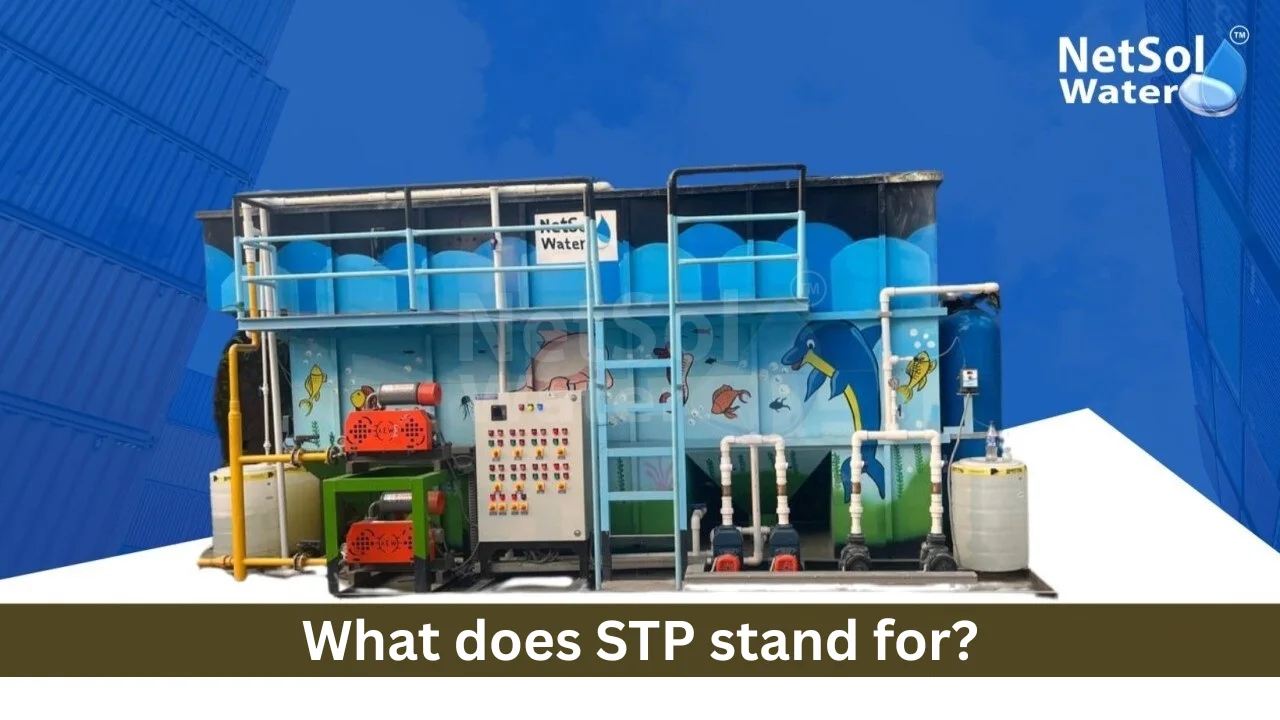
What does STP stand for?
STP stands for Sewage Treatment Plant. Clean water and safe disposal matter for health and for the environment. Netsol Water leads as an STP manufacturer, and it brings expertise to design and to deliver plants that match local needs.
Sewage Treatment Plant (STP)
Understanding the meaning and the basic function of STP helps to see why the Sewage Treatment Plant matters so much. At its core, an STP takes used water and removes harmful materials so the water can return to the environment in a safer form. This function protects public health and reduces pollution. It also supports water reuse in areas that face shortages.
1. What STP stands for and why the name matters
STP stands for Sewage Treatment Plant. The term points to the two main ideas in the process. The first idea is sewage, which means wastewater from homes, businesses, and industries. The second idea is treatment, which means the steps that remove solids, harmful microbes, and chemicals from this water. The name matters because it tells users that the system handles both collection and cleaning. Choosing a skilled sewage treatment plant manufacturer ensures that the plant matches the volume and the nature of the wastewater.
2. Main stages in the treatment process
The STP works in stages that remove different types of contaminants. The first stage removes large solids and grit so that pumps and later stages do not get damaged. The second stage focuses on organic matter. This step often uses biological processes where microbes break down organic load. The third stage removes nutrients and fine particles. This stage may use filtration or chemical steps. Each stage needs careful control, and the sewage treatment plant manufacturers must choose parts that work well together. Modern plants may include further polishing and disinfection so the treated water meets legal standards or so it can be reused for tasks like irrigation.
Why STP design and manufacture matter
Good design and careful manufacture determine how well an STP performs over time. A sewage treatment plant manufacturer plays an important role in turning plans into robust systems that deliver expected results. Designers must understand the wastewater type, the available space, the local climate, and the operation skills of the staff who will run the plant.
1. Matching the plant to local needs
Not all sewage is the same, and not all sites require the same size or the same processes. Residential complexes have a different waste profile than food processing units. The STP manufacturer needs to assess the inflow amount, the variation over time, and any specific chemicals in the wastewater. This assessment guides the choice of process, such as activated sludge, membrane bioreactor, or constructed wetland. The design must also fit into the available space and allow for future expansion. Netsol Water follows a process where engineers study the site and then suggest options that balance cost and performance.
2. Quality control and long-term support
After the design comes manufacture and then installation. Each step affects how the plant performs in real life. A reliable STP manufacturer uses tested components and follows strict quality checks. The manufacturer also offers training to the operators and a plan for spare parts. These services make sure the plant stays online and meets the standards set by authorities. In many places, regulations require regular testing and reporting. A good manufacturer provides documentation and helps with commissioning tests.
Benefits applications and reuse options
Knowing what an STP can do helps to see why the Sewage Treatment Plant Manufacturer must think beyond cleaning. Treated water can serve many uses when the plant delivers consistent quality. This reduces demand on fresh water and cuts disposal cost. The benefits also include lower pollution and safer communities.
1. Common applications of treated water
Treated water from an STP can support landscape irrigation, industrial washing and cooling, and some cleaning tasks in buildings. When further polishing happens, the water can fill flush tanks or serve as process water in factories. Using treated water reduces demand on municipal supplies. It also reduces the volume sent to rivers or to the sea, which in turn protects fish and plants. However, safe reuse depends on meeting quality standards and on monitoring. The sewage treatment plant manufacturer must design systems that deliver the required output and that include steps for disinfection where needed. Netsol Water offers modular solutions that allow clients to add reuse options as their needs grow.
2. How reuse boosts value and sustainability
When a facility adopts treated water, it lowers its operating cost and shows a clear commitment to sustainability. This approach helps companies meet regulatory goals, and it improves public image. The STP manufacturer plays a role by ensuring the plant is reliable and by providing controls that show water quality over time. Sensors and automation make it easier to manage reuse safely and to react if a parameter moves out of range. Good manufacturers also build in safety steps like multiple barriers to prevent any health risk. This attention to detail makes reuse a practical option rather than a risky experiment.
Read some interesting information for the Sewage Treatment Plant Manufacturer in Faridabad
Conclusion
Understanding what STP stands for shows how important the Sewage Treatment Plant Manufacturer is for clean water and for safe disposal. The right manufacturer designs, builds, and supports plants that protect health and that help reuse water in useful ways. Netsol Water stands as a leading STP manufacturer with experience across many sectors and site types. If you need advice on the right STP for your site or if you want a consultation on water reuse, contact Netsol Water for more information. The team can assess your needs, provide a clear plan, and help you with installation and operation.
Contact Netsol Water at:
Phone: +91-9650608473
Email: enquiry@netsolwater.com