
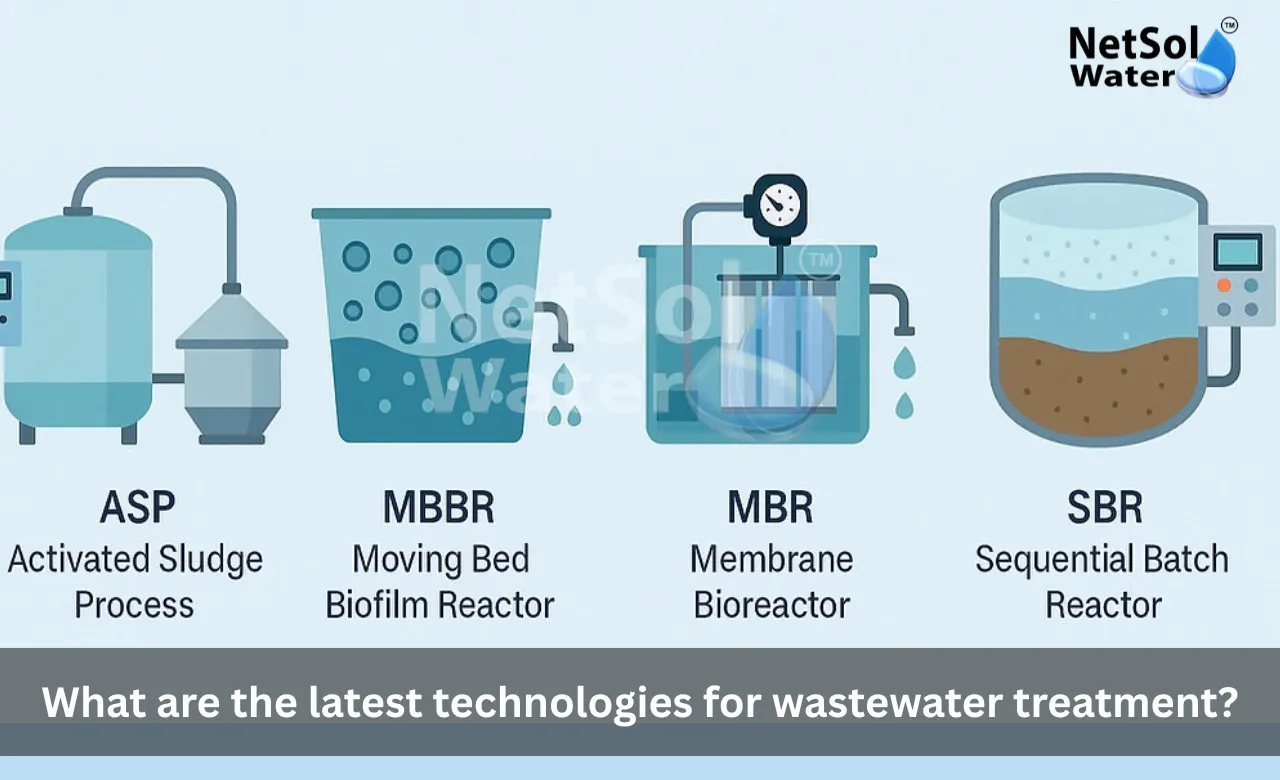
What are the latest technologies for wastewater treatment?
Wastewater treatment shows fast change today. Netsol Water is the leading name that many industries trust. Cities that have heavy manufacturing find good treatment crucial. These places need reliable methods to protect health and the environment. Modern wastewater treatment now moves toward a circular economy. It aims to recover energy and harvest nutrients. It also works to break down persistent chemicals such as PFAS. We will look at new tools and methods that make treatment safer, cleaner, and more useful.
Advanced Oxidation & Chemical Destruction
Advanced chemical methods matter because some pollutants resist normal biological systems. These methods break hard molecules into simple, harmless parts. Let us have a look at some of the key technologies and how they work.
1. Supercritical Water Oxidation (SCWO)
SCWO works at very high temperature and pressure above the water critical point. This setting forces organic waste to react with oxygen fast. The process converts stubborn compounds into water and CO₂. Facilities use SCWO to treat sludges and compounds that refuse to break down. Operators note that SCWO reduces final waste mass. The process needs strong engineering and careful control. When plants run SCWO, they can destroy PFAS and similar chemicals that many other methods cannot touch.
2. Photocatalytic Degradation
Photocatalytic systems use light and a catalyst to split pollutants. Titanium dioxide often acts as the catalyst. When light hits the surface, it creates reactive species that attack organic molecules. The technology suits dilute streams and polishing steps after the main treatment. Plants can add photocatalysis to remove traces of colour and taste or to target specific toxins. The method runs with low chemical use, and it can work with sunlight or artificial lamps.
3. Reductive Defluorination (PRD)
Reductive defluorination cuts strong fluorine bonds inside PFAS. The method pairs UV light with special reagents to kick off step-by-step removal of fluorine atoms. PRD aims to turn PFAS into simpler, safe molecules. Research teams improve yields and lower energy use. When PRD works well, it offers a route to handle chemicals once thought permanent. Operators may combine PRD with other steps to ensure full removal.
Biological & Nature-Based Innovations
Biological systems deliver low-energy treatment and small land needs. New nature-based methods boost performance and add resource recovery. Let us have a look at some of these living solutions and how plants use them.
1. Aerobic Granular Sludge (AGS)
AGS forms dense round granules that settle fast. These granules let multiple treatment steps occur in one tank. Plants that use AGS cut space needs by up to seventy-five percent. The granules keep bacteria close so reactions run faster and more stable. Many factories choose AGS to lower their footprint and to reduce pumping and tank count. The system suits places with variable loads, and it trims operating costs while keeping strong effluent quality.
2. Vermifiltration
Vermifiltration uses worms and microbes to clean wastewater in an organic bed. The worms break down solids, and the microbes digest dissolved organics. The method can remove a high share of contaminants in short contact times. Designers use vermifiltration for small community plants and for pretreatment in industries. The process needs mild upkeep, and it produces a usable organic residue. Sites that favor nature-based steps often add vermifiltration to reduce sludge volume and to recover soil matter.
3. Algal Biofilms
Algal biofilms capture nutrients like nitrogen and phosphorus and convert them into biomass. Revolving algae belts and other moving systems boost contact with light and boost uptake. After harvest, the algal biomass can turn into fertilizer or biomaterial. This path closes a loop and shifts waste into value. Municipal systems use algae to meet strict nutrient limits while adding a product stream. Algal steps help reduce chemical dosing, and they link treatment with agriculture.
Smart Systems & Resource Recovery
Digital control and electrochemical tools change how plants run. New methods cut energy use, and they let operators reclaim power and materials. Let us have a look at some smart tools and recovery technologies now in use.
1. Bio-Electrochemical Treatment (BETT)
Bio-electrochemical systems let microbes drive electrical current while they digest organics. These units can treat strong waste streams, and they may generate small power output. Facilities use BETT to reduce energy needs and to lower sludge. The technology works well for high-strength industrial effluent. Engineers integrate BETT with other steps to capture electrons and to make treatment more circular.
2. AI and Machine Learning
AI and machine learning link sensor data to better control. These tools predict maintenance needs, and they set chemical dosing with fine-tuned accuracy. Plants that use AI cut reagent use and boost compliance. The systems also spot anomalies so teams can act before failures grow. This change lets operators run steady processes with less manual tuning.
3. Membrane Innovations
Membrane tech moves ahead with new pore designs and materials. Additive manufacturing helps make membranes with uniform pores that resist fouling. These membranes lower energy demand for pressure-driven steps. Firms test new membranes for longer life and easier cleaning. Improved membranes broaden reuse options since they deliver high-quality output with less backwash and less downtime.
Decentralized & Onsite Reuse
Local treatment cuts pipes, and it feeds reuse close to the source. Onsite reuse saves water and lowers infrastructure cost. Let us have a look at practical systems that enable reuse today.
1. Modular Gray Water Systems
Modular systems treat shower and laundry water for reuse in toilets and landscaping. They sit inside homes and buildings. These units filter and disinfect water so people can reuse it safely. The units fit retrofits and new builds alike. Homeowners and building managers find these systems reduce fresh water demand and cut sewer flow. The approach helps spread reuse in urban areas where new pipework proves costly.
2. Distributed Treatment
Distributed treatment scales municipal-grade technologies down to small footprints. Systems can fit under basements or in compact rooms. They return up to ninety-five percent of building water for non-potable uses. Developers use distributed plants in office towers and in large apartment blocks. These plants shorten water travel, and they keep treatment close to where water flows.
Read some interesting information for the Effluent Treatment Plant Manufacturer in Delhi
Conclusion
Netsol Water is the leading partner for many projects that aim to recover energy, harvest nutrients, and remove forever chemicals. If your site needs help with new technology or with a feasibility review, reach out for a consultation. Wastewater treatment now can save money and protect resources. Contact a specialist to learn which mix of tools fits your needs.
Contact Netsol Water at:
Phone: +91-9650608473
Email: enquiry@netsolwater.com