STP Plant - Page 2 of 2 - Sewage Treatment Plant Manufacturers

Is-STP-water-safe-for-drinking.webp

January 21, 2026by Netsol Water

Is STP Water Safe for Drinking?

Water reuse grows more common as cities face shortages and as industries seek cost savings. Many people ask whether water from a sewage treatment plant can serve as drinking water. This question matters because treated wastewater can look clear and smell neutral yet still have risks for health. Public officials and plant designers work to remove pollutants and microbes. Still, the levels they achieve in a standard sewage treatment plant usually match non-potable needs rather than the strict rules for drinking water.

Is Standard STP Water Safe for Drinking?

Letus take a look at some key facts to understand why most STP effluent is not suitable for direct drinking.

  • What Standard STPs Remove

Standard sewage treatment plants remove solids and reduce organic pollution through a sequence of physical and biological steps. The plant first screens and settles large solids. Then, microbes break down dissolved organic matter in aeration tanks. After settling, the water flows through filters or disinfection steps that lower many bacterial counts and improve clarity. These steps make the water acceptable for many reuse tasks. Gardens, toilet flushing, industrial cooling, and landscaping can use this level of treated water safely when managers follow safe practices.

The design focus of a Sewage Treatment Plant Manufacturer often targets reliable removal of suspended solids, biological oxygen demand, and basic pathogens for those non-potable roles. The result usually meets standards for non-drinking applications, but it does not match the comprehensive limits required for a public drinking supply.

  • Why Standard STP Effluent Fails Potable Standards

Drinking water standards require consistent and redundant protection. Standard STPs do not usually include the high-level polishing steps and redundancy needed for that role. Chemical contaminants such as pharmaceuticals, personal care products, and some industrial compounds can persist at low concentrations after conventional treatment. Some microbes and viruses also survive unless the system uses advanced disinfection and multiple independent barriers. Potable systems need rigorous monitoring, frequent lab testing, and documented performance at all times.

When Can Treated Water Be Safe to Drink?

Let us have a look at some technologies, rules, and practices that allow treated wastewater to become safe for potable use.

  • Advanced Treatment Technologies

To make reclaimed water safe for drinking, engineers add several polishing steps beyond conventional sewage treatment. These steps may include membrane filtration such as reverse osmosis, advanced oxidation processes, granular activated carbon, and multiple disinfection stages including ultraviolet light combined with chlorination. Reverse osmosis removes dissolved salts, many chemicals, and most microbes. Advanced oxidation systems break down trace organic pollutants.

Combining several independent barriers gives much stronger protection than any single treatment. A sewage treatment plant manufacturer who designs potable reuse systems must integrate these technologies with careful pre-treatment and post-treatment to avoid fouling and to maintain stable performance.

  • Regulation, Monitoring, and Public Health Safeguards

Even with advanced treatment, regulators require strict monitoring and testing to declare reclaimed water safe to drink. Utilities measure microbiological indicators, chemical markers, and specific contaminants at high frequency. They also maintain traceable records and perform routine audits.

Public health agencies set numeric limits for bacteria, viruses, and chemicals that the treated water must meet every time it leaves the plant. In many places, regulators also require proven emergency response plans and public communication strategies.

Uses of STP-Treated Water and the Role of Manufacturers

Let us have a look at typical non-drinking uses and at how manufacturers shape safe reuse systems.

  • Common Non-Potable Uses

Operators commonly use treated STP effluent for irrigation, toilet flushing, industrial cooling, dust control, and certain industrial processes. These uses reduce demand on freshwater sources and lower operating costs for large consumers. Because the water does not enter human mouths, the treatment demands remain lower than for potable use. Reuse in industry often requires additional conditioning, such as hardness control or corrosion inhibition. A sewage treatment plant manufacturers will tailor a system to the intended reuse so the water meets the needed quality consistently while keeping treatment affordable and simple to operate.

  • Role of Sewage Treatment Plant Manufacturers and Netsol Water

Manufacturers design systems that meet specific reuse goals and local rules. They select unit processes, size equipment, and provide control systems and maintenance plans. Netsol Water is a leading sewage treatment plant manufacturer that supplies plants for municipal, industrial, and commercial clients. Netsol Water works with customers to define the required treated water quality and to choose the right combination of treatment steps. For projects that aim only at non-potable reuse, Netsol Water focuses on cost-effective, reliable options. For customers who seek potable reuse, the company helps specify advanced membranes, disinfection and monitoring systems, and may support compliance testing. By matching design to use, Netsol Water helps clients gain water savings while protecting public health.

Read some interesting information for the Industrial RO Plant Manufacturer

Conclusion

Treated water from a standard sewage treatment plant does not meet drinking water rules by default. Converting sewage effluent into safe potable water requires extra treatment, careful monitoring, and regulatory approval. A sewage treatment plant manufacturer plays a central role in choosing technologies and building systems that match the intended use. If you want advice on safe reuse options or a consultation about plants from basic reuse to potable reuse, please contact Netsol Water for more information.

Contact Netsol Water at: Phone: +91-9650608473 | Email: enquiry@netsolwater.com

What-are-the-latest-Hybrid-Purification-Systems.webp

January 19, 2026by Netsol Water

What are the advantages of STP plants?

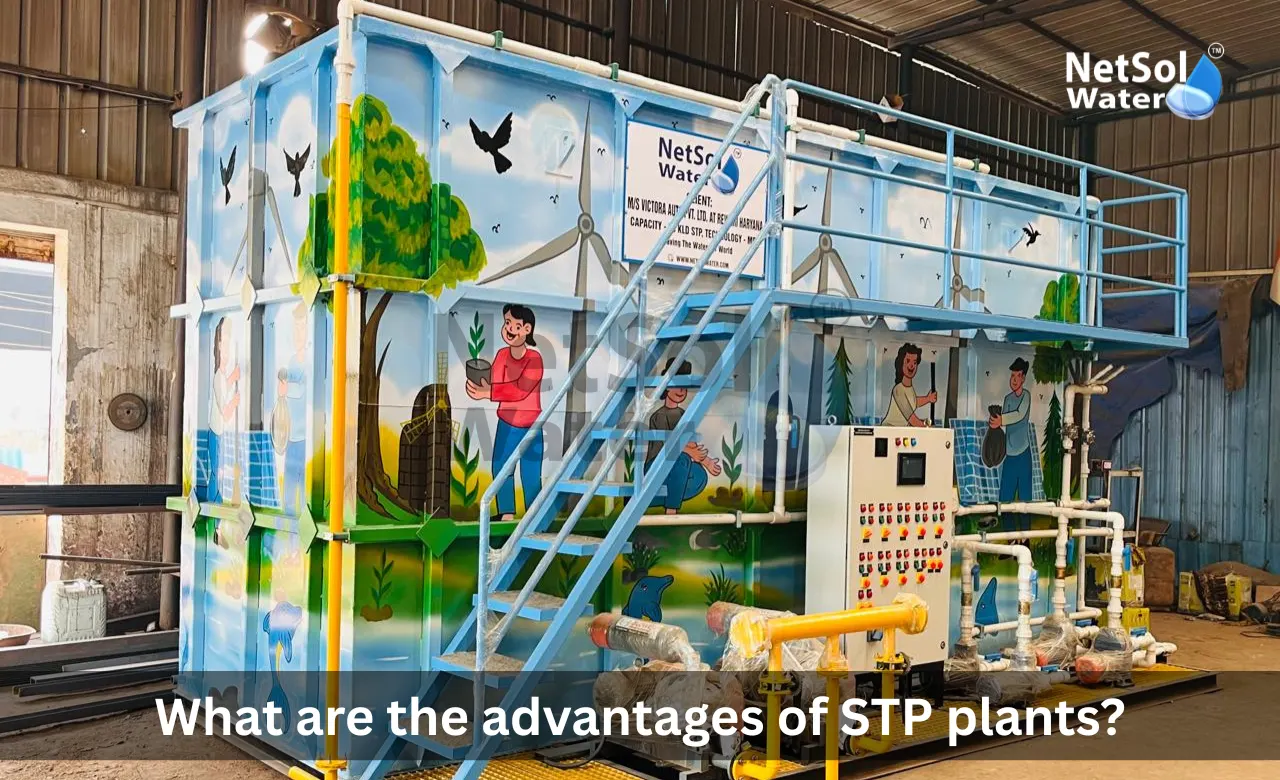
When people let used water flow away without treatment, they harm rivers, ground, and soil. Places known for tourism or heavy industry face higher pressure on water bodies. Clean rivers help tourism. Clean ground helps farming. Clean water keeps people healthy. Netsol Water is the leading Sewage Treatment Plant Manufacturer and we design plants that fit local needs and rules. We build plants for small communities, large housing projects, and factories. A good plant makes water safe for reuse or safe return to nature. We will explain the main advantages of STP plants.

Environmental and water resource advantages

Clean water and a steady water supply form the core of this benefit. Treating sewage lowers pollution and protects rivers and lakes. Let us have a look at some ways STP plants make a difference.

1. Reduced pollution and healthier ecosystems

When an STP removes organic waste and chemicals, it cuts the load on rivers. Fish and plants survive longer. Algae growth drops so oxygen stays in the water. That keeps rivers from turning into foul-smelling drains. Cleaner water also supports birds and other wildlife. Over time this restores balance in the whole watershed.

2. Groundwater recharge and reuse

Treated water can return to the ground or flow into recharge pits. This helps raise groundwater levels in areas facing water stress. Cities and towns can use treated water for watering parks, flushing toilets, or for industry. Reuse lowers the need to pump fresh groundwater. That prevents wells from drying and keeps the land stable. When communities plan reuse carefully, they save large volumes of fresh water every year.

Public health and community benefits

STP plants protect people and improve life in towns and housing areas. Clean water cuts the spread of disease and supports safer daily life. Let us have a look at some key health and social benefits.

1. Fewer waterborne diseases and cleaner public areas

Raw sewage causes infections and skin problems. An STP removes pathogens and harmful bacteria. This lowers cases of diarrhea, cholera, and other infections. Cleaner drainage reduces mosquito breeding, so fever and vector-borne illnesses fall. When wastewater stays treated, public parks, playgrounds, and streets become safer for children and older people.

2. Better living standards

When a town treats its sewage, people see and feel the change. Homes face less bad smell. Local drains do not overflow on rainy days. Schools, offices, and markets grow healthier and more pleasant. This uplift in daily life boosts community pride. People support local projects that keep the area clean. That creates a positive loop where residents protect shared water resources and demand better services.

Economic, operational, and regulatory advantages

Building and running an STP brings savings and opens new value streams. Firms and local bodies gain from lower costs and from meeting rules. Let us have a look at some financial and operational benefits.

1. Cost savings and resource recovery

Using treated water cuts the fresh water bill for industry and large complexes. Treated water can power cooling towers, wash floors, or irrigate green areas. This reduces the need for expensive fresh water. Some STP designs recover biogas from sludge. That gas can run pumps or heaters. Recovering nutrients from sludge produces compost that farmers can use. These options turn waste into savings and small new income streams.

2. Compliance reliability and easier approvals

Regulators now expect proper wastewater handling from builders and factories. A certified STP keeps projects inside the law. That speeds up approvals and avoids fines. When a Sewage Treatment Plant Manufacturer supplies clear operation manuals and training, the plant runs smoothly. Good monitoring lowers downtime and reduces surprise repair costs. Developers sell properties faster when they can show safe and approved wastewater systems. Investors trust projects that follow rules and protect the environment.

Read some interesting information for the Commercial RO Plant Manufacturer

Conclusion

Sewage Treatment Plant Manufacturer firms make plants that protect water, health, people, and money. Netsol Water stands as the leading Sewage Treatment Plant Manufacturers with experience in design, fabrication, and service. A well-planned STP cleans water, lowers disease risk, saves fresh water, and helps meet regulations. It also creates chances to recover energy and nutrients that add value back to the community. If you want clear answers on which system fits your site, talk to a firm that designs for local conditions. Contact us to request a consultation and a site visit.

Contact Netsol Water at:

Phone: +91-9650608473

Email: enquiry@netsolwater.com


Top-Sewage-and-Effluent-Treatment-Plant-Manufacturers-in-Noida.webp

May 6, 2025by Netsol Water

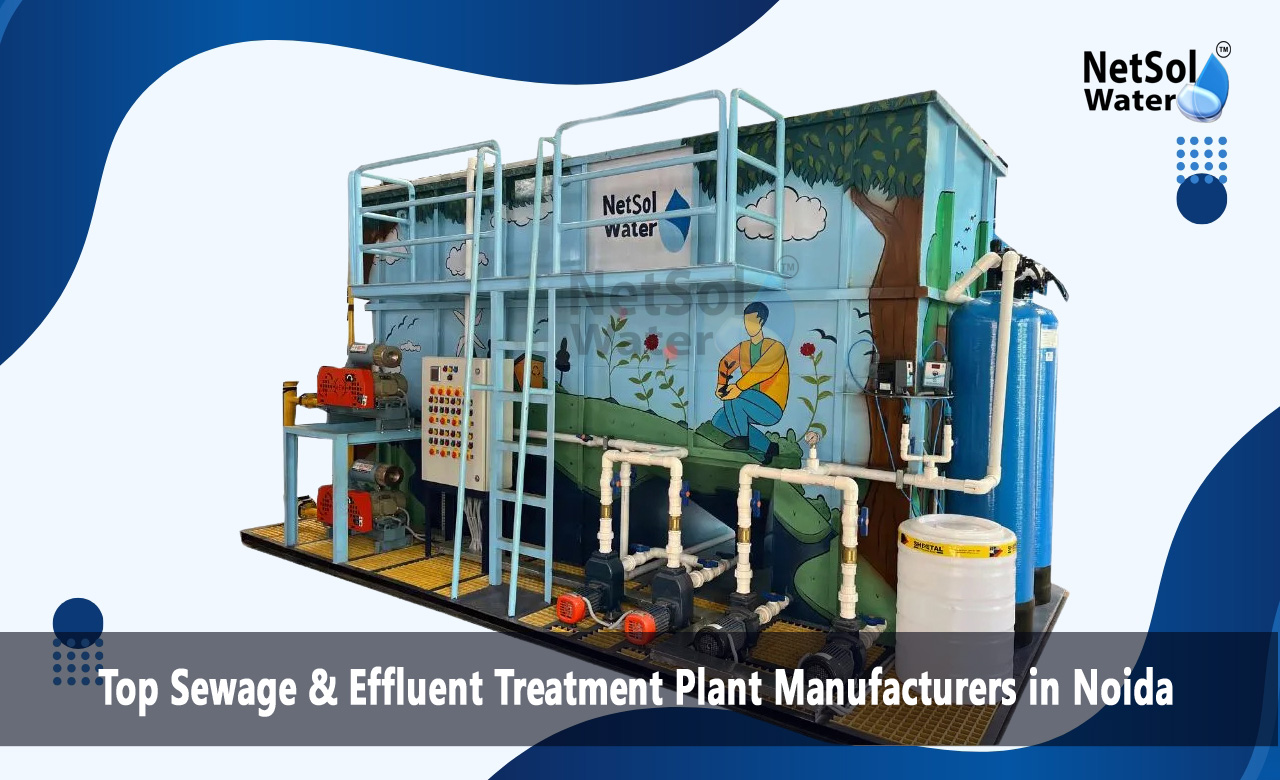
Top Sewage & Effluent Treatment Plant Manufacturers in Noida

In today’s environmentally conscious world, industries and municipalities must ensure proper wastewater treatment before discharge. Netsol Water, a leading Sewage Treatment Plant (STP) and Effluent Treatment Plant (ETP) Manufacturers in Noida, offers cutting-edge technologies to treat industrial and domestic wastewater effectively. Our solutions ensure regulatory compliance, cost-effective operations, and sustainable water reuse.

Why Are STP & ETP Plants Essential in Noida?

1. Growing Industrial & Urban Wastewater Challenges

Noida and Greater Noida are major industrial hubs in Uttar Pradesh, hosting sectors like:

  • IT & Software Parks
  • Automobile & Manufacturing
  • Pharmaceuticals & Chemicals
  • Textiles & Food Processing

These industries generate large volumes of wastewater containing organic matter, harmful chemicals, and dissolved solids. Without proper treatment, this wastewater pollutes rivers, groundwater, and soil, leading to severe environmental and health hazards.

2. Strict Environmental Regulations

The Central Pollution Control Board (CPCB) and Uttar Pradesh Pollution Control Board (UPPCB) enforce strict discharge regulations for industries and municipalities. Companies failing to comply face heavy penalties.

  • An efficient ETP or STP Plant ensures:
  • Compliance with effluent discharge standards
  • Reduced carbon footprint
  • Prevention of waterborne diseases
  • Recycling and reuse of treated water

3. Water Scarcity & Sustainable Solutions

With freshwater resources depleted, wastewater recycling is no longer optional. Advanced treatment technologies allow industries to reuse water for:

  • Cooling towers
  • Landscape irrigation
  • Toilet flushing
  • Industrial processes

This reduces dependency on freshwater and supports sustainable business practices.

Sewage Treatment Plant (STP) vs. Effluent Treatment Plant (ETP)

Feature Sewage Treatment Plant (STP) Effluent Treatment Plant (ETP)
Purpose Treats domestic sewage (from households, hotels, hospitals) Treats industrial wastewater (from factories, manufacturing units)
Contaminants Organic waste, suspended solids, pathogens Chemicals, heavy metals, toxic compounds
Treatment Process Biological treatment (aerobic/anaerobic) Chemical + Biological treatment
End Use Irrigation, toilet flushing Industrial reuse, safe discharge
Regulatory Body Municipal corporations Pollution Control Board

Why Choose Us?

With years of expertise, Netsol Water has emerged as a trusted STP and ETP Plant Manufacturer in Noida, offering:

✔ Customized Solutions – Tailored to industrial requirements
✔ Advanced Technologies – Membrane bioreactors (MBR), Sequential Batch Reactors (SBR) and Reverse Osmosis (RO)
✔ Energy-Efficient Designs – Low operational costs
✔ Quick Installation & Delivery – Prefabricated and modular systems
✔ 24/7 Customer Support – From consultation to maintenance

Our STP Solutions in Noida

We provide a wide range of sewage treatment plants, including:

  1. Compact Sewage Treatment Plant– Ideal for apartments, hotels, and small industries
  2. Prefabricated STP Plant– Easy to install, minimal civil work
  3. Modular Sewage Treatment Plant– Scalable for growing needs
  4. Industrial STP– For pharmaceuticals, textiles, and food processing

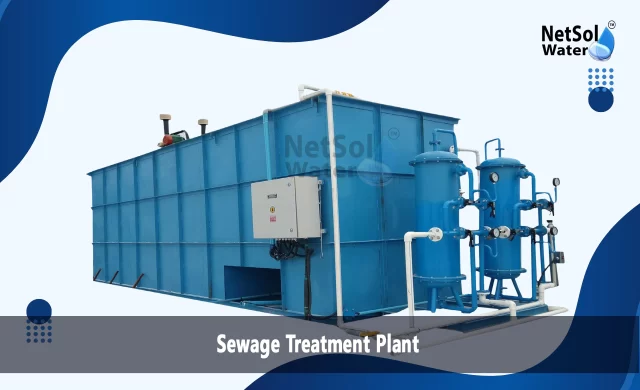
Sewage Treatment Plant

STP Treatment Process:

  • Primary Treatment– Removal of large solids
  • Secondary (Biological) Treatment– Breakdown of organic matter
  • Tertiary Treatment– Disinfection & filtration for reuse

Our ETP Solutions in Noida

We specialize in industrial effluent treatment plants for:

  • Chemical & Pharmaceutical Industries– Acid-alkali neutralization
  • Textile & Dyeing Units– Color & chemical removal
  • Automobile & Engineering– Oil-grease separation

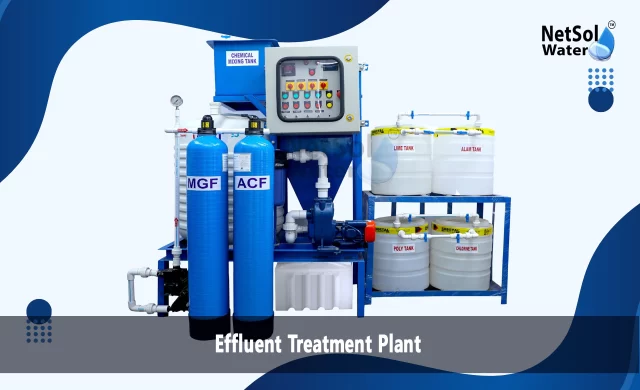
Effluent Treatment Plant

ETP Treatment Process:

  • Primary (Physical) Treatment– Screening & sedimentation
  • Secondary (Biological/Chemical) Treatment– BOD/COD reduction
  • Tertiary (Advanced) Treatment– RO, UV, or ozonation

Industries We Serve in Noida & Greater Noida

  1. Hospitals – STPs for medical wastewater
  2. Hotels & Malls– Compact STPs for water recycling
  3. Textile & Dyeing– ETPs for color removal
  4. Food & Beverage– Organic wastewater treatment
  5. Automotive & Engineering– Oil-water separation systems

Key Benefits of Netsol’s STP & ETP Plants

  • Compliance with Pollution Control Board norms
  • Cost-effective & energy-saving designs
  • Minimal maintenance & automatic operation
  • Quick installation & robust construction
  • Customizable for different industry needs

Frequently Asked Questions (FAQs)

1. What is the cost of an STP/ETP plant in Noida?

The price range depends on capacity, technology, and customization. Contact us for a free quote.

2. How long does installation take?

Prefabricated STP/ETP plants can be installed in 2-4 weeks.

3. Do you provide maintenance services?

Yes, we offer annual maintenance contracts (AMC) for smooth operations.

Conclusion

As a leading Sewage Treatment Plant Manufacturers in Noida and Effluent Treatment Plant Manufacturers in NoidaNetsol Water stands out for its innovation, compliance, and customer-centric approach. Whether you need a compact STP, industrial ETP, or membrane-based treatment, we provide end-to-end wastewater treatment facility solutions that align with global environmental standards.

Choose Netsol Water for sustainable, efficient, and regulatory-compliant water treatment facilities in Noida & Greater Noida!


Top-Sewage-Treatment-Plant-Manufacturers-in-Greater-Noida.webp

April 24, 2025by Netsol Water

In today’s world, managing wastewater efficiently is crucial for environmental protection and public health. Greater Noida, a rapidly developing city in Uttar Pradesh, demands advanced sewage treatment plants (STPs) to handle industrial waste, residential applications, and commercial wastewater. If you search for top sewage treatment plant manufacturers in Greater Noida, this guide highlights the best providers offering cost-effective, energy-efficient, and modular sewage treatment plants.

Why Choose Professional Sewage Treatment Plant Manufacturers?

Sewage treatment plays a crucial role in reducing water pollution and ensuring clean water for reuse. Reputed manufacturers like Netsol Water provide modern sewage treatment plants with biological treatments, membrane bioreactors, and aerobic treatment processes. These systems ensure consistent water quality, cost savings, and compliance with environmental regulations.

Key Benefits of Advanced Sewage Treatment Plants

  • Reduced carbon footprint with energy-efficient designs
  • Compact, space-efficient designs for urban and commercial establishments
  • Wastewater recycling for sustainable water management
  • Low maintenance costs with regular maintenance services
  • Customized sewage treatment plant solutions for industrial, residential, and commercial applications

Top Sewage Treatment Plant Manufacturers in Greater Noida

1. Netsol Water

A leading name in wastewater treatment plantsNetsol Water offers cutting-edge sewage treatment solutions, including modular sewage treatment plants and effluent treatment plants (ETPs). Their advanced treatment technologies ensure tertiary treatment for safe water discharge.

Key Offerings:

  • Compact Sewage Treatment Plant for space-constrained areas
  • Biological treatment methods for organic waste removal
  • Maintenance service for smooth operation
  • Cost-effective and eco-friendly solutions

2. Sewage Treatment Plants

Specializing in decentralized treatment systems, Sewage Treatment Plants provide pre-fabricated sewage treatment plants ideal for construction sites, commercial wastewater, and domestic wastewater management.

Key Features:

  • Aerobic and anoxic processes for efficient treatment
  • Budget-conscious projects with affordable prices
  • Customized water treatment solutions

3. Other Reputed STP Manufacturers in Greater Noida

  • Urban STP Plant– Ideal for hotels, malls, and offices
  • Wastewater Treatment Plants– For factories and manufacturing units
  • Compact STP Plant– For municipal and large-scale deployments

Factors to Consider When Choosing an STP Manufacturer in Greater Noida

Selecting the right Sewage Treatment Plant manufacturer is crucial for ensuring efficient wastewater management, regulatory compliance, and long-term cost savings. Here are the key factors to evaluate before making a decision:

1: Technology Used in Sewage Treatment

Modern sewage treatment plants employ various advanced technologies, including:

  • Membrane Bioreactors (MBR)– High-efficiency filtration for superior water quality.
  • Sequential Batch Reactors (SBR)– Ideal for compact sewage treatment plants with intermittent flow.
  • Moving Bed Biofilm Reactor (MBBR)– Combines aerobic and anoxic processes for effective organic waste treatment.
  • Tertiary Treatment– Ensures advanced wastewater treatment through membrane filtration and disinfection.

Choose a manufacturer that offers cutting-edge sewage treatment solutions tailored to your needs.

2: Compliance with Environmental Regulations

Greater Noida follows strict environmental regulations to control water pollution. A reputable STP manufacturer should ensure:

  • Effluent Treatment Plants (ETPs) meet the Uttar Pradesh Pollution Control Board (UPPCB)
  • BOD & COD reduction for safe discharge or reuse.
  • Zero Liquid Discharge (ZLD) compliance for industries with high wastewater generation.

3: Customization & Scalability

Different applications require different sewage treatment plant solutions:

  • Residential STPs– Compact and low-maintenance systems.
  • Commercial Sewage Treatment Plants– For hotels, malls, and offices.
  • Industrial STPs– Designed for heavy organic and chemical waste.
  • Modular Sewage Treatment Plants– Easily expandable for future needs.

Ensure the manufacturer provides customized solutions based on your wastewater composition and flow rate.

4: Cost-Effectiveness & Maintenance Services

  • Initial STP Plant Cost– Compare pricing but prioritizequality and efficiency.
  • Maintenance Costs– Opt for manufacturers offering annual maintenance contracts (AMC).
  • Energy-Efficient Designs– Reduce operational expenses with low-power consumption systems.

5: Manufacturer’s Reputation & After-Sales Support

  • Check client reviews and project history.
  • Ensure 24/7 customer care support for emergencies.
  • Look for warranty and service agreements.

Future of Sewage Treatment in Greater Noida

With rapid urbanization and industrialization, Greater Noida’s sewage treatment sector is evolving with sustainable and smart solutions. Here are the key trends shaping the future of sewage treatment:

1: Adoption of Advanced Treatment Technologies

  • AI & IoT-Based Monitoring– Real-time tracking of water quality, flow rates, and system efficiency.
  • Membrane Filtration & Reverse Osmosis (RO)– For ultra-pure water recycling in industries.
  • Decentralized Treatment Systems– Smaller, localized STPs for construction sites, townships, and commercial hubs.

2: Focus on Water Recycling & Zero Liquid Discharge (ZLD)

  • Wastewater recycling will become mandatory for industries and large residential complexes.
  • Tertiary treatment will ensure safe reuse in irrigation, cooling systems, and flushing.

3: Green & Energy-Efficient STP Designs

  • Solar-Powered STPs– Reducing carbon footprint.
  • Energy Recovery Systems– Converting sludge into biogas for power generation.

4: Government Initiatives & Smart City Integration

  • Smart City Projects in Greater Noida will integrate automated STPs with centralized monitoring.
  • Public-Private Partnerships (PPP) for large-scale sewage treatment infrastructure.

5: Increased Demand for Compact & Pre-Fabricated STPs

  • Space-saving designs for urban areas.
  • Quick installation for budget-conscious projects.

Conclusion

Choosing the right sewage treatment plant manufacturer in Greater Noida ensures clean water, regulatory compliance, and long-term cost savings. Whether you need an STP for residential, commercial, or industrial use, companies like Netsol Water and Sewage Treatment Plants provide reliable, advanced, and cost-effective solutions.

For more details on sewage treatment plant products, maintenance services, and customized solutions, contact the top STP Plant manufacturers in Uttar Pradesh today!


greywater-wastewater-treatment-by-best-mbbr-stp-plant-netsol.jpg

December 28, 2020by Netsol Water

100% of the wastewater, greywater, and sewage is recycled using the Advanced Sequencing Batch Reactor (SBR) from Netsol Water, India. The treated water is employed for flushing and gardening resulting in enormous water savings. The system operates fully automated and requires very low periodic maintenance also. The kitchen water is skilled a grease trap and an anaerobic digester – to scale back the oil, fats, and grease getting into the SBR. The treated water from the SBR is filtered employing a pressure sand filter and an activated charcoal filter and at the delivery point, it passes through the UV filter also to scale back the suspended impurities and control the microbial growth.

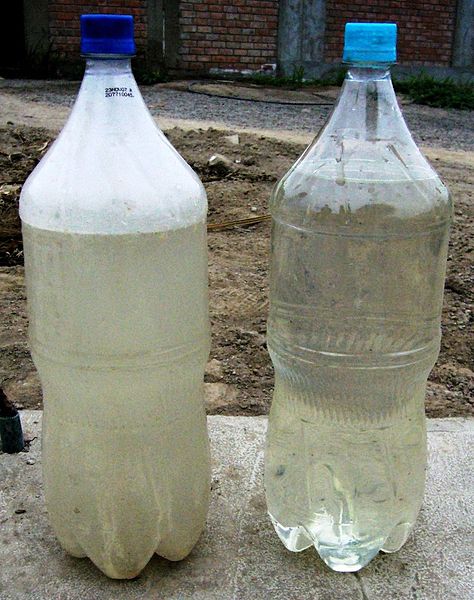
Samples of Treated waste water by netsol -9650608473

The recycled water which features a high level of micro-nutrients is extremely good for gardening and caters to the entire gardening and flushing needs of the power.

For detailed result and best wastewater treatment machine contact Netsol Water Solutions for Best Sewage Treatment Plant.