RO - Sewage Treatment Plant Manufacturers

Which-RO-water-is-best-for-health.webp

February 23, 2026by Netsol Water

Which RO water is best for health?

Choosing the right RO matters for health and daily life. Water quality varies across cities and areas. Some places draw water from deep wells. Other places depend on surface water. Each source can carry different impurities. A good RO removes harmful elements and keeps useful minerals. A multi-stage purifier that adds minerals back gives safer water and better taste. We are the leading commercial RO plant manufacturer that offers plants that focus on health and efficiency. We will explain what makes an RO good for health.

Recommended RO Purifiers for Health

The choice of purifier must start with health goals and source water type. For homes and offices, the best units use more than one cleaning step. They also restore a proper mineral balance.

1. 7 Stage Purifier with Copper and Mineralizer

This purifier uses seven cleaning steps to remove pathogens and chemical traces. It includes RO followed by UV and MF to catch even fine particles. The system adds a measured dose of copper and other minerals after purification. Copper can support digestion and immunity when present in safe amounts. The unit aims for near total removal of harmful elements while restoring a healthy mineral profile. It also improves taste so people prefer to drink more water. The design suits urban water that may carry microbial or chemical risk. The focus on health makes it a strong pick for users who want both safety and a gentle mineral boost.

2. RO with Alkaline Booster and Zero Wastage

This model adds an alkaline booster. The booster raises pH up to 9.5 to help neutralize excess acid in the body. It also has a copper filter and a TDS control valve to keep natural minerals at healthy levels. The purifier uses RO along with UV and UF for full coverage. It recirculates rejected water back to the overhead tank. The built-in pump handles that step. This process cuts water waste to almost zero. People who worry about water loss in drought-prone areas find this feature useful. The unit works well where municipal supply and stored water mix.

3. 9 Stage Purifier with High Recovery

This unit uses nine purification steps to address a wide range of contaminants. It adds minerals such as calcium and magnesium to meet BIS norms. It uses a modern UV LED for instant disinfection without mercury. An external sediment filter extends the life of inner filters. Advanced filter media and smart design allow more than forty percent water recovery. This ratio reduces how much water goes to drain. The purifier fits places where source water quality shifts over time. It works well in areas with hard water or mixed supplies.

Why Mineralization is Crucial for Health

Water that passes through RO leaves behind dissolved minerals. This change can affect taste and long-term mineral intake. People who drink only demineralized water may miss small amounts of calcium and magnesium. Over many years, that gap can matter for bone health and heart function. A good purifier replaces these minerals in safe amounts. Let us have a look at some key points about mineralization and health.

1. Mineral Depletion Concern

Demineralized water may feel pure but it can lack trace elements that the body uses daily. Calcium and magnesium serve structural and metabolic roles. When diet lacks these minerals, long-term health outcomes can worsen. The risk depends on the whole diet. In many diets, people may not get enough minerals from food. In such cases, mineralized water gives a small but steady supply. A purifier with a mineralizer or TDS controller can return the water to a balanced level. This step keeps water safe yet richer in natural elements.

2. Mineral Enhanced Solution

Purifiers that add minerals do so in controlled amounts. The process uses media that mix calcium, magnesium, and sometimes copper back into the water. Alkaline boosters can adjust pH for a less acidic effect. TDS control valves let users keep essential dissolved solids within a healthy range. These features improve taste. They also make the water more similar to natural spring water.

Read some interesting information for the Effluent Treatment Plant Manufacturer in Faridabad

Conclusion

Choosing the right purifier means balancing safety, mineral content, and water use efficiency. A multi-stage system with a mineralizer, alkaline booster, and copper filter gives the best mix for health. Commercial RO plants that add minerals and cut waste help both users and the environment. Netsol Water leads the commercial space with solutions that focus on health and recovery. If you need help picking the right commercial or home unit, contact a trusted commercial RO plant manufacturer for a consultation. Reach out for more information or to request a site visit and a personalized recommendation.

Contact Netsol Water at:

Phone: +91-9650608473

Email: enquiry@netsolwater.com

What_is_a_zero_liquid_discharge_plant.jpg

November 18, 2022by Netsol Water

Zero Liquid Discharge (ZLD) Plants – An Effective Wastewater Treatment Solution

A technological approach to purifying water in which all water is recovered and contaminants are converted to solid waste is known as “zero liquid discharge.” ZLD is the most challenging goal to attain since recovery costs and challenges increase as wastewater concentrations grow. Although many water treatment systems strive to boost freshwater recovery and minimize waste. Concentrations of salinity, organics, and scaling compounds, all rise, adding to the expense of regulating these increases. Combining water treatment technologies that can handle wastewater when the toxins are concentrated allows for ZLD.

With so many benefits to offer from a ZLD one becomes curious to know about it keenly and contribute to the environment. Let’s settle your curiosity and know the zero liquid discharge more elaborately!

Zero liquid discharge plant:

You can turn your waste into no-waste by using a zero-liquid discharge plant. These sturdy, portable systems handle wastewater from industrial processes and salvage priceless goods from recycling procedures. Materials are successfully separated from water or other wet materials, and they are then converted to solid waste that may be sold, reused, or disposed of more effectively. ZLD systems are advantageous to the environment and your bottom line, and they are simple to modify to match your changing demands and regulatory requirements.

A ZLD treatment system, as the name indicates, uses cutting-edge modern water treatment procedures to reduce liquid waste at the conclusion of your industrial process to zero. A zero Liquid Discharge treatment system that is effective and properly thought out should be able to:

  • Adapt the fluctuations in the flow and contamination of waste
  • Allow for necessary changes to chemical amounts
  • More of your liquid waste can be recovered for reuse.
  • Treat your waste to recover valuable byproducts.
  • Create a solid or dry cake for disposal.

Your business will be able to comply with strict effluent standards and Electric Power Generating Effluent Guidelines with the use of a ZLD treatment system. Just bear in mind that the criteria for your facility will change depending on whether you are discharging to the environment under a National Pollutant Discharge Elimination System or into a publicly owned treatment works.

What components make up a fundamental ZLD plant?

The precise parts of a ZLD treatment system will primarily rely on

(1) Amount of dissolved material present in the waste,

(2) Flow rate needed for the system, and

(3) What particular pollutants are there. But often, a fundamental ZLD treatment system consists of some combination of:

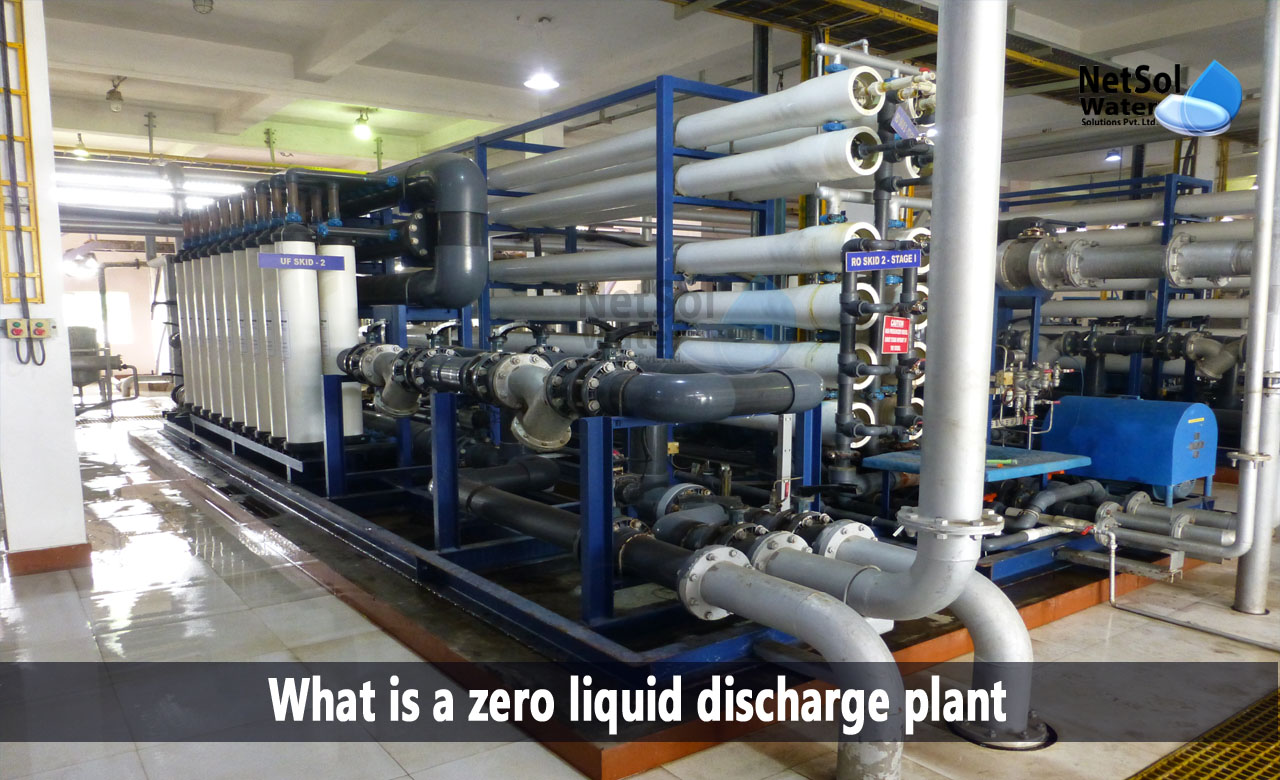
  • A clarifier or reactor to remove hardness, metals, and silica
  • Chemical feed to aid in the coagulation, flocculation, or precipitation of any metals and suspended solids
  • A filter press beside an evaporator or after pretreatment concentrates secondary solid waste.
  • UF: Ultrafiltration (UF) to eliminate any traces of suspended particles that are still present and stop fouling, scaling, and/or corrosion later in the treatment process.
  • RO: Brine concentrators to further concentrate the reject RO stream or reject from electrodialysis to further concentrate the dissolved solids removed by reverse osmosis (RO), which removes the majority of dissolved solids from the water stream in the main phases of concentration.
  • Evaporator: In the final stages of waste concentration before the crystallizer, an evaporator is used to vaporize access water.
  • Crystallizer: Using a crystallizer, boil out any residual liquid to produce a dry, solid cake that may be disposed of.

These standard components are sufficient depending on the requirements of your plant and process, but if your plant needs a system that offers a little bit more customization, you could need to add additional features or technologies. ZLD is a highly customized process because of the wide range of industries it is used in and the many waste streams it produces, and these add-ons will vary depending on your facility’s specific requirements.

What Netsol offers!

Our international service network employs devoted experts that are informed about your sector. Whenever and wherever you need parts or assistance, we are here to provide it.

For maximum uptime, availability, and optimization, Netsol takes care of all your needs throughout the equipment’s life cycle, including setup, maintenance, support, and monitoring services.

For any other support, inquiries, or product purchases, call on +91-9650608473 or email at enquiry@netsolwater.com

You may also read this How does reverse osmosis purifies water?