
Sewage Treatment Plant Manufacturer in Mumbai
Sewage Treatment Plant Manufacturer in Mumbai
Mumbai faces many water challenges, and it needs strong sewage treatment solutions. The city has dense neighborhoods, busy ports, and large industrial zones. Clean water and safe waste disposal shape public health and future growth. Sewage treatment plants reduce pollution and protect local rivers and coastal waters. They also help cities meet regulations and support new construction projects. A sewage treatment plant manufacturer in Mumbai plays an important role in building this capacity. Netsol Water leads the market with trained teams and proven systems.
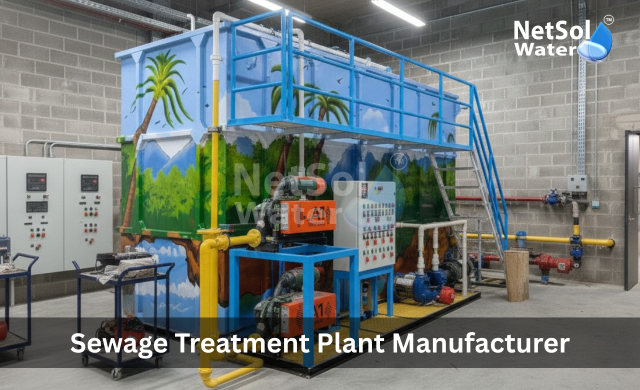
Types of Sewage Treatment Plants and Their Role
Sewage treatment plants come in many forms, and each type meets a different need. Knowing the types helps project planners choose the right plant for location, load, and budget. Let us have a look at some main types and how they serve Mumbai areas.
- Conventional Activated Sludge System
The conventional activated sludge system handles large flows with steady organic loads. It uses aeration tanks and settling units to remove organic matter and suspended solids. This system fits municipal zones, housing complexes, and large commercial complexes. The process begins with primary screening to remove coarse solids.
Next the biological reactor breaks down organic material with microbes. Finally, the clarifier separates biomass from treated water. Operators return part of the biomass to the reactor to keep the process stable. This design offers predictable performance for cities that face daily high volumes.
Netsol Water customizes these systems for local space constraints and for permit needs. They size each plant to match the expected peak load and to reduce energy use during low-load periods. Maintenance teams train local staff and provide spare parts to keep systems working without delays.
- Moving Bed Biofilm Reactor and Advanced Modular Systems
The moving bed biofilm reactor and modular systems work well for space-limited sites and for projects that need compact solutions. These systems use media to host biofilm, and they allow high organic removal in small tanks. The compact design suits coastal plots and retrofits inside existing plants.
MBBR adapts to variable loading, and it requires fewer personnel to operate. Modular units come preassembled, and they shorten site work time. Netsol Water installs modular plants with control panels and remote monitoring. The company also offers hybrid designs that combine MBBR with clarification and polishing steps. These options help clients meet strict discharge standards and reduce land use.
Why Choose Netsol Water as the Leading Sewage Treatment Plant Manufacturer in Mumbai
Choosing the right manufacturer affects plant performance, cost, and lifecycle. Netsol Water stands out as a sewage treatment plant manufacturer in Mumbai because it pairs engineering skills with local experience. Let us have a look at some strengths that make this choice practical.
- Custom Design and Compliance Focus
Netsol Water begins each project with a site assessment and a clear plan. The team adapts designs to ground conditions, load profile, and regulatory limits. They provide detailed drawings and clear specifications to avoid site delays. Netsol Water also handles permit paperwork and coordinates with local authorities to speed approvals. The company follows quality standards for materials and components so clients receive durable systems.
For clients with strict discharge limits, Netsol Water adds tertiary treatment and disinfection options. These steps ensure treated water meets the set standards for reuse or safe discharge. The design team also plans for future expansion and for low-maintenance operations. This practical focus helps clients manage costs and maintain compliance over time.
- Project Support and After-Sales Service
Netsol Water offers a full service package that includes installation, commissioning, and staff training. Their teams supervise site work and perform factory checks before shipping equipment. On commissioning, they test all systems, and they tune control loops for stable performance.
After handover, Netsol Water provides routine maintenance contracts and offers remote monitoring for key signals. The company also stocks critical spares, and it conducts regular performance audits. This support reduces downtime, and it helps plants run efficiently. Netsol Water also gives clients clear manuals and training sessions so local teams can operate treatment plants with confidence. These services reduce long-term costs, and they protect client investments.
Key Features and Technologies Used
Modern sewage treatment plants need sensors, smart controls, and energy-efficient equipment. Key technologies lower cost, improve reliability, and make operation simpler. Let us have a look at some technologies Netsol Water uses and how they improve plant outcomes.
- Automation and Control Systems
Automation brings reliability, and it reduces human error. Netsol Water fits programmable logic controllers with human-machine interfaces to control pumps, aeration, and recirculation. The control system collects data on flow, dissolved oxygen, and sludge levels. Operators receive real-time alerts, and they can view trends to plan maintenance. Remote access lets service engineers diagnose faults without a site visit in many cases. Automation also supports staged operation to save energy during low-flow periods. For plants with reuse goals, the control system manages disinfection and dosing to keep output within safe limits. These features reduce manpower needs, and they improve process stability.
- Energy Efficiency and Footprint Reduction
Energy use forms a major part of operating cost. Netsol Water chooses blowers, pumps, and mixers with high efficiency, and they design the layout to reduce head losses. The company uses variable speed drives to match power to demand, and it adds energy recovery where feasible. Compact reactors and integrated chambers reduce civil cost and land need. For some projects, Netsol Water offers solar-ready designs, and it integrates control logic to use alternative power sources. These steps lower monthly running costs, and they make systems easier to operate in areas with unstable power supplies.
Industries Served and Maintenance Services
Sewage systems must meet different needs for municipal sites, residential groups, and industrial clients. Services and maintenance keep plants working, and they extend equipment life. Let us have a look at clients and post-installation services Netsol Water provides.
- Municipal and Residential Projects
Netsol Water designs large-scale plants for municipalities and for residential townships. These plants handle continuous flow peaks, and they include robust screening and grit removal. The company sizes clarifiers and biological reactors to match daily cycles and seasonal variations. For housing societies, Netsol Water offers compact onsite plants and a simple operator interface. They also design systems for treated water reuse in landscaping and for flushing. This reduces fresh water demand, and it lowers the cost of water supply to the community. For municipal clients, Netsol Water works in phases to allow staged commissioning, and it provides training for local staff to support long-term operation.
- Industrial, Commercial, and Institutional Clients
Factories, hotels, hospitals, and schools need solutions that match their discharge and reuse needs. Netsol Water designs treatment trains that accept process-specific loads, and it adds pretreatment where required. The company also offers periodic cleaning, sludge handling, and disposal services. For critical facilities, Netsol Water provides service level agreements with guaranteed response times for faults. They train in-house teams, and they schedule planned maintenance to avoid major shutdowns. This approach keeps compliance intact, and it protects client operations.
Conclusion
Selecting a sewage treatment plant manufacturer in Mumbai determines the quality and cost of treatment for years ahead. Netsol Water offers personalized designs and full-service support across project stages. The company supplies modern technologies with a focus on ease of operation and energy efficiency. If you manage a project or if you plan a new development, Netsol Water can evaluate your site and propose a practical plant design. Contact Netsol Water for a consultation and for a detailed proposal. Request a site visit and a cost estimate to begin planning today.
Contact Netsol Water at:
Phone: +91-9650608473
Email: enquiry@netsolwater.com