
What Are the Three Layers of the RO Membrane?
Clean water has become a basic need in homes and industries. People need it for drinking, cooking, production, and many daily tasks. Industries also need purified water to keep machines running well and to maintain product quality. This is why reverse osmosis has become one of the most trusted water treatment methods in use today. A skilled manufacturer understands that the membrane is the main part of the plant.
We are the leading commercial RO plant manufacturer that focuses on the science behind membrane performance and system efficiency. At first glance, the RO membrane may seem like a single thin sheet. In reality, it contains three different layers that work together in a smart and effective way. Each layer has a separate task. One layer filters the water. Another layer supports the filtering layer. The third layer adds strength and stability to the full structure. When these layers work together, the membrane performs well and delivers safe water for many uses.
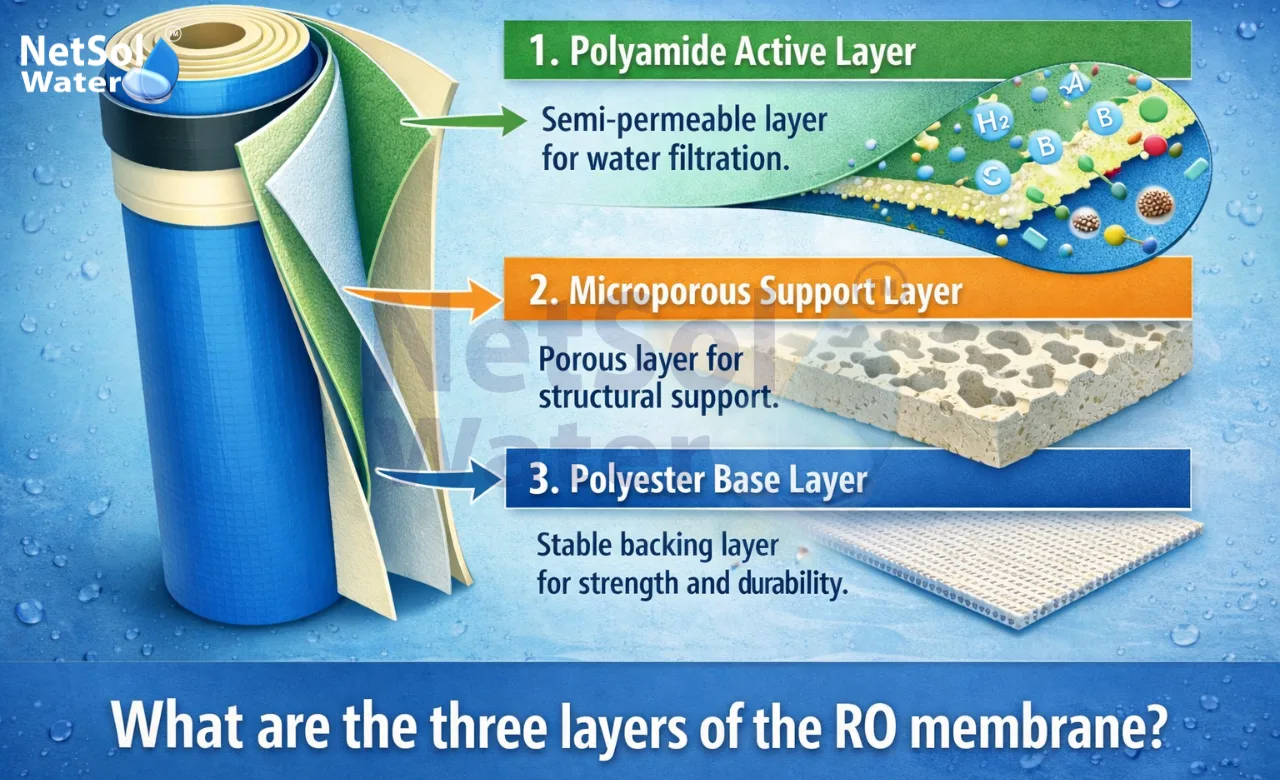
Polyamide Barrier Layer
The polyamide barrier layer is the most important part of the RO membrane. It sits at the top and performs the actual filtration. This layer is extremely thin, yet it carries the main responsibility in the process. It controls what passes through and what stays behind. Because of this layer, the RO membrane can remove a very high amount of dissolved salts, organics, and bacteria from water.
1. How This Layer Works
This layer works like a very fine gate. Water molecules can pass through it while unwanted impurities cannot move forward with ease. The layer contains tiny spaces that designers create with great precision. These spaces are far smaller than most dissolved particles in water. So when pressurized water enters the membrane, the clean water moves ahead and the contaminants remain behind. This is the reason reverse osmosis can produce such pure water.
The polyamide layer is also delicate. It must stay thin because a thin layer helps water flow more easily. At the same time, it must remain strong enough to reject impurities. If this layer gets damaged, then the membrane loses its efficiency. That is why a dependable RO plant manufacturer always gives special attention to membrane quality, handling, and proper system design.
2. Why It Matters in Water Treatment
This top layer decides the quality of the final output water. It removes many unwanted substances that other filters may not catch. It also helps the RO plant produce water that meets strict standards for drinking and industrial use. Since this layer does the main job, it is often called the active layer. Without it, the membrane would not separate clean water from dirty water in such an effective way.
The polyamide barrier layer is only about 0.2 microns thick. That size may sound very small, and it is. Still, this tiny layer plays the biggest role in the membrane. It gives the RO system its filtration power and makes the membrane useful in many areas where water quality matters. This is one reason why every experienced RO Plant Manufacturer gives so much attention to this layer.
Polysulfone Interlayer
The polysulfone interlayer sits below the top barrier layer. It works as the support layer and helps the membrane stay stable during operation. This layer does not perform the main filtration but it supports the main job in a very important way. The top layer is very fragile and cannot perform alone. It needs a firm and even base. That base comes from the polysulfone layer.
1. Its Support Function
This middle layer has a porous structure. That means it contains many tiny openings that allow water to move through without much resistance. At the same time, it gives the top layer a smooth and steady surface. This matters because the thin polyamide layer must stay in place during operation. If the base is uneven, then the top layer may not form properly or may not withstand pressure for long.
The polysulfone layer also helps the membrane handle high pressure. RO systems work by pushing water through the membrane with force. Without a support layer, the top sheet could collapse or tear. The middle layer prevents that problem. It keeps the membrane working smoothly even when the system runs for long hours.
2. Why This Layer Is Essential
A strong membrane needs balance. It must allow water to flow and also keep its shape. The polysulfone interlayer provides that balance. It gives high permeability so water can pass through easily. It also offers enough mechanical strength so the membrane can survive real working conditions. This is very important in both domestic systems and large industrial units.
The thickness of this layer is usually around 40 to 50 microns. That makes it much thicker than the active layer. Even so, it remains light and porous. This layer may not appear visible during use but it plays a quiet and powerful role. A good RO plant manufacturer always understands that support layers decide how long a membrane can perform well.
Polyester Support Web
The polyester support web is the bottom layer of the RO membrane. It acts like the backbone of the whole structure. This layer gives the membrane its strength and durability. It may not filter water directly but it helps the entire membrane stay stable and intact. Without this layer, the membrane would not have the support it needs for long-term performance.
1. Its Structural Role
This bottom layer is usually made from non-woven fabric. It works like a strong backing sheet. Its purpose is to hold the other layers together and protect them from physical stress. Water systems create pressure and vibration. Membranes also face continuous flow and regular operation. The polyester support web helps the membrane handle all of this without breaking down too quickly.
This layer also makes handling easier during manufacturing and installation. It gives the membrane a firm base so the final product can be rolled, packed, and used safely. In real systems, this matters a lot because membranes must perform under changing conditions. The support web reduces the chance of damage and improves the life of the membrane.
2. Why Durability Depends on This Layer
The bottom layer plays a bigger role than many people realize. A membrane may have a strong filtering layer and a good support layer above it. Still, it needs a solid base to remain useful over time. The polyester web provides that base. It helps the membrane resist wear and tear. It also adds to the strength needed in both domestic and industrial RO systems.
The thickness of this layer is usually about 100 to 120 microns. That makes it the thickest among the three layers. Its role is not to filter but to protect and support. When this layer works well, the whole membrane becomes more reliable. This is another reason why a trusted RO plant manufacturer pays attention to every layer and not only the top surface.
How the Three Layers Work Together
The three layers of the RO membrane do not work separately. They work as one complete system. The top polyamide layer performs the filtration. The middle polysulfone layer supports the thin active layer. The bottom polyester web gives strength and durability. Together, they form a membrane that can clean water with great accuracy.
This layered design is what makes thin-film composite membranes so effective. Each layer solves a different problem. One layer blocks impurities. One layer supports water flow. One layer adds structure. When these layers come together in the right way, the membrane becomes highly efficient and long-lasting. That is why modern RO systems depend on this design for stable performance.
A professional manufacturer studies these layers carefully before designing a plant. Better membrane design leads to better water quality, better system life, and better overall results. This is true for homes, offices, factories, and many other places where clean water is needed every day. Netsol Water follows this approach as a leading RO plant manufacturer and focuses on dependable performance in every system.
Read some interesting information for the Commercial RO Plant Manufacturer in Faridabad
Conclusion
The three layers of an RO membrane make the reverse osmosis process possible. The polyamide barrier layer filters the water. The polysulfone interlayer supports the active layer. The polyester support web gives the membrane strength and stability. Each layer has its own role, and each one matters for smooth operation.
When people choose a reliable RO plant manufacturer, they get more than a plant. They get a water treatment solution built on strong membrane science and practical design. Netsol Water is a trusted manufacturer that focuses on quality, performance, and long-term value. For more information or to request a consultation, get in touch and explore the right RO solution for your needs.
Contact Netsol Water at:
Phone: +91-9650608473
Email: enquiry@netsolwater.com