
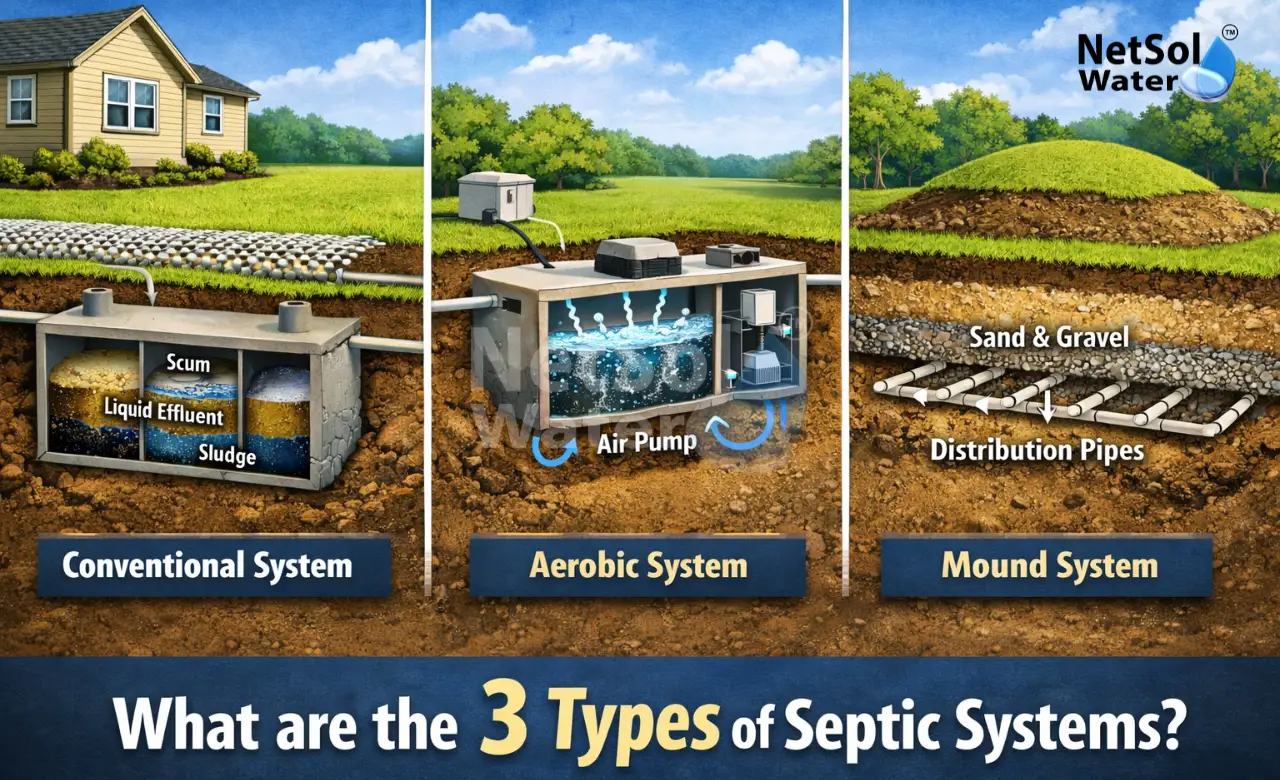
What are the 3 Types of Septic Systems?
Septic systems handle household wastewater where central sewers are not available. They protect health and keep soil and water clean. We are the leading wastewater treatment plant manufacturer and can help design systems that match local ground conditions and rules. We will explain the three main types of septic systems and how each one treats wastewater.
Conventional Septic Systems
Conventional septic systems serve most homes because they cost less and work simply. They use a tank that holds solids and lets liquid flow out to a drainfield in the ground. The tank separates solids from liquids. Bacteria in the tank break down organic waste. Then the liquid moves by gravity to trenches in the soil. Soil microbes filter and clean the liquid as it moves down. The soil acts as the final natural treatment step. Proper spacing and a good soil type make this system reliable. If the ground drains well, the system can last many years with regular pumping and care.
Let us have a look at some common design features and maintenance tips.
- First, the septic tank size must match the home size and daily water use. Larger tanks give more time for solids to settle.
- Next, the drainfield must sit where soil can absorb water and where the water table is low. Trenches filled with gravel spread the treated liquid evenly.
- Finally, maintenance needs include regular inspections and pumping when sludge fills too much of the tank.
These steps keep the system working and protect nearby wells and streams.
Alternative (On-Site) Septic Systems
Alternative septic systems serve places where conventional systems cannot work because of high water tables, shallow soil, or steep slopes. These systems add treatment steps to meet local rules and to protect water. They often suit small lots or sensitive sites.
Let us have a look at some common alternative designs and how they meet tougher site needs. We will explain three of the most used systems and what makes each one different from conventional systems.
1. Mound Systems
Mound systems use a raised bed of sand and soil built above the natural ground. They move treated liquid through layers that mimic deeper soil. This design helps when the natural soil sits on rock or the water table sits near the surface. The mound holds a septic tank outlet and a distribution network that spreads effluent across the sand. Microbes in the sand and the soil break down remaining contaminants as the liquid flows downward. Mounds need careful design and height to match site needs and to prevent surface damage. Proper plant cover on the mound prevents erosion and hides the system.
2. Aerobic Treatment Units (ATUs)
Aerobic treatment units add air to the wastewater to speed up the breakdown of organic matter. These units act like small treatment plants that treat liquid more deeply than a simple tank. Air pumps or blowers feed oxygen into the treatment chamber. Oxygen helps aerobic bacteria to break down pollutants fast. The treated liquid leaves the unit cleaner and with less odour. ATUs work well where strict discharge rules exist or where shallow soils limit filtering. They need power and regular checks to keep blowers and pumps running. When well-maintained, they provide better-quality effluent than a conventional tank.
3. Sand Filter Systems
Sand filter systems pass effluent through a box of sand before it reaches the soil. The sand acts as a tight filter and hosts microbes that remove pollutants. This design suits sites with poor soil or where extra treatment is required before the liquid enters the ground. The filter box sits after the septic tank and before the drainfield. It removes suspended solids and lowers biological load. The cleaned effluent then goes to a dispersal area or to a drain. Sand filters need occasional cleaning and careful monitoring. They offer a reliable way to improve water quality where a simple drainfield would fail.
Discharging Systems
Discharging systems serve sites where the soil cannot accept wastewater at all. These systems treat effluent to a high standard and then send it to a surface water body under strict permits. The process often includes disinfection steps to remove harmful bacteria. Municipal rules control where and how these systems may release water. Owners must follow monitoring and testing rules to protect public health and the environment.
Let us have a look at how these systems work and when they apply.
- First, these systems include stages that remove solids and chemical contaminants.
- Next, advanced processes such as filtration and disinfection prepare water that meets discharge limits. Then, treated water leaves through a pipe to a stream, ditch, or other approved outlet.
- Finally, the owner must keep records and allow inspections to show the system meets permit terms.
These steps make discharging systems a controlled option when no soil-based treatment can work.
Read some interesting information for the Commercial RO Plant Manufacturer in Delhi
Conclusion
Choosing the right septic system affects home safety and water quality. A proper wastewater treatment plant design protects neighbors and the wider environment. Netsol Water is the leading wastewater treatment plant manufacturer and can provide advice and site-specific designs. If you want a system that fits your land or you need a consultation, request help from a qualified designer today. Contact an expert for a site assessment, a written plan, and a maintenance schedule that keeps your plant working well.
Contact Netsol Water at:
Phone: +91-9650608473
Email: enquiry@netsolwater.com