

Is RO Water Safe for Kidneys?
Concern about drinking water quality continues to grow across cities and industrial areas. RO systems now appear in homes, offices, hospitals, and factories because people want water that feels safe and clean. At the same time, many people ask whether RO water supports kidney health or creates problems over long periods. This question matters even more when large systems supply water to many users every day. A manufacturer plays a major role in water quality because plant design decides how much is removed and what remains in the water. Netsol Water works as a leading RO Plant Manufacturer and focuses on providing water that stays pure while remaining suitable for daily use. We will explain how RO treatment affects water composition, how kidneys respond to this water, and what steps help maintain balance.
How Reverse Osmosis Works and What It Removes
Understanding the working process of RO helps clarify why people raise health questions. RO uses pressure to push water through a membrane that allows only very small molecules to pass. This action separates water from dissolved salts, chemicals, and microbes. The result is water with very low dissolved content. Such purity protects users from many harmful elements that otherwise place stress on kidneys. Let us have a look at some key aspects of this process that directly influence health and long-term use.
- Removal of Contaminants and the Benefit to Kidneys
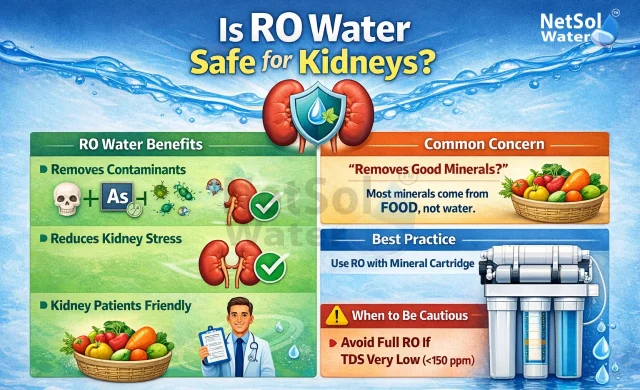
RO treatment removes contaminants that can slowly damage kidney function. Heavy metals, pesticides, excess fluoride, and disease-causing microbes all increase the burden on kidneys when they remain in drinking water. By reducing these substances, RO water lowers long-term exposure and supports safer hydration. People living in areas with polluted groundwater often experience real health benefits after switching to RO-treated water. Commercial RO Plant Manufacturers design systems that achieve consistent removal rates so water quality stays stable even with high daily demand. When pre-treatment systems work properly, membranes perform better and the plant delivers water that reduces health risks.
- Mineral Removal and Why It Matters
While RO removes harmful substances, it also removes natural minerals found in water. Calcium, magnesium, and other dissolved minerals often disappear during the filtration process. These minerals contribute to daily intake even though food remains the main source. Drinking water with very low mineral content for long periods may change how the body manages electrolytes and fluids. Some people notice increased urination or mild imbalance over time. These effects explain why experts recommend thoughtful system design rather than avoiding RO altogether. Commercial RO Plant Manufacturers address this issue by planning remineralization steps that restore safe mineral levels. When systems return essential minerals after purification, RO water supports health instead of creating gaps.
RO Water and Kidney Health
People want scientific clarity when health questions arise. Research and guidance provide a balanced view of RO water use. Evidence shows that RO protects kidneys by removing toxic substances. At the same time, studies highlight the importance of mineral balance.
- Short-Term Safety and Protective Effects
Short-term studies and practical experience show that RO water remains safe for most people. In many regions, RO treatment improves public health because it removes contaminants linked to kidney disease and other illnesses. People who drink RO water from properly designed systems often experience fewer water-related problems. For individuals with normal kidney function, RO water does not create immediate harm. Instead, it reduces exposure to metals and chemicals that damage kidney tissue over time. Commercial RO Plant Manufacturers supply systems that meet treatment standards and include proper filtration stages. These measures help ensure that water stays clean, consistent, and suitable for daily consumption.
- Long-Term Concerns and Mineral Balance
Long-term use of demineralized water has drawn attention from health agencies and researchers. Some reports show that continuous intake of water lacking minerals may increase urine output and affect electrolyte levels. Observations from desalinated and membrane-treated water systems suggest that mineral-free water does not always support optimal balance. Experts therefore recommend adding minerals back into drinking water used for extended periods. This approach does not reduce the benefits of RO purification. Instead, it completes the process by restoring calcium, magnesium, and other ions.
Making RO Water Safe for Long-Term Kidney Health
System design and operation decide whether RO water remains suitable for years of use. Commercial installations especially require careful planning because they serve many people every day. Commercial RO Plant Manufacturer must address purity and mineral content together. Let us have a look at some practical steps that ensure RO water stays safe for kidneys over time.
- Remineralization and Monitoring
Remineralization restores balance to RO-treated water. This step introduces controlled amounts of calcium, magnesium, or other minerals after purification. Methods include mineral dosing units, blending systems, or contact with natural mineral media. These solutions improve taste and support healthy mineral intake. Regular testing of water parameters ensures that mineral levels remain within recommended ranges. Commercial systems often include automated controls that maintain stable output. When operators monitor water quality and adjust settings as needed, the system delivers water that remains safe and pleasant to drink.
- Maintenance Standards and Choosing the Right Manufacturer
Long-term safety also depends on maintenance and system management. Membranes, filters, and pretreatment units require regular inspection and servicing. Netsol Water, as a leading Commercial RO Plant Manufacturer, emphasizes proper pretreatment, membrane care, and scheduled checks. These practices prevent performance loss and ensure consistent water quality. Following local regulations and accepted guidelines further strengthens system reliability. Choosing a manufacturer that understands both engineering and health considerations helps ensure that RO water supports kidney health.
Read some interesting information for the Effluent Treatment Plant Manufacturer
Conclusion
RO treatment removes many harmful substances that threaten kidney health and overall well-being. At the same time, long-term use of very low mineral water requires thoughtful management. A Commercial RO Plant Manufacturer that combines effective purification with controlled remineralization provides water that stays clean, balanced, and safe. Netsol Water continues to lead as a Commercial RO Plant Manufacturer by focusing on system design, maintenance, and health outcomes. For organizations and individuals seeking guidance on RO systems and water quality, consultation remains the best step. Connect with Netsol Water to understand your water source needs and ensure a solution that protects health while delivering dependable performance.
Contact Netsol Water at:
Phone: +91-9650608473
Email: enquiry@netsolwater.com