
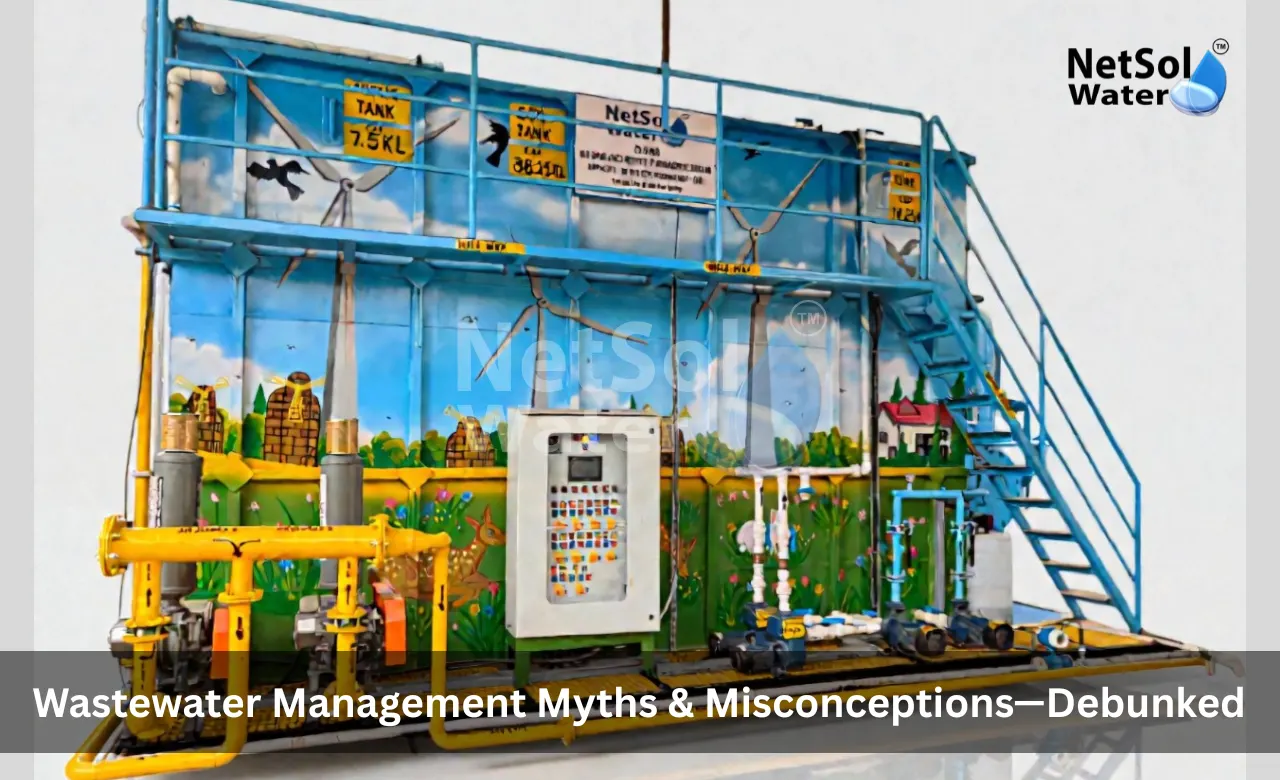
Wastewater Management Myths & Misconceptions—Debunked
Wastewater management raises many myths and misconceptions. People hear a phrase and then they accept it as true. We will look at common myths about wastewater treatment. India has fast growing cities and large industries. These places face real challenges with water quality and sewage. Good rules and good plants help cities stay clean and keep water safe. Netsol Water is the leading name in designing and making solutions for these needs. We will help you understand what is true and what is not about the Wastewater Treatment Plant.
Myth 1: One simple filter can treat all wastewater
People want low cost fixes. They think a single filter will solve all problems. That idea can cause wrong design and higher long term cost. A real Wastewater Treatment Plant uses many steps and each step does a different job. Let us have a look at some of the parts and why each part matters.
- Physical removal and why it comes first
Solid matter must come out before other steps. Screens and grit chambers stop large bits and sand. If solids stay, they will block pipes and damage pumps. Physical removal reduces load on the next steps. This makes the whole plant work better and last longer.
- Biological treatment and what it does
After solids come out, the plant uses microbes to break down organic matter. This step is crucial for reducing oxygen demand and for removing smell. The biomass needs a correct food load and a stable environment. If people skip this step or try to replace it with one device, the process will fail. Biological systems need time and balance.
- Advanced treatment and final polishing
Some waste has nutrients or toxic chemicals that need special care. Filters and chemical steps can remove these. Advanced steps make the output safe for reuse or release. Each step adds cost but it prevents damage to the environment. A single filter cannot do all these tasks. A well designed Wastewater Treatment Plant chooses the right mix of steps for the water that comes in.
Myth 2: Wastewater treatment is only for large cities
This myth matters because small towns and factories then ignore treatment. That choice harms rivers and groundwater. It also risks health and fines from regulators. A clear view will help local leaders and small industries plan right. Let us have a look at some ways small scale treatment works and why it matters.
- Modular systems for small towns and villages
Small towns can use modular plants that match their size. These systems take less space and cost less up front. They can be built in parts so towns can expand capacity later. Modular design uses simple units that are easy to operate. A small sewer network can feed a compact Wastewater Treatment Plant that serves the whole community. This approach keeps local water bodies clean and saves public health cost. A trusted Sewage Treatment Plant Manufacturer can design these systems to meet local needs.
- Onsite treatment for industries and institutions
Factories and large buildings can treat wastewater onsite. This reduces water use and saves money from lower water bills. Treated water can return to cooling systems or to landscaping. Onsite treatment also avoids long sewers and lowers the risk of spills. Small scale plants can meet local rules and bring direct benefit to the owner.
- Shared plants and cluster solutions
Neighboring towns and small industrial areas can join to fund a single plant. This shared model reduces cost and spreads the technical work. A single well run wastewater treatment plant can serve many users and meet higher standards than many small failing systems. Collaboration works well if local leaders plan and act together.
Myth 3: Treated water is unsafe for reuse
This myth stops reuse and wastes a resource. People fear health risk and they avoid treated water. Modern science and regulation set clear safe limits. Knowing the facts will help planners use treated water with confidence. Let us have a look at some forms of reuse and how safety is kept.
- Uses that fit treated water
Treated water can serve many uses that do not need drinking quality. These include irrigation of parks and crops that do not touch food, cooling water in factories, and flushing toilets. These uses reduce fresh water demand and lower cost. When a Wastewater Treatment Plant produces stable quality water, managers can plan reuse safely. A reliable Sewage Treatment Plant Manufacturer ensures the plant meets quality standards for safe reuse.
- Monitoring and standards that protect health
A system works when it has clear standards and regular checks. Safe reuse needs testing for bacteria and chemicals. Simple measures like chlorination and UV disinfection reduce risk. Rules define what level of treatment each use needs. When plants follow these rules, reuse becomes a safe and reliable practice. Netsol Water designs plants that include monitoring and fail-safe steps to protect public health.
Read some interesting information for the Sewage Treatment Plant Manufacturer in Faridabad
Conclusion
Misunderstanding wastewater treatment raises cost and risk. Clear design and proper operation make a Wastewater Treatment Plant a strong tool for water security. Netsol Water is the leading provider for practical solutions that match local needs. If you want to know more or need a consultation, contact us today. We can review a site and suggest simple steps to improve performance and to enable safe reuse. Act now to make water management work for your community.
Contact Netsol Water at:
Phone: +91-9650608473
Email: enquiry@netsolwater.com