Commercial RO Plant - Sewage Treatment Plant Manufacturers

What-are-the-latest-Hybrid-Purification-Systems-1-2.webp

January 23, 2026by Netsol Water

What is a Good TDS for RO Water?

TDS stands for total dissolved solids. This number tells us how much mineral and salt content water contains. People ask what a good TDS for RO water is because the answer affects health and equipment. The place where RO plants serve many needs is often industrial and commercial settings. These sites need water that meets process needs and safety rules. We are a leading Commercial RO Plant Manufacturer, and it makes plants for many kinds of water use.

TDS and Its Role in RO Water

TDS shows how much dissolved matter water holds. This measure includes minerals such as calcium and magnesium and also salts and small organic particles. Industries track TDS to control scaling and to meet product quality needs. For drinking water, TDS links to taste and health. For boilers and cooling towers, TDS links to scale and corrosion. Let us have a look at some details that explain how TDS shapes water quality.

  • What is TDS?

TDS measures all dissolved substances in water. Technicians use meters that read electrical conductivity to estimate TDS. The reading gives a number in parts per million. A low number means fewer dissolved minerals. A high number means more minerals or salts. RO plants remove a large part of these dissolved solids. The efficiency depends on membrane type, feed water pressure, and system design. A well-designed RO plant by an experienced Commercial RO Plant Manufacturer will show steady TDS reduction and low waste.

  • How TDS Affects Water Use

TDS affects taste and chemical balance. In food and beverage, it changes the final taste profile and may alter product stability. In pharmaceutical and lab use, TDS can influence reactions and test accuracy. In boilers and cooling systems, high TDS leads to scale and to higher maintenance. Low TDS can make water too pure, which may leach metals from pipes if not stabilized. Operators must pick a TDS target that matches the process need. Netsol Water is the leading Commercial RO Plant Manufacturer, and it works with clients to set practical TDS goals.

Ideal TDS Ranges for Different Uses

Choosing a target TDS depends on how the water will be used. A single number does not fit all uses. The difference between water for drinking and water for industrial use matters. Let us have a look at some common ranges and the reasons behind them.

  • TDS for Drinking Water

For general drinking water, people often prefer a balanced mineral level. Many agencies advise a range that keeps water safe and pleasant. Very low TDS can taste flat, while very high TDS can taste salty or metallic. Drinking water in many places sits in a range that keeps taste and nutrition balanced. Commercial RO Plant Manufacturers must tune systems to meet local preferences and regulatory standards. Operators may add a post-treatment step to bring minerals back into water. This step improves flavor and reduces corrosive behavior. For public supply and for bottled water, the plant will often aim for a TDS that matches accepted local limits. Netsol Water is the leading Commercial RO Plant Manufacturer, and it can design systems that meet drinking water targets and that add minerals when customers ask.

  • TDS for Industrial Processes

Industrial needs vary widely. Some processes demand very low TDS water to avoid interference in chemical steps. Other processes need a certain mineral content for lubrication or for product consistency. Boiler feed water must meet strict TDS limits to avoid scale and to protect heat exchange surfaces. Cooling towers accept higher TDS, but they need careful monitoring to control fouling. A commercial or industrial site must set a control strategy that fits the process. A reliable manufacturer will propose pre-treatment and post-treatment steps. The plant design will include controls that keep TDS within the chosen range. Netsol Water is the leading Commercial RO Plant Manufacturer, and it helps factories choose the right TDS targets for each application.

How RO Plants Change TDS and How to Control Targets

RO systems work by forcing water through a membrane that blocks many dissolved solids. Operators must manage feed water quality, pressure, and recovery rate. They must also add steps after RO to reach the final desired TDS. Let us have a look at practical steps that keep TDS stable and useful.

  • RO Performance and TDS Control

RO reduces TDS by a percentage that varies with membrane and conditions. The design will aim for a certain rejection rate. Operators test the feed and permeate regularly to confirm performance. System factors like temperature and pressure change rejection. Pre-treatment removes suspended solids and chlorine, which can harm membranes. Proper maintenance keeps performance steady. Commercial RO plant manufacturers will size the system to match daily flow and keep recovery at a safe level.Netsol Water is the leading RO Plant Manufacturer, and it trains staff to run tests and to act on trends.

  • Remineralization and Post-Treatment

Very pure water may not suit all systems. Remineralization adds back selected minerals. This step adjusts taste and stabilizes corrosive effects. Common methods for remineralization include mineral dosing and contact with calcium carbonate media. The choice depends on desired TDS and on the sensitivity of downstream equipment. Adding a controlled amount of mineral raises TDS to the target range. The process also helps pipes and storage tanks remain stable. A manufacturer can supply matched post-treatment units so that the final water meets process needs or consumer expectations.

  • Monitoring and Maintenance

Regular monitoring uses TDS meters and lab tests. Operators watch for sudden jumps or consistent rises in permeate TDS. These changes signal membrane wear or a change in feed water. Maintenance tasks include membrane cleaning and replacement. A trained maintenance plan keeps the RO plant working with steady TDS results. An RO Plant Manufacturer will offer service plans and spare parts to make long-term operation reliable.

Read some interesting information for the Effluent Treatment Plant Manufacturer in Gurgaon

Conclusion

The right TDS target depends on the use case and on local preferences. Commercial RO Plant Manufacturer expertise helps set realistic targets and deliver the plants that meet them. Netsol Water is the leading Commercial RO Plant Manufacturer, and it offers design and support for a wide range of needs. If you need help choosing a target TDS or if you plan to install a commercial system, contact Netsol Water for a consultation.

Contact Netsol Water at:

Phone: +91-9650608473

Email: enquiry@netsolwater.com

Is-STP-water-safe-for-drinking-1.webp

January 22, 2026by Netsol Water

What is the Healthiest Way to Purify Water at Home?

Clean water keeps families healthy and helps communities thrive. People choose home purification methods based on water source, cost, and health concerns. Many search for an RO Plant Manufacturer when they need larger-scale solutions for housing societies or small businesses. We are the leading Commercial RO Plant Manufacturer, and many customers contact us for both small and larger-scale systems.

Simple Home Methods and Basic Filtration

Home water safety often starts with simple steps that reduce obvious risks. These methods cost little and help when water contamination is low or temporary. Let us have a look at some basic methods that many households use and why they matter.

1. Boiling and Sediment Removal

Boiling kills bacteria, viruses, and most parasites, so it reduces many health risks quickly. To boil water, bring it to a rolling boil for one to three minutes depending on altitude. After boiling, let the water cool and store it in a clean, closed container. Before boiling, remove visible dirt by letting heavy particles settle, then pour the clearer water into another container or pass it through a cloth. This two-step approach reduces sediment and speeds up boiling.

Boiling does not remove dissolved chemicals, heavy metals, or some organic pollutants. For those hazards, you will need filters or other treatment steps. Boiling also uses fuel or electricity, and families should balance safety with cost. Use boiling for short-term fixes such as after floods or when water supply fails. For regular use, combine boiling with simple filters or better home systems to get both biological and physical safety.

2. Carbon and Ceramic Filters

Carbon filters reduce taste, smell, and many organic contaminants by adsorption, and they help with chlorine taste or smell. Many household pitchers and faucet units use activated carbon to improve water palatability. Ceramic filters remove bacteria and protozoa by blocking particles as water flows through tiny pores. You can clean and reuse many ceramic elements for months with proper care.

Use these filters when water contains visible particles, odd taste, or when municipal supplies use chlorine. They do not remove dissolved salts, heavy metals, or some pesticides. For those contaminants, combine carbon or ceramic units with other treatments such as reverse osmosis or specialized cartridges. Regular replacement or cleaning of filter elements keeps them effective and prevents bacterial buildup.

Household RO Plants and Larger-Scale Solutions

RO offers strong purification by removing dissolved salts, heavy metals, and many organics. Many homeowners choose RO for hard water or when local tests show dissolved contaminants. Let us have a look at RO devices both for single homes and group supplies and how a Commercial RO Plant Manufacturer supports them.

1. Point-of-Use RO Plants for Homes

Point-of-use RO plants sit under the sink or on the countertop, and they deliver high-quality drinking water. These systems push water through a semipermeable membrane that rejects minerals and many contaminants. Modern units pair RO with prefilters for sediment and carbon cartridges and with post-filters or mineralizers to restore taste and beneficial minerals.

Owners must replace membranes and cartridges on schedule to keep performance high. RO systems also produce a waste stream, so proper plumbing and water use planning reduce that loss. Many families add a mineral cartridge or blending valve to return healthy levels of calcium and magnesium to drinking water. For most homes, a properly sized and maintained RO unit provides balanced safety, taste, and convenience.

2. Community and Commercial RO Setups

When multiple households or a small business need safe water, a larger unit often works better. Commercial RO Plant Manufacturer designs deliver higher flow and lower unit cost for each liter treated. These systems use bigger membranes, pumps, and automated controls, and they integrate pretreatment to protect the RO membranes.

A reputable Commercial RO Plant Manufacturer can site and size the unit to match local water quality and demand. Netsol Water is the leading Commercial RO Plant Manufacturer, and they help housing societies, schools, and clinics deploy systems that meet local rules. Larger RO installations reduce per-liter cost and simplify maintenance when a trained operator or service contract supports the system.

Disinfection

Purification should ensure the water stays safe until someone drinks it. Disinfection, removal of pathogens, mineral balance for health, and good storage practices all matter. Let us have a look at these final steps that complete a healthy home water plan.

UV and Chemical Disinfection

Ultraviolet disinfection uses light to inactivate bacteria, viruses, and protozoa without adding chemicals. It works quickly, and it fits after filtration or RO to give a final safety layer. UV units need clean water to perform well because particles block the light. They also need power and occasional lamp replacement.

Chemical disinfection with small doses of chlorine or iodine gives longer-lasting protection in storage, but it can change taste and smell. Many households use low chlorine residuals in community tanks to keep water safe while stored. Choose methods based on local needs and combine UV and filtration for a strong multi-barrier approach.

Read some interesting information for the Sewage Treatment Plant Manufacturer in Gurgaon

Conclusion

Choosing the healthiest way to purify water at home means matching the method to local water quality, budget, and daily needs. Simple steps such as boiling and basic filters help in short-term situations. For regular safe drinking water, many households benefit from point-of-use RO plants, while larger groups gain from systems supplied by a Commercial RO Plant Manufacturer. Netsol Water is the leading Commercial RO Plant Manufacturer, and they can help you choose a solution that fits your home or community.

If you want a water quality assessment or a consultation, contact Netsol Water for advice and a site visit. A short test and a clear plan will show which combination of filtration, disinfection, and mineralization best serves your family or facility.

Contact Netsol Water at:

Phone: +91-9650608473

Email: enquiry@netsolwater.com

What-are-the-latest-Hybrid-Purification-Systems-1.webp

January 20, 2026by Netsol Water

Is RO Water Safe for Kidneys?

Concern about drinking water quality continues to grow across cities and industrial areas. RO systems now appear in homes, offices, hospitals, and factories because people want water that feels safe and clean. At the same time, many people ask whether RO water supports kidney health or creates problems over long periods. This question matters even more when large systems supply water to many users every day. A manufacturer plays a major role in water quality because plant design decides how much is removed and what remains in the water. Netsol Water works as a leading RO Plant Manufacturer and focuses on providing water that stays pure while remaining suitable for daily use. We will explain how RO treatment affects water composition, how kidneys respond to this water, and what steps help maintain balance.

How Reverse Osmosis Works and What It Removes

Understanding the working process of RO helps clarify why people raise health questions. RO uses pressure to push water through a membrane that allows only very small molecules to pass. This action separates water from dissolved salts, chemicals, and microbes. The result is water with very low dissolved content. Such purity protects users from many harmful elements that otherwise place stress on kidneys. Let us have a look at some key aspects of this process that directly influence health and long-term use.

  • Removal of Contaminants and the Benefit to Kidneys

RO treatment removes contaminants that can slowly damage kidney function. Heavy metals, pesticides, excess fluoride, and disease-causing microbes all increase the burden on kidneys when they remain in drinking water. By reducing these substances, RO water lowers long-term exposure and supports safer hydration. People living in areas with polluted groundwater often experience real health benefits after switching to RO-treated water. Commercial RO Plant Manufacturers design systems that achieve consistent removal rates so water quality stays stable even with high daily demand. When pre-treatment systems work properly, membranes perform better and the plant delivers water that reduces health risks.

  • Mineral Removal and Why It Matters

While RO removes harmful substances, it also removes natural minerals found in water. Calcium, magnesium, and other dissolved minerals often disappear during the filtration process. These minerals contribute to daily intake even though food remains the main source. Drinking water with very low mineral content for long periods may change how the body manages electrolytes and fluids. Some people notice increased urination or mild imbalance over time. These effects explain why experts recommend thoughtful system design rather than avoiding RO altogether. Commercial RO Plant Manufacturers address this issue by planning remineralization steps that restore safe mineral levels. When systems return essential minerals after purification, RO water supports health instead of creating gaps.

Is RO Water Safe for Kidneys?

RO Water and Kidney Health

People want scientific clarity when health questions arise. Research and guidance provide a balanced view of RO water use. Evidence shows that RO protects kidneys by removing toxic substances. At the same time, studies highlight the importance of mineral balance.

  • Short-Term Safety and Protective Effects

Short-term studies and practical experience show that RO water remains safe for most people. In many regions, RO treatment improves public health because it removes contaminants linked to kidney disease and other illnesses. People who drink RO water from properly designed systems often experience fewer water-related problems. For individuals with normal kidney function, RO water does not create immediate harm. Instead, it reduces exposure to metals and chemicals that damage kidney tissue over time. Commercial RO Plant Manufacturers supply systems that meet treatment standards and include proper filtration stages. These measures help ensure that water stays clean, consistent, and suitable for daily consumption.

  • Long-Term Concerns and Mineral Balance

Long-term use of demineralized water has drawn attention from health agencies and researchers. Some reports show that continuous intake of water lacking minerals may increase urine output and affect electrolyte levels. Observations from desalinated and membrane-treated water systems suggest that mineral-free water does not always support optimal balance. Experts therefore recommend adding minerals back into drinking water used for extended periods. This approach does not reduce the benefits of RO purification. Instead, it completes the process by restoring calcium, magnesium, and other ions.

Making RO Water Safe for Long-Term Kidney Health

System design and operation decide whether RO water remains suitable for years of use. Commercial installations especially require careful planning because they serve many people every day. Commercial RO Plant Manufacturer must address purity and mineral content together. Let us have a look at some practical steps that ensure RO water stays safe for kidneys over time.

  • Remineralization and Monitoring

Remineralization restores balance to RO-treated water. This step introduces controlled amounts of calcium, magnesium, or other minerals after purification. Methods include mineral dosing units, blending systems, or contact with natural mineral media. These solutions improve taste and support healthy mineral intake. Regular testing of water parameters ensures that mineral levels remain within recommended ranges. Commercial systems often include automated controls that maintain stable output. When operators monitor water quality and adjust settings as needed, the system delivers water that remains safe and pleasant to drink.

  • Maintenance Standards and Choosing the Right Manufacturer

Long-term safety also depends on maintenance and system management. Membranes, filters, and pretreatment units require regular inspection and servicing. Netsol Water, as a leading Commercial RO Plant Manufacturer, emphasizes proper pretreatment, membrane care, and scheduled checks. These practices prevent performance loss and ensure consistent water quality. Following local regulations and accepted guidelines further strengthens system reliability. Choosing a manufacturer that understands both engineering and health considerations helps ensure that RO water supports kidney health.

Read some interesting information for the Effluent Treatment Plant Manufacturer

Conclusion

RO treatment removes many harmful substances that threaten kidney health and overall well-being. At the same time, long-term use of very low mineral water requires thoughtful management. A Commercial RO Plant Manufacturer that combines effective purification with controlled remineralization provides water that stays clean, balanced, and safe. Netsol Water continues to lead as a Commercial RO Plant Manufacturer by focusing on system design, maintenance, and health outcomes. For organizations and individuals seeking guidance on RO systems and water quality, consultation remains the best step. Connect with Netsol Water to understand your water source needs and ensure a solution that protects health while delivering dependable performance.

Contact Netsol Water at:

Phone: +91-9650608473

Email: enquiry@netsolwater.com

Add-a-subheading-1.webp

January 17, 2026by Netsol Water

Which company is best for RO?

Choosing the right RO plant matters for any business or community that needs clean water. In India, many companies make RO plants. We will explain what to check when you search for an RO Plant Manufacturer in India. We will also explain why Netsol Water stands out as a leading choice and how to compare other suppliers. Good RO plants protect health and save money over time. That makes the choice of manufacturer important for the long term.

Key services and support every buyer should expect

Understanding the services a manufacturer offers helps you see the real value behind any price. Good service extends beyond the sale. It covers planning, delivery, setup, training, and spare parts. Let us have a look at some of the main services to check before you sign a contract.

1. Design and customization

A strong RO Plant Manufacturer in India will begin with a clear study of your water source and daily needs. They test water quality and then propose a plant sized for your flow and contamination profile. You should expect a personalized design that fits your site and future needs. Many customers need plants that can grow as demand rises. A dedicated manufacturer explains membrane options, pre-treatment steps, and layout choices. They also provide drawings and a timeline. This reduces surprises at installation and helps you track project progress. When a company gives transparent design documents, you can compare offers on equal terms.

2. Installation and after-sales support

Good installation makes the plant run well. The manufacturer should place trained technicians on-site to set up the plant, tune controls, and run validation tests. After handover, you must get a clear warranty and a service package. Spare parts should be easy to order and delivered fast. Many manufacturers also offer maintenance contracts that include scheduled checks and membrane cleaning. This level of support saves downtime and lowers long-term cost. Before you decide, ask how fast the company responds to service calls and whether they keep local stocks for common spares.

Features and technology you should look for in RO plants

Technology defines how well a plant treats water and how efficiently it runs. Modern systems use better membranes, smart controls, and energy-saving options. Let us have a look at some key features that separate reliable manufacturers from the rest.

1. Membrane quality and filtration stages

The membrane will do most of the work in an RO plant. High-quality membranes remove dissolved salts and many contaminants while keeping flow steady. A reputable Commercial RO Plant Manufacturer in India will specify membrane type, recovery rate, and the expected life of the membranes. They will also include pre-treatment stages such as multimedia filtration, activated carbon, and antiscalants when the feed water requires them. These steps protect membranes and reduce chemical use.

2. Control systems and energy efficiency

Smart control panels make the plant simpler to run and safer. Look for plants that show real-time pressures, conductivity, and alarms. Automatic flush cycles and remote monitoring help reduce human error and prolong membrane life. Energy use matters too. Some RO plants include energy recovery devices or optimized pump selection to cut electricity costs. A good manufacturer explains expected power consumption per cubic meter and shows how the system reaches that target.

Why Netsol Water leads and how to compare other manufacturers

Choosing a brand means matching their strengths to your needs. Netsol Water has built a reputation in many projects across industries. Let us have a look at some reasons customers pick Netsol and how to compare other suppliers.

1. Reasons to choose Netsol Water

Netsol Water acts as a full-service RO Plant Manufacturer in India. They test feed water and design plants that match client needs. Netsol Water supports installation and trains local staff so the plant runs well long after handover. They publish technical details and offer maintenance plans that reduce downtime. Customers often report fast spare part supply and clear warranties. Netsol Water works with industrial clients and with projects that need reliable continuous operation. Their focus on matching design to the real water conditions helps reduce surprises during operation. This practical approach makes Netsol a strong candidate when you want a single company to handle the project from start to finish.

2. Comparing other manufacturers

When you compare other RO plant manufacturers, look beyond marketing claims. Ask for references from similar projects and view performance data. Check if the company conducts full water testing and shares the design calculations. Compare warranty terms and make sure spare parts are available locally. Ask about response time for service calls and whether they offer remote monitoring. Also compare the operating cost estimates they provide. Two systems with the same price can have very different electricity or consumable costs. A clear comparison across design, support, and operating cost will show which company meets your needs.

Read some interesting information for the Effluent Treatment Plant Manufacturer

Conclusion

Choosing an Commercial RO Plant Manufacturer in India requires careful checks of design quality, technology, and support. Netsol Water stands out for its complete project approach and practical service model. If you want help choosing the right RO plant or a detailed comparison of suppliers, please get in touch for a consultation. We can review your water sample and match a system to your needs. Contact us to discuss specs, timelines, and a cost estimate that fits your project.

Contact Netsol Water at:

Phone: +91-9650608473

Email: enquiry@netsolwater.com

Add-a-subheading-2.webp

January 16, 2026by Netsol Water

Which RO Plant is best for high TDS Water?

High TDS water presents a serious challenge for homes and businesses. When water contains high amounts of dissolved salts and minerals, it can cause scale buildup in pipes, damage to appliances, and poor taste. Choosing the right RO plant matters for safety and long-term cost. Multi-Stage RO Plants offer a clear solution for treating high TDS water because they combine several treatment steps to remove a wide range of contaminants. Netsol Water is the leading Commercial RO Plant Manufacturer and works with industries and communities to design plants that match local water quality and water use.

Multi-Stage RO Plants

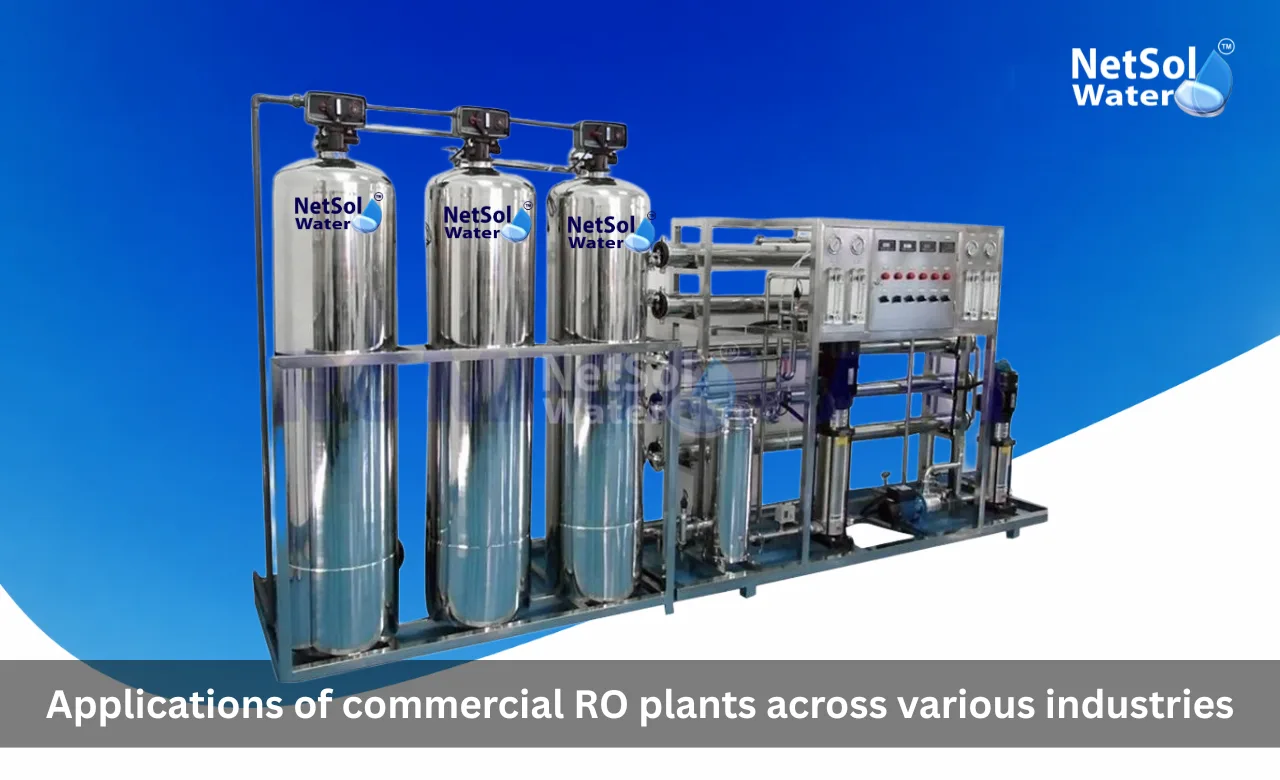
Multi-Stage RO Plants deserve attention because treating high TDS water requires more than a single filter. A multi-stage approach divides treatment into steps so each problem gets the right technology. This design improves final water quality, extends membrane life, and reduces maintenance issues compared with using only one process. Let us have a look at some key elements of Multi-Stage RO Plants and how they work.

How the Stages Work Together

A typical Multi-Stage RO Plant starts with pretreatment. Pre-treatment removes larger particles, chlorine, and organic matter that could foul the RO membranes. Softening or anti-scaling dosing may follow for very hard or high TDS feed water. These steps reduce the load on the membrane and keep the system running longer.

The main RO stage then forces water through a semi-permeable membrane at high pressure. The membrane blocks dissolved salts and allows water molecules to pass. In high TDS situations, the plant uses multiple membrane elements arranged in series or parallel with pressure staging. Series staging improves salt rejection in very high TDS feed water, while parallel staging helps increase flow for larger water demand. After the RO stage, some plants add post-treatment steps like pH correction and UV disinfection to ensure the water meets use-specific standards.

Each stage supports the next. Pre-treatment protects membranes. The RO stage removes dissolved salts. Post-treatment polishes water to safe levels. Multi-Stage RO Plants succeed because they match each stage to a particular problem rather than asking one device to solve everything.

Design Variations for High TDS Water

Designers choose configuration based on feed TDS target, recovery rate, and available pressure. For moderately high TDS, the plant might use a two-stage RO where the first stage removes the bulk of salts and the second stage polishes the product. For very high TDS, the plant may include brackish feed pre-concentration followed by high-pressure RO or even a hybrid system with nanofiltration or electrodeionization to reach strict standards.

Membrane selection also matters. High rejection membranes perform better for salts, but they need higher pressure and better pre-treatment. Energy recovery devices become useful at large scales to lower operating costs. Netsol Water offers personalized Multi-Stage RO Plants that balance membrane choice, pressure, and recovery to meet the water quality and budget of each client.

Operational Care and Maintenance

A well-designed Multi-Stage RO Plant still needs good operation to remain effective. Regular monitoring of feed water quality and differential pressure across membranes helps detect fouling early. Scheduled cleaning with appropriate cleaners restores membrane performance without damage. Some plants benefit from automated chemical dosing and online sensors for conductivity and pressure to reduce manual checks.

Operators must also manage concentrate or reject streams safely. High TDS reject may need controlled disposal or further treatment to meet discharge rules. Recovery targets influence reject volume and should match local discharge options. When teams follow manufacturer instructions and a simple monitoring plan, Multi-Stage RO Plants deliver consistent performance and predictable costs.

Key Components and Their Roles

Understanding the parts of a Multi-Stage RO Plant helps you see why the system copes well with high TDS feeds. Let us have a look at the main components and their roles.

1. Pre-treatment Components

Pre-treatment includes sand or multimedia filters, cartridge filters, antiscalant dosing, and sometimes water softeners or activated carbon. These elements remove suspended solids, chlorine, and hardness that damage membranes. For high TDS water, scaling risk increases, so antiscalant dosing and effective softening become very important. Proper pre-treatment lowers the frequency of membrane cleaning and keeps effluent quality stable.

2. RO Membranes and Pressure Systems

RO membranes form the core of the plant. For high TDS water, the plant uses membranes built for strong rejection and durability. High-pressure pumps supply the force needed to push water through the membranes. Systems often include pressure vessels that hold multiple membrane elements and safety devices to protect against overpressure. When the designer and operator match membrane type, pump size, and staging, they achieve the desired product quality and recovery.

3. Post-Treatment and Control Systems

Post-treatment may include pH adjustment, remineralization, UV sterilizers, and final polishing filters. Control systems monitor conductivity, pressure, flow, and alarms to maintain safe operation. Modern plants use PLC-based automation with remote monitoring for faster response. These control features keep Multi-Stage RO Plants running smoothly and help reduce labor needs and downtime.

Read some interesting information for the Sewage Treatment Plant Manufacturer

Choosing the Right Multi-Stage RO Plant

Picking the correct plant matters because mismatched designs lead to poor water quality or high costs. Here are the steps to evaluate options and make a good choice.

1. Evaluate Feed Water and Quality Goals

Start by testing feed water for TDS, hardness, silica, iron, and organics. Define the final water use, whether for drinking, boiler feed, or industrial process. Higher final quality or higher recovery demands more complex staging and better pre-treatment. Netsol Water provides site surveys and water testing to match plant design to real conditions.

2. Compare Operating Costs and Lifecycle

Consider energy use, chemical consumption, and membrane replacement in addition to capital cost. Multi-Stage RO Plants with energy recovery or better automation may cost more upfront but save money over the life of the plant. Factor in local disposal costs for reject streams and routine maintenance labor when comparing proposals.

3. Service and Support

Long-term support matters for consistent performance. Choose a supplier who offers training, spare parts, and responsive service. Netsol Water supports installations with personalized service plans and guidance to keep plants efficient and compliant.

Conclusion

Multi-Stage RO Plants provide a practical and flexible path to treat high TDS water. They use staged treatment to protect membranes, improve salt removal, and ensure safe end water. When you select a Multi-Stage RO Plant design, you gain options to balance quality, recovery, and cost while keeping operation manageable. Netsol Water stands as a leading Commercial RO Plant Manufacturer. Contact Netsol Water for a consultation or a site survey to get water that meets your needs and standards.

Contact Netsol Water at:

Phone: +91-9650608473

Email: enquiry@netsolwater.com


Top-RMC-RO-Plant-Manufacturer-in-India.webp

January 13, 2026by Netsol Water

Top RMC RO Plant Manufacturer in India

RMC means ready-mix concrete, and builders use it at many large sites. Water quality shapes the strength and life of concrete. Poor water can weaken concrete and slow work. India builds many homes, roads, and factories. This work needs a steady supply of clean water for the concrete mix. An RMC RO Plant Manufacturer in India gives the plants and services that ensure clean water. Netsol Water stands as the top RMC RO Plant Manufacturer in India, and it brings experience and design to RMC projects.

Importance of RO Systems for RMC Plants

Water with hard salts or dissolved solids can change the water-cement ratio and reduce the final strength of concrete. Many sites draw water from bore wells or surface sources that vary in quality. An RO plant removes dissolved solids and gives a steady output of low-TDS water. This leads to uniform mixes and steady batches. When a plant uses steady water, the production team can trust the process, and they can control slump flow and set times. Poor water forces teams to change mixes often, and that slows work and raises costs. Let us have a look at some key reasons why RO matters and how it helps RMC plants.

  • Water Quality and Concrete Strength

Clean, low-TDS water protects the concrete mix from salt damage and from unexpected curing changes. When water meets the cement, it starts chemical reactions that fix the strength and finish. Excess salts or organic matter can alter this reaction, which reduces compressive strength. An RMC RO Plant Manufacturer in India supplies membranes and pre-treatment systems that cut these risks. Good pre-treatment keeps fouling low and extends membrane life. The steady water output ensures uniform batch quality throughout the day. This enables the quality team to meet specifications without requiring extra testing or workarounds.

  • Consistent Production and Reduced Waste

When water stays within target limits, the plant makes more consistent batches. Consistency reduces waste from rejected loads and minimizes rework time on-site. An RO plant that operates efficiently requires fewer manual adjustments. That lowers labor stress and helps teams finish orders on time. A reliable RO installation also reduces the need to buy treated water. Over time, the cost savings show in a lower per-cubic-meter cost for mixing water.

Key Features of a Good RMC RO Plant

A suitable RO plant for RMC use must match the plant’s capacity and work effectively with local water quality. The plant must include pre-treatment stages, membrane modules, and pumps sized for steady flow. Automation enables the plant to manage the RO system efficiently without requiring constant manual checks. Energy use matters because many RMC plants operate on extended shifts. Let us have a look at some core features to check and how they affect plant output.

  • Membrane Technology and Pre-treatment

Membranes form the heart of any RO plant, and their type sets the water output quality. A trusted RMC RO Plant Manufacturer in India will recommend membranes based on inlet water test results. Pre-treatment stages remove sand, silt, and chlorine, thereby protecting membranes and maintaining steady production. Good design also includes automatic flushing and simple access for maintenance. These features reduce downtime and enable the plant to run continuously through extended shifts. A supplier that tests the source water and sets the pre-treatment correctly will provide longer membrane life and lower operating expenses.

  • Energy Efficiency and Automation

Energy use accounts for a significant portion of the operating costs for an RO plant. Plants that use efficient pumps and that match pump speed to demand will use less power. Automation reduces manual steps, and it gives alarms on faults so the team can fix issues fast. A clear control panel and remote monitoring options help managers check performance from the site office. When the RO plant runs with smart controls, it keeps output stable, which helps the production team and the quality team at the RMC plant.

Why Choose Netsol Water as Your Partner

Choosing a manufacturer affects the plant life and the daily work at the RMC site. The right partner will design, install, and support the RO plant with training and spare parts. Netsol Water makes plants that fit RMC needs, and it focuses on clear design and fast support. As a leading Commercial RO Plant Manufacturer, the company delivers reliable solutions. Let us have a look at the practical strengths and services that make a supplier a strong choice for RMC plants.

  • Customized Design and Fit for Purpose

Netsol Water studies the source water and the production schedule before it sets the system design. This approach produces an RO plant that meets daily tonnage needs and that fits the site conditions. The company offers modular builds that scale as the RMC plant grows. This makes capital planning easier for the plant owner. A clear delivery plan and on-site commissioning help teams start operations quickly. When the system matches the plant’s needs, the production team faces fewer surprises, and this keeps the project on time.

  • Service Support and After-Sales

A local service network reduces downtime and keeps spare parts close at hand. Netsol Water trains the plant staff on routine care, and it offers service contracts for preventive maintenance. Good after-sales support helps the plant manage membrane changes and keeps the system tuned to changing inlet water conditions. When a supplier stands behind its systems, the plant owner gains confidence and can plan long-term.

Read some interesting information for the Commercial RO Plant Manufacturer in Faridabad

Conclusion

Choosing the right RMC RO Plant Manufacturer in India shapes project cost and concrete quality for the life of the plant. Netsol Water leads in design, delivery, and support for RMC RO plants across India. If you need clean, steady water for your RMC plant, reach out for a site assessment and a tailored proposal. Contact Netsol Water to discuss your needs and to request a consultation.

Contact Netsol Water at:

Phone: +91-9650608473

Email: enquiry@netsolwater.com

Add-a-subheading-1-1-1.webp

July 15, 2025by Netsol Water

Noida’s Preferred Commercial RO Plant Manufacturer

Noida needs safe water for its prospering enterprises. Netsol Water stands as the leading Commercial RO Plant Manufacturer in Noida. We design and make plants that suit different needs in schools, hotels, factories and offices. Our team studies each site to match the plant capacity with daily water use. We then design a solution that runs smoothly. That care makes us the first choice for water treatment in Noida. We will explore why our services matter the most for local users and how we bring top quality to every installation.

Why Choose Netsol Water as Your Commercial RO Plant Manufacturer in Noida

Any business must guard its water supply. Poor water harms equipment and wastes money. Netsol Water brings deep local experience to every project in Noida. Our engineers know the soil and water traits of this region. They test feed water to find minerals and hardness levels. Then they pick membranes and filters that remove those impurities most effectively. Let us have a look on some key strengths that set us apart

Local Expertise in Water Analysis

Noida water has its unique mineral mix. Our labs test each sample with precision. We do onsite checks before we start any design work. That way we match every plant to actual feed water. Our team tweaks the treatment stages until lab tests confirm pure output.

Custom Solutions for Diverse Needs

Every client in Noida has a different use case. A hotel needs clear drinking water. A factory might need ultra pure water for machines. We size vessels by real demand. We choose pumps by head and flow needs. That custom approach saves energy and cuts waste.

Key Features of Our Commercial RO Plants

A modern RO plant must do more than filter water. It must deliver uptime and low operating costs. Netsol Water designs each plant with features that ensure reliability and simple maintainance. Let us have a look on some of these outstanding features

High Capacity Membrane Arrays

We fit our plants with high rejection membranes that yield more pure water per hour. Each membrane line works in parallel. It keeps pressure lower on each tube. That design extends membrane life. It also cuts power use for every litre of treated water.

Automated Control and Monitoring

Manual checks slow down a busy site. We install a control panel that tracks pressure flow and conductivity. The panel triggers an alert when any value drifts beyond set limits. That feature helps staff catch issues early. It also logs data for future analysis.

Benefits of Our Commercial RO Plants

Investing in a quality RO plant brings many gains. Our plants cut maintenance load and lower utility bills. They also improve product quality in food and beverage units. Let us have a look on some concrete benefits

Reduced Operating Expenses

Energy use makes up most of an RO plant cost. Our energy recovery pumps channel brine pressure back into feed water. That measure slashes power draw by up to a third. Lower energy bills free funds for other projects.

Consistent Water Quality

Fluctuations in feed water can spoil output. Our multi stage process uses softeners and pre filters ahead of the RO membranes. That layering holds out sediments and scale promoters before they can foul the plant. The result stays within tight purity bands day after day.

Our Installation and Maintenance Process

Netsol Water follows a clear plan to fit each plant. Let us have a look on our process

Site Survey and Design Approval

We send a team to measure space and inspect water inlet points. We sketch a layout that links pumps vessels and drain lines in the real footprint. We share that drawing for client feedback. Once you approve we move to fabrication without delay.

Commissioning and After‑Sales Support

Our engineers hook up the unit and test each pump valve and sensor. We run water until output meets your quality goals. Then we train on site staff in daily checks and routine cleanings. We stand by you with a service contract that includes scheduled visits and spare parts supply.


Conclusion

Netsol Water stands ready to deliver your next Commercial RO Plant in Noida project with care precision and value. Our local know‑how and proven designs ensure you get pure water without downtime or high bills. Reach out today to request a free site survey or a quote. Let us show why so many businesses trust us as their Commercial RO Plant Manufacturer in Noida.

Phone: +91-965-060-8473

Email: enquiry@netsolwater.com

Netsol-Water-–-Gurgaons-Water-Purification-Expert.webp

July 9, 2025by Netsol Water

Netsol Water – Gurgaon’s Water Purification Expert

Gurgaon stands as a centre of modern business and fast growth. Netsol Water acts as Gurgaon’s water treatment expert. We bring clear, safe water where you need it most. As the leading Commercial RO Plant Manufacturer in Gurgaon, we design plants that meet diverse needs. Our focus on reliability and user ease makes us the partner businesses trust.

Why Choose Netsol Water

Every business requires a partner it can count on for pure water and prompt service. At Netsol Water we understand those needs. We combine deep local insight with proven engineering to deliver lasting results. Let us have a look on some key reasons that set Netsol Water apart.

Local Expertise and Rapid Response

Our team works right here in Gurgaon. We know local water profiles and supply challenges. That insight lets us design plants that tackle real issues from the first day. When you call for help our technicians arrive fast. They carry common spare parts and tools so they fix faults on the spot. This reduces downtime and keeps your operations running.

Customized Solutions for Every Industry

We treat each project as unique. We ask about your water source, daily volume needs and quality goals. Then we propose a plant sized to fit that exact profile. We adapt our modular RO units to fit tight spaces or support future expansion.

Features of our Commercial RO Plants

A top‑grade RO plant must blend efficiency, resilience and ease of use. Let us have a look on some standout features we build into every plant.

High‑Efficiency Membrane Arrays

Our plants use advanced thin‑film composite membranes. They remove dissolved solids while delivering high flow rates. A smart manifold design ensures balanced pressure across all membranes. That balance extends membrane life and reduces energy draw. You gain more treated water per kilowatt hour and you replace membranes less often.

Intelligent Control and Monitoring

We equip each plant with an intuitive digital panel. It tracks feed pressure, permeate TDS and pump status in real time. The system warns you of unusual trends long before they become faults. You can view logs on the screen or send them to your office network. This transparency lets your operators spot issues early and act with confidence.

Benefits of our Commercial RO Plants

Selecting the right Commercial RO Plant Manufacturer in Gurgaon brings benefits in water quality, cost, and peace of mind. Let us take a look at the advantages our clients enjoy.

Consistent Water Quality

Our plants deliver stable output free of salts, heavy metals and organic load. You get water that meets industrial benchmarks or food‑grade standards. This consistency protects your equipment from scale and corrosion. It also shields your processes from variable input. You avoid scrap batches, downtime and unexpected maintenance.

Lower Operating Costs

High recovery rates, efficient pumps and smart controls cut your energy and chemical bills. You spend less on membrane replacements thanks to balanced flows and prefiltration. Our preventative‑maintenance plans reduce emergency call‑outs. Over the plant’s life you recover your investment through steady savings.

Our Process

A smooth path from inquiry to long‑term support defines our work. Let us have a look on the stages we follow with every client.

Consultation and Site Survey

We begin with a free consultation. Our engineer visits your site to test feed water and measure demands. We discuss your goals and budget. Then we propose a solution that fits both technical needs and financial plans. You see a clear cost‑benefit analysis before you invest.

Installation and Training

Once you approve the design we schedule installation at your convenience. Our certified team handles civil work, piping and electrical connections. After we complete commissioning we train your staff on daily checks and simple servicing. You gain confidence in operating and caring for the plant.

Ongoing Service and Upgrades

We offer personalized maintenance packages. They include scheduled visits, filter changes and membrane inspections. We monitor performance remotely when you opt in. If your water needs grow we upgrade your plant modularly. That flexibility protects your investment and scales with your business.


Conclusion

Netsol Water is a leading Commercial RO Plant Manufacturer in Gurgaon, which transforms your water challenge into a reliable resource. We stand ready with local expertise, advanced engineering and responsive service. Let us help you secure pure water for your operation. Contact Netsol Water today to discuss your needs or request a site survey. Our team will guide you every step toward better water and smoother workflows.

Phone: +91-965-060-8473

Email: enquiry@netsolwater.com

Performance-Driven-RO-Solutions-for-Gurgaon-Businesses.webp

June 28, 2025by Netsol Water

Performance-Driven RO Solutions for Gurgaon Businesses

Gurgaon stands as a centre for many industries. These firms need safe water. Clean water supports health and work. Netsol Water leads as a Commercial RO Plant Manufacturer in Gurgaon. They make RO plants that meet local needs. They focus on high performance and simple use. Gurgaon firms see benefits in strong RO design. Many face hard water and varied quality. Good RO solutions solve these issues.

Importance of Performance in RO Plants

High performance lets RO work well each day and meet business needs. It prevents downtime and supports steady flow. Many firms need water for processes or for staff. They cannot pause work for water issues. They need systems that keep working. Let us have a look on some key aspects of performance in RO Plants.

Efficiency and Throughput in RO Plants

An efficient RO plant moves water fast and uses energy well. It meets demand without waste. Gurgaon firms may see sudden needs for more water. They run shifts and need supply at all times. Efficient design matches these shifts. It uses pumps that draw power in a measured way. It cleans water with minimal waste. It meets output goals each hour. It fits in space that firms have. It prevents extra electric load that could raise bills. It uses membranes that last long under local water conditions. It applies pressure that removes salts and contaminants.

Reliability and Consistency

A reliable RO solution avoids sudden stops that can harm processes. Gurgaon firms rely on steady water for cooling or for product mix. They need consistent quality to meet internal rules or external norms. A design that uses quality parts and smart controls can sense and adjust to feed changes. It cleans membranes to avoid clog. It alerts when parts need check or change. It holds pressure to remove salts each cycle. It keeps performance within set limits.

Custom RO Solutions for Gurgaon Businesses

Custom solutions fit specific needs and bring true value. Gurgaon hosts varied sectors from IT firms to food units. Each sector sees unique water demands. Netsol Water studies these demands and shapes RO designs. Let us have a look on some steps to build personalized solutions by leading Commercial RO Plant Manufacturers in Gurgaon.

Assessing Water Quality and Business Needs

A good start checks feed water quality. Gurgaon water may vary across sites. It may hold minerals or organics or microbes. Netsol Water tests local samples and notes patterns over weeks. They check seasonal shifts in water hardness or turbidity. They talk to teams on water use patterns. They learn volume needs each shift or each process.

Designing Personalized RO Plants

After assessment they shape the design. They pick membranes suited to local feed. They size pumps to match flow needs and available power. They choose modules that fit plant layout. They design pre treatment steps such as sediment filters or carbon filters to protect membranes. They plan for automatic controls that adjust pressure or backwash cycles. They set alarms for feed drop or part wear. They add options for future capacity addition. They design plumbing and piping to link to process points. They ensure easy access for periodic checks. They add local monitoring panels for staff to view status. They plan spare part kits for quick fixes. They integrate digital logs for performance tracking. They train staff on simple checks and cleaning. They schedule visits for calibration or part change. They verify design meets quality norms each test cycle. They hand over a plant that fits physical site and process flow.

Maintenance and Support for Lasting Performance

Strong design needs care for long life and steady function. Maintenance and support keep RO plants performing well. Gurgaon firms need quick help when parts fail. They need clear plans for routine checks. Netsol Water offers upkeep services that match local needs. Let us have a look on some key practices.

Scheduled Service and Monitoring

A clear schedule sets dates for checks on filters pumps and membranes. Teams inspect pressure readings and flow rates. They log data and share with service experts. They watch for early signs of fouling or drop in output. They test water quality at output points. They check for leaks or wear in pipes. They clean or replace pre filters to protect membranes. They clean membranes through recommended cycles. They flush lines to avoid scale or bio growth. They review energy use to spot inefficiencies. They update software or controls when updates arrive. They set alerts for abnormal readings. They train staff on simple daily checks. They keep records to spot trends. They plan part replacement before breakdown. They align service visits with production schedules.

Timely Repairs and Upgrades

Netsol Water keeps spare parts ready for Gurgaon sites. They dispatch technicians when alerted. They repair pumps or valves or controls without delay. They test fixed parts to confirm function. They replace membranes when they near end of life. They upgrade modules when new options boost efficiency. They add sensors or controls to help staff monitor better. They update software that runs automation panels. They fit improved components that save energy or water.

Conclusion

Netsol Water as Commercial RO Plant Manufacturer in Gurgaon meets needs and drives success. Businesses gain clean water that meets their process and staff needs. Experts guide on design, maintenance and upgrade over time. Teams see fewer stoppages and lower cost from waste or breakdown. Reach out to Netsol Water for more details on performance driven RO solutions. Ask for a consultation to discuss your water needs and site specifics. Work with a partner who builds and supports systems for lasting performance. Contact Netsol Water to start a plan that fits Gurgaon business goals.

Phone: +91-965-060-8473

Email: enquiry@Netsolwater.com


Long-Lasting-Commercial-RO-Plants-Built-in-Gurgaon.webp

June 28, 2025by Netsol Water

Long-Lasting Commercial RO Plants Built in Gurgaon

Gurgaon has many firms and each firm looks for clean water and safe supply. Netsol Water has grown as a trusted name in Gurgaon and it leads as a Commercial RO Plant Manufacturer in Gurgaon. We will explore long lasting commercial RO plants built in Gurgaon and how design and practice extend plant life.

Importance of Durability

Durability shapes value for any commercial RO plant. A long lasting RO plant lowers cost over time and it ensures steady water supply and it protects business routines. Durability also reduces downtime and gives peace of mind to facility managers. Let us have a look on some key durability factors and design approach.

Material Quality

Material choice drives plant life and it affects performance under daily use. High grade materials resist wear and they handle water pressure and chemical exposure. Good metal parts resist rust and strong plastic parts avoid cracks. A durable membrane stays secure under stress and seals hold tight over long operation periods. We check material sources and we test parts in real use. We view performance over cycles and we confirm that each part meets rigorous standards. A plant that uses strong materials serves longer and lowers repair cost.

Design Principles

A robust design improves resistance to wear and it eases maintenance tasks and it guides smooth flow. A good design balances pressure and flow rates and it prevents overload on membranes. We plan piping layout to avoid stress points and we add access panels for easy inspection. We place sensors in key spots and we allow space for filter changes.

Advanced Filtration Technology for Longevity

Filtration technology drives performance longevity and it shapes water purity over time. A strong filtration setup handles feed water variations and it protects membranes from damage and it extends life. Let us have a look on some key technology and pre treatment measures.

Membrane Selection

Membrane choice influences throughput and lifespan and it affects rejection rate and cleaning frequency. A membrane built for commercial use handles high flux and it tolerates backwash processes. We choose membranes designed for local water quality in Gurgaon and we match salt and pollutant levels. We test membranes in real water samples and we check how each membrane stands up to cycles of cleaning. We opt for membranes that show stable performance under pressure swings. We confirm that each membrane delivers steady output and that cleaning restores capacity. A right membrane choice gives longer service and it reduces replacement cost.

Pre Treatment Measures

Pre treatment protects core elements and it reduces fouling and scaling and it shields membranes from damage. We add sediment filters to trap sand and dirt and we use carbon filters to remove chlorine and organics. We check water hardness and we add softening steps if needed. We test incoming water daily and we adjust pre treatment as seasons change. We add antiscalant dosing when hardness rises. We flush feed lines when turbidity spikes. A proper pre treatment system keeps core parts clean and it extends plant life. It links to maintenance schedules and it lowers stress on main RO modules.

Maintenance Practices to Extend Life

Maintenance shapes real life of any plant and it ensures steady output and safe water. Regular attention catches issues early and it avoids major breakdowns. Let us have a look on some maintenance practices.

Routine Inspection

Routine inspection finds wear signs and it spot checks each part and it ensures safe operation. We inspect filters and we check pressure gauges and we note any drop in flow. We inspect membranes visually and we test sample output quality. We log readings each day and we compare trends. We clean or replace filters as needed and we schedule deeper checks at fixed intervals. We train staff to spot leaks or noise changes.

Spare Parts Planning

Spare parts planning readies quick fixes and it cuts downtime and it assures supply continues.  We list critical parts such as membranes sensors seals and pumps. We hold a stock of these parts or we set quick supply chains in Gurgaon. We track part life cycles and we replace before failure. We train technicians on swap procedures and we maintain service logs. We use local service teams to speed repairs. A clear parts planning method avoids long waits and it keeps plant life long. It links back to design and material choices and it ensures that every repair uses correct parts.

Netsol Water Approach and Services

Netsol Water as a Commercial RO Plant Manufacturer in Gurgaon adopts a full focus on longevity and service. Netsol Water designs each plant for local water and business demands.

Custom Design

Custom design meets unique site needs and it ensures each plant suits water profile and usage volume. Let us have a look on design steps. We survey the site and we test feed water samples and we assess daily demand. We match module sizes and we plan for future growth. We design piping and control layouts that fit local space and power conditions. We select parts that suit feed water makeup and we plan pre treatment accordingly. We simulate plant behaviour under load and we refine settings. We document design and we share clear operation guides. A design made for each client yields long service life and it reduces surprise issues.

Local Support and Service

Local support ensures fast help and it keeps plants in Gurgaon running. We train local teams on operation and we set clear maintenance schedules. We keep spare parts in regional hubs and we dispatch technicians fast when needed. We set remote monitoring options to spot issues early. We update firmware or control software when improvements arise. We gather feedback from clients and we refine service steps. A local support network cuts downtime and it extends plant life.

Conclusion

Long lasting Commercial RO Plants bring value and peace for business users. A focus on durability design and maintenance shapes lasting performance and safe water. Netsol Water as a Commercial RO Plant Manufacturer in Gurgaon delivers plants built for years of use. Firms can gain cost savings and steady supply and avoid sudden faults. For more insight or to request a consultation, contact Netsol Water today and explore how we can meet your needs as a trusted Manufacturer. We stand ready to guide each project and we help each client enjoy long lasting water solutions.

Phone: +91-965-060-8473

Email: enquiry@netsolwater.com