
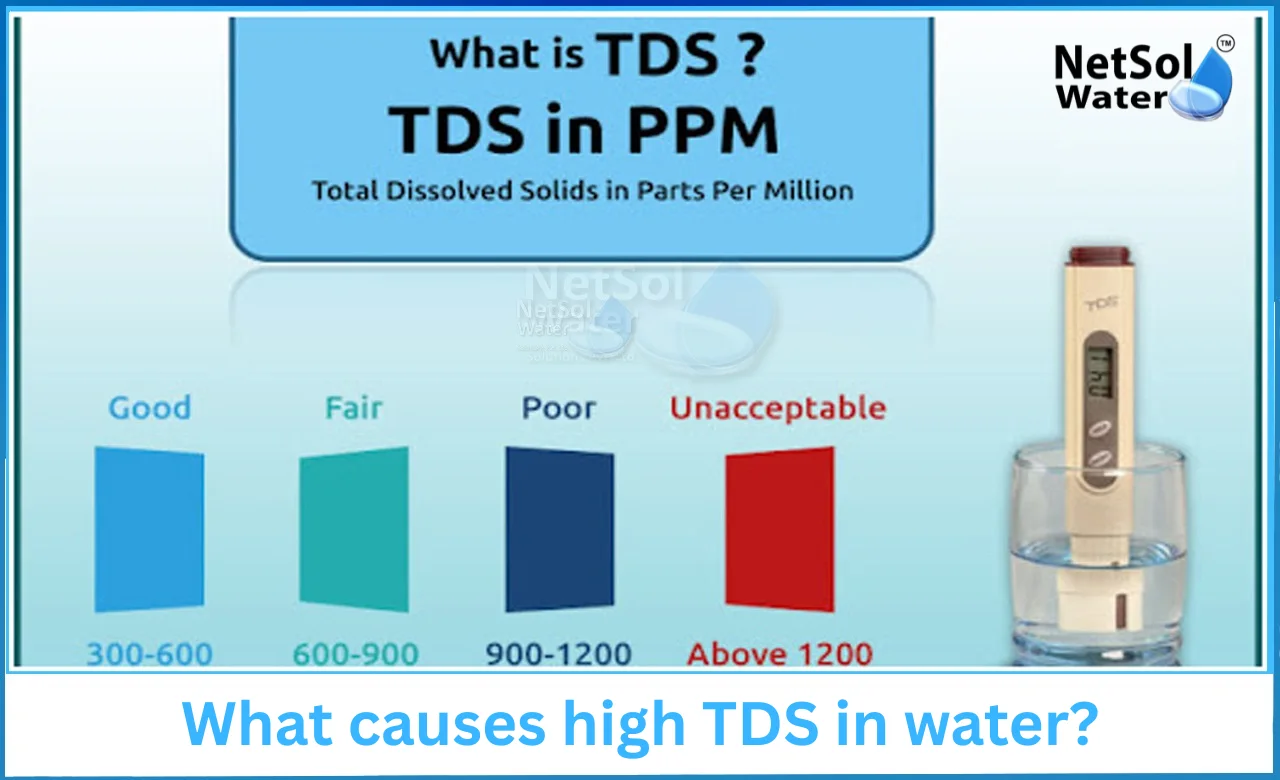
What causes high TDS in water?
High TDS Water affects many homes and businesses. The quality of water matters for health and for equipment. High TDS water can change the taste of drinking water and can shorten the life of water-using machines. Netsol Water offers testing and treatment services for such problems.
Natural Causes of High TDS Water
Understanding natural causes helps to see why some water sources start with higher mineral content. Let us have a look at some common natural sources and how they raise TDS.
1. Mineral Dissolution from Rocks
Water moves through soil and rock layers. It dissolves salts and minerals on the way. Over long time, the water collects calcium, magnesium, sodium, and potassium. These follow the water into wells and pipes. When water carries more dissolved minerals, the TDS value rises. This process happens more in areas with limestone or gypsum. Hard water shows high TDS because it holds many dissolved minerals. Homes that use bore wells often find higher TDS values than homes on surface water.
2. Saline Intrusion and Groundwater Variation
In coastal zones, salt water may move into freshwater aquifers. This saline intrusion raises sodium chloride levels. In dry seasons, the water table drops and the salt mixes more with groundwater. Rivers and lakes also change their mineral mix with the seasons. Heavy rain can dilute minerals and lower TDS for a time. Dry months reverse that effect. Knowing the local water cycle helps in predicting when TDS will rise.
Human Causes and Industrial Sources
Human activity can add dissolved solids to water. Let us have a look at some man made sources which raise TDS.
Agricultural Runoff and Fertilizers
Fields receive fertilizers and soil treatments. Rain moves these chemicals into streams and lakes. The runoff adds nitrates and other salts to the water. Over time this raises the TDS level of surface water that supplies towns. Irrigation return flow also carries dissolved minerals back into local water bodies. Farming areas near water sources often show higher TDS values than undeveloped land.
Effects of High TDS Water on Health and Equipment
High TDS affects both people and machines. Let us have a look at some key impacts.
1. Health Effects and Taste Issues
High TDS alters the taste of water. Water can taste salty, metallic, or bitter. Most healthy people can drink water with moderate TDS for short time. Very high TDS may affect people who need low sodium diets. Some dissolved elements such as lead or arsenic pose real health risks even at low TDS. Testing helps to find the harmful components rather than only the TDS number. Drinking water standards focus on specific contaminants and not only on TDS values.
2. Impact on Appliances and Plumbing
Appliances that use water can fail faster with high TDS. Boilers, heaters, and water purifiers can build scale when minerals concentrate. Scale reduces heat transfer, which raises energy use. Pipes can clog and fixtures can lose flow. Washing machines and dishwashers need more detergent when TDS stays high. Fixed costs rise through repairs and replacements. Treating water lowers these costs and extends plant life.
Testing Treatment and Prevention
Testing gives the data and treatment acts on the problem. Let us have a look at some testing methods and treatment options that work best.
1. Testing and Measurement
A simple digital TDS meter gives a fast reading at the tap. Laboratories can run full water analysis to find specific ions. A lab report shows which dissolved solids appear and how much of each exists. Regular testing helps track changes over time. Testing before and after treatment confirms success. The company that treats water can advise on the right tests to order for a clear diagnosis.
2. Treatment Options and Best Practice
Several treatment methods remove or reduce TDS. RO removes most dissolved solids by forcing water through a fine membrane. Distillation heats water and collects the vapour, leaving the solids behind. Ion exchange swaps unwanted ions for harmless ones. Each method has benefits and trade offs in cost and maintenance. Combining methods may suit some cases better than a single method. A qualified provider can recommend a solution based on the test results and on the user needs. The provider can also supply installation and after sale support.
Read some interesting information for the Sewage Treatment Plant Manufacturer
Conclusion
High TDS water can come from natural processes and from human activity. It affects taste, health, and appliances. Treatment protects both health and devices. If you need a clear assessment or a solution for high TDS water, contact the company that can help you plan a suitable treatment. Ask for a water test and a free consultation to learn which option fits your situation.
Contact Netsol Water at:
Phone: +91-9650608473
Email: enquiry@netsolwater.com