
What is a UASB Reactor? How Does it Work?
A UASB Reactor can change how facilities treat strong organic wastewater. Netsol Water is the leading name in supplying this system for industrial sites that need reliable and cost-smart treatment. We will explain the basic idea behind a UASB Reactor and see how the system works in clear steps.
What is a UASB Reactor?
A UASB Reactor stands for Upflow Anaerobic Sludge Blanket. The reactor treats wastewater that contains high amounts of organic material. The unit uses anaerobic bacteria that live in dense granules. These granules form a sludge blanket that stays in the reactor while water moves up through it. The bacteria break down organic compounds and turn them into biogas. The tank does not need mechanical mixing or a packing medium to support biomass. This simple design lowers power needs and reduces maintenance work. Operators can place the reactor as a first stage for heavy industrial wastewater or as a main treatment unit for streams from food and beverage, pulp and paper, and some chemical plants. The reactor works best when the feed has a stable organic load and when temperature stays warm enough for anaerobic microbes. Engineers choose this technology when they want compact systems that give energy recovery from the biogas and cut the amount of sludge that needs to be handled.
Key Characteristics
The UASB Reactor depends on granular sludge. The granules measure about 1 to 4 mm and hold high numbers of active microbes. These granules resist wash-out and keep biomass inside the reactor for long running times. The reactor typically removes a major share of biochemical oxygen demand and chemical oxygen demand from the feed stream. You can expect removal in the range of 60 to 90 percent depending on reactor design and operating conditions. The system yields biogas that operators can capture for heat or electricity. The tank uses upflow distribution to keep solids inside and to allow gases to rise up for capture. The reactor needs careful control of hydraulic loading and organic loading to avoid sludge wash-out. It performs best in warm climates because microbial activity falls with low temperature. Many industries adopt this technology to cut operating cost and to gain energy from their waste. The compact footprint and low power need make the reactor easy to fit into new or existing plants. Staff training and routine checks will ensure steady gas capture and stable effluent quality.
How it Works
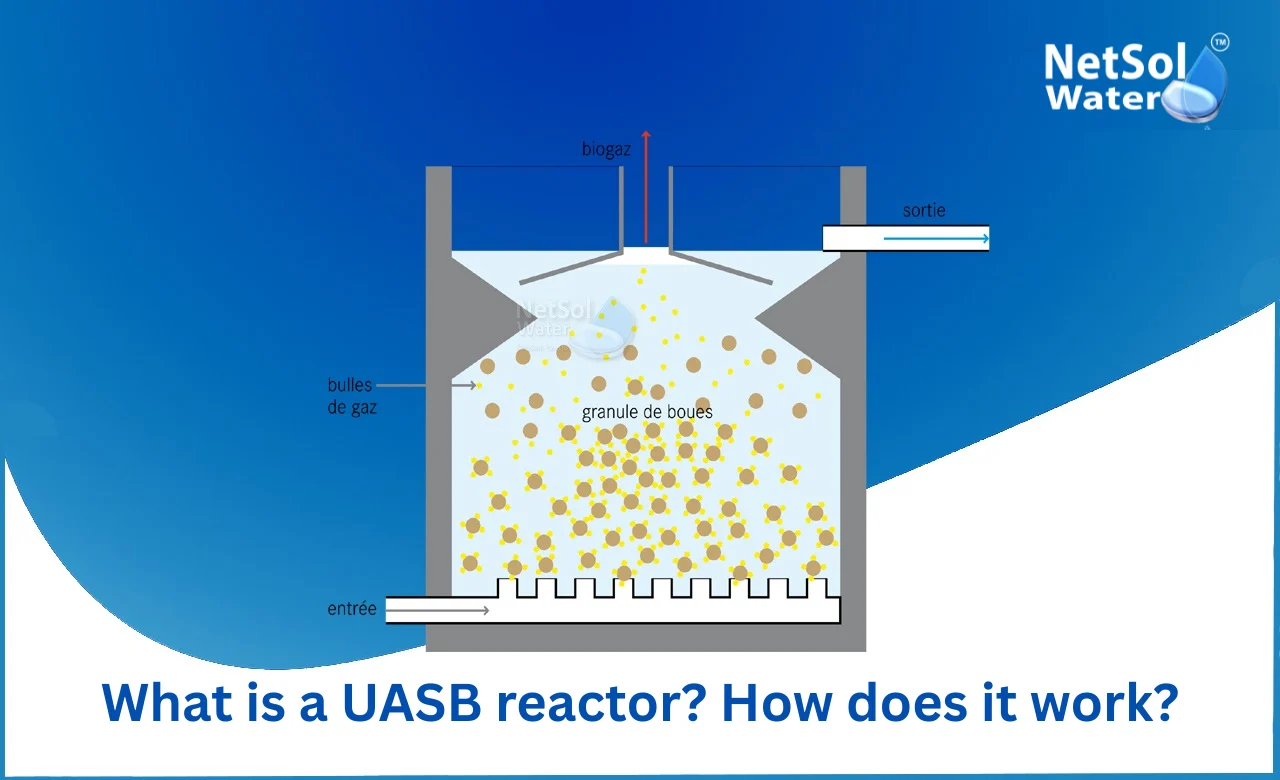
The UASB Reactor uses upflow motion and a sludge blanket to make contact between wastewater and microbes. The reactor keeps microbes in dense granules. Wastewater enters at the bottom and flows upward through the sludge. Biogas that forms in the granules rises and helps mix the reactor naturally. At the top, a three-phase separator divides gas, liquid, and solids. The treated liquid then leaves the tank for final polishing.
1. Wastewater Entry
Influent water enters at the reactor base through a feed distribution system. The distribution must spread the inflow evenly across the cross-section to avoid channelling. Even flow ensures that all incoming waste sees the sludge blanket as it rises. Engineers fit the inlet with a manifold or perforated plate to smooth the flow pattern. The feed pumps work at a controlled rate to match the hydraulic retention time set for the reactor. Operators watch the feed quality for sharp spikes in load. Big swings in organic load can upset the microbes and cause gas production to change too quickly. Careful feed control gives steady reactor performance and reduces the chances of biomass loss.
2. Biological Digestion
The sludge blanket holds granules that contain a mixed microbial community. These microbes break down complex organics by anaerobic digestion. The process moves through hydrolysis, acidogenesis, acetogenesis, and methanogenesis in a linked chain of reactions. Fermenting bacteria first break large molecules into smaller acids and alcohols. Other microbes convert these products into acetate, hydrogen, and carbon dioxide. Methanogens then turn acetate, hydrogen, and carbon dioxide into methane and more carbon dioxide. The result is a steady stream of biogas and a smaller mass of residual sludge. The granules give high process stability since they keep bacteria in close contact with the waste stream and with each other.
3. Phase Separation
Biogas forms inside the granules and then escapes as bubbles. The bubbles lift flocs and fine particles upward. At the reactor top, a three-phase separator catches the rising gas and sends it to a collection dome. The dome channels gas to storage or to a flare. Solids that reach the separator hit baffles and then fall back into the sludge blanket. The clarified liquid flows over the overflow weir and leaves the reactor. This stage prevents biomass loss and collects gas for energy use. Proper design of the separator ensures clean effluent and steady gas capture.
Read some interesting information for the Sewage Treatment Plant Manufacturer in Delhi
Conclusion
UASB Reactor systems give a practical way to treat strong organic wastewater while producing usable biogas. The design delivers low power need, a compact footprint, and high biomass retention. Industries with warm climates and steady loads can see large benefits from this approach. Netsol Water is the leading supplier that can help with system selection, design, and commissioning. If you want more details or a site-specific study, please get in touch to request a consultation.
Contact Netsol Water at:
Phone: +91-9650608473
Email: enquiry@netsolwater.com