Commercial RO Plant Manufacturer in Gurgaon - Sewage Treatment Plant Manufacturers

Successfully-Installed-2000-LPH-RO-Plant-at-Godrej-Zenith-Gurgaon.webp

August 18, 2026by Netsol Water

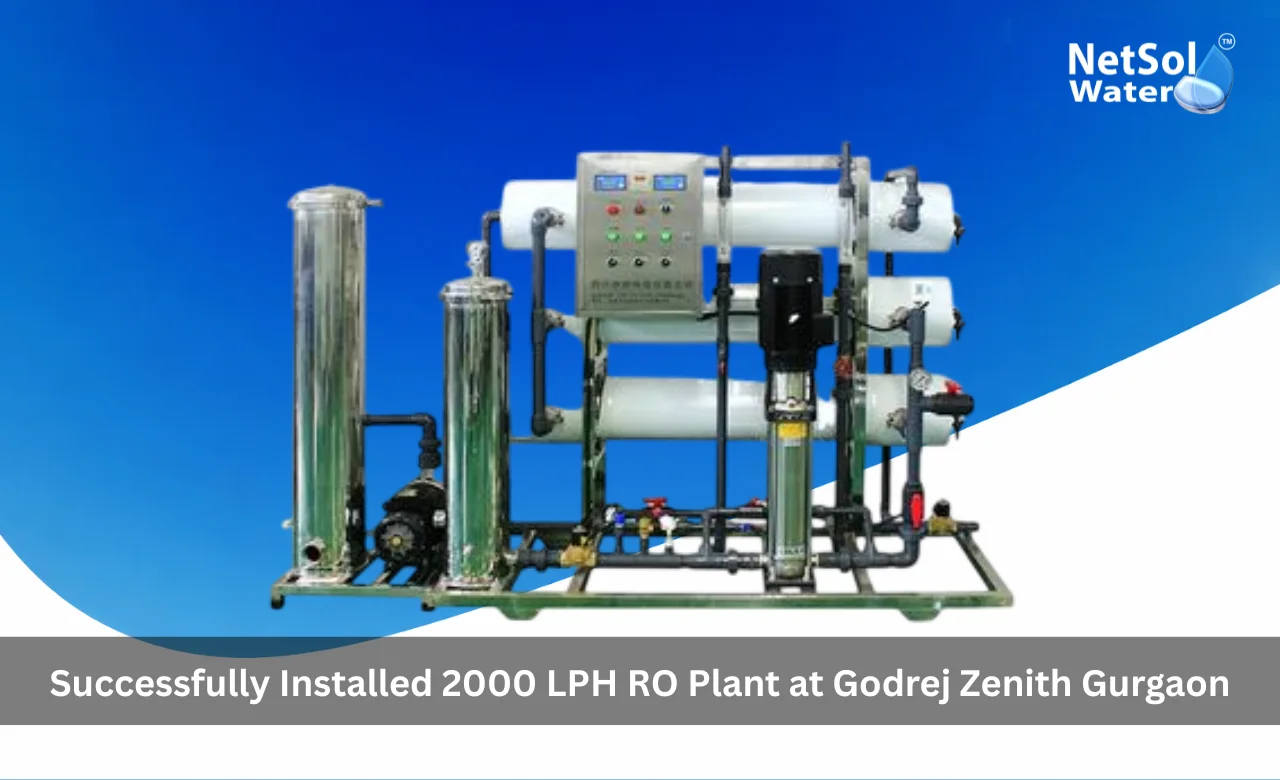
Successfully Installed 2000 LPH RO Plant at Godrej Zenith Gurgaon

The provision of good and properly treated water is a key requirement for today’s residential and commercial developments. Water quality can vary due to raw-water quality and/or dissolved solids, hardness, suspended matter, and other contaminants, which can have an impact on water usability, plumbing systems, equipment performance, and overall facility operations. In order to overcome these challenges, a suitable water-treatment plant should incorporate an efficient pretreatment process as well as a robust membrane filtration process.

A 2000 LPH Reverse Osmosis Plant was installed at Godrej Zenith, Gurgaon successfully, to ensure a reliable supply of treated water while sustaining the efficient running of the plant and the consistent quality of the water produced.

The project comprised the following activities: Water-treatment requirement assessment, selection of appropriate treatment technology, fabrication of the plant, transportation, installation, testing, commissioning and performance verification. The system was designed based on the reverse osmosis technology, which is protected by proper pretreatment stages and has high treatment efficiency.

This project showcases our capabilities as a leading Commercial RO Plant Manufacturer in Gurgaon and delivers customized RO solutions to residential complexes, commercial buildings, institutions, industries, hotels, hospitals, corporate buildings, and more, that demand reliable water purification.

Project Overview

The project entailed the supply, installation, testing and commissioning of a 2000 litres per hour (LPH) commercial RO plant for Godrej Zenith, Gurgaon.

The main goal was to implement a well-designed water-treatment method that could remove dissolved contaminants and enhance the water quality of the raw water. The performance of an RO membrane is highly dependent on the quality of water fed to the membrane system, so the project was planned as an integrated treatment system rather than just putting up an RO membrane unit.

All of these features – pretreatment, filtration, high pressure pumping, reverse osmosis membrane separation, instrumentation, flow control mechanisms, and collected treated water – constituted the full treatment arrangement.

The following were given special consideration:

  • Consistent treated-water production
  • Decrease in dissolved salts and undesirable impurities
  • Protection of RO membranes
  • Operational reliability
  • Ease of maintenance
  • Use of available space is maximized.
  • Maintains a stable system pressure and flow.
  • Convenient operator access
  • The ability to install in a safe and systematic manner
  • Long-term plant performance

The 2000 LPH capacity is based on the treated water demand of the site and anticipated operating conditions.

Its successful installation enables Godrej Zenith to have a water-treatment system that is planned to give its customers treated water of 2,000 litres per hour for the above stated operating conditions and parameters.

Client Details

Project Detail Information
Client/Project Godrej Zenith
Water Resources Water Resources Management, Water Treatment, Water Quality Management
Type of RO plant Commercial.
Rated Capacity 2000 LPH
Location Gurgaon, Haryana


Godrej Zenith needed a water treatment system that could supply a reliable amount of treated water, with consistent quality.

When choosing a RO for projects like this, the right choice of RO capacity is just part of the equation. Other factors to consider include water chemistry, operating hours, recovery expectations, pressure requirements, feed-water characteristics, pretreatment requirements, equipment accessibility and future maintenance requirements.

These requirements were analyzed by our technical team as part of the treatment configuration development.

This led to the development of a tailor-made 2000 LPH commercial RO unit, which is optimized for a combination of water quality enhancement, plant efficiency, protection of RO membranes and ease of maintenance.

Project Location – Godrej Zenith, Gurgaon

The RO plant was commissioned in Godrej Zenith at Gurgaon, Haryana.

Gurugram, popularly known as Gurgaon, has undergone a large scale residential, corporate, institutional and commercial growth. The region’s large properties need reliable water-management systems to keep them running.

Ground water and other sources of water may contain various amounts of dissolved minerals, hardness, suspended materials, and other contaminants. Other sources of water, seasonal changes, storage conditions, and area water supply systems can also impact water quality.

Therefore, plant capacity is not the only criterion to consider when choosing a water-treatment system. Water quality and water quantity must both be taken into account for proper treatment design.

Being one of the leading Commercial RO Plant Manufacturer in Gurgaon, we do not use a one size fits all approach for all projects, but customize the design of RO systems for each site.

Plant Capacity – 2000 LPH

The treated water production capacity of the RO system installed is:

2000 Litres Per Hour (LPH)

Plant size typically means that it is designed to give a purified water output of around 2,000 litres an hour under the plant design conditions.

The chosen capacity offers an ideal combination of:

  • Required treated-water demand
  • Available feed-water quantity
  • Operating duration
  • RO recovery
  • Membrane loading
  • Pump capacity
  • Storage requirement
  • Space availability
  • Expected future usage

When a RO plant is installed correctly, it does not result in the problems caused by under sizing or oversizing the plant.

An undersized system can be running all the time and could come up short of meeting peak demand. A system that is too large, however, will waste money on capital expense, equipment size and power use.

The configuration of 2000 LPH was therefore chosen, to provide an effective solution for the water-treatment requirement of the site, yet maintain the ability to operate and maintain the system.

Treatment Technology

This project employs the main treatment technology of RO.

Reverse osmosis is a pressure driven membrane-separation process, which is widely used for removal of dissolved salts and other undesirable component from water.

In RO water treatment, feed water is pumped at high pressure through semi-permeable membranes, which are treated beforehand. As the water molecules cross the membrane, they leave behind a high concentration of salts and other rejected components as the concentrate stream.

But an effective commercial RO plant is more than just an RO membrane.

The treatment system installed at Godrej Zenith consists of various stages to ensure that the RO membranes receive the feed water suitably treated.

The overall technology is comprised of:

  • Feed-water handling
  • Pressure boosting
  • Multimedia/sand filtration
  • Activated carbon filters
  • Micron cartridge filtration
  • Chemical conditioning – as appropriate.
  • High-pressure pumping
  • Reverse Osmosis Membrane Separation
  • Product-water collection
  • Monitoring the flow and pressure.
  • Influent Characteristics

The source or feed water had impurities that required further treatment prior to use.

In the context of local source and supply conditions, raw water from Gurgaon may pose treatment issues like:

  • Dissolved salts or elevated TDS
  • Hardness
  • Fine suspended matter
  • Turbidity
  • Calcium and magnesium compounds
  • Chlorides and other dissolved ionic constituents
  • Colour or odour-causing substances
  • Organic impurities
  • Fine particles capable of fouling RO membranes

Wherever possible, the design of any RO system should be based on a water analysis.

The treatment train is designed for this installation to allow the removal of the contaminants from the water before it reaches the membranes and to create water with a much better quality.

Direct feeding of untreated water into RO membranes can lead to:

  • Membrane scaling
  • Fouling
  • Reduced permeate flow
  • Increased pressure requirement
  • Reduced salt rejection
  • More frequent membrane cleaning.
  • Shortened membrane life

The influent water conditions thus influenced the type and configuration of the pretreatment equipment.

Treatment Process

Godrej Zenith Gurgaon installed 2000 LPH commercial RO plant which has a systematic treatment sequence.

Step 1: Feed Water Collection

Water that comes from the designated raw water source or water storage facility to the treatment system.

To maintain the continuous operation of the RO plant it is essential to have enough feed-water.

Step 2: Feed/Raw Water Pumping

The pretreatment units require a certain flow and pressure, which is achieved using a feed pump.

Feed pressure stability is crucial because fluctuations in feed pressure can impact the filtration process downstream and RO performance.

Step 3: Multimedia/Sand Filtration

Water for the feed is passed through a filtration unit which removes:

  • Suspended particles
  • Sediment
  • Silt
  • Turbidity
  • Coarser particulate matter

These contaminants are removed to ensure protection of subsequent treatment stages.

Step 4: Activated Carbon Filtration

Activated carbon filtering to remove compounds that cause an undesirable colour, odour and some organic contaminants is required by the feed-water characteristics in most cases.

It can also serve as a protection for downstream membranes where there are oxidizing compounds to be controlled.

Step 5: Chemical Conditioning

Appropriate dosing can be added to prevent scaling and optimize membrane performance, depending on the chemistry of the feed water.

Dissolved minerals can be deposited on the surface of the membrane, causing scale formation, which is a critical issue in RO systems.

Chemical conditioning minimizes precipitation and can increase the operating life of the membrane.

Step 6: Micron Cartridge Filtration.

Water is filtered through small cartridge filters prior to entering the high pressure RO section.

This filtration stage serves as an extra layer of protection by getting rid of fine particles that might have gotten through the preceding filtration stages.

Step 7: High-Pressure Pumping

The feed water is pumped up to the required pressure for membrane separation by a high-pressure pump.

The pump is one of the most significant parts of the commercial RO plant as the required pressure should be sufficient to overcome the osmotic pressure for the desired product-water production.

Step 8: Reverse Osmosis Membrane Treatment

Feed water is pressurized and fed into the RO membrane housings.

The membrane system splits the feed stream into:

Permeate/Product Water: Water that goes through the RO membrane and has much lower concentration of dissolved impurities.

Rejected/Concentrated Water: Salt and impurities rejected by the membranes, while the water is concentrated.

Step 9: Product water collection tank

The purified permeate is fed to the treated-water storage facility, from where it is used.

Step 10: Monitor and control

Essential operating parameters can be monitored via pressure gauges, flow meters, valves and other instrumentation.

This allows the detection of plant performance changes before they become serious maintenance problems.

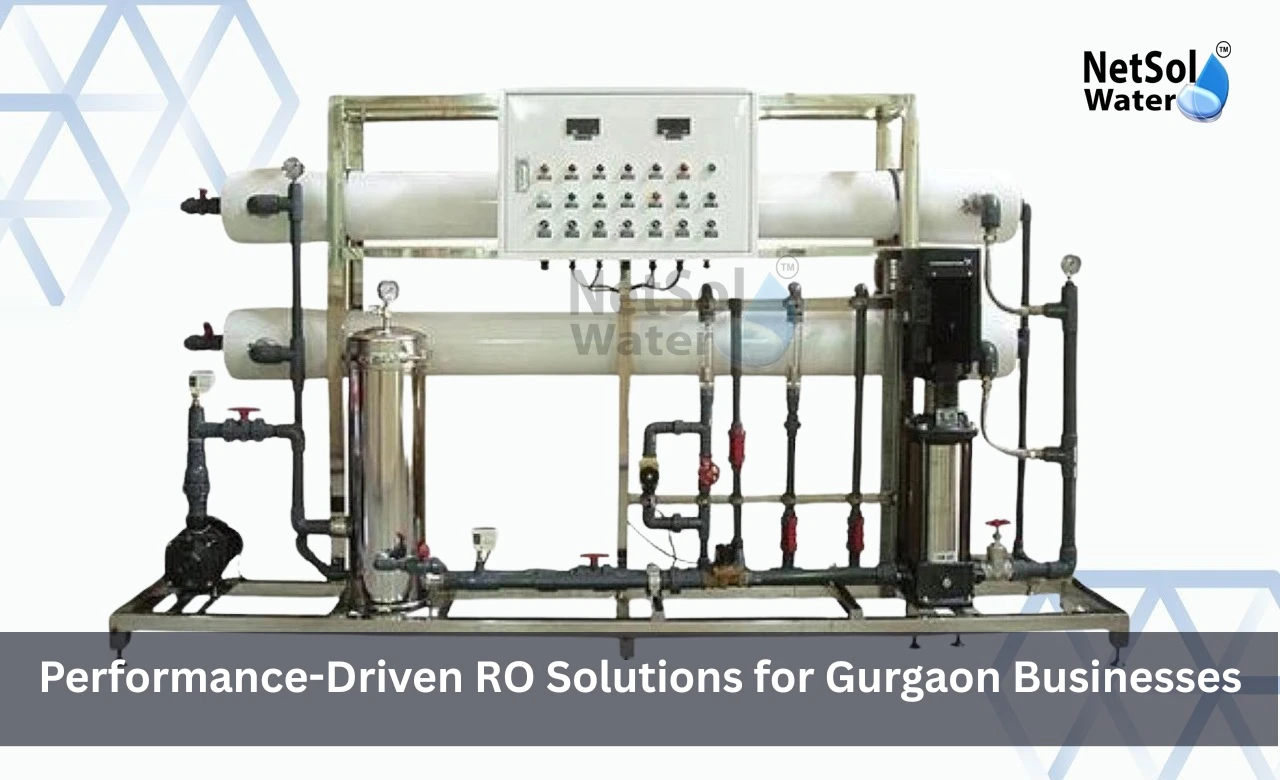
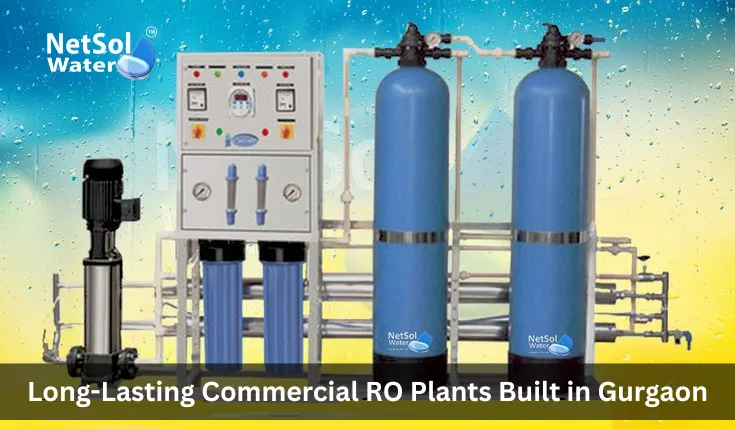
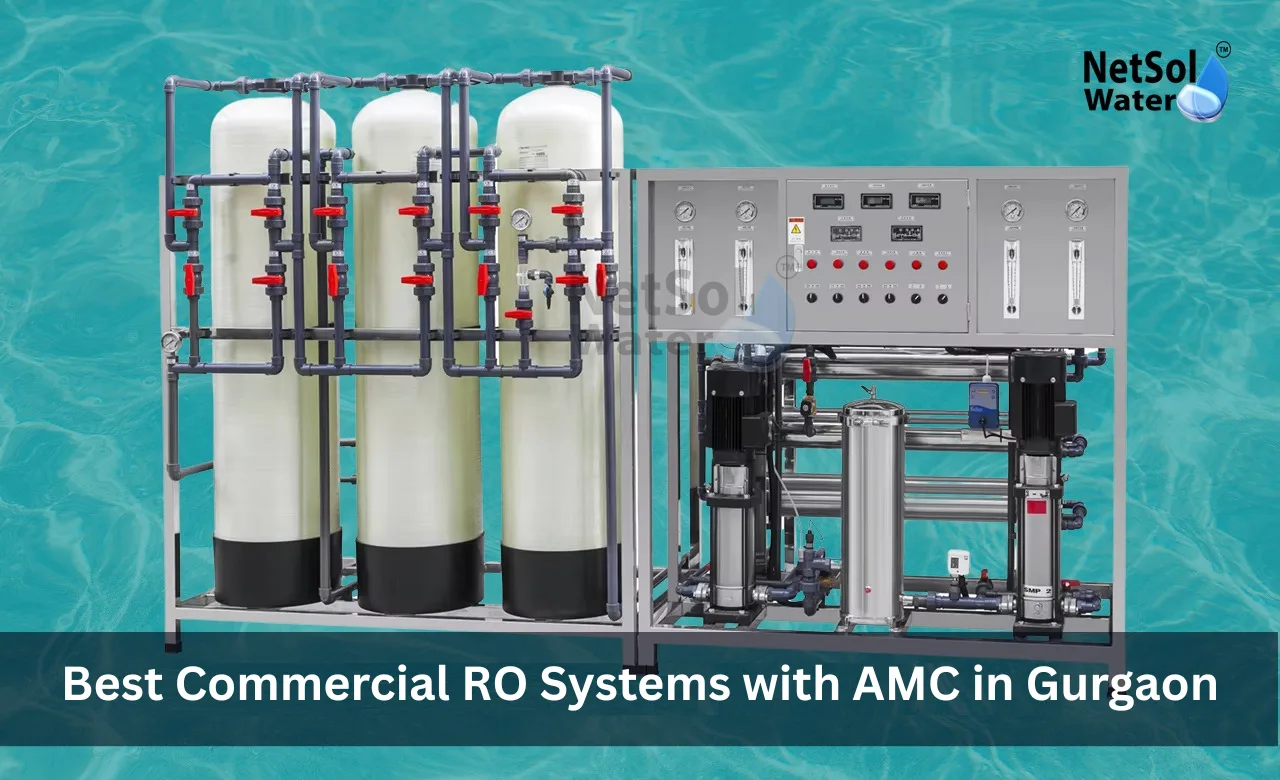
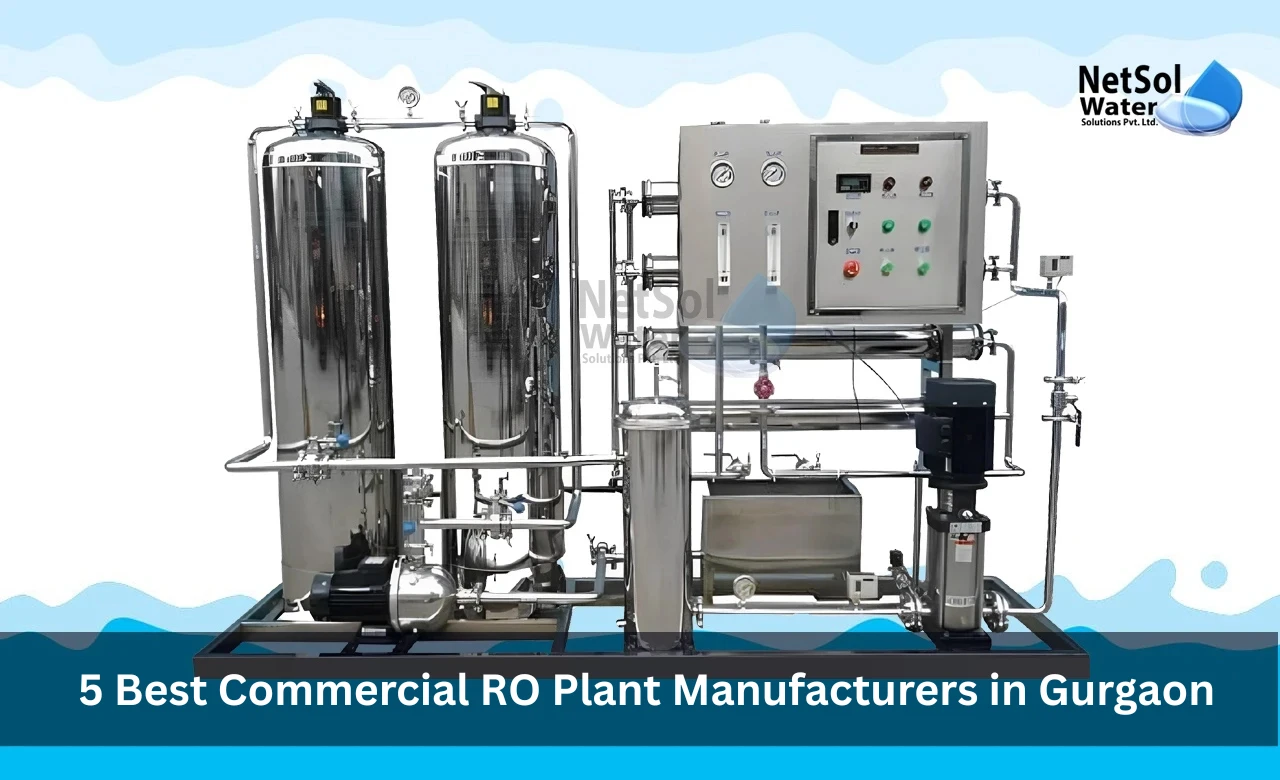
Major Equipment for 2000 LPH RO Plant.

The entire plant design includes equipment chosen based on the required treatment conditions, operating pressure and flow.

Major Equipment Purpose / Description
Raw Water/Feed Pump Provides sufficient water flow and pressure to the pretreatment section.
Multimedia/Sand Filter Minimizes suspended matter, silt, sediment and turbidity of incoming water.
Activated Carbon Filter Removes undesirable organics, odours, colour and other contaminants.
Chemical Dosing System Used for water conditioning and/or membrane-scale control based upon the characteristics of the raw water.
Micron Cartridge Filter Fine filtration directly in front of the RO section.
High-Pressure Pump Produces the operating pressure for efficient reverse osmosis.
RO Membrane Housings Hold the reverse osmosis membrane elements and be able to resist the operating pressure of the system.
RO Membranes Carry out the main dissolved-solids separation operation.
Flow Meters Allow product-water and reject-water flow to be observed by operators.
Pressure Gauges Assist in measuring pressure at significant treatment points and detect abnormal operating conditions.
Control Panel Central Controls for electricity and helps in safe operation of pumps and other equipment.

IPV is the process of connecting pipes and valves together.

Regulates and regulates water flow between treatment processes.

All major components have been installed to ensure ease of operation and future maintenance.

Installation Process

The installation of a commercial RO plant involves appropriate planning because even the well-designed RO plant can perform poorly if there is improper piping, electrical connection, foundation alignment, foundation preparation, or improper commissioning.

The installation of Godrej Zenith project was a systematic process.

1. Site Assessment

Prior to the final position of the equipment the available installation space and utility arrangements were evaluated.

Considerations included:

  • Available floor area
  • Water inlet location
  • Drainage arrangement
  • Electrical supply
  • Treated-water outlet
  • Operator movement
  • Maintenance clearance
  • Equipment accessibility
  • Equipment Positioning

Key treatment components were placed in a logical sequence that started at the raw water intake and ended at the treated water discharge.

Equipment spacing was observed to allow for routine inspection and servicing as much as possible.

2. Piping Connections

The piping between the feed-water section, filters, dosing arrangement, cartridge filtration system, high-pressure pump, membrane system, reject line and permeate outlet was installed.

3. Electrical Connections

Electrical connections were made to pumps and control systems based on the plant operating criteria.

4. Instrument Installation

Monitoring equipment such as pressure, flow, valves, etc. placed at appropriate locations.

5. Leakage and Connection Checks

Inspection for leaks and alignment of piping joints, membrane housings, valves and connections were performed prior to regular operation.

Plant Commissioning

One of the most critical phases of any water-treatment system installation is commissioning.

It is not just about starting the RO plant, but it is about checking whether all the treatment stages are working properly or not and whether the whole system is working in an integrated manner.

The commissioning of the 2000 LPH RO plant at Godrej Zenith Gurgaon was a commissioning exercise that involved the following:

  • Inspection of installed equipment
  • Verification of piping connections
  • Checking electrical connections
  • Confirmation of valve positions
  • Filter flushing
  • Cartridge-filter inspection
  • Pump operation checks
  • High-pressure section inspection
  • Membrane-system startup
  • Pressure adjustment
  • Flow-rate adjustment
  • Permeate-flow monitoring
  • Reject-flow monitoring
  • Product-water quality checking
  • System leakage inspection
  • Overall operational testing

It was initially under a controlled operation until the pressure and flow of the system was stabilized.

The RO system was then tested to verify the production of the treated water is in line with the rated capacity and operating conditions of the plant.

The plant was successfully tested and put into operation for regular use.

The one of the biggest benefit of an onsite commercial RO plant is that you can generate treated water as per the operational requirements of the property.

Some potential applications of treated RO water are:

  • Domestic water requirements
  • Cleaning applications
  • Utility requirements
  • Process-water applications
  • Food processing equipment that uses low TDS water

We also accept other alternative uses for property, as outlined below:

Treatment levels should always match the use(s) of the treated water and the regulatory/operational requirements.

The water quality of RO reject water may also be considered for potential non-potable reuse opportunities, when water quality, infrastructure, and local needs allow.

Applications may be selected cleaning, flushing or other non-critical uses, following suitability determinations.

This re-use can help to achieve more responsible water management and minimise unnecessary water waste.


Results and Performance

Godrej Zenith 2000 LPH RO plant was successfully installed and commissioned and it was found to be operating very stable with the designed parameters.

The main outcomes of the project were:

1. Consistent Treated-Water Production

Under the design operating conditions, the system was designed to produce about 2000 litres per hour of treated water.

A substantial decrease in the concentration of dissolved impurities.

The dissolved salts and other membrane-rejectable components of the feed water were significantly decreased through the use of the RO membrane stage.

2. Improved Water Quality

The treated water was significantly better than the untreated feed water and is suitable to the intended site use.

3. Stable Operating Pressure

The high pressure system was tuned during the commissioning process to obtain stable operation of the membrane.

4. Effective Pretreatment

The particulate and contaminant load entering the RO membrane section is reduced by the use of the pretreatment units.

5. Membrane Protection

The system minimizes the chances of fouling and scaling of the membranes by using the right pretreatment and chemical conditioning.

6. Reliable System Operation

Dependable day to day operation relies on correct size, systematic piping, instrumentation and commissioning.

7. Maintenance-Friendly Layout

The equipment layout enables filters, valves, gauges, pumps and membrane housings to be easily accessed for routine inspection and maintenance.

This successful installation proves that the proper combination of selection, pretreatment and the professional commissioning is of key importance.

Customer Feedback / Testimonial

Godrej Zenith’s commissioned 2000LPH RO plant is a testament to the client’s need for a reliable and professionally set up commercial water treatment system.

Client testimonial:

*The LPH RO plant was installed at our site successfully and the system is operating with a regular rate of treated water production. Technical team provided proper support during installation, testing and commissioning.*

The successful completion of this project further highlights our commitment for designing, fabricating, installing, commissioning, and after-sales technical support of not only RO equipment, but an entire water treatment solution.

Why opt for us as your Commercial Ro Plant Manufacturer in Gurgaon?

Capacity and price are not the only two criteria that should be used to select an RO plant.

The lifespan of a commercial RO system is determined by a number of factors such as:

  • Raw-water analysis
  • Appropriate plant sizing
  • Pretreatment design
  • Membrane selection
  • Pump sizing
  • Operating pressure
  • Recovery percentage
  • Instrumentation
  • Installation quality
  • Preventive maintenance
  • Technical support, availability of support.

We are a Commercial RO Plant Manufacturer in Gurgaon and offer plants according to site specific needs.

RO solutions that are commercial and industrial, can be made to fit various capacities and applications such as:

  • Residential societies
  • Commercial complexes
  • Corporate offices
  • Hotels
  • Hospitals
  • Educational institutions
  • Restaurants
  • Manufacturing facilities
  • Food-processing units
  • Industrial plants
  • Construction projects
  • Institutional buildings
  • Warehouses
  • Shopping complexes

RO plants can be combined with other technologies like multimedia filtration, activated carbon filtration, softening, antiscalant dosing, UV treatment, ozone treatment, ultrafiltration and other water-treatment technologies, depending on the water characteristics and application.

Project Summary

Details of the project: Installation of Commercial RO Plant.

Project Detail Details
Client Godrej Zenith
Location Gurgaon, Haryana
Plant Capacity 2000 LPH
Primary Technology Reverse osmosis.
Pretreatment Filtration and water conditioning according to the needs of the feed water.
Treatment The use of treated water for plant needs.
Project Scope Design, supply, installation, test and commissioning.
Install and Commission Status Successfully Installed and Commissioned;

The project illustrates the potential of a well-designed RO plant to be a reliable solution for consistent treated water quality for commercial and residential developments.

Every stage of the treatment requirement to the final commissioning was completed with a focus on operational reliability, membrane protection, efficiency and maintainability over time.

Call to Action

In cases where the issues are high TDS, hardness, dissolved salt, water quality, or intermittent availability of treated water in residential societies, commercial buildings, hotels, hospitals, institutions, offices, restaurants or industrial facilities, the right commercial RO system will be able to help.

We produce and install the customized RO plant as per your requirement:

  • Raw-water quality
  • Required treated-water capacity
  • Daily water consumption
  • Available installation space
  • Operating conditions
  • Intended application
  • Budget
  • Automation requirements

The system can be designed to meet the specific requirements of the project, whether for a 5000 LPH or any other higher capacity RO plant, or a 5000 LPH, 3000 LPH, 2000 LPH, 1000 LPH or 500 LPH RO plant.

Read some interesting information for the Industrial RO Plant Manufacturer in Faridabad

Need a Commercial RO Plant in Gurgaon?

Contact us for:

  • Site Assessment
  • Water Quality Evaluation
  • RO Plant Design and Capacity Selection
  • Commercial RO Plant Manufacturing
  • Installation and Commissioning
  • RO Membrane Replacement
  • Plant Maintenance and AMC Services
  • Existing RO Plant Upgradation
  • Technical Support and Troubleshooting

If you are searching for a reliable Commercial RO Plant Manufacturer in Gurgaon, contact our water-treatment specialists to discuss your requirement and receive a customized solution.

Get in touch today for a commercial RO plant consultation, site visit, and customized quotation.

Contact Netsol Water at:

Phone: +91-9650608473

Email: [enquiry@netsolwater.com](mailto\:enquiry@netsolwater.com)

What-are-the-Applications-of-Commercial-Water-Softeners-3.webp

August 17, 2026by Netsol Water

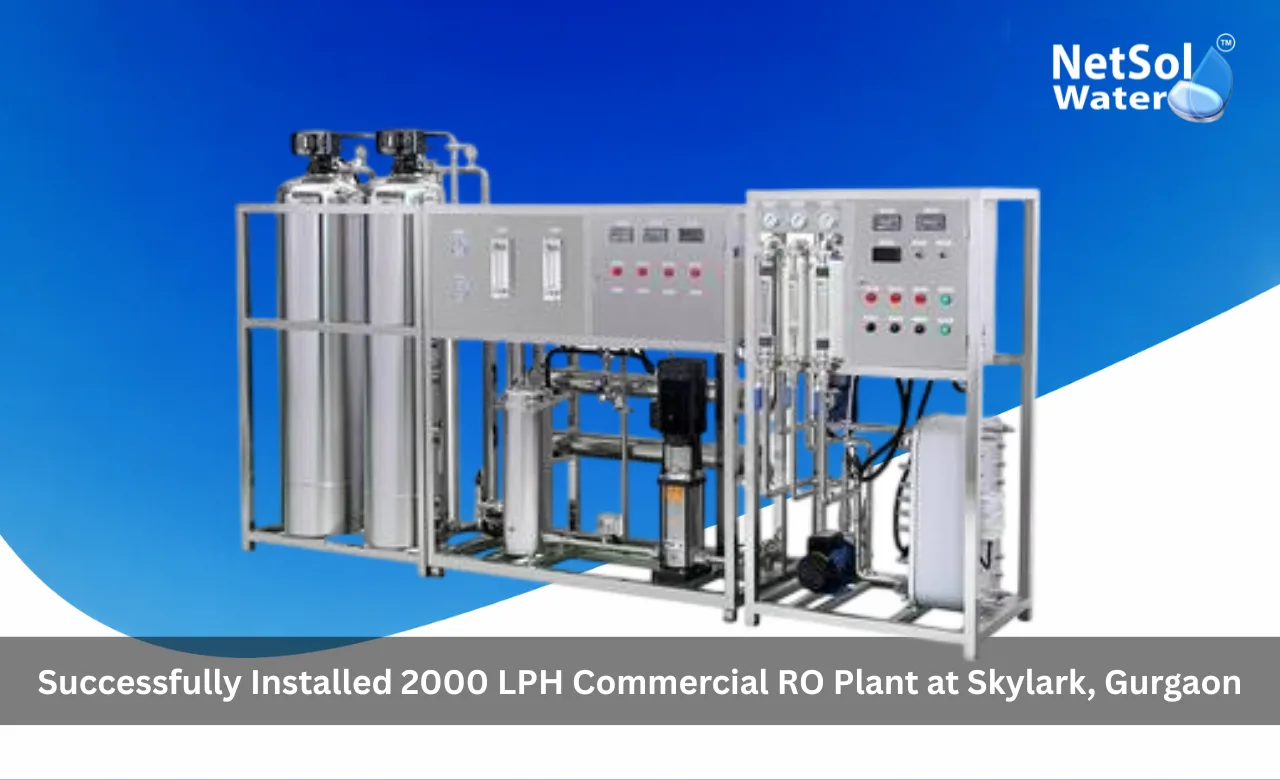
Successfully Installed 1000 LPH Commercial RO Plant at Skylark, Gurgaon

Commercial offices, infrastructure companies, manufacturing facilities, institutions and hotels need reliable access to appropriately treated water. The incoming water may have excessive dissolved salts, hardness, suspended particles or other undesirable constituents; a properly designed commercial RO system can help maintain the necessary treated-water quality. We installed and commissioned a 1000 LPH Commercial RO Plant at Skylark, Gurgaon for its production of about 1000 litres of RO treated water per hour with the specified operating conditions. The project embodies our work as a reputed Commercial RO Plant Manufacturer in Gurgaon.

Project Overview

The main goal of this project was to set up a commercial water treatment system which would produce about 1000 LPH of RO treated water at Skylark‘s Gurgaon site.

The water-treatment systems used in commercial facilities are different to those in small domestic RO units. The equipment should be able to process greater flow rates, operate longer hours and process different feed-water characteristics, and be easy to operate and maintain.

The treatment system was designed for a 1000 LPH commercial RO plant with appropriate pre-treatment stages for this project. The goal was to not only install RO membranes, but to design an entire treatment sequence that would safeguard the membranes and ensure consistent output.

The overall work involved in the installation comprised assessment of the area, equipment planning, plant fabrication and assembly, plant transportation, positioning of the plant equipment, plant plumbing connections, electrical connections, plant pretreatment setup, plant RO membrane installation, testing, plant flushing, plant trial operation and final plant commissioning.

The final product was a water-treatment system that satisfied the commercial need of Skylark with a convenient access path for future inspection and maintenance of the major components of the system.

Client Details

The project was for Skylark, Gurgaon as a client. It has EPC, mining, toll collection and highway maintenance as its major business segments.

The company’s operations feature large-scale infrastructure activities, and a significant employee base. Such an organisation needs reliable utility services capable of supporting the normal running of business.

One of these utilities is water-treatment infrastructure. An appropriate size commercial RO plant can process water at a central location, and the purified water can be stored for use as required at the facility, rather than using small purification units.

Thus the 1000LPH Commercial RO Plant was selected which proved to be a good solution for the site with a relatively small footprint for the system.

Project Location

The RO plant installed at Skylark, Gurgaon, Haryana. Their address in Gurgaon is: 267, Udyog Vihar, Phase IV, Gurgaon – 122015, Haryana, India.

One of the prominent commercial and industrial hubs of Gurgaon, Udyog Vihar is home to offices, manufacturing units, warehouses and corporate establishments in the various stages.

Water supply to commercial establishments in Gurgaon may be from various sources and the water quality may vary depending on the source and local conditions. Therefore, it is best to choose the water-treatment equipment based on the water’s feed-water quality, not just on the basis of its LPH rating.

Therefore, as a Commercial RO Plant Manufacturer in Gurgaon, our emphasis is on the capacity of the RO Plant and the number of treatment stages that will be required for a particular application as well as the quality of the water source.

Plant Capacity

The commercial RO system installed has a product water capacity of:

Parameter Value
Product Water Capacity 1000 Litres Per Hour (LPH)


This implies it is capable of delivering about 1,000 litres per hour of RO water under the plant’s operating and feed-water conditions.

Capacity must be determined based on a number of considerations such as:

Capacity Consideration
Daily treated-water requirement
Peak water demand
Number of operating hours
Available raw-water storage
Treated-water storage capacity
Feed-water quality
Membrane performance
Required product-water characteristics


A theoretical yield can be calculated: For a 1000 LPH plant, if it is able to work for 8 hours, then the theoretical output is about 8,000 litres. The theoretical production at the same time of effective operation is about 10,000 litres.

The actual production may change depending on the feed-water temperature, pressure, condition of the membrane, concentration of dissolved-solids, fouling, maintenance and other operating conditions.

This means that Skylark is able to deliver commercial scale water production with a 1000 LPH capacity, but not with a much larger treatment plant.

Treatment Technology

The key purification technology applied in the project is Reverse Osmosis (RO) together with the appropriate pre-treatment.

Reverse osmosis is a pressure driven membrane separation process. The water is pushed across a semi-permeable membrane, creating product water or permeate and reject water or concentrate, which is a concentrated stream.

The pretreatment decreases the loading rate on the membranes, fine filtration gives further protection against particulates, the high-pressure pump creates the pressure for membrane separation, and the RO membranes decrease the concentration of dissolved material in the product-water stream.

The plant can be systematically maintained and a practical solution for commercial water treatment is possible.

Influent Characteristics

An RO plant‘s performance is highly dependent upon the properties of the influent, or raw water entering the plant.

For commercial RO systems, some key feed-water parameters that are normally considered in designing and operating systems are:

Influent Parameter
Total Dissolved Solids (TDS)
Total hardness
Calcium and magnesium
Turbidity
Suspended matter
pH
Chloride
Alkalinity
Iron, where present
Hard Minerals (Silica, etc.)
Organic matter
Microbiological Condition


Treatment Process

The 1000 LPH Commercial RO Plant consists of a series of treatment units that work together in a coordinated manner.

1. Raw-Water Feeding

Raw water is initially delivered to the pretreatment part by the feed line. Flow of feed is essential as subsequent equipment relies on a steady supply of feed water.

2. Pressure/Media Filtration

The primary filtration section filters out suspended impurities and turbidity.

Particulate loading is reduced at this stage which leads to less loading of fine filters or RO membranes.

3. Activated Carbon Treatment

Activated carbon treatment is available to remove chlorine, odour and some organic material in feed water if needed.

Granular activated carbon is widely utilised in water treatment applications for the adsorption of taste and odour-causing compounds and a number of organic contaminants.

4. Antiscalant Dosing

If scaling has the potential to occur, controlled antiscalant dosing can decrease the growth of mineral deposits on membrane surfaces.

As scaling builds up it can decrease membrane output, increase differential pressure, and over time increase maintenance needs.

5. Micron/Cartridge Filtration

Water flows through fine cartridge filtration before going to the high pressure RO section.

This provides another protection to keep small suspended particles away from the membrane elements.

6. High-Pressure Pumping

This high-pressure pump raises the water pressure to the amount necessary for a good reverse osmosis.

The RO process is dependent on pressure and requires it to push water through the semi-permeable membrane.

7. RO Membrane Separation

Water is split into two streams in the membrane housings.

These are referred to as RO permeate, which flows through the membrane at much lower levels of many dissolved substances.

The second is the concentrate or reject stream that contains more of the substances that are rejected by the membrane.

The EPA also explains RO as generating a permeate/product water stream and a reject/concentrate stream.

8. Treated-Water Collection

The RO permeate is finally channeled to the intended treated water storage facility for distribution and use.

Major Equipment

Skylark Gurgaon‘s 1000 LPH Commercial RO Plant features all necessary equipment needed for a commercial water treatment system.

The main functional elements are:

Equipment
Raw-water feed arrangement
Feed-water pump
Pressure/media filtration system
Activated carbon filtration is used
Antiscalant dosing system
Micron cartridge filter
High-pressure pump
Commercial RO membrane elements.
Membrane pressure housings
Pressure gauges
Product-water flow monitoring
Reject-water flow monitoring
TDS/water-quality monitoring arrangement
Control panel
Valves and inter-connections pipelines
Treated-water outlet arrangement
Reject-water discharge arrangement


Equipment was set up both to be functional and accessible.

Maintenance or inspection of parts such as filter elements, dosing equipment, membrane housings, pumps and instruments requires regularity, particularly in a commercial RO plant, where accessibility is of paramount importance.

A quality commercial RO system should therefore be capable of yielding treated water, but also be designed to serve a long time.

Installation Process

The installation process was systematically conducted so that the RO plant is able to function after its commissioning.

A review of the available installation area and the selection of suitable locations for the RO skid and pretreatment equipment was the first step.

Wherever possible, working space was kept clear around the treatment units to enable routine changes of the filters, pressure checks and maintenance to be carried out conveniently.

Post equipment positioning, the raw water line was hooked up to the feed section and interconnections between the pretreatment components and the RO system were made.

The product-water piping and reject-water piping were not connected to each other so as to avoid mixing of the two streams.

Electrical connections to the feed pump and the high-pressure pump were then made, along with the feed pump, dosing system and control panel.

The installation team preperformed the following checks before starting the plant:

Pre-Startup Check
Pipe connections
Valve positions
Electrical connections
Pump direction
Filter installation
Membrane housing connections
Pressure lines
Conveying product and reject outlets
Potential leakage points


The process of installation was systematic which facilitated controlled startup and commissioning of the system.

Plant Commissioning

Commissioning of plants is the point where the installed equipment is tested as a whole water-treatment system.

Firstly, the 1000 LPH RO plant was flushed to prepare the filtration section and membrane section for normal operation.

Feed pump was then operated and then low pressure section was started in a controlled way.

The technical team was monitoring the operating condition such as feed-flow, pressure, product-water generation, reject-water discharge etc. during the commissioning.

Leaks were tested and the pressure and operation of the pumps were monitored for any abnormality.

The plant was slowly ramped up to operating conditions to avoid unnecessary hydraulic stressing of the plant.

The treated water production rate was verified against the desired plant capacity of 1000 LPH

There was also basic operational guidance provided in the commissioning process, such as:

Operational Guidance Topic
Plant startup
Plant shutdown
Pressure observation
Product-water monitoring
Cartridge-filter replacement
Chemical dosing
Membrane maintenance
The detection of abnormal flow and/or pressure.
Preventive maintenance requirements


Following successful testing and adjustment, the plant was made ready for routine operation.

Treated Water Reuse

The treated water from the plant can be stored in a separate treated water tank until such treated water is required for Skylark‘s own water usage.

Depending on the quality needed for each application, treated water can be used for:

Treated Water Use
After required final treatment and verification, drinking-water supply.
A full pantry and kitchen will be supplied.
A well-equipped kitchen and pantry will be provided.
Office utility requirements
Appropriate equipment or process applications
Other purposes with relatively lower TDS water


The actual end use should always determine the required final water-quality specification.

If treated water is to be used for human consumption, then hygienic storage and disinfection as required, and routine laboratory testing should be observed. IS 10500:2012 specifies requirements for drinking water in India, which can be used to evaluate the water quality parameters relevant to it.

The reject water from RO system should be disposed properly. The EPA states that the concentrate stream will include salts and other materials that are trapped by the membrane, and therefore, should be treated appropriately before being discharged or managed.

Only the reject water’s quality and the needs of the intended non-potable use should be taken into account when considering possible reuse.

Results and Performance

The successful installation and commissioning of the 1000 LPH Commercial RO Plant at Skylark Gurgaon has enabled the facility to have a dedicated on-site water-treatment system which can provide about 1,000 litres of RO water per hour under its specified operating conditions.

The project was successful in achieving the project objective of having a stable commercial scale production of treated water using a structured pretreatment and membrane-separation process.

The main results are:

Result Description
Well defined treated water production The plant offers treated water as a separate source of water rather than relying only on smaller point-of-use water purifiers.
Commercial scale capacity A rated capacity of 1000 LPH is considered a reasonable scale of production/capacity to install.
Removal of dissolved mineral content RO Membrane technology is used specifically for the removal of a variety of inorganic constituents and dissolved solids.
Pretreatment for membrane protection Proper filtration prior to the RO stage can minimise fouling and plugging, which are known operational issues of membrane treatment.
Easy system monitoring Pressure monitoring points, flow monitoring points and water-quality monitoring points allow system operators to monitor plant operation during regular operation.
Sustainable equipment layout System installed to allow convenient access to consumables and major equipment needing routine maintenance.


This overall installation thus provides both 1000LPH purification capacity and a complete commercial treatment solution including pretreatment, membrane separation, monitoring and the collection of treated water.

Customer Feedback / Testimonial

Installing and commissioning processes were executed professionally, keeping in mind operational ease and system reliability.

After commissioning, basic maintenance and operation of the plant was demonstrated to the concerned personnel.

As a result of not having received an independently verified customer quotation for this case study a direct statement must not be attributed to Skylark without permission.

The installation and commissioning of the 1000 LPH Commercial RO Plant in our Gurgaon facility is done professionally and the plant is functioning well as per our water treatment requirement and the technical team gave us proper guidance about the operation and routine maintenance of this plant.

Looking for a trustworthy Commercial RO Plant Manufacturer in Gurgaon for your office, factory, hotel, school, hospital, warehouse, commercial complex or industrial plant?

Some of the points to consider in a well-designed system:

Design Consideration
Raw-water quality
Daily water requirement
Peak demand
Required treated-water quality
Available operating hours
A space that allows for the installation of equipment.
An area that can accommodate equipment.
Pretreatment requirements
Water storage
Maintenance requirements
Intended treated-water application


We supply complete solution from the designing to manufacturing, installation and commissioning of RO Plant for Commercial applications in Gurgaon for various capacities.

Commercial RO plant can be designed in various capacities like:

Available Capacities
500 LPH
1000 LPH
2000 LPH
3000 LPH
5000 LPH
10,000 LPH and customised capacities


Our services include water-treatment requirement assessment, system design, equipment selection, RO plant manufacturing, installation, commissioning, operator guidance, membrane replacement, filter replacement, troubleshooting and preventive maintenance support.

Our track record of delivering water-treatment projects from conception to commissioning, such as the 1000 LPH Commercial RO Plant at Skylark Gurgaon, showcases our capabilities in delivering commercial water-treatment projects.

If you require a dependable Commercial RO Plant Manufacturer in Gurgaon, contact our technical team.

Read some interesting information for the Effluent Treatment Plant Manufacturer in Faridabad

Conclusion

The 1000 LPH (Commercial RO Plant) installed at Skylark Gurgaon is testament to the significance of selecting the right plant capacity, pretreatment, membrane technology and professional commissioning under one umbrella solution.

Skylark is an infrastructure and engineering company that has offices in EPC (Engineering, Procurement, and Construction) and other sectors such as mines, tolls, and highways.

When a commercial facility is being used, the reliability of the water treatment will not only be determined by the rated capacity of the RO plant but also by factors such as incoming water condition, pretreatment performance, proper operating pressure, membrane condition and periodic maintenance.

The 1000 LPH system meets these needs with a series of systematic treatment processes that involve raw-water feeding, pretreatment, fine filtration, high-pressure pumping, and RO membrane separation and output of product water.

While RO is an established membrane separation process for decreasing dissolved solids and a host of other contaminants, system pretreatment and concentrate management are important factors in proper system operation.

As a Commercial RO Plant Manufacturer in Gurgaon, the project has also provided another hands-on example to understand our capability to deliver commercially appropriate water-treatment systems based on capacity, water quality, and operational requirements.

For businesses planning a new RO installation or upgrading an existing treatment facility, a properly engineered commercial RO plant can provide a dependable, scalable and manageable source of treated water for long-term use.

Contact Netsol Water at:

Contact Details
Phone +91-9650608473
Email enquiry@netsolwater.com


What-are-the-Applications-of-Commercial-Water-Softeners-2.webp

August 13, 2026by Netsol Water

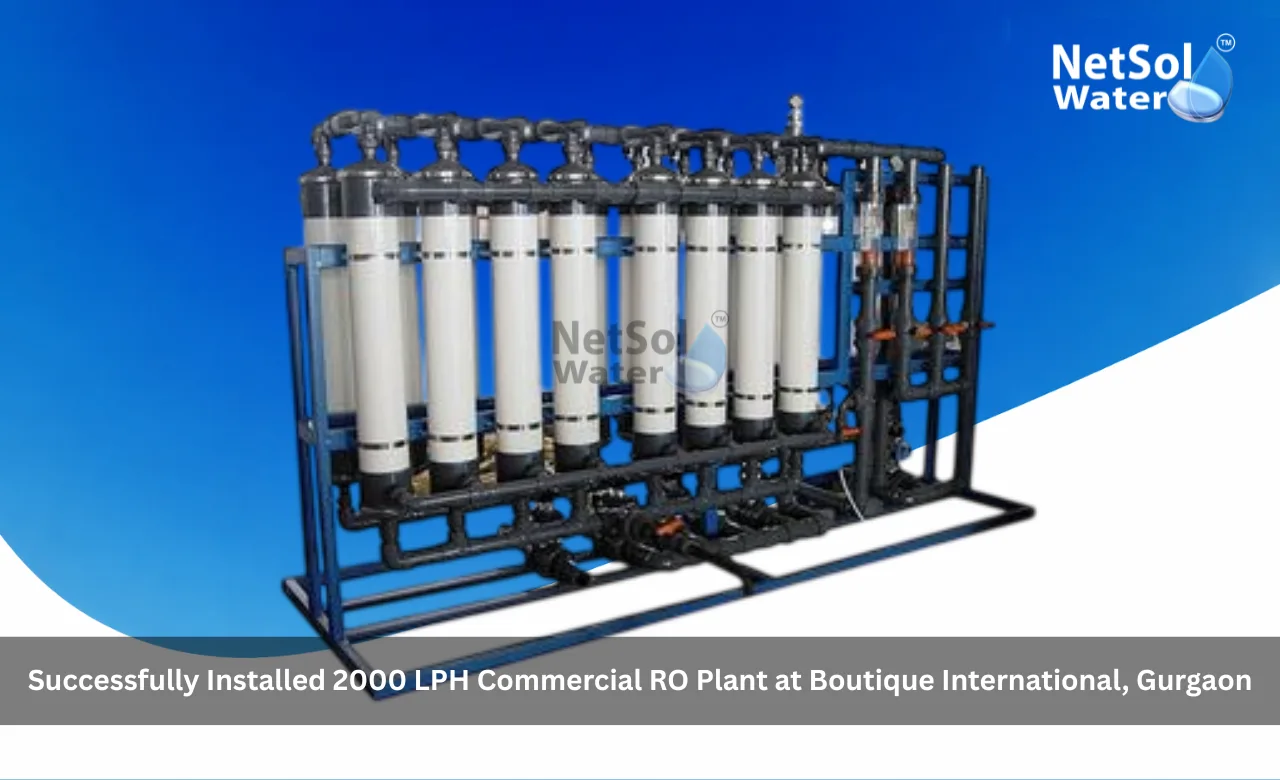
Successfully Installed 2000 LPH Commercial RO Plant at Boutique International, Gurgaon

Consistently treated water is important for commercial and industrial operations that rely on water consistently and continuously. The composition of raw water, including dissolved salts, hardness, suspended matter and other water properties, can vary and impact the usefulness of the raw water for drinking, utilities, processes. The combination of appropriate pretreatment with membrane purification would present an effective solution provided by a suitably designed commercial RO plant. The RO plant of 2000 LPH Commercial RO Plant was successfully installed and commissioned at Boutique International, Gurgaon and they were provided with a reliable source of treated water of about 2000 litres per hour based on the operating conditions provided.

Boutique International is a vertically integrated garment Export Company based in Gurgaon. It has knitting, embroidery, printing and other apparel manufacturing activities and is manufactured in its facility in Gurgaon.

The project reflects our expertise as a Commercial RO Plant Manufacturer in Gurgaon and most importantly, designing treatment systems as per the plant requirements, feed water quality available at the site, output capacity required and operational needs of the client.

Project Overview

The aim of the project was to supply a viable commercial scale water treatment plant for Boutique International that will produce 2,000 litres per hour of treated water.

The quantity of water required is not the only factor to consider before installing a commercial RO plant, the characteristics of the feed water must also be taken into account. RO membranes are primarily meant to separate the dissolved contaminants from water, and pretreatment is used to abate suspended particles, scaling, etc., that can impact the membrane.

Thus, it was decided that the solution will be an integrated treatment system instead of a standalone RO membrane unit. The removal of material from the raw water, generating the pressure, separation in a membrane, monitoring and treating the water out of the membrane were all taken into account, in order to ensure the plant’s operation under commercial conditions.

The project involved site assessment, capacity planning, equipment selection, system fabrication, transportation to the facility, installation, electrical and plumbing connections, flushing, trial operation, parameter adjustment and final commissioning.

The system once installed, gives Boutique International a separate RO water-treatment system of 2000 LPH for assured everyday operation.

Client Details

Boutique International is a garment manufacturing and export company from Gurgaon, Haryana, which was the client for this project.

Boutique International calls itself the star export house for apparel brands in the United States and Europe recognised by the government. The company claims its manufacturing process is vertically integrated, that is all the process from yarn to finished goods are done at the company’s facility. It has the facilities of circular knitting, flat knitting, embroidery and printing.

Infrastructure reliability is crucial in an organisation that operates at this level. All water-treatment facilities need to be able to deliver the treated water needed in the required quantity, and not make routine operation and maintenance unnecessarily complex.

The need was thus for a commercial system, not a small domestic purification system. The chosen capacity of 2000 LPH was deemed to be an appropriate balance of the water demand, operational capability and future utility.

Project Location

The commercial RO plant was installed in Boutique International, Plot No. 553, Pace City 2, Gurgaon, Haryana – 122016.

The town Gurgaon or Gurugram has emerged as a very important business and industrial hub in Delhi NCR region. The nature of water may vary greatly depending on whether it comes from a municipal water supply, a ground water well or a tanker.

So, it is not right to choose commercial RO plants only on the basis of the rated production capacity. The characteristics of the feed-water, treatment time, and pretreatment time, storage facilities, and the water quality to be expected after treatment, must also be taken into account.

As a Commercial RO Plant Manufacturer in Gurgaon, we therefore do not follow a one design fits all principle instead we ensure that the treatment configuration is personalized to fit the actual site needs.

Plant Capacity

The rated treated water production of the installed plant is: 2000L/h (Litres per Hour)

Parameter Value
Rated Treated Water Production 2000 L/h (Litres per Hour)


The system can generate around 2000 litres of RO treated water in an hour when operated at its full capacity. The actual daily production will vary depending on the operating time, feed-water condition, membrane performance, maintenance condition, and water need of the facility.

The theoretical production capacity of a 2000 LPH plant is, for example, about 16 000 litres during a period of 8 effective production hours. But the plant does not have to run around the clock—operation can be synchronized with treated-water storage and actual consumption.

The capacity selected is enough for commercial scale output, while treated water production and storage will follow the facility’s production schedule.

Treatment Technology

The RO process with the proper pre-treatment technology represents the main treatment process adopted in the plant.

Reverse osmosis is a method that uses pressure to push feed water through a special membrane to extract some of the water. This results in two streams of water, the purified water or permeate, and a more concentrated stream of water called the concentrate or reject water, which contains the dissolved substances that were not purified. RO is a membrane-separation technology capable of separating a wide spectrum of dissolved contaminants and salts.

But RO membranes should not be fed inadequately treated feed water. Scaling compounds, suspended matter, and chlorine and organics may have an impact on membrane life and performance.

Influent Characteristics

Incoming water quality is one of the most crucial factors to consider while designing any commercial RO plant.

Dissolved salt, minerals which form hardness, suspended solids, turbidity, chlorine and organic matter can be found in varying amounts in commercial feed water.

The treatment system was designed to address the key parameters, which typically affect commercial RO operation, such as:

Total dissolved solids, hardness, suspended particles, turbidity, scaling potential and contaminants that could impact the performance of the membrane.

Pretreatment is particularly important because it is not only to enhance the quality of the feed water, but to avoid fouling or scaling of RO membranes before they are used. DuPont says proper pretreatment ensures good RO performance and that the pretreatment required is a function of the chemistry of the raw water and the purpose of the treated water.

If the water is to be used for drinking, it is prudent to test its final quality with the right tests. The drinking-water specification of Bureau of Indian Standards (BIS) IS 10500:2012 suggests that the acceptable range for TDS is 500 mg/L and permissible range is 2,000 mg/L without any source. This same standard establishes acceptable hardness levels between 6.5 and 8.5, as well as limits for chloride, fluoride, nitrate and many other parameters.

BIS IS 10500:2012 Parameter Value
TDS – Acceptable Range 500 mg/L
TDS – Permissible Range (No source) 2,000 mg/L
Acceptable Level 6.5 to 8.5


Treatment Process

The 2000 LPH Commercial RO Plant is designed to pass through a series of treatment stages that help prevent damage to the membranes and assure a consistent product-water quality.

The raw water is pumped into pretreatment section first. The suspended matter is filtered out initially and the load is reduced to the later filter elements.

The water is then filtered through media filters. This stage is useful in controlling turbidity, suspended impurities, colour, odour and substances which may affect the operation of the RO membrane depending on the nature of the raw water.

When incorporated, activated carbon treatment acts as an important barrier to protect the membranes from the presence of chlorine and some of the organic compounds before they reach the membranes. This is especially important since improper feed-water conditions can adversely affect the performance of the membrane.

Fine cartridge filtration is another physical barrier to small suspended particles that is offered before membrane treatment.

A high-pressure pump is used to pump the pretreated water to the RO section. Reverse osmosis requires pressure due to the natural tendency of dissolved salts to move across a semi-permeable membrane.

The feed flows inside the RO membrane housing, splitting into a product water and a concentrate stream. Water passing through the membrane becomes the product water and continues to treated water storage, while a higher concentration reject water stream removes a significant amount of the dissolved substances separated.

During operation, flow and pressure parameters are monitored along with water quality parameters to detect any abnormal conditions and correct them.

Major Equipment

The main components needed for the pretreatment, membrane purification, monitoring and controlled operation were set up in the commercial RO system.

The major functional equipment consisted of:

Equipment
Arrangements for feeding raw water and water feeding pump.
Pressure/media filtration system
Activated Carbon Treatment, when needed based on feed-water conditions
Antiscalant dosing arrangement
Micron/cartridge filtration
High-pressure RO pump
Monitoring of product-water and reject-water flow.
Temperature and operating controls
Electrical control panel
Interconnection of piping, fittings and valves.
RO-treated-water outlet/storage connection


The equipment size was scaled to the product water requirement of 2000 LPH and operating condition.

The design also took ease of operation and maintenance into account since the installation of successful commercial water treatment relies not only on a good installation, but also regular monitoring, changing filters, maintaining membranes and timely servicing.

Installation Process

Installation started by surveying the plant space and existing utility services.

RO skid and pretreatment equipment were located for good accessibility for future maintenance and filter change out. The positioning of equipment is especially critical in commercial installations as the layout could become unnecessarily complicated to service the equipment routinely.

The inlet plumbing for raw water was connected to the pretreatment system, and connections between the treatment stages were made. Careful checks were made on the high pressure line, membrane housings, product-water outlet and reject water discharge line.

Pumping and dosing equipment and the control panel were electrically connected. The system was then checked for correct positioning of the valves, piping alignment and leaks.

With mechanical and electrical connections checked, individual system sections were ready for flushing and start-up.

Installation method – The approach was designed to reduce disruption to the client’s existing operations and provide easy access to the water-treatment equipment for future maintenance.

Plant Commissioning

Commissioning is one of the most important phases of a commercial RO project as good installation does not guarantee good operation.

The system was initially flushed to clear any loose material that may have been encountered during installation, and to ready the filters and membrane system for use.

The pumps were then gradually started and increased pressure applied in a controlled manner. The feed-water flow, product-water flow and reject-water flow were monitored as the system approached normal operating conditions.

The team inspected the system for leaks, abnormal pump performance, pressure and flow blockages during the commissioning. RO operating parameters were optimized for stable operation, while avoiding undue stress to the membranes.

The product-water output has been validated with the desired capacity of the plant, namely 2000 LPH subject to the condition of operating conditions and the quality of feed-water.

Routine startup and shut down, pressure monitoring, cartridge-filter replacement, chemical dosing, membrane cleaning indicators and preventive maintenance were also discussed with the operators.

Treated Water Reuse

The water that is treated through RO system can be stored in a separate tank, and can be pumped to specific locations where the facility needs low TDS water.

RO treated water can be used to prepare drinking water, to meet pantry needs, for utility uses and for appropriate process water needs based on the client’s internal water-management plan, where controlled dissolved-solids levels are desired.

For any end use, the distribution should be the same as the required water quality specification. If the water is used for drinking, the proper post-treatment, hygienic storage and regular microbiological and chemical testing are essential.

Concentrate management is also responsible for RO concentrate. Facilities may consider whether they can make a suitable non-potable use of the reject-water stream depending on its quality and the local needs. Testing and the needs of the intended use should be considered when making a reuse decision.

Results and Performance

The installation and commissioning of 2000LPH Commercial RO Plant at Boutique International, Gurgaon was a great success, it gave the facility its own high capacity treatment system to produce purified water there.

The main aim of the project, which was to set up a reliable RO water production system with a rated capacity of around 2000 litres per hour was achieved.

After commissioning, the stable operation of the system with controlled feed pressure, product-water generation, and reject flow were identified. The RO membrane stage achieved high removal of dissolved mineral matter from the feed water, and pretreatment prevented particulate and scaling loading of the membrane system.

The primary operational advantages of the installation are the assured commercial scale water production, reduced reliance on small-scale purification units, ability to control the availability of treated-water, improved management of the dissolved solids and hardness, and the plant configuration which allows for easy monitoring of system performance and for routine service.

RO membrane technology is a proven technology for commercial and industrial water treatment. Commercial RO membranes are utilized in a wide variety of applications, from restaurants and hotels to medical and scientific facilities.

The finished project provided Boutique International with a new facility water-treatment asset on top of its current facility infrastructure.

Customer Feedback / Testimonial

Installation was finished with special consideration for the performance of the plants, ease of access and ease of operation. The system was tested during commissioning and the operating procedures were discussed to the facility staff.

The 2000 LPH Commercial RO Plant has been installed at our facility in Gurgaon and we are pleased with the professional installation and commissioning of the RO Plant. The RO Plant is working as per our water-treatment requirement and the Technical team provided us the required support during installation, testing and handover.

In execution of this project success highlights the needs of using proper plant capacity together with proper pretreatment, reliable equipment, proper installation and technical support.

Call to Action

When it comes to selecting the best commercial RO Plant Manufacturer in Gurgaon, the decision is crucial if you have a factory, office, hotel, hospital, school, institution, warehouse or commercial facility which needs a reliable water-treatment plant.

A commercial RO system should be configured based on your specific water analysis, your daily water demand, the number of hours the system will be used, available space and the specific quality of water you want to produce—rather than just picking a capacity from a standard capacity chart.

We design, manufacture, install and commission the commercial RO plants for various water needs and operating conditions. The treatment configuration can be designed depending on the application and feed-water characteristics, if you need a 500 LPH, 1000 LPH, 2000 LPH, 3000 LPH, 5000 LPH or a customised commercial RO plant.

Available Capacities
500 LPH
1000 LPH
2000 LPH
3000 LPH
5000 LPH
Customised commercial RO plant


Services offered range from requirement assessment to designing the water-treatment system, selecting the equipment, manufacturing the RO plants, commissioning and training the operators, troubleshooting and providing equipment maintenance support and replacement of consumables and membranes.

The installation of a 2000 LPH Commercial RO plant at Boutique International, Gurgaon, showcases our capability to take on commercial water-treatment projects from system design to final commissioning.

Looking for a reliable Commercial RO Plant Manufacturer in Gurgaon? Contact us today and speak about your water requirement.

Provide us with your raw-water test report and daily water demand and our technical team will be able to suggest the capacity and treatment configuration of the RO plant required for your facility.

Read some interesting information for the Commercial RO Plant Manufacturer in Faridabad

Conclusion

The Boutique International project did not just use the RO membrane but included all the components of a complete treatment process, such as pretreatment, fine filtration, pressure generation, membrane separation, monitoring, commissioning and operational guidance. This is significant because the performance and life of the membrane is highly dependent on the quality of the water treated and the quality of pretreatment.

The system installed has a capacity of 2000 litres per hour and enables the Boutique International‘s Gurgaon facility to have a significant treatment water production capacity with the help of installed system. Reliable long term operation is also achieved through correct installation, system commissioning and equipment arrangement which is easy to access.

If any organisation is planning to install a similar RO Plant in Gurgaon, it is advisable to choose a Commercial RO Plant Manufacturer in Gurgaon to ensure that plant capacity, water chemistry, pretreatment and operational requirements are all taken care.

A business where treated water availability is a constant requirement can turn to a professionally engineered commercial RO plant for a reliable solution that is scalable and can provide them with the water they need.

Contact Netsol Water at:

Contact Details
Phone +91-9650608473
Email enquiry@netsolwater.com


What-are-the-Applications-of-Commercial-Water-Softeners-1.webp

August 12, 2026by Netsol Water

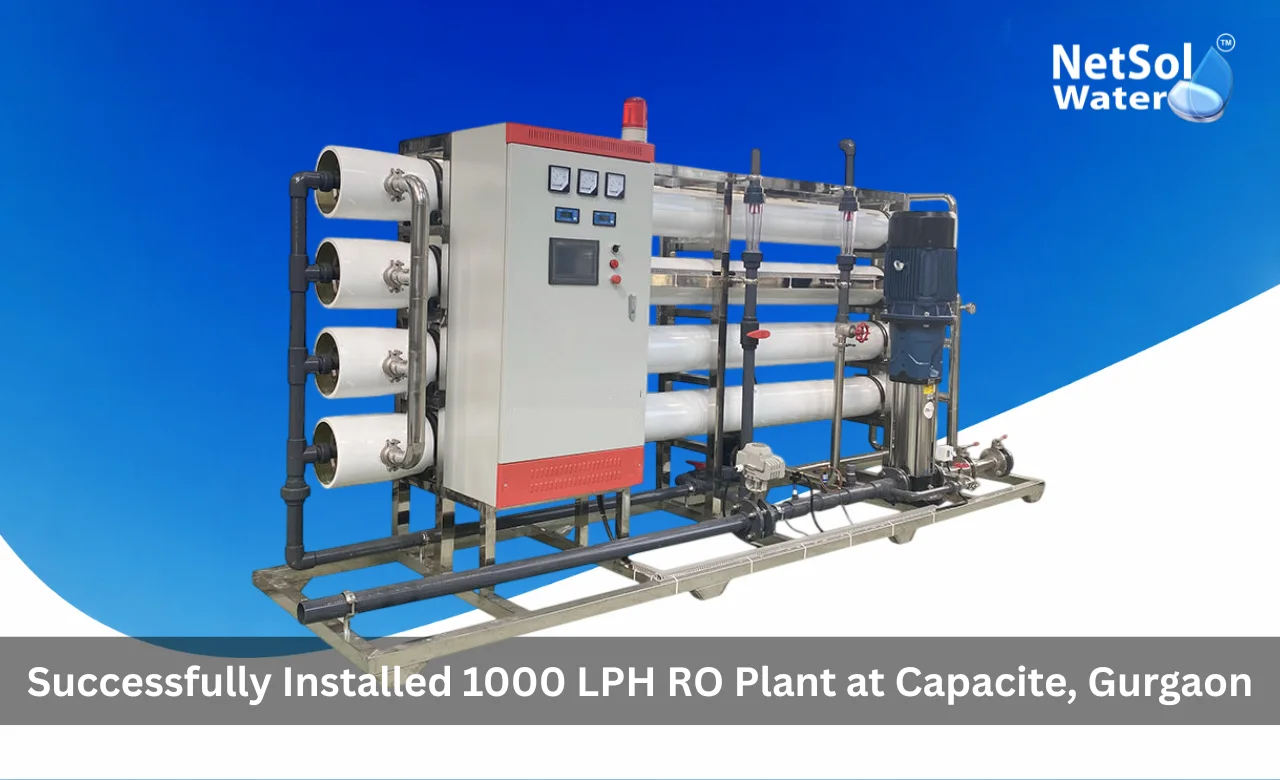
Successfully Installed 1000 LPH RO Plant at Capacite, Gurgaon

Purified water is important to commercial buildings, offices, construction sites, industrial sites, institutions and large workplaces. Raw water may contain dissolved salts, hardness, suspended particles, unpleasant taste or smell and other contaminants that are not desirable for direct use. A properly designed RO plant provides an effective solution by combining pre-treatment, membrane separation, process control, and water-quality monitoring.

Netsol Water has installed a 1000 LPH RO Plant at Capacite, Gurgaon, which is a commercial and industrial water purification plant that can produce high purity water. The installation illustrates the ability of the right size RO plant to satisfy the daily purified water need of a commercial water facility in a compact and manageable treatment setup.

This project serves as an excellent example of how plant capacity, treatment stages, equipment selection, installation, and commissioning can be linked to create an effective water-treatment system.

Project Overview

The project was the installation of Capacite 1000 litres per hour (LPH) RO plant in Gurgaon, Haryana. The primary goal was to obtain a dependable system for producing purified water on site for the facility rather than relying on the untreated incoming water or the supply of purified water from outside.

The product water capacity for a 1000 LPH plant is about 1,000 litres per hour per operating hour. The actual amount of production possible depends on the number of hours the plant is operating, the quality of the raw water, the feed pressure, the condition of the membranes, their maintenance, and the plant’s demand.

Netsol Water‘s commercial RO solutions rely on several treatment stages and not just the RO membrane. It has been documented that its commercial RO process encompasses the removal of suspended solids, treatment with activated-carbon, fine cartridge filtration, high pressure pumping, membrane separation, management of reject water, dosing, instrumentation and provisions for membrane cleaning.

The Capacite project is an important installation for Netsol Water as it further strengthens its reputation as a leading Commercial RO Plant Manufacturer in Gurgaon and the Delhi NCR region.

Client Details

The client for the project was the Capacit’e Infraprojects which is a company that is engaged in construction activities. It defines its sectoral presence as total contracting, general contracting and design-and-build services for such projects as high-rise buildings, super-high-rise buildings, commercial and office buildings, institutional buildings, hospitals, hotels, data centres, industrial buildings, mass housing, and other large projects.

Water availability becomes significant for the construction and commercial development, as well as infrastructure sectors, not just in providing drinking water, but also some functions within project offices and facilities.

A commercial RO system must then be tough enough to use regularly, and be easy to operate and maintain.

Project Location

The RO plant was setup in Capacite, Gurgaon. Gurgaon is among the important commercial and corporate cities of Delhi-NCR, which has a large number of offices, housing societies, hotels, institutions, construction sites, industrial units, etc. These facilities may need special water treatment facilities when the quality of the water is not satisfactory for the intended purpose.

Netsol Water in particular in Gurgaon offers commercial RO solutions and emphasizes the need for choosing a plant based on the number of users, water source parameters, water required capacity, installation site and maintenance needs.

Plant Capacity

The RO plant installed has the capacity of:

Parameter Value
Plant Capacity 1000 LPH
Equivalent Product-Water Output 1 m³/h


This is a capability that makes the system appealing to facilities that need a significant amount of purified water over the course of a workday, but the amount is not too much to handle.

The rated capacity, for instance, refers to the theoretical capacity that the plant can achieve, for example, at 8 hours operating time it can deliver around 8000 litres, at 10 hours it can deliver around 10000 litres subject to actual operating conditions and availability of feed-water.

The sizing of plants is an important engineering design decision. Both an undersized and an oversized RO plant can have drawbacks in terms of meeting peak consumption and/or operating the plant efficiently. The 1000 LPH capacity offers a realistic compromise between capability, size, usage and commercial water demand.

Treatment Technology

RO is the main treatment technology being utilized in the project.

RO is a membrane separation technique where the pretreated water is subjected to pressures and allowed to flow through semi-permeable RO membranes. The water molecules traverse the membrane as purified permeate while a large percentage of the dissolved salts and other constituents that are not allowed to pass through are left on the concentrate side of the membrane and exit through the reject line.

But this successful RO performance relies on proper pre-treatment. If the untreated water is fed directly to RO membrane, it may lead to fouling, scaling, pressure demand, frequent cleaning and deterioration of the membrane.

The commercial RO treatment unit by Netsol Water, therefore, includes several treatment mechanisms, namely the sand filter, the activated carbon filter, the micron filter, the high pressure pump, the membrane, the dosing system, the instrumentation and the cleaning system.

This multi-stage approach is designed to help protect and stabilize the system performance of the membrane.

Influent Characteristics

One of the key components of commercial RO design is influent assessment. The following are some of the parameters that are usually assessed prior to the finalization of an RO system:

Influent Parameter
Total Dissolved Solids (TDS)
Electrical conductivity
pH
Total hardness
Calcium and magnesium
Chloride
Sulphate
Alkalinity
Turbidity
Suspended matter
Iron, where relevant
Organic matter


Depending on the water source, microbiological contamination occurs.

Water-quality parameters like pH, EC, TDS, total hardness, calcium, magnesium, alkalinity, chloride, sulphate, nitrate, fluoride, sodium and potassium are also listed as important water-quality parameters in Haryana’s water quality testing infrastructure.

This treatment system was designed to solve the larger problem of the conversion of the incoming water into a reliable high purity product-water supply, for the Capacite project, rather than simply basic filtration.

Treatment Process

The treatment sequence is in accordance with the multi-stage treatment principle proven in the commercial RO systems of Netsol Water.

A system for removing dissolved solids from raw water that includes feed pump, pressure sand filter, activated carbon filter, micron filter, scale control, high pressure pump, RO membranes, storage and use.

Stage 1: Raw Water Feeding

Water is pumped into the plant by means of a feed pump at the appropriate flow and pressure into the pre-treatment system.

Stage 2: Pressure Sand Filtration

Water is first filtered in the sand filter stage. This will help to remove any suspended solids or larger particulate matter that might enter the cartridge filters and/or RO membranes.

Stage 3: Activated Carbon Filtration

Activated-carbon treatment is the next step. Activated carbon is part of its commercial sequence for dechlorination by Netsol Water. Another property that can be modified by carbon treatment is the water properties, by removing some of the organic compounds that cause undesirable taste and odour.

Stage 4: Micron Cartridge Filtration

Fine filter before high pressure section, with a micron filter. It is a secondary barrier to smaller suspended particles.

Stage 5: Dosing and scale protection

The use of the proper chemicals allows control of scaling at the surface of the membranes. Often, the membrane is scaled and this can lead to lower permeate flow and higher operating pressure, which require protection for the long-term stable operation.

Stage 6: High-Pressure Pumping

The pre-treated water is pressurised by the high-pressure pump. The purified water must be pushed through the RO membrane against the osmotic pressure which requires adequate pressure.

Stage 7: Reverse Osmosis Membrane Separation

The water is split into two streams within the membrane system:

Stream Description
Product water Water that has been treated to be used for various purposes.
Rejected/Concentrated Water with a greater concentration of rejected dissolved materials.


The permeate is directed to a storage tank or used as is, with the concentrate being directed to the reject or recycle system, depending on the plant design. Netsol Water refers to the same general process when referring to its commercial RO systems.

Major Equipment

The key equipment of a commercial RO system of this kind is:

Equipment
Raw-water/feed pump
Pressure sand filter
Activated carbon filter
Micron cartridge filter housing
Chemical/anti-scalant dosing arrangement
High-pressure RO pump
RO membrane housings
Reverse osmosis membranes
Flow meters
Pressure gauges
Conductivity/TDS monitoring instruments
Level-control switches
Control panel
Product-water line
Reject-water line
Installing piping and valves between different units.
Connecting pipes and valves between units.
Structural/skid arrangement


Netsol Water specifically records pressure gauges, flow meters, conductivity sensors and level switches for monitoring the performance of commercial RO systems and provides a description of a CIP system for maintaining the membranes.

These components combine to give not just filtration, but an environmentally regulated water-treatment process.

Installation Process

Installing an RO plant is no simple task; it must be done successfully. Mechanical, Electrical, Hydraulic, and Control components should function in a coordinated manner.

Netsol Water has confirmed success with 1000 LPH installation on the Capacite project.

A commercial structured RO installation would involve determining the space for the plant, positioning the filtration vessels and the RO skid, installing pipelines for raw water and product water, routing the reject line, connecting the pumps and the control panel, instrumenting and installing dosing lines, inspecting valves and pressure points, and ensuring product-water storage.

After mechanical erection pipelines and electrical connections are checked prior to controlled plant start-up.

This is especially crucial for organizations choosing a Commercial RO Plant Manufacturer in Gurgaon, as product supply without proper installation and commissioning could lead to varying plant performance.

Plant Commissioning

Commissioning is a process that transforms an installed RO plant to an operating treatment plant.

The commissioning process includes feed-water availability, correct pump rotation and pressure, flushing of the treatment system, checking filters, setting chemical dosing, checking for leakages, checking flow through the RO membranes, observing permeate and reject streams, checking instrumentation and automatic controls.

Pressure, flow, conductivity and water-quality behaviour are monitored during initial operation. Stable plant conditions can then be obtained by making adjustments.

Netsol Water has successfully completed many commercial RO installations, and all of these are instrumented to track both water quality and operating conditions, such as pressure gauges, flow meters, conductivity sensors and level switches.

The installation at Capacite is the successful completion of going from the equipment deployment stage to an operational purification system of 1000 LPH.

Treated Water Reuse and Utilisation

The design of the RO plant was aimed to produce high purity water for commercial and industrial use, and Netsol Water‘s project announcement was dedicated to the industries, offices, and commercial complexes.

Purified RO water can have applications where controlled water quality is required at a facility like Capacite provided the final water specification for the product is acceptable and the internal water-distribution system is acceptable.

Producing purified water on site, instead of having to bring the purified water into the site, may also help to minimise reliance on external supply of purified water, and enable the site to have more control over the water supply for the day.

Quality of the RO reject stream should always be managed based on the site requirements and quality of the RO reject stream. Where technically feasible, reject water can also be assessed for non-potable purposes, rather than be needlessly wasted.

Results and Performance

The successful installation of a rated 1000 LPH commercial and industrial RO plant at Capacite, Gurgaon, was the main outcome of the project.

The key results of the major project are:

Result
The installation of an on-site water purification system is made possible.
Dedicated water purification system on-site is enabled.
Purified-water production capacity of 1000 LPH (litre per hour) rated water.
1000 LPH (litre per hour) rated water for purification.
Treatment in multiple stages instead of one stage
The protection of RO membrane pre-treatment.
The separation of concentrated reject water and purified permeate.
Operational monitoring is provided.
A small system for commercial applications
Minimized reliance on untreated water supply for purified water uses
A treatment plan that is systematic and can be maintained and serviced over time


Customer Feedback and Project Acceptance

The importance of this ongoing relationship is that acceptance of a project in the commercial water-treatment industry involves not just providing equipment, but also engineering services, installation, service responsiveness, and confidence in ongoing support.

The Capacite is thus an important reference project for companies looking at the Commercial RO Plant Manufacturer in Gurgaon, Netsol Water.

How Netsol Water is Considered as a Leading Commercial RO Plant Manufacturer in Gurgaon?

The first step in plant selection is not necessarily to look at price or nominal capacity, but to consider what the requirement for the water is.

Netsol Water is producing commercial RO plants in various capacities and states and claims to offer customisable systems as per the customer’s requirement. It has documented treatment process that includes pre-filtration, activated-carbon treatment, cartridge filtration, high-pressure RO membranes, dosing, instrumentation and membrane-cleaning provisions.

Netsol Water also covers Gurgaon in the list where it supplies water-treatment plants and also provides commercial RO plants for various applications such as industries, commercial water plants, institutions, housing societies, hostels, restaurants, hospitals etc.

The successful installation of a 1000 LPH Commercial RO Plant in Capacite is a testament to Netsol Water‘s ability to transform a commercial water requirement into a treatment solution that is installed on-site.

Read some interesting information for the Sewage Treatment Plant Manufacturer in Faridabad

Call to Action!

When your office, commercial complex, hotel, hospital, educational institution, housing society, construction project or industrial facility needs a reliable RO water-treatment system, Netsol Water has the answer to find a plant of your choice that meets your raw water quality, required purified water capacity, operating hours, available installation space, and intended water application.

Selecting the right system configuration can provide you with better water quality and save downstream applications while also ensuring a reliable supply of purified water, whether you need a 500 LPH, 1000 LPH or a higher capacity commercial RO plant.

Are you searching for a reputed Commercial RO Plant Manufacturer in Gurgaon?

For consultation, water analysis, selection, design, manufacture, installation, commissioning and post installation support for water systems contact Netsol Water.

Contact Details
Call +91 9650608473
Email enquiry@netsolwater.com


What-are-the-Applications-of-Commercial-Water-Softeners.webp

August 11, 2026by Netsol Water

Successfully Installed 3,000 LPH RO Plant at ACC Cement RMC Plant, Gurgaon

A good water quality is essential in a ready-mix concrete (RMC) plant since the water becomes an integral part of the production environment and can affect the consistency, process control, equipment maintenance, and final product quality of the concrete. Netsol Water‘s 3000 LPH RO plant was installed at ACC Cement Ready Mix Concrete plant in Gurgaon to improve its supply of process water. The installation has been well documented by the project team of Netsol Water as a 3000 LPH RO plant to produce high-quality water for the RMC process.

The project shows Netsol Water the real-world benefits of using the right RO capacity, treatment and automation along with site commissioning for an industrial customer. It also demonstrates the importance of choosing an experienced commercial RO plant manufacturer in Gurgaon when the treatment plant is to be used along with the manufacturing activity.

Project Overview

The project was to supply and install a 3000 litres per hour (LPH) RO plant at an ACC Cement RMC plant in Gurgaon, Haryana and test and commission it. The information provided on the public project material is specific to:

Parameter Details
Customer ACC Cement Customer
Application Ready Mix Concrete
Plant Capacity 3000 LPH
RO plant supplier/Installer Netsol Water


The essential goal of the core project was to develop a reliable supply of treated water for the RMC process on site. The RO plant offers a controlled treatment barrier as opposed to just treated source water that may contain varying amounts of dissolved minerals.

The reverse osmosis process operates by pressurizing water to force it through a membrane that allows only water to pass, leaving a purified stream of water and a stream of reject or concentrate. The U.S. Environmental Protection Agency states that RO will remove many dissolved solids and inorganic contaminants from water.

From there the capacity of the 3000 LPH was chosen because it was a practical level for a plant that has variable process-water needs throughout the working day, but robust enough to allow for industrial-scale production. The unit will produce up to 3,000 litres of treated water per hour at nominal capacity.

Client Details

Field Details
Client ACC Cement / ACC Limited
Industry Cement, building materials, and ready-mix concrete
Process water Water used in the production process at the RMC plant


ACC Limited is one of the reputed manufacturers of cement, building materials, and ready-mix concrete in India and is currently part of the Adani Portfolio. According to ACC’s official website, the company has a huge national operating presence with over 117 ready-mix concrete plants.

Controlled batching and repeatability is essential to RMC production. Water is one of the fundamental requirements to make concrete, so a more reliable treated water supply can help with process control.

Project Location

The plant was installed in the premises of ACC Cement Ready Mix Concrete (RMC) plant in Gurugram (Gurgaon), Haryana. Gurugram is an important industrial, commercial, residential, and institutional city of Delhi NCR, having industrial activities, construction activities, institutional activities, hotel and hospitality activities and commercial activities which demand reliable water treatment system. Netsol Water is also a company that supplies commercial RO solutions to Gurgaon only and offers project services like design, installation, testing and support.

The project is also a good local benchmark for companies looking for a reliable Commercial RO Plant Manufacturer in Gurgaon for medium and large scale industrial applications.

Plant Capacity

The installed system is capable to produce 3000 LPH of treated RO water with the given design conditions. According to a published RO product information, Netsol Water‘s 3000 LPH RO unit is a fully automatic reverse osmosis configuration, appropriate for industrial water treatment.

A 3000 LPH system offers valuable flexibility of operation. It can be used for up to 24,000 litres of treated water per hour when running at full capacity. The actual daily production will vary based on the quality of the feed water, plant demand, recovery, storage space, cleaning cycles and operating pressure.

This capability is suitable for an industrial facility that has a much higher demand for treated water than a small commercial facility.

Treatment Technology

RO is the primary treatment technology used.

RO Systems: Pretreated feed water under pressure and forced through a semi-permeable membrane. The water molecules pass preferentially through the membrane and the reject stream carries off a portion of the dissolved salts and other rejected constituents, with a more concentrated reject stream.

Making water clear is not the sole significance of RO for an RMC plant. Its aim is to lower ionic loading of the water and maintain uniformity of the water provided to quality sensitive plant uses. EPA has designated RO as a technology that can remove a wide variety of dissolved solids and inorganics.

Influent Characteristics

Industrial RO plants may be used for source water that contains suspended matter, hardness-forming minerals, dissolved salts, alkalinity, and other components that can impact RO system performance. These factors dictate the pretreatment needed, operating pressure, antiscalant programme, cleaning frequency and recovery level.

For this ACC Cement project, the public installation material does not show laboratory values for inlet TDS, hardness, turbidity, pH, silica, iron or alkalinity. Hence, this case study does not assign the numerical values of the influents.

The treatment configuration should rather be interpreted as a selection, which is made with the aim of making the feed water available in the required state and to minimize the content of dissolved matter in the feed water before it is used in the RMC process. It is technically correct as the RO performance is very sensitive to the chemical nature of the feed water and adequate pretreatment will ensure the membranes are not fouled or scaled.

The technical datasheet for the project should have the actual influent water analysis from the project or commissioning record from Netsol Water added.

Treatment Process

The sequence of the 3000 LPH plant is similar to that of a commercial and industrial RO treatment plant:

Raw-water feed → Pretreatment → Cartridge/micron filtration → Chemical conditioning (as needed) → High-pressure pumping → RO membrane separation → Collection of treated water → Supply to the RMC process.

The raw water first flows to the pretreatment area. Media filtration is used to remove suspended contaminants and to preserve the downstream components. Sand and carbon filtration are pretreatment components of the system along with high-pressure pumping.

Next, fine filtration offers an extra layer of protection of the membrane. Positioning of the antiscalant for dosing and other conditioning may be required to prevent mineral deposits depending on the feed analysis. The high pressure pump is, in turn, used to deliver the pressure needed for the membrane separation process.

In the RO membrane vessels, the feed is divided into two streams: the treated permeate and reject concentrate. The water from the treatment plant is stored for use in the process and the reject water is sent to the site’s approved water-management system.

Operating conditions are optimized during commissioning to ensure a stable flow, pressure and product-water quality.

Major Equipment

The key equipments used for the 3000 LPH RO system are:

S. No. Equipment
1 Transfer pump and raw-water feed system
2 Pressure sand/media filtration
3 Activated carbon filtration
4 Micron/cartridge filter housing
5 Chemical dosing system, including antiscalant
6 High-pressure RO pump
7 RO membrane housings and membrane elements
8 Pressure gauges and flow indication
9 Treated-water and reject-water piping
10 Electrical Control Panel/Automation
11 Valves, fittings and instrumentation
12 Treated-water storage/supply interface


Netsol Water‘s RO treatment yields 3000 LPH, that the treatment is fully automated, and that the RO treatment is of industrial scale, and its more extensive product are sand/carbon pretreatment and high-pressure pumps.

Installation Process

However, at a working RMC factory, co-ordination needs to be carried out such that water-treatment operations don’t needlessly interfere with production. The job of Netsol Water involved installation of 3000 LPH RO plant on site, which has been captured for the ACC’s Gurugram location.

A standard install process for a plant of this type will consist of foundation verification, positioning of treatment skid and filter vessels, raw water and treated water connections, reject drainage, electrical connections, pump rotation, pretreatment flushing, filter media loading or verification, cartridge and membrane install and finally valves and instrumentation checking.

Special care is needed in access for future maintenance. Filters, membrane housings, pumps and dosing systems must be serviceable following the commissioning. Reliable long-term operation is also achieved by proper pipe support, drainage, electrical safety and operator access.

After mechanical and electrical installation the system is taken to the testing and commissioning phase.

Plant Commissioning

Converting an installed RO system into a stable operating utility is called commissioning. First, mechanical and electrical checks, leak testing, line flushing, pump testing, pretreatment testing, and checking instruments and controls for proper response are performed.

The RO is then operated under controlled conditions. Operators gradually bring up the necessary feed pressure and monitor the flow of permeate, reject flow, pressure, and quality of treated water. The goal is not just to achieve 3000 LPH for a short period, but to create repeatable operation in the plant’s design envelope.

The last item to consider is operator handover. Regular checks are required on inlet/outlet quality, pressure differential, filter condition, dosing chemical level, permeate flow, reject flow, pump behaviour and indications of membrane fouling.

Treated Water Reuse

The main application of the treated water was in the RMC process. The above mentioned public project post on the Netsol Water website explicitly mentions the use of water of high quality for the Ready Mix Concrete process.

Process water in an RMC facility can be processed to be used for quality sensitive applications as per the internal SOPs of the plant and requirement for concrete production.

The main operational benefit is that the site now has a treatment step on site that is able to produce a controlled stream of RO permeate instead of sending untreated source water to all uses.

This also allows for more control to be exercised by the plant personnel over the water applied to applications where consistency is of great importance.

Results and Performance

The key achievement so far is the successful installation of a 3000 LPH RO system at the ACC Cement RMC plant in Gurugram and its operation for supplying good quality water to RMC process.

In operational terms, there are four distinct advantages to the installation. It establishes a separate treated-water supply within the facility. Second, RO removes dissolved contaminants and salts which permeate through the normal particulate filtration. Third, the 3000 LPH rating ensures production at an industrial scale, with appropriate process-water demand. Fourth, automation helps to maintain consistent operation, with reduced need for ongoing manual adjustments.

The project represents a suitable sized commercial or industrial RO plant to serve a manufacturing plant where water quantity and quality is significant.

Customer Feedback / Testimonial

The 3000 LPH RO plant was installed as part of our RMC facility and is in reliable operation, “We appreciate the help Netsol Water provided during installation and start-up.”

Call to Action (CTA)

For quality and reliable water purification, Netsol Water can design a system based on your actual feed-water quality, demand, and hourly consumption, whether you have an RMC plant, factory, hospital, institution, commercial complex, or industrial unit.

Netsol Water is a Commercial RO Plant Manufacturer in Gurgaon and provides Commercial RO water solutions along with Project support ranging from selection to design, installation, testing and commissioning as well as after sales support. It has a Gurgaon-based commercial RO page which says that businesses in this region can avail customised RO plants along with lifecycle support.

Need RO Plant in Gurugram for commercial or industrial use that delivers 3000 LPH?

Talk to Netsol Water about your:

S. No. Item to Discuss
1 Raw-water test report
2 Required treated-water quality
3 The water requirements for an hour and a day
4 The amount of water needed per hour and per day
5 Operating hours
6 Treated-water storage requirement
7 Desired automation level
8 Available installation space
9 The process or product has been applied to industry or commerce


For commercial enquiries about RO, contact the Netsol Water +91-9650608473.

Read some interesting information for the Industrial RO Plant Manufacturer in Noida

Successful installation of the ACC Cement RMC system illustrates the ability to use a relatively simple RO system at an industrial plant to deliver a consistent supply of water for process use, which is quality-focused. This project offers a real-world demonstration of a 3000 LPH Commercial RO Plant solution tailored for industrial applications.

When a combination of water analysis, pretreatment, membrane technology, automation, and professional installation and commissioning is used, the commercial RO treatment can be a reliable component of an industrial facility’s water-management infrastructure. This is a practical example of what is being done by Netsol Water at ACC Cement RMC plant in Gurugram.


Netsol-Water-–-Gurgaons-Water-Purification-Expert.webp

July 9, 2025by Netsol Water

Netsol Water – Gurgaon’s Water Purification Expert

Gurgaon stands as a centre of modern business and fast growth. Netsol Water acts as Gurgaon’s water treatment expert. We bring clear, safe water where you need it most. As the leading Commercial RO Plant Manufacturer in Gurgaon, we design plants that meet diverse needs. Our focus on reliability and user ease makes us the partner businesses trust.

Why Choose Netsol Water

Every business requires a partner it can count on for pure water and prompt service. At Netsol Water we understand those needs. We combine deep local insight with proven engineering to deliver lasting results. Let us have a look on some key reasons that set Netsol Water apart.

Local Expertise and Rapid Response

Our team works right here in Gurgaon. We know local water profiles and supply challenges. That insight lets us design plants that tackle real issues from the first day. When you call for help our technicians arrive fast. They carry common spare parts and tools so they fix faults on the spot. This reduces downtime and keeps your operations running.

Customized Solutions for Every Industry

We treat each project as unique. We ask about your water source, daily volume needs and quality goals. Then we propose a plant sized to fit that exact profile. We adapt our modular RO units to fit tight spaces or support future expansion.

Features of our Commercial RO Plants

A top‑grade RO plant must blend efficiency, resilience and ease of use. Let us have a look on some standout features we build into every plant.

High‑Efficiency Membrane Arrays

Our plants use advanced thin‑film composite membranes. They remove dissolved solids while delivering high flow rates. A smart manifold design ensures balanced pressure across all membranes. That balance extends membrane life and reduces energy draw. You gain more treated water per kilowatt hour and you replace membranes less often.

Intelligent Control and Monitoring

We equip each plant with an intuitive digital panel. It tracks feed pressure, permeate TDS and pump status in real time. The system warns you of unusual trends long before they become faults. You can view logs on the screen or send them to your office network. This transparency lets your operators spot issues early and act with confidence.

Benefits of our Commercial RO Plants

Selecting the right Commercial RO Plant Manufacturer in Gurgaon brings benefits in water quality, cost, and peace of mind. Let us take a look at the advantages our clients enjoy.

Consistent Water Quality

Our plants deliver stable output free of salts, heavy metals and organic load. You get water that meets industrial benchmarks or food‑grade standards. This consistency protects your equipment from scale and corrosion. It also shields your processes from variable input. You avoid scrap batches, downtime and unexpected maintenance.

Lower Operating Costs

High recovery rates, efficient pumps and smart controls cut your energy and chemical bills. You spend less on membrane replacements thanks to balanced flows and prefiltration. Our preventative‑maintenance plans reduce emergency call‑outs. Over the plant’s life you recover your investment through steady savings.

Our Process

A smooth path from inquiry to long‑term support defines our work. Let us have a look on the stages we follow with every client.

Consultation and Site Survey

We begin with a free consultation. Our engineer visits your site to test feed water and measure demands. We discuss your goals and budget. Then we propose a solution that fits both technical needs and financial plans. You see a clear cost‑benefit analysis before you invest.

Installation and Training

Once you approve the design we schedule installation at your convenience. Our certified team handles civil work, piping and electrical connections. After we complete commissioning we train your staff on daily checks and simple servicing. You gain confidence in operating and caring for the plant.

Ongoing Service and Upgrades

We offer personalized maintenance packages. They include scheduled visits, filter changes and membrane inspections. We monitor performance remotely when you opt in. If your water needs grow we upgrade your plant modularly. That flexibility protects your investment and scales with your business.


Conclusion

Netsol Water is a leading Commercial RO Plant Manufacturer in Gurgaon, which transforms your water challenge into a reliable resource. We stand ready with local expertise, advanced engineering and responsive service. Let us help you secure pure water for your operation. Contact Netsol Water today to discuss your needs or request a site survey. Our team will guide you every step toward better water and smoother workflows.

Phone: +91-965-060-8473

Email: enquiry@netsolwater.com


Performance-Driven-RO-Solutions-for-Gurgaon-Businesses.webp

June 28, 2025by Netsol Water

Performance-Driven RO Solutions for Gurgaon Businesses

Gurgaon stands as a centre for many industries. These firms need safe water. Clean water supports health and work. Netsol Water leads as a Commercial RO Plant Manufacturer in Gurgaon. They make RO plants that meet local needs. They focus on high performance and simple use. Gurgaon firms see benefits in strong RO design. Many face hard water and varied quality. Good RO solutions solve these issues.

Importance of Performance in RO Plants

High performance lets RO work well each day and meet business needs. It prevents downtime and supports steady flow. Many firms need water for processes or for staff. They cannot pause work for water issues. They need systems that keep working. Let us have a look on some key aspects of performance in RO Plants.

Efficiency and Throughput in RO Plants

An efficient RO plant moves water fast and uses energy well. It meets demand without waste. Gurgaon firms may see sudden needs for more water. They run shifts and need supply at all times. Efficient design matches these shifts. It uses pumps that draw power in a measured way. It cleans water with minimal waste. It meets output goals each hour. It fits in space that firms have. It prevents extra electric load that could raise bills. It uses membranes that last long under local water conditions. It applies pressure that removes salts and contaminants.

Reliability and Consistency

A reliable RO solution avoids sudden stops that can harm processes. Gurgaon firms rely on steady water for cooling or for product mix. They need consistent quality to meet internal rules or external norms. A design that uses quality parts and smart controls can sense and adjust to feed changes. It cleans membranes to avoid clog. It alerts when parts need check or change. It holds pressure to remove salts each cycle. It keeps performance within set limits.

Custom RO Solutions for Gurgaon Businesses

Custom solutions fit specific needs and bring true value. Gurgaon hosts varied sectors from IT firms to food units. Each sector sees unique water demands. Netsol Water studies these demands and shapes RO designs. Let us have a look on some steps to build personalized solutions by leading Commercial RO Plant Manufacturers in Gurgaon.

Assessing Water Quality and Business Needs

A good start checks feed water quality. Gurgaon water may vary across sites. It may hold minerals or organics or microbes. Netsol Water tests local samples and notes patterns over weeks. They check seasonal shifts in water hardness or turbidity. They talk to teams on water use patterns. They learn volume needs each shift or each process.

Designing Personalized RO Plants

After assessment they shape the design. They pick membranes suited to local feed. They size pumps to match flow needs and available power. They choose modules that fit plant layout. They design pre treatment steps such as sediment filters or carbon filters to protect membranes. They plan for automatic controls that adjust pressure or backwash cycles. They set alarms for feed drop or part wear. They add options for future capacity addition. They design plumbing and piping to link to process points. They ensure easy access for periodic checks. They add local monitoring panels for staff to view status. They plan spare part kits for quick fixes. They integrate digital logs for performance tracking. They train staff on simple checks and cleaning. They schedule visits for calibration or part change. They verify design meets quality norms each test cycle. They hand over a plant that fits physical site and process flow.

Maintenance and Support for Lasting Performance

Strong design needs care for long life and steady function. Maintenance and support keep RO plants performing well. Gurgaon firms need quick help when parts fail. They need clear plans for routine checks. Netsol Water offers upkeep services that match local needs. Let us have a look on some key practices.

Scheduled Service and Monitoring

A clear schedule sets dates for checks on filters pumps and membranes. Teams inspect pressure readings and flow rates. They log data and share with service experts. They watch for early signs of fouling or drop in output. They test water quality at output points. They check for leaks or wear in pipes. They clean or replace pre filters to protect membranes. They clean membranes through recommended cycles. They flush lines to avoid scale or bio growth. They review energy use to spot inefficiencies. They update software or controls when updates arrive. They set alerts for abnormal readings. They train staff on simple daily checks. They keep records to spot trends. They plan part replacement before breakdown. They align service visits with production schedules.

Timely Repairs and Upgrades

Netsol Water keeps spare parts ready for Gurgaon sites. They dispatch technicians when alerted. They repair pumps or valves or controls without delay. They test fixed parts to confirm function. They replace membranes when they near end of life. They upgrade modules when new options boost efficiency. They add sensors or controls to help staff monitor better. They update software that runs automation panels. They fit improved components that save energy or water.

Conclusion

Netsol Water as Commercial RO Plant Manufacturer in Gurgaon meets needs and drives success. Businesses gain clean water that meets their process and staff needs. Experts guide on design, maintenance and upgrade over time. Teams see fewer stoppages and lower cost from waste or breakdown. Reach out to Netsol Water for more details on performance driven RO solutions. Ask for a consultation to discuss your water needs and site specifics. Work with a partner who builds and supports systems for lasting performance. Contact Netsol Water to start a plan that fits Gurgaon business goals.

Phone: +91-965-060-8473

Email: enquiry@Netsolwater.com


Long-Lasting-Commercial-RO-Plants-Built-in-Gurgaon.webp

June 28, 2025by Netsol Water

Long-Lasting Commercial RO Plants Built in Gurgaon

Gurgaon has many firms and each firm looks for clean water and safe supply. Netsol Water has grown as a trusted name in Gurgaon and it leads as a Commercial RO Plant Manufacturer in Gurgaon. We will explore long lasting commercial RO plants built in Gurgaon and how design and practice extend plant life.

Importance of Durability

Durability shapes value for any commercial RO plant. A long lasting RO plant lowers cost over time and it ensures steady water supply and it protects business routines. Durability also reduces downtime and gives peace of mind to facility managers. Let us have a look on some key durability factors and design approach.

Material Quality

Material choice drives plant life and it affects performance under daily use. High grade materials resist wear and they handle water pressure and chemical exposure. Good metal parts resist rust and strong plastic parts avoid cracks. A durable membrane stays secure under stress and seals hold tight over long operation periods. We check material sources and we test parts in real use. We view performance over cycles and we confirm that each part meets rigorous standards. A plant that uses strong materials serves longer and lowers repair cost.

Design Principles

A robust design improves resistance to wear and it eases maintenance tasks and it guides smooth flow. A good design balances pressure and flow rates and it prevents overload on membranes. We plan piping layout to avoid stress points and we add access panels for easy inspection. We place sensors in key spots and we allow space for filter changes.

Advanced Filtration Technology for Longevity

Filtration technology drives performance longevity and it shapes water purity over time. A strong filtration setup handles feed water variations and it protects membranes from damage and it extends life. Let us have a look on some key technology and pre treatment measures.

Membrane Selection

Membrane choice influences throughput and lifespan and it affects rejection rate and cleaning frequency. A membrane built for commercial use handles high flux and it tolerates backwash processes. We choose membranes designed for local water quality in Gurgaon and we match salt and pollutant levels. We test membranes in real water samples and we check how each membrane stands up to cycles of cleaning. We opt for membranes that show stable performance under pressure swings. We confirm that each membrane delivers steady output and that cleaning restores capacity. A right membrane choice gives longer service and it reduces replacement cost.

Pre Treatment Measures

Pre treatment protects core elements and it reduces fouling and scaling and it shields membranes from damage. We add sediment filters to trap sand and dirt and we use carbon filters to remove chlorine and organics. We check water hardness and we add softening steps if needed. We test incoming water daily and we adjust pre treatment as seasons change. We add antiscalant dosing when hardness rises. We flush feed lines when turbidity spikes. A proper pre treatment system keeps core parts clean and it extends plant life. It links to maintenance schedules and it lowers stress on main RO modules.

Maintenance Practices to Extend Life

Maintenance shapes real life of any plant and it ensures steady output and safe water. Regular attention catches issues early and it avoids major breakdowns. Let us have a look on some maintenance practices.

Routine Inspection

Routine inspection finds wear signs and it spot checks each part and it ensures safe operation. We inspect filters and we check pressure gauges and we note any drop in flow. We inspect membranes visually and we test sample output quality. We log readings each day and we compare trends. We clean or replace filters as needed and we schedule deeper checks at fixed intervals. We train staff to spot leaks or noise changes.

Spare Parts Planning

Spare parts planning readies quick fixes and it cuts downtime and it assures supply continues.  We list critical parts such as membranes sensors seals and pumps. We hold a stock of these parts or we set quick supply chains in Gurgaon. We track part life cycles and we replace before failure. We train technicians on swap procedures and we maintain service logs. We use local service teams to speed repairs. A clear parts planning method avoids long waits and it keeps plant life long. It links back to design and material choices and it ensures that every repair uses correct parts.

Netsol Water Approach and Services

Netsol Water as a Commercial RO Plant Manufacturer in Gurgaon adopts a full focus on longevity and service. Netsol Water designs each plant for local water and business demands.

Custom Design

Custom design meets unique site needs and it ensures each plant suits water profile and usage volume. Let us have a look on design steps. We survey the site and we test feed water samples and we assess daily demand. We match module sizes and we plan for future growth. We design piping and control layouts that fit local space and power conditions. We select parts that suit feed water makeup and we plan pre treatment accordingly. We simulate plant behaviour under load and we refine settings. We document design and we share clear operation guides. A design made for each client yields long service life and it reduces surprise issues.

Local Support and Service

Local support ensures fast help and it keeps plants in Gurgaon running. We train local teams on operation and we set clear maintenance schedules. We keep spare parts in regional hubs and we dispatch technicians fast when needed. We set remote monitoring options to spot issues early. We update firmware or control software when improvements arise. We gather feedback from clients and we refine service steps. A local support network cuts downtime and it extends plant life.

Conclusion

Long lasting Commercial RO Plants bring value and peace for business users. A focus on durability design and maintenance shapes lasting performance and safe water. Netsol Water as a Commercial RO Plant Manufacturer in Gurgaon delivers plants built for years of use. Firms can gain cost savings and steady supply and avoid sudden faults. For more insight or to request a consultation, contact Netsol Water today and explore how we can meet your needs as a trusted Manufacturer. We stand ready to guide each project and we help each client enjoy long lasting water solutions.

Phone: +91-965-060-8473

Email: enquiry@netsolwater.com


Best-Commercial-RO-Systems-with-AMC-in-Gurgaon.webp

June 27, 2025by Netsol Water

Best Commercial RO Systems with AMC in Gurgaon

Water purity makes a direct impact on business health and staff well being. In Gurgaon businesses need reliable RO plants that ensure clean water. Netsol Water is the leading Commercial RO Plant Manufacturer in Gurgaon and stands out by offering solutions that fit the local needs. We will explore the Best Commercial RO Plants with AMC in Gurgaon

Importance of Annual Maintenance Contracts for Commercial RO Plants

An Annual Maintenance Contract plays an essential role in keeping a water treatment plant in good condition. It prevents unexpected breakdowns and saves businesses from costly downtime. A well structured AMC ensures that filters stay clean and membranes last longer so a plant delivers pure water day after day. Let us have a look on some key aspects that make an AMC a smart choice for every organization in Gurgaon.

Scheduled Filter Replacement

A timely filter change keeps water quality high and protects downstream equipment from damage. Our AMC plan sets fixed dates for filter checks and replacements so you never miss a service window. Engineers arrive on site and perform a thorough check of pre and post filters and then swap out any parts that show wear or clogging. This approach keeps flow rates stable and prevents bacterial growth inside the housings.

Membrane Cleaning and Inspection

RO membranes lie at the heart of every RO plant and they need special care. Under our AMC technicians flush membranes and use safe cleaning agents that remove scale deposits. They also test membrane integrity and measure rejection rates to confirm membranes perform within factory specifications. This step extends membrane life and makes sure purified water meets safety norms.

System Calibration and Performance Testing

Calibration of sensors and flow meters ensures each plant runs with accuracy. As part of the AMC a qualified service engineer tests pressure gauges and conductivity sensors. They adjust control settings and run a performance test that measures output purity. This level of detail uncovers minor issues before they turn into failures and guarantees your RO plant meets designed output every day.

Key Features of Our Commercial RO Plants with AMC

A robust RO plant should deliver reliable water quality while using less energy and occupying minimal floor space. Netsol Water uses smart design with compact build to design plants that fit every commercial setup. Let us have a look on some core features that makes us leading Commercial RO Plant Manufacturer in Gurgaon.

Energy Efficient Pump and Motor Assembly

High quality motors and energy efficient pumps lower power bills and reduce heat generation. We select pump models that match the plant capacity and avoid oversizing. This reduces down electricity usage and keeps noise levels to a minimum. Smart drive controls adjust pump speed to real time demand and save energy during low flow periods.

Automated Control Panel with Remote Monitoring

Our plants come with user friendly panels that guide operators through start up shut down and cleaning cycles. The panels display key parameters like inlet pressure and total dissolved solids count. This gives you peace of mind and control even when you are off site.

Customer Support and After-Sales Service

Netsol Water customer support covers rapid response times and technical help that solves problems before they grow. Let us have a look on some service that define our commitment to clients in Gurgaon.

Dedicated Support Helpline

We staff a helpline that businesses can call for any query or emergency. Support agents log every call and assign a priority level. An engineer reaches your site within the agreed time frame and carries a spare parts kit that covers common failures. This rapid response reduces downtime and ensures your RO plant stays online.

Training and Knowledge Transfer

We train your team to handle daily checks and routine cleaning tasks. A service engineer visits your site and shows staff how to read gauges change filters and start emergency flush cycles.  This training effort keeps your operators confident and ready to act at the first sign of trouble.

Spare Parts Availability

To avoid waiting for parts we keep a local stock of critical components in Gurgaon. From high pressure pumps to sensor probes you get genuine parts that fit precisely into your plant. Our logistics network delivers parts on the same day for most requests. This local supply chain reduces repair times and extends the working life of your RO plant.

Conclusion

Commercial RO Plant Manufacturer in Gurgaon provides solutions that match the needs of every business in this fast paced city. Netsol Water makes RO plants with reliable design and comprehensive AMC plans. If you wish to learn more or arrange a site survey please get in touch today and experience how Netsol Water can transform your water treatment setup.

Phone: +91-965-060-8473

Email: enquiry@netsolwater.com


5-Best-Commercial-RO-Plant-Manufacturers-in-Gurgaon.webp

June 3, 2025by Netsol Water

5 Best Commercial RO Plant Manufacturers in Gurgaon

Gurgaon, previously known as Gurugram, is a fast-developing commercial and industrial area in India. As the demand for pure and purified water increases in hotels, schools, offices, and shopping complexes, commercial RO plants are now a necessity. Selecting the correct manufacturer guarantees not only pure water but also efficiency and reliability for smooth day-to-day functioning. Here’s the 5 Best Commercial RO Plant Manufacturers in Gurgaon, beginning with us—Netsol Water.


5 Best Commercial RO Plant Manufacturers in Gurgaon

1. Netsol Water – At the Forefront of Commercial RO Solutions

We at Netsol Water are proud to be included among the 5 Best Commercial RO Plant Manufacturers in Gurgaon. Our dedication to quality, customer care, and state-of-the-art water purification technology has earned us a name to trust throughout the city and surrounding areas.

We know that each business has distinct water needs. That is why we create and manufacture tailored commercial RO plants that are simple to operate, energy-efficient, and long-lasting. From corporate offices to schools and retail chains, our systems make it easy for businesses to fulfill their water needs.

What distinguishes us is not only our product but how we engage with our clients. We provide installation, training, and total after-sales assistance. When you go with us, you’re not merely purchasing a machine — you’re getting a team of people invested in your success.

2. Aqua Pristine

Aqua Pristine has a good exposure in Gurgaon and offers cost-effective commercial RO systems with superior quality at affordable prices. They have a reputation for quality service and efficient designs, and hence they are an appropriate decision for medium enterprises. Their exposure to working with different sectors keeps them aware of different water quality needs and enables them to fulfill them.

Their credibility further enhances as one of the top 5 Best Commercial RO Plant Manufacturers in Gurgaon, particularly among schools and small industries.


3. Urban RO Systems

Urban RO Systems is another name to consider when in search of good quality RO plants in Gurgaon. Their plants are most recognized for compact size and high performance and hence are suited best for small spaces such as cafes, clinics, and mobile food stalls.

With emphasis on prompt installation and periodic maintenance service, Urban RO Systems has made it to the list of 5 Best Commercial RO Plant Manufacturers in Gurgaon.


4. Waterman Engineers

Waterman Engineers provides commercial RO plants that are strong and easy to maintain. Their technology is based on superior technical design and capability to customize systems according to requirements. They provide solutions to industries, hotels, and large commercial installations. Their professional workforce ensures long-term customer satisfaction.

Due to their reliability and innovation, Waterman Engineers is frequently included in the list of the 5 Best Commercial RO Plant Manufacturers in Gurgaon.

5. Aquafresh RO Systems

Aquafresh RO Systems is a reputed manufacturer that provides simple-to-operate commercial RO plants. Their products are designed to operate smoothly with no complicated processes, which is ideal for retail shops and restaurants.


Why Choose from the Best?

Choosing from the 5 Best Commercial RO Plant Manufacturers in Gurgaon ensures you’re investing in quality, durability, and professional service. These manufacturers understand the importance of:

  • Providing uninterrupted clean water
  • Designing systems that save energy and space
  • Meeting commercial demands without breakdowns
  • Offering strong post-sales support

If your business relies on pure water, you cannot afford to compromise. You need the best that can provide you with peace of mind and long-term outcomes.

Your Reliable Partner Netsol Water

At Netsol Water, we don’t merely construct RO plants — we construct trust. Our emphasis on innovation, support, and long-term value has earned us a favoured name in Gurgaon. When individuals look up for the 5 Best Commercial RO Plant Manufacturers in Gurgaon, our name appears at the top of the list, and the reason being that we deliver what we assure.

Whether you are beginning a new business or expanding your present water treatment facility, we can assist you to make the right decision. With us, safe and clean water is never out of reach.

Conclusion

Selecting the most appropriate RO plant manufacturer can go a long way in running your business daily. The above-mentioned companies are the 5 Best Commercial RO Plant Manufacturers in Gurgaon, relied upon by clients for their performance, reliability, and servicing. Of these, we at Netsol Water take pride in being at the forefront with our client-centric approach and premium commercial RO plants.

Let us assist you to make your water difficulties easier. Clean water, improved business — that’s the Netsol Water guarantee.

Do you need an advice or assistance on selecting the best water and waste water treatment unit? We have solutions for all your problems!

Let us know your problem, our experts will make sure that it goes away.

For an assistance or related query,

Call on +91-9650608473

Or write us at enquiry@netsolwater.com