
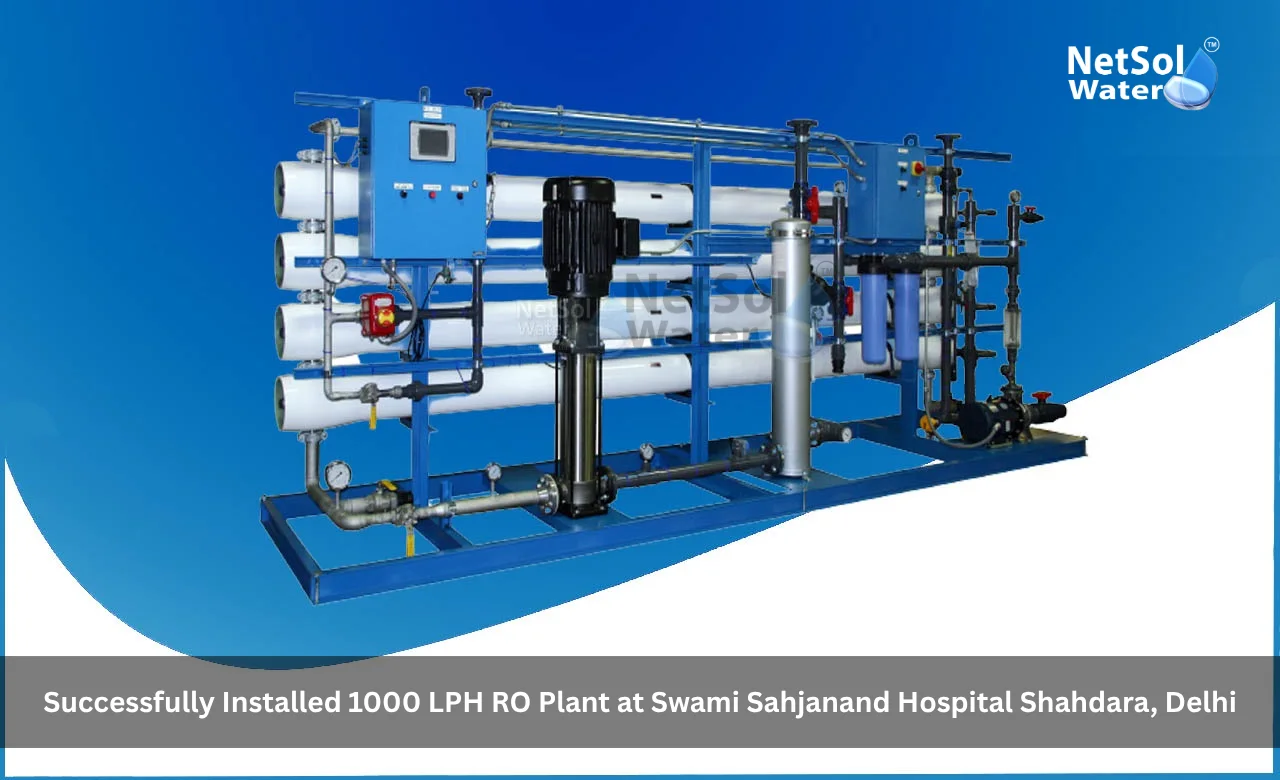
Successfully Installed 1000 LPH RO Plant at Swami Sahjanand Hospital Shahdara, Delhi
Swami Sahjanand Hospital in Shahdara, Delhi required a suitable water treatment system to support its operational water needs. To address this requirement, we successfully installed a 1000 LPH RO plant at the hospital premises. The project focused on providing a practical water treatment solution that could produce treated water at a steady rate while fitting the requirements of the facility.
Water treatment requires careful planning because the treatment system must match the required output and the quality of the incoming water. A properly selected RO plant can help reduce dissolved impurities and improve the quality of treated water. For an institutional facility such as a hospital, having a planned water treatment system also helps create a more controlled approach to water management.
We approached the project with attention to plant capacity, treatment stages, equipment selection, installation and commissioning. The 1000 LPH capacity was selected for the stated project requirement. The installation then moved through site preparation, equipment placement, system connections and performance checks. The completed installation demonstrates how a Commercial RO Plant Manufacturer in Delhi can provide a treatment solution based on a specific site requirement without adding unsupported features or claims.
Project Overview
A water treatment plant must address the actual needs of the facility where it operates. The project at Swami Sahjanand Hospital was planned around the requirement for a 1000 LPH RO plant. The objective was to install a treatment system that could provide treated water at the required production rate and operate as an integrated plant rather than as a collection of separate components.
The scope of the project included the installation of the RO treatment system along with the associated equipment and connections required for operation. Netsol Water handled the installation process and prepared the system for commissioning after completing the necessary site work.
The project also required coordination between plant equipment and the available site conditions. Correct placement of the equipment was important because the treatment stages need to work in a defined sequence. The raw water first enters the treatment arrangement and passes through the required stages before reaching the RO membrane section. The treated water then moves toward the designated storage or use point.
The overall goal was therefore to create a functioning water treatment arrangement that matched the hospital’s stated capacity requirement. Once installation was completed, the plant was tested and commissioned so that the system could move from installation to regular operation.
Client Details
Swami Sahjanand Hospital is the client facility for this project. The project information identifies the facility as a hospital located in Shahdara, Delhi. A hospital environment has a clear need for dependable water management because water forms part of many routine activities within a healthcare facility. The treatment requirement for this project was addressed through the installation of a dedicated 1000 LPH RO plant. The plant was intended to provide treated water based on the specified capacity rather than depending only on untreated incoming water.
Selecting the right treatment arrangement also helps a facility manage water quality in a more structured manner. The RO system gives the client a defined treatment process through which incoming water passes before treated water is produced. This creates a clear path from raw water intake to treated water output.
For Netsol Water, understanding the client’s requirement was therefore an important part of the project. The treatment system had to match the specified output and had to be installed in a way that supported proper plant operation at the hospital site.
| Detail | Information |
| Client | Swami Sahjanand Hospital |
| Facility Type | Hospital (institutional/healthcare facility) |
| Location | Shahdara, Delhi |
| Solution Provided | 1000 LPH RO Plant |
| Installed By | Netsol Water |
Project Location
The location of a treatment plant affects how the installation is planned and executed. Every site has its own available space, access conditions and connection points. The project was carried out at Swami Sahjanand Hospital in Shahdara, Delhi. The urban setting made proper planning of equipment placement and system connections important during installation.
The treatment plant needed to be positioned in a suitable area where the equipment could operate correctly and where the required piping and electrical connections could be completed. The installation team also needed to consider the physical arrangement of the treatment system so that the water could move through the process in the intended sequence.
The location also gives the project practical relevance for institutions in Delhi that need dedicated water treatment systems. The successful installation reflects the ability of a Commercial RO Plant Manufacturer in Delhi to execute an RO plant project at an operating institutional site while keeping the system focused on the specified requirement.
Plant Capacity
Plant capacity determines how much treated water a system can produce within a given period. Choosing a capacity that matches the intended requirement helps prevent a mismatch between plant output and actual use. A system with an unsuitable capacity may not serve the intended purpose efficiently. For this reason, capacity selection formed an important part of the project planning.
For Swami Sahjanand Hospital, the installed RO plant has a capacity of 1000 litres per hour. This means the plant is designed to produce treated water at a nominal rate of 1000 litres per hour under the applicable operating conditions.
The selected capacity provides the hospital with a defined level of treated water production. It also gives the facility a treatment system that has been sized for the requirement stated for this project. The 1000 LPH rating is therefore one of the key specifications of the installation.
Capacity alone does not determine plant performance. The complete treatment system must work together so that the raw water reaches the RO section in suitable condition and the plant can continue to produce treated water as intended. This makes the treatment technology and process arrangement equally important.
| Parameter | Specification |
| Installed Capacity | 1000 LPH (Litres Per Hour) |
| Treatment Technology | Reverse Osmosis (RO) |
| Project Site | Swami Sahjanand Hospital, Shahdara, Delhi |
| Plant Type | Institutional / Commercial RO Plant |
| Design Basis | Defined production rate matched to hospital’s requirement |
Treatment Technology
The project uses Reverse Osmosis as the main water treatment technology. RO is widely used when water needs treatment to reduce dissolved impurities. The process works by applying pressure to water and directing it through a semi-permeable membrane. The membrane allows water to pass while restricting many dissolved substances and other contaminants.
For this project, the RO membrane forms the central treatment stage. However, the membrane does not function independently. Proper pretreatment supports the RO process by preparing the incoming water before it reaches the membrane. This helps the complete system follow an orderly treatment sequence.
1. Reverse Osmosis Process
During RO operation, raw water is brought to the membrane section at suitable pressure. The pressure drives water through the membrane. A portion of the incoming water passes through the membrane as treated water while the concentrated stream leaves through the reject or concentrate side.
The RO membrane is therefore responsible for the main separation step in the treatment process. Its performance depends on several operating conditions including feed water quality, pressure and the condition of the pretreatment stages.
2. Importance of Pretreatment
Pretreatment supports the RO membrane by removing or reducing materials that can interfere with membrane operation. Suspended matter and other unwanted materials can place an unnecessary load on the membrane when they are not controlled before the RO stage.
The treatment system therefore uses preceding stages to prepare the feed water. Once the water reaches a suitable condition, it enters the RO section for the main separation process. This arrangement gives each treatment stage a clear role and allows the system to work as a connected process.
Influent Characteristics
Understanding the incoming water is essential before selecting and operating a treatment system. Feed water quality can affect membrane performance, pretreatment requirements and overall operating conditions. Parameters such as TDS, hardness, turbidity, iron and microbial content can influence how a treatment plant should be designed.
The treatment system was installed to process the available incoming water and produce treated water through the specified RO arrangement. The pretreatment stages provide the initial conditioning required before water reaches the RO membrane. This preparation is important because the membrane section performs the main dissolved impurity reduction.
Influent characteristics can also change with the source and local conditions. Regular monitoring is therefore useful for understanding whether operating conditions remain suitable over time.
Treatment Process
A properly arranged treatment process helps water move through the plant in the correct order. Each stage prepares the water for the next stage and supports the overall performance of the system. At Swami Sahjanand Hospital, the treatment sequence is centred on pretreatment followed by RO purification.
1. Raw Water Entry
The process begins when raw water enters the treatment system. At this stage, the incoming water contains the impurities that the treatment plant is designed to reduce. The water then moves into the pretreatment section so that it can be conditioned before reaching the RO membrane.
2. Pretreatment Stage
Pretreatment forms the first major treatment step after raw water entry. Its purpose is to improve the condition of the feed water before the RO stage. Depending on the system arrangement, pretreatment equipment can help control suspended matter and other substances that may affect downstream equipment.
By preparing the water before membrane treatment, the pretreatment section creates better operating conditions for the RO unit. This makes the relationship between the stages important. The pretreatment stage does not replace RO. Instead, it supports the membrane treatment stage.
3. High-Pressure Feed to RO
After pretreatment, the water is directed toward the RO section. The RO system requires pressure to force water across the semi-permeable membrane. The high-pressure arrangement therefore becomes the next important step in the treatment sequence.
The feed water reaches the membrane under pressure and the separation process begins. The membrane allows a portion of water to pass through while retaining many dissolved substances.
4. RO Membrane Separation
The membrane section is the main treatment stage of the plant. Water passing through the membrane becomes the treated product stream. The remaining concentrated stream is separated from the product water and is managed through the system’s reject arrangement.
This stage determines the main purification action of the plant. The performance of the membrane depends on proper feed conditions and correct operation of the supporting equipment.
5. Treated Water Collection
After membrane separation, the treated water moves toward the designated collection or storage point. The treated water then becomes available for the intended application at the facility.
The complete process therefore follows a connected path from raw water intake through pretreatment and pressurisation to membrane separation and treated water collection. This sequence helps the 1000 LPH plant operate as one integrated treatment system.
| Stage | Function |
| Raw Water Entry | Incoming water enters the system carrying impurities the plant is designed to reduce |
| Pretreatment Stage | Improves feed water condition before it reaches the RO stage |
| High-Pressure Feed to RO | Pressurised water is directed toward the membrane for separation |
| RO Membrane Separation | Water is separated into treated product stream and concentrated reject stream |
| Treated Water Collection | Treated water moves to the designated collection/storage point |
Major Equipment
Equipment selection directly affects how a treatment plant operates. Each component has a specific function and must work with the other parts of the system. For the hospital project, the major equipment forms the operating structure of the treatment plant.
1. Pretreatment Equipment
Pretreatment equipment prepares the raw water before it enters the RO section. It helps reduce the load placed on the membrane by controlling the materials that could interfere with membrane operation.
2. Feed and High-Pressure Pumping System
Pumping equipment moves water through the treatment stages and provides the pressure required for RO operation. The high-pressure pump is particularly important because the membrane separation process depends on sufficient pressure to move water through the membrane.
3. RO Membrane Assembly
The RO membrane assembly carries out the main separation process. It divides the feed into treated water and concentrated reject water. The membrane is therefore the central treatment component in the plant.
4. Control and Connection Arrangement
The plant also requires suitable piping, valves, electrical connections and control arrangements to link the treatment stages. These connections allow water to move through the process and allow the operator to manage the plant during operation.
Together, these components form the complete treatment arrangement. Proper integration is important because the performance of one section can affect the operation of the next.
| Equipment | Role in the System |
| Pretreatment Equipment | Prepares raw water and reduces the load placed on the membrane |
| Feed & High-Pressure Pumping System | Moves water through the stages and provides pressure for RO operation |
| RO Membrane Assembly | Carries out the main separation into treated water and reject water |
| Control & Connection Arrangement | Piping, valves, electrical and control components linking the stages |
Installation Process
Plant installation requires careful execution because the equipment must be placed correctly and then connected into a working treatment system. At the hospital site, the installation process followed a logical sequence so that the plant could move from physical placement to testing.
The work began with site preparation and assessment of the area selected for the treatment plant. The installation team considered the available space and the points needed for water, drainage and other system connections. Preparing the site first created a suitable base for equipment installation.
The major plant components were then positioned according to the treatment layout. Correct placement was important because the stages needed to remain connected in the required process sequence. The team arranged the equipment so that water could move from pretreatment toward the RO section without unnecessary complications.
After positioning the equipment, the required piping connections were completed. These connections linked the raw water side, treatment stages, RO section, treated water outlet and reject stream. Proper valve and pipe connections helped establish the intended flow path.
Electrical connections were then completed for the powered equipment and control arrangements. The installation team checked the physical and operational connections before moving toward commissioning.
The final installation stage involved reviewing the complete system. This included checking whether the equipment was properly connected and whether the treatment sequence was ready for testing. Once these checks were completed, the plant was prepared for commissioning.
Plant Commissioning
Commissioning marks the transition between installation and regular plant operation. It allows the team to verify that the equipment works together as intended and that the water treatment process is operating according to the project requirement.
At the hospital site, commissioning involved checking the installed system and operating the plant under controlled conditions. The team reviewed the water flow through the connected stages and checked the operation of the pumps and RO section.
The commissioning process also provided an opportunity to identify installation issues before regular use. Piping, valves and electrical connections were checked to confirm that the complete arrangement functioned correctly.
The plant was then run to confirm its operational readiness. The 1000 LPH capacity served as the principal plant specification for the project. The successful completion of commissioning indicated that the installed RO system was ready to support the intended water treatment requirement.
Treated Water Reuse
Effective use of treated water is an important part of any water treatment project. Producing treated water is only one part of the process. The facility must also use the treated output according to its intended requirement.
For Swami Sahjanand Hospital, the installed 1000 LPH RO plant provides treated water for the facility’s intended water treatment needs. The RO system gives the hospital a dedicated source of treated water from the installed treatment process. This creates a structured route from incoming raw water to treated water production. The availability of a dedicated treatment plant also provides the facility with a defined treatment capacity that can be managed through the plant’s operating routine.
Results and Performance
Project results provide a practical measure of whether the installed system meets its intended purpose. In this project, the main measurable outcome is the successful installation and commissioning of a 1000 LPH RO plant at Swami Sahjanand Hospital.
The plant now provides a dedicated RO treatment system with a nominal production capacity of 1000 litres per hour. This directly addresses the specified requirement for the project and gives the facility a defined treatment capacity.
The installation also established a complete treatment sequence that includes pretreatment, pressurisation, RO membrane separation and treated water collection. Each stage supports the next and allows the system to operate as an integrated plant.
The successful completion of the installation and commissioning remains an important project outcome. It shows that the treatment system was installed, connected and prepared for operation at the hospital site. For a Commercial RO Plant Manufacturer in Delhi, completing this type of project also demonstrates practical capability in delivering treatment systems for institutional requirements.
| Confirmed Outcome | Status |
| Installation of 1000 LPH RO Plant | Completed |
| Pretreatment, Pumping & Piping Connections | Completed |
| Plant Commissioning | Completed |
| Laboratory/TDS Data | Not provided — not included in this case study |
Customer Feedback or Testimonial
Customer feedback provides useful insight into the completion and practical acceptance of an installation. It can also show whether the delivered system met the requirement for which it was installed.
The Netsol Water team completed the 1000 LPH RO plant installation on schedule and with clear communication throughout the process. The system has been operating reliably and meets our facility’s requirement. We needed a dependable water treatment solution for the hospital, and Netsol Water delivered exactly that. The plant has performed consistently since commissioning, and their team stayed professional from planning through installation.
Read some interesting information for the Commercial RO Plant Manufacturer in Noida
Conclusion
Reliable water treatment begins with a clear understanding of the requirement, followed by suitable capacity selection, process design, equipment integration and careful installation. At Swami Sahjanand Hospital in Shahdara, Delhi, Netsol Water successfully completed the installation and commissioning of a 1000 LPH RO plant to address the stated water treatment requirement.
The project brought together pretreatment, RO membrane treatment, pumping, piping and control connections into one working system. The installed capacity gives the facility a defined treated water production rate while the RO process provides the main separation step required for water purification.
Netsol Water continues to serve institutional and commercial requirements as a Commercial RO Plant Manufacturer in Delhi. Businesses, hospitals and other facilities that need a suitable RO treatment solution can discuss their water requirement, plant capacity and site conditions with the Netsol Water team.
For more information about RO plants and water treatment solutions, contact Netsol Water to discuss your requirement and request a suitable consultation.
Contact Netsol Water
| Contact | Details |
| Phone | +91-9650608473 |
| enquiry@netsolwater.com |