
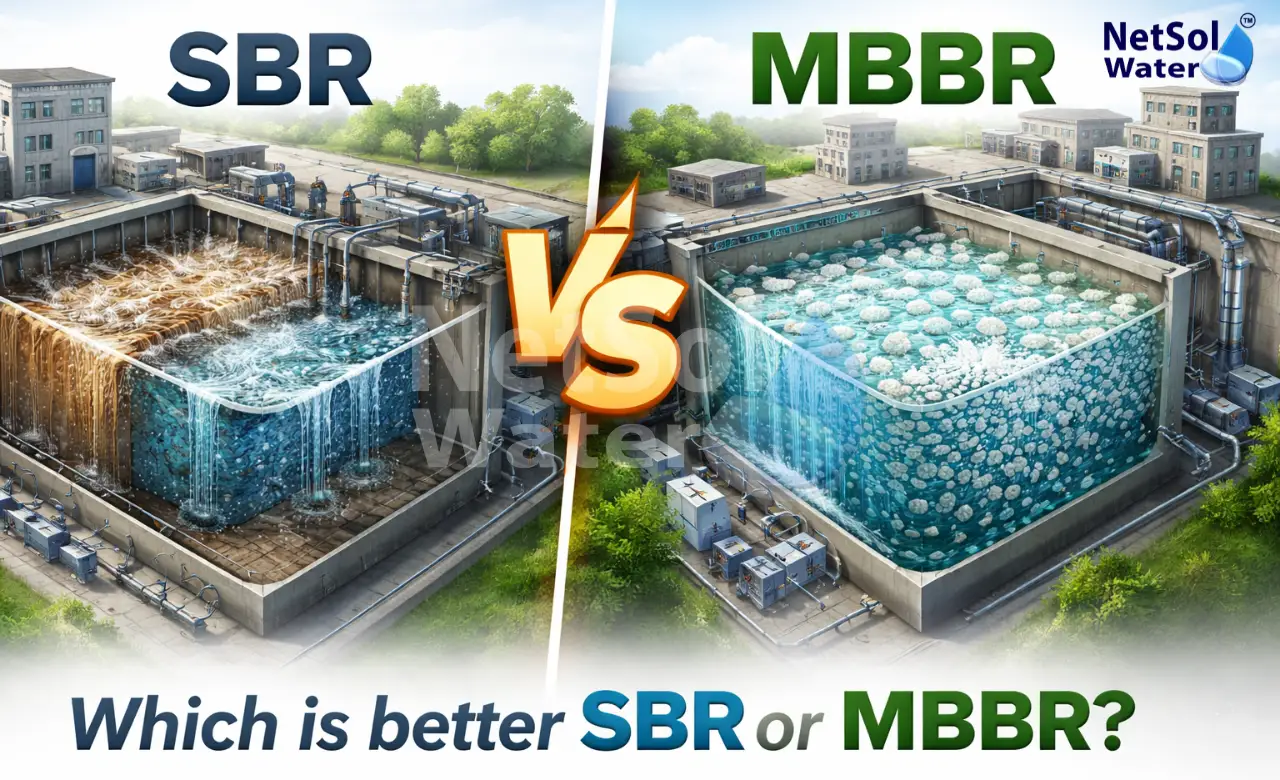
Which is better SBR or MBBR?
When people plan a sewage treatment plant, they often ask a simple question. Which system will work better for their site and their budget? That is where the choice between SBR or MBBR becomes important. Both plants treat wastewater well. Both can support clean water goals. Yet they work in different ways and suit different needs.
We are the leading name in water and wastewater treatment and helps clients choose a plant that fits the site instead of forcing one design on every project. This matters because a small housing project does not need the same setup as a busy industrial unit.
What Makes SBR a Strong Choice?
SBR plays an important role in many treatment plants because it works in a simple cycle and gives good control over water quality. It treats wastewater in batches instead of a constant flow. This makes it useful where the plant can manage timed steps with careful automation. Let us have a look at some of the main points that make this plant valuable.
1. How SBR Works in Practice
SBR means Sequencing Batch Reactor. In this plant, one tank handles several stages one after another. The tank first fills with wastewater. Then it aerates the water so microbes can break down waste. After that, the plant lets the solids settle. Then it removes the clear treated water. This cycle repeats again and again.
This batch style gives the operator a lot of control. The plant can change the timing of each stage based on the quality of incoming sewage. That makes SBR helpful when effluent limits are strict. It can also support good nitrogen and phosphorus removal because the process can be adjusted with care. This is one reason many municipal projects prefer it. The plant can manage flow well when the sewage supply stays fairly steady.
2. Benefits and Limits of SBR
SBR often suits small to medium plants because it can combine treatment steps in one tank. That saves space in some cases and can lower the first cost of construction. It also gives good water quality when skilled staff monitor the cycle. Many engineers like it for planned urban projects where the flow remains regular through the day.
Still, the system needs proper automation and attention. If the timing goes wrong, the treatment quality can fall. It also depends on trained operators who understand the cycle and keep the process stable. That is why SBR or MBBR is not only a technical choice. It is also a choice about site skill and daily management. SBR works best when the plant has regular flow and a team that can manage the system well.
What Makes MBBR a Strong Choice?
MBBR has become popular because it offers strong treatment in a compact space and handles changes in load with ease. It uses small plastic carriers inside the tank. These carriers give microbes a surface to grow on. That helps the plant treat more wastewater in less space. Let us have a look at the main reasons people choose this system.
1. How MBBR Works in Practice
MBBR stands for Moving Bed Biofilm Reactor. In this setup, the tank contains special media or carriers that move with the water and air flow. Microorganisms grow on these carriers and form a biofilm. As wastewater passes through the tank, the microbes break down the organic matter.
This design gives the system high biomass in a small area. That is a big advantage where land is costly or space is limited. The system also handles shock loads well. If the incoming wastewater suddenly changes in strength or volume, the biofilm can stay stable and keep working. That makes MBBR a good fit for industrial sites, hotels, and remote plants where flow can change often.
2. Benefits and Limits of MBBR
MBBR is easy to expand. If a plant needs more capacity, engineers can often add more media instead of building a new tank. That helps owners who want future growth without major civil work. The system also needs less daily attention than many other options because the biofilm does much of the work on its own.
Even so, MBBR may need post-treatment in some projects if the plant wants very high nutrient removal or very clear water. It usually works best as a strong and flexible biological stage rather than a complete answer for every case. That is why many people compare SBR or MBBR carefully before they build. MBBR often wins when the site needs compact design, strong stability, and simple operation. It becomes a very practical choice when wastewater volume changes through the day.
SBR or MBBR: Which One Fits Better?
This question matters because the best plant is not the one with the most features. It is the one that suits the site conditions and the long-term operation plan. Let us have a look at some clear situations where one system may suit better than the other.
1. When MBBR Fits Better
MBBR often suits projects where land is tight and wastewater flow changes often. The carrier-based system gives strong treatment in a smaller tank and keeps working well under sudden load changes. That is useful for industrial plants. It also helps when the owner wants a system that does not need very complex daily control.
MBBR also works well in retrofit projects. If an existing plant needs higher capacity, the team can sometimes increase performance by adding media. That makes it attractive for upgrades. For sites with limited operator support, it can also feel easier to manage. The process stays stable and does not need the same level of cycle control as batch systems.
2. When SBR Fits Better
SBR often suits projects where the plant has a more steady flow and where cost control matters. It can offer strong treatment in one tank and can be a smart option for small to medium municipal projects. It is also a good choice when the plant must control nutrient removal with more precision. The timed stages allow the engineer to shape the process with care.
SBR can also support lower power use in some cases because aeration only happens during the react stage. That can help owners who watch operating cost closely. Yet the plant must have proper automation and trained staff. Without that support, the system may not perform at its best. So the choice depends on more than just treatment strength. It depends on people, equipment, and operating habits too.
Read some interesting information for the Effluent Treatment Plant Manufacturer in Noida
Conclusion
Choosing the right treatment system starts with the real needs of the site. Space. A plant should solve today’s problem and also support future needs without creating avoidable cost.
For many projects, SBR or MBBR can both work well. The better choice depends on how the plant will run every day and what kind of water quality the site expects. A careful review with the right technical team can save time, money, and future trouble. Netsol Water can help you compare both systems and select the one that fits your project goals. Reach out for more information or request a consultation to find the right solution for your plant.
Contact Netsol Water at:
Phone: +91-9650608473
Email: enquiry@netsolwater.com