
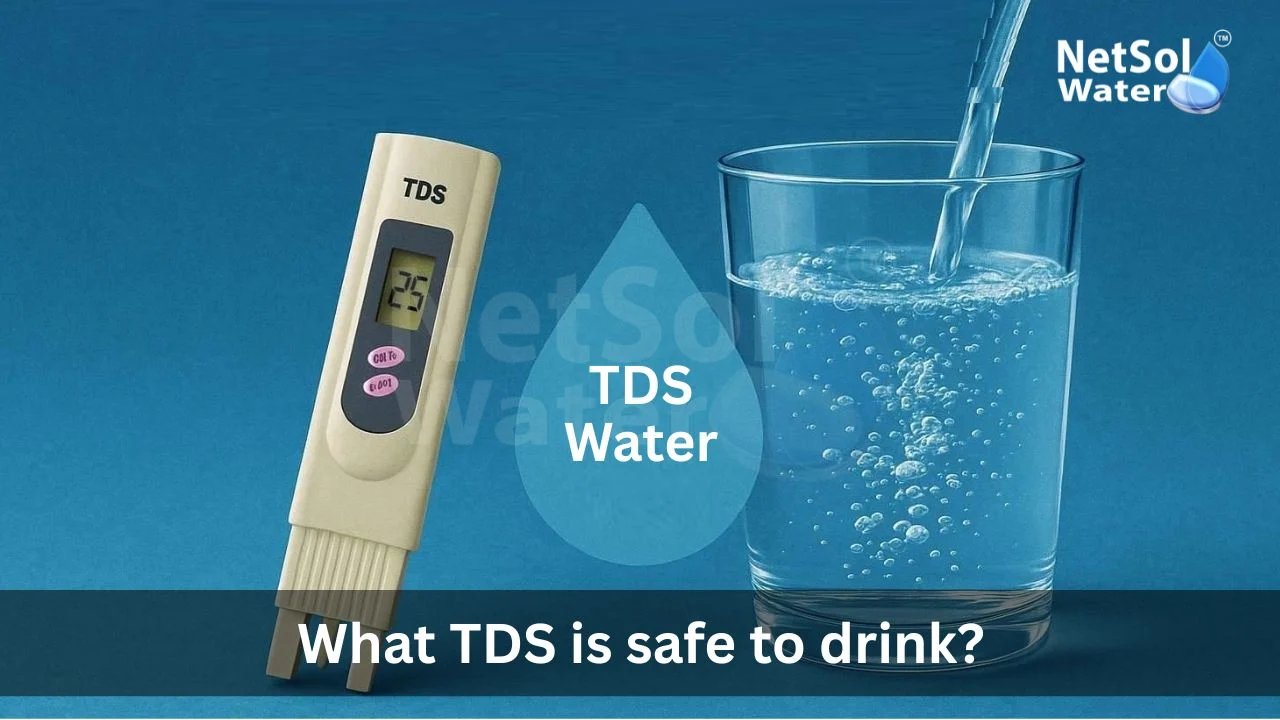
What TDS is safe to drink?
Many people ask about TDS level and what number makes water safe to drink. India is famous for its long history and rich food. Many areas also face changes in water quality for reasons like hard soil and old pipes. People want clear facts they can use at home and at work. Netsol Water is the leading provider of water treatment solutions in many cities.
TDS Level and Why It Matters
Water carries many natural minerals and small impurities. TDS means total dissolved solids. These solids can change the taste of water and affect how appliances work. High TDS can harm machines and shorten the life of kettles and boilers. Low TDS can make water taste flat. People with special health needs should check TDS closely. Farmers and business owners also check TDS to protect plants and machines. A clear view of TDS helps a home choose the correct filter.
1. What TDS Means
TDS means all the dissolved mineral salts in water. These solids include calcium, magnesium, sodium, and tiny organic matter. The unit for TDS is milligrams per liter. A meter reads the amount and gives a quick number. That number shows how many parts of solid matter sit in one liter of water. People use this number to judge the overall mineral load in water. TDS does not show specific toxins. For that, one must test for chemicals and microbes. Still, TDS gives a quick view of the general purity of water.
2. How TDS Is Measured
People measure TDS with a small handheld meter. You dip the meter into a glass of water. The meter then shows a number on a screen. Lab tests can also measure TDS with more detail. Lab methods follow set steps to dry the water and weigh the residue. The meter gives a fast field estimate. Lab methods give a more accurate final number. A homeowner can use a meter to track changes over time. If the number rises a lot, then it signals a change in source or in pipes.
Safe TDS Levels for Drinking and How to Manage Them
We will explain the numbers that health groups often use. Netsol Water is the leading company that can test and advise on fixes.
1. Recommended TDS Ranges and Health Effects
Experts give general bands for TDS level to guide use. Water with TDS under fifty mg per liter can taste flat to many people. Water between fifty and one hundred fifty mg per liter often tastes clean and mild. Most people find water between one hundred and three hundred mg per liter acceptable. This range retains useful minerals. Water above five hundred mg per liter can taste salty or bitter to some people. Very high TDS may mean more dissolved sodium or other salts. That can matter for people with high blood pressure. Low TDS does not mean the water is free from bacteria or chemicals. A full safety check should include both TDS and specific contaminant tests. For daily use, most families aim for a TDS level in the range of one hundred to three hundred mg per liter. That range gives a good balance between taste and minerals.
2. Ways to Control TDS and Role of Netsol Water
People use several methods to change the TDS level in their water. A simple way is to mix water from two sources to lower the overall TDS. Another way is to use an ion exchange filter to remove certain salts. Reverse osmosis gives the biggest drop in TDS. It works by forcing water through a membrane. This removes most dissolved solids. Carbon filters do not cut TDS much. They do remove tastes and odors. The choice of method depends on the source and on the target number. A home may choose a mild softener for hard water. A factory may need a complete RO system to meet process needs. We are the leading commercial RO plant manufacturer that can help test the source and suggest the right system. Netsol Water can also install plants and give a plan for regular checks.
Measurement Methods
Handheld meters and lab tests
A handheld TDS meter gives a quick number in mg per liter. It needs clean probes and fresh batteries. You must rinse the probe before each test to avoid carryover. The meter reads conductivity and converts that reading to a TDS number. Temperature can affect the reading, so many meters adjust for it. A lab test uses a balance and a drying step to weigh the residue. This method takes more time, but it gives a direct measure. A lab can also test for specific ions. Many homeowners start with a meter to spot trends. They then use a lab if the meter shows a big change.
Health Effects
Who must take care and what to do?
People with heart or kidney issues should watch TDS level. High dissolved sodium can affect blood pressure in some people. Low TDS water lacks minerals that support daily needs in small measure. Children and older adults can feel the change in taste and digestion. For these groups, the safest path is to test water and talk with a doctor. A balanced TDS level keeps water pleasant and helps daily use of kitchen and household tools.
Read some interesting information for the Commercial RO Plant Manufacturer in Faridabad
Conclusion
Understanding TDS level helps a family protect health and enjoy good-tasting water. The number gives a useful view of the mineral load in water. It does not show specific harmful chemicals or microbes. For full safety, a user should test for both TDS and specific contaminants. Netsol Water is the leading provider of testing and service. If you want a clear test and a plan to reach a safe TDS level, then get in touch today. Request a consultation and a field test.
Contact Netsol Water at:
Phone: +91-9650608473
Email: enquiry@netsolwater.com