
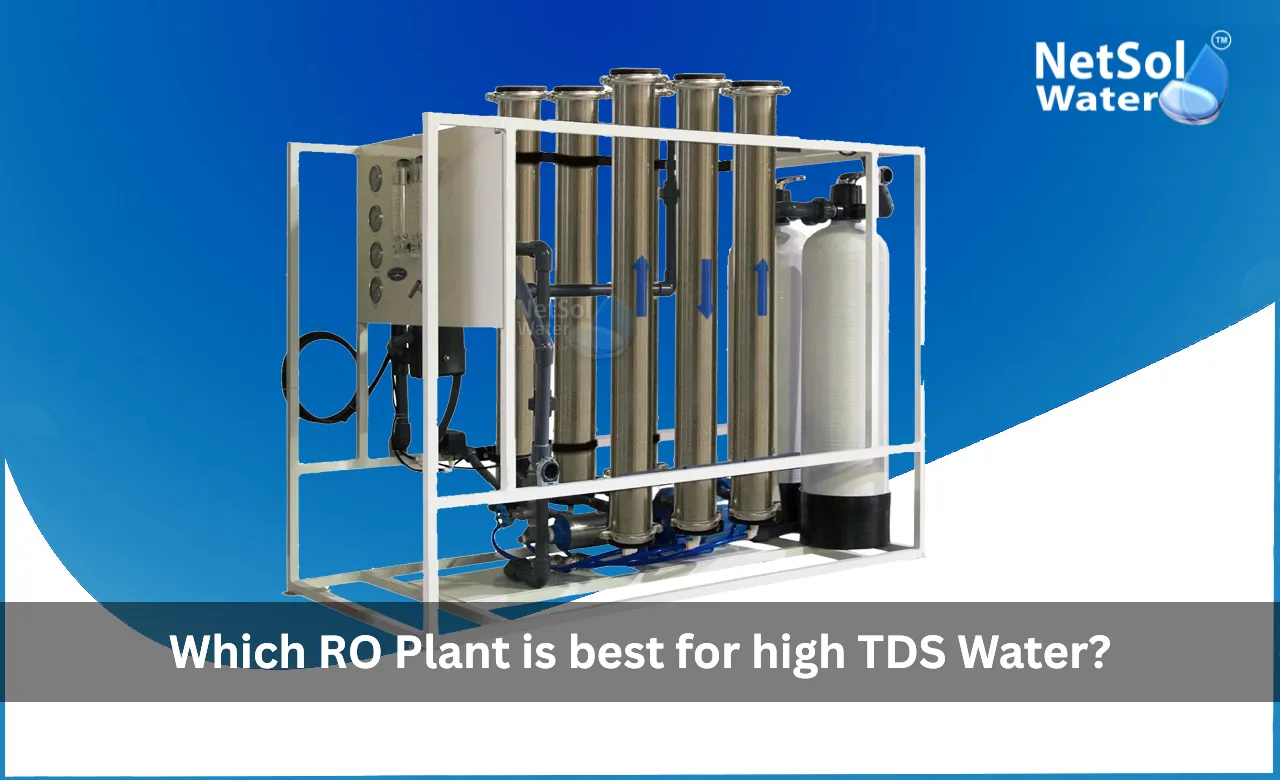
Which RO Plant is best for high TDS Water?
High TDS water presents a serious challenge for homes and businesses. When water contains high amounts of dissolved salts and minerals, it can cause scale buildup in pipes, damage to appliances, and poor taste. Choosing the right RO plant matters for safety and long-term cost. Multi-Stage RO Plants offer a clear solution for treating high TDS water because they combine several treatment steps to remove a wide range of contaminants. Netsol Water is the leading Commercial RO Plant Manufacturer and works with industries and communities to design plants that match local water quality and water use.
Multi-Stage RO Plants
Multi-Stage RO Plants deserve attention because treating high TDS water requires more than a single filter. A multi-stage approach divides treatment into steps so each problem gets the right technology. This design improves final water quality, extends membrane life, and reduces maintenance issues compared with using only one process. Let us have a look at some key elements of Multi-Stage RO Plants and how they work.
How the Stages Work Together
A typical Multi-Stage RO Plant starts with pretreatment. Pre-treatment removes larger particles, chlorine, and organic matter that could foul the RO membranes. Softening or anti-scaling dosing may follow for very hard or high TDS feed water. These steps reduce the load on the membrane and keep the system running longer.
The main RO stage then forces water through a semi-permeable membrane at high pressure. The membrane blocks dissolved salts and allows water molecules to pass. In high TDS situations, the plant uses multiple membrane elements arranged in series or parallel with pressure staging. Series staging improves salt rejection in very high TDS feed water, while parallel staging helps increase flow for larger water demand. After the RO stage, some plants add post-treatment steps like pH correction and UV disinfection to ensure the water meets use-specific standards.
Each stage supports the next. Pre-treatment protects membranes. The RO stage removes dissolved salts. Post-treatment polishes water to safe levels. Multi-Stage RO Plants succeed because they match each stage to a particular problem rather than asking one device to solve everything.
Design Variations for High TDS Water
Designers choose configuration based on feed TDS target, recovery rate, and available pressure. For moderately high TDS, the plant might use a two-stage RO where the first stage removes the bulk of salts and the second stage polishes the product. For very high TDS, the plant may include brackish feed pre-concentration followed by high-pressure RO or even a hybrid system with nanofiltration or electrodeionization to reach strict standards.
Membrane selection also matters. High rejection membranes perform better for salts, but they need higher pressure and better pre-treatment. Energy recovery devices become useful at large scales to lower operating costs. Netsol Water offers personalized Multi-Stage RO Plants that balance membrane choice, pressure, and recovery to meet the water quality and budget of each client.
Operational Care and Maintenance
A well-designed Multi-Stage RO Plant still needs good operation to remain effective. Regular monitoring of feed water quality and differential pressure across membranes helps detect fouling early. Scheduled cleaning with appropriate cleaners restores membrane performance without damage. Some plants benefit from automated chemical dosing and online sensors for conductivity and pressure to reduce manual checks.
Operators must also manage concentrate or reject streams safely. High TDS reject may need controlled disposal or further treatment to meet discharge rules. Recovery targets influence reject volume and should match local discharge options. When teams follow manufacturer instructions and a simple monitoring plan, Multi-Stage RO Plants deliver consistent performance and predictable costs.
Key Components and Their Roles
Understanding the parts of a Multi-Stage RO Plant helps you see why the system copes well with high TDS feeds. Let us have a look at the main components and their roles.
1. Pre-treatment Components
Pre-treatment includes sand or multimedia filters, cartridge filters, antiscalant dosing, and sometimes water softeners or activated carbon. These elements remove suspended solids, chlorine, and hardness that damage membranes. For high TDS water, scaling risk increases, so antiscalant dosing and effective softening become very important. Proper pre-treatment lowers the frequency of membrane cleaning and keeps effluent quality stable.
2. RO Membranes and Pressure Systems
RO membranes form the core of the plant. For high TDS water, the plant uses membranes built for strong rejection and durability. High-pressure pumps supply the force needed to push water through the membranes. Systems often include pressure vessels that hold multiple membrane elements and safety devices to protect against overpressure. When the designer and operator match membrane type, pump size, and staging, they achieve the desired product quality and recovery.
3. Post-Treatment and Control Systems
Post-treatment may include pH adjustment, remineralization, UV sterilizers, and final polishing filters. Control systems monitor conductivity, pressure, flow, and alarms to maintain safe operation. Modern plants use PLC-based automation with remote monitoring for faster response. These control features keep Multi-Stage RO Plants running smoothly and help reduce labor needs and downtime.
Read some interesting information for the Sewage Treatment Plant Manufacturer
Choosing the Right Multi-Stage RO Plant
Picking the correct plant matters because mismatched designs lead to poor water quality or high costs. Here are the steps to evaluate options and make a good choice.
1. Evaluate Feed Water and Quality Goals
Start by testing feed water for TDS, hardness, silica, iron, and organics. Define the final water use, whether for drinking, boiler feed, or industrial process. Higher final quality or higher recovery demands more complex staging and better pre-treatment. Netsol Water provides site surveys and water testing to match plant design to real conditions.
2. Compare Operating Costs and Lifecycle
Consider energy use, chemical consumption, and membrane replacement in addition to capital cost. Multi-Stage RO Plants with energy recovery or better automation may cost more upfront but save money over the life of the plant. Factor in local disposal costs for reject streams and routine maintenance labor when comparing proposals.
3. Service and Support
Long-term support matters for consistent performance. Choose a supplier who offers training, spare parts, and responsive service. Netsol Water supports installations with personalized service plans and guidance to keep plants efficient and compliant.
Conclusion
Multi-Stage RO Plants provide a practical and flexible path to treat high TDS water. They use staged treatment to protect membranes, improve salt removal, and ensure safe end water. When you select a Multi-Stage RO Plant design, you gain options to balance quality, recovery, and cost while keeping operation manageable. Netsol Water stands as a leading Commercial RO Plant Manufacturer. Contact Netsol Water for a consultation or a site survey to get water that meets your needs and standards.
Contact Netsol Water at:
Phone: +91-9650608473
Email: enquiry@netsolwater.com