
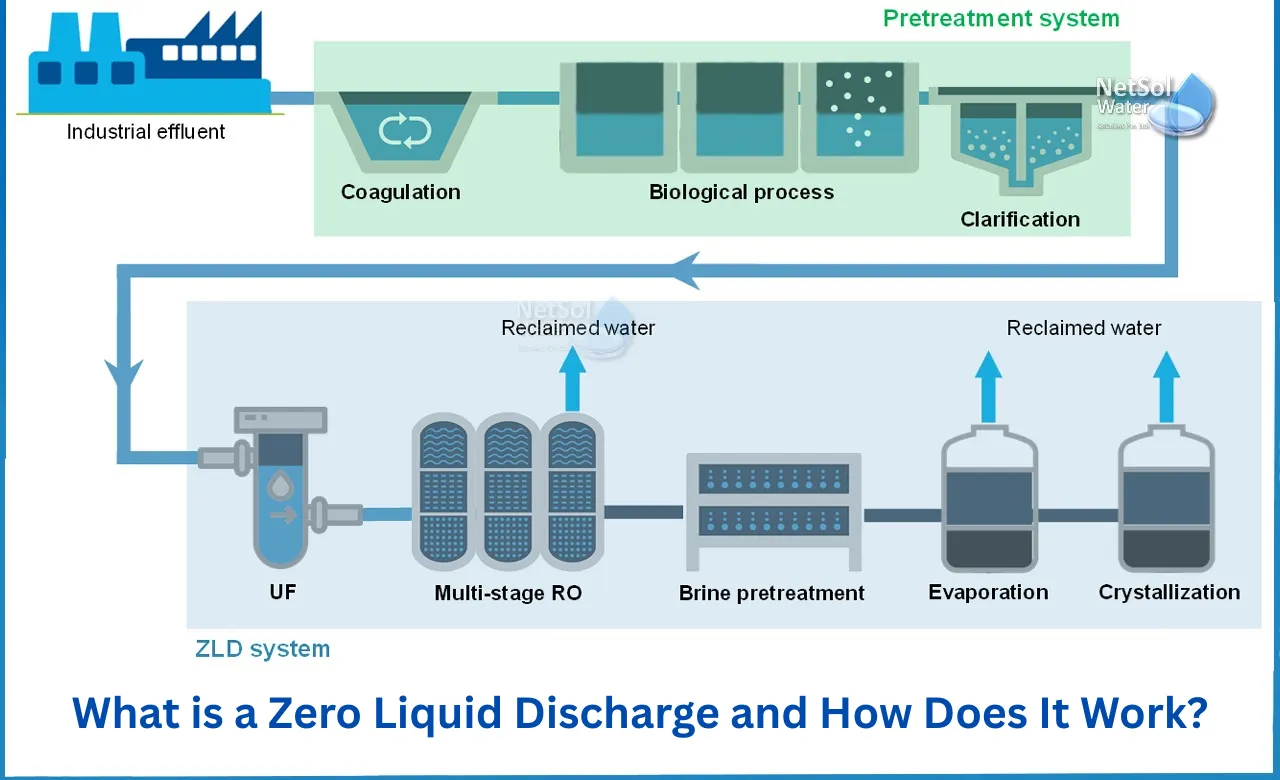
What is Zero Liquid Discharge and How Does It Work?
Zero Liquid Discharge System helps factories and plants reduce wastewater and avoid releasing harmful effluent into rivers and land. Industries in water-stressed regions use this approach to close their water loops and to meet strict discharge rules. We are the leading provider of ZLD System solutions in many industrial areas and they design systems that fit local needs.
What is Zero Liquid Discharge?
Understanding the meaning of Zero Liquid Discharge matters for anyone who manages industrial water. Zero Liquid Discharge System aims to eliminate any liquid waste leaving a site. The system treats all wastewater and then recovers clean water while turning the remaining waste into solids. Companies adopt this approach to meet regulations and to save water in scarce regions.
Let us have a look at some key ideas that define Zero Liquid Discharge and how they shape system design.
First, the system separates contaminants from the wastewater stream. Then it concentrates the contaminants into a smaller volume. After that, it dries or crystallizes the concentrate so no free liquid leaves the site. Each step reduces water loss and raises the chance to recover water for reuse. Plants can then reuse treated water in cooling systems, boilers, or cleaning. This makes operations more sustainable and cuts operating costs over time. A ZLD System also protects local water bodies from contamination and helps companies meet environmental targets. Many sectors have adopted ZLD to manage hazardous brine and to keep their permits in order.
Key Components and Processes in a ZLD System
Knowing the parts of a Zero Liquid Discharge System helps to see how the whole flow works. The design varies with the wastewater type but most systems include pretreatment, concentration, and solid handling. Let us have a look at some main components and how each one adds value to the whole process.
1. Pre-Treatment
Pre-treatment forms the first line of work in a Zero Liquid Discharge System. This stage removes coarse solids and suspended matter. It also adjusts pH and removes oil and grease when needed. Pre-treatment protects downstream membranes and evaporators from fouling. Plants use screens, clarifiers, and chemical dosing in this stage. Filtration and sedimentation reduce the load on finer processes. When the wastewater comes from a chemical or textile line, the pre-treatment also targets specific contaminants that can harm the rest of the system. Good pre-treatment makes the whole ZLD system more stable. It lowers maintenance needs and keeps recovery rates high. Operators plan this step based on the wastewater profile and on tests from a lab. Well-planned pre-treatment can cut the size of the following concentration units and reduce energy needs.
2. Evaporation and Crystallization
Evaporation and crystallization act as the concentration core in a ZLD System. These processes remove water as vapour and concentrate salts and other dissolved solids. Evaporators collect the vapour and return it as clean condensate. Crystallizers then force salts to form solids that can be collected. Plants often use mechanical vapour recompression or thermal evaporators to cut energy use. The choice depends on the feed chemistry and on energy costs. Evaporation removes most of the liquid mass while crystallization finishes the job. The result is a small stream of solid waste and a larger flow of recovered water. Operators must balance temperature, residence time, and scale control to avoid deposits on heat surfaces. Good control and regular cleaning keep the unit efficient and reliable.
3. Brine Management and Solids Handling
Brine management and solids handling complete the Zero Liquid Discharge System. After concentration, the remaining brine contains most of the dissolved contaminants. The system converts this brine into solid crystals or into safe, stabilized sludge. Facilities use centrifuges, filters, and dryers to separate solids and to reduce their volume. The dry solids then go for safe disposal or for reuse when the chemistry allows. For some industries, companies recover salts or minerals and sell them as by-products. Proper handling of the solid stream reduces disposal cost and lowers environmental risk. The ZLD design must also consider the logistics of storing and shipping solids. This step closes the loop and ensures that no liquid effluent leaves the site.
Benefits, Challenges, and Real-World Applications
Seeing the benefits and the limits of Zero Liquid Discharge helps managers decide if the system suits their needs. Let us have a look at some practical outcomes and common challenges.
1. Benefits of ZLD
Zero Liquid Discharge System brings clear benefits to plants that face strict discharge rules or water shortages. It prevents liquid waste from reaching rivers or soils. It increases the reuse of water and so it cuts fresh water purchases. Companies can lower their long-term costs by using recovered water in cooling, boilers, and process steps. ZLD also improves compliance and reduces the risk of fines and permits being revoked. When the system produces recoverable salts or minerals, a plant can gain new revenue. These returns help justify the initial investment when the plant has high water or disposal costs. A good ZLD design improves the image of the company and supports ESG goals.
2. Challenges of ZLD
Implementing a ZLD System brings technical and cost challenges. The energy needed for evaporation and crystallization can be high. Many sites need to upgrade their utilities to run the system reliably. The chemical nature of the wastewater can cause scale or fouling that raises maintenance needs. Disposal of the final solids still requires safe practices and good planning. The initial capital cost can also be large for small plants. Projects need careful study to balance energy cost, pre-treatment needs, and expected savings. Operators often combine energy recovery and advanced controls to reduce operating cost and to improve system economics.
3. Applications and Industries
Industries with high salinity or with strong regulation use Zero Liquid Discharge System most often. Textile dyeing, tanneries, and chemical plants produce wastewater with complex dissolved salts that suit ZLD. Power plants and refineries use ZLD to recover boiler feed water. Food and beverage plants also use ZLD to save water and to manage concentrated organic streams. Mines and metal finishing shops use ZLD for brine control and to recover metals when possible. Water-stressed regions and coastal industrial zones often require ZLD to protect scarce freshwater resources. Each application needs a tailored design and a site-specific plan for pre-treatment, energy recovery, and solids handling.
Read some interesting information for the Effluent Treatment Plant Manufacturer in Delhi
Conclusion
Zero Liquid Discharge System offers a clear path to close water loops and to stop liquid effluent from leaving a site. The system blends pre-treatment, concentration, evaporation, and solids handling to recover water and to shrink waste. Companies that face tight discharge rules or that operate in areas with little fresh water will find ZLD a strong option. Netsol Water offers design and service for ZLD System needs and they can assess how a system will fit your plant. If you want to explore a ZLD solution, contact an expert for a site-specific review or request a consultation to learn expected recovery rates, energy use, and waste volumes.
Contact Netsol Water at:
Phone: +91-9650608473
Email: enquiry@netsolwater.com