Sewage Treatment Plant Faridabad - Sewage Treatment Plant Manufacturers

Successfully-Installed-20-KLD-MBR-STP-Plant-at-Victura-Jatinder-Kaur-Banga-Faridabad.webp

October 24, 2026by Netsol Water

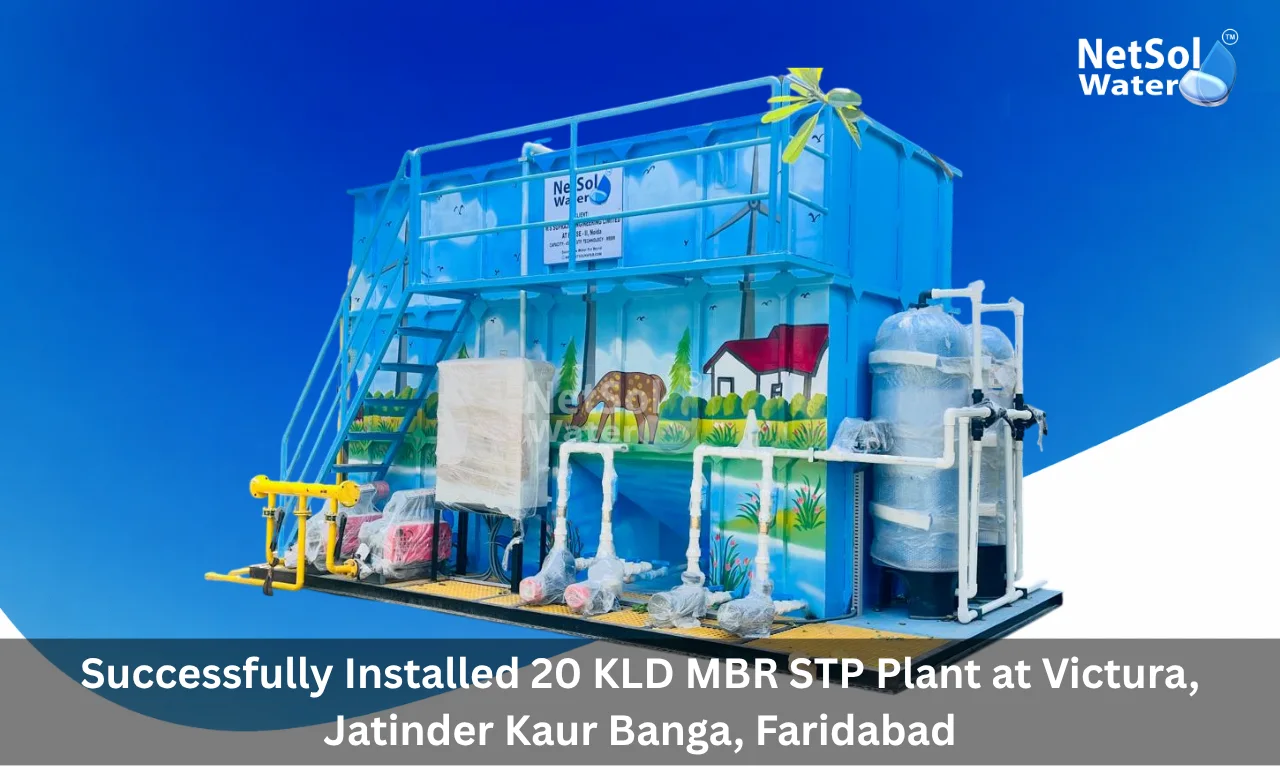
Successfully Installed 20 KLD MBR STP Plant at Victura, Jatinder Kaur Banga, Faridabad

Good sewage control enables the responsible management of wastewater while ensuring good control of wastewater use on a day-to-day basis. A proper sewage treatment system receives wastewater, processes it according to the necessary procedures, and makes the treated water available for a suitable reuse or disposal. The correct capacity of a plant and technology is significant, as treatment needs are related to the quantity and quality of sewage produced. We have successfully installed a Sewage Treatment Plant of 20 KLD MBR in Victura, Jatinder Kaur Banga, in Faridabad, Haryana. The project comprises a dedicated sewage treatment plant with capacity as per the requirement, which is designed with the MBR technology. It is used to facilitate the site management of effluent and to offer the client an effluent treatment system that meets their needs.

As a Sewage Treatment Plant Manufacturer in Faridabad, Netsol Water offers sewage treatment solutions for different applications. The installation of this plant is intended to emphasize the need for the right treatment process to be chosen and proper installation of the plant before it is operated.

Project Snapshot

Parameter Details
Client Victura, Jatinder Kaur Banga
Location Faridabad, Haryana
Plant Capacity 20 KLD
Technology Membrane Bioreactor (MBR)
Plant Type Sewage Treatment Plant (STP)
Executed By Netsol Water

Project Overview

A sewage treatment plant is a methodical treatment of sewage at its point of origin. A treatment plant receives the flow of sewage and treats it before it enters an inappropriate disposal system or is allowed to build up. The design should consider the nature and quantity of expected flow, wastewater characteristics, space constraints, and effluent water quality requirements.

Netsol Water installed a 20 KLD MBR-based sewage treatment plant for Victura, Faridabad. The project aimed to create a dedicated treatment facility capable of treating the above-mentioned sewage load. The MBR process is a combination of biological treatment and membrane filtration that assists in separating treated water from suspended biological matter. A similar process is used in sewage treatment facilities, where the water quality of the treated water and space efficiency are significant.

The project thus combines a defined treatment capacity with a technology that is appropriate for sewage treatment. Actual plant performance will depend on the inlet wastewater, proper operation and maintenance, and compliance with the required standards for the treated water. The project scope is used as a starting point for investigating the client’s requirements and the function of the installed system.

Client Details

It is important to understand your client and the reason for the installation to understand the importance of the treatment solution. All sites produce wastewater based on their operations, water use and sanitation systems. A sewage treatment plant should be able to provide a solution to the wastewater at the site rather than provide a “one size fits all” solution regardless of operating conditions.

An appropriate treatment system can offer a more coherent sewage management process to the client. It also provides the opportunity for the recovery of treated water for appropriate non-potable purposes if the final water quality is satisfactory for these purposes.

Project Location

The site location is a factor to consider during installation, access, connections, and operation of a sewage treatment plant. A treatment system must fit into the facility, and its size is influenced by the available space, current drainage configuration, electric power, and the location of the treated effluent. Examining these aspects will help to make sure the plant can be operated and maintained without undue difficulty.

At Victura, Faridabad (Haryana), 20 KLD MBR STP has been installed. Wastewater management is relevant to various facilities in Faridabad City, as it is an urban and industrial center in NCR.

It is necessary to make room for the incoming sewage and to have an appropriate path for the treated water and the sludge formed during treatment at the project site. Access for inspection, equipment servicing, and maintenance of the membrane is also provided for continued operation.

The treatment requirement of a plant is not determined by its location. The suitability is dependent on the actual site conditions: sewage flow, wastewater quality, and operating conditions. These factors have a direct link to selecting a 20 KLD capacity and utilizing the MBR technology.

Plant Capacity

Choosing an appropriate plant capacity is an important consideration in planning sewage treatment. A plant should be capable of treating the wastewater that it is expected to receive, and the different stages of the treatment process should all operate under appropriate conditions. If the capacity is not adequately designed, plant operation may be more complicated to perform, especially if the actual inflow is not equal to the plant load.

Installed sewage treatment plant at Victura is 20KLD. This is the design capacity for the project as specified. It is suitable for the conditions of the site depending on the amount of sewage produced daily and the flow conditions taken into account at the design of the system.

The operating team should keep track of the quantities of incoming sewage and make note of any changes in flow per day. For instance, if inlet flow increases unexpectedly, the treatment conditions may change, and if inlet flow stays below the normal range there may be a change in the behaviour of the biological processes. Monitoring is a way for the operator to be aware of such changes and to take appropriate action.

One should also keep in mind the difference between the plant capacity and the actual daily capacity. A 20 KLD rating does not indicate that treatment of that flow rate occurs daily in the plant. Throughput will vary according to the amount of wastewater available, hours of operation, equipment condition and other process conditions.

These factors being taken into account, the capacity given is a good reference to help manage the sewage treatment operation and to plan the usual monitoring of the plant.

Treatment Technology

Membrane Bioreactor Technology (MBR) is used in the project. This treatment technique is a combination of biological wastewater treatment and membrane separation. Biodegradable organic material in the sewage is broken down by microorganisms, and a membrane keeps much of the suspended material and biological solids from getting into the treated liquid.

1. How MBR Technology Works

During the biological treatment stage, microorganisms are used to remove biodegradable pollutants from the raw sewage. The process requires proper conditions, where aerobic treatment is used, a sufficient oxygen supply, and proper operating conditions of the biological population.

The membrane stage then ensures a physical barrier between the treated liquid and suspended biological material. Membranes can be in the biological reactor or a separate membrane tank, depending on the system design.

2. Why is the MBR relevant to sewage treatment?

MBR technology is an important technology because it allows for the integration of biological treatment and solids separation in a single process. Membrane filtration can also help to minimize the suspended solids in the treated water and can help achieve a compact treatment plant layout, as opposed to layouts where the secondary clarification facilities are separate.

The technology isn’t a substitute for correct operation. The operator should ensure that the biological process is sustained and, when necessary, operate the aeration system and apply cleaning and maintenance procedures as specified by the membrane supplier.

Influent Characteristics

Characteristics of the influent must be understood before determining the treatment conditions or assessing plant performance. Influent is the untreated sewage that is pumped into the treatment plant. It impacts the biological activity, equipment selection, treatment efficiency, and quality of effluent produced.

The common parameters that are used for assessing the sewage are pH, biochemical oxygen demand, chemical oxygen demand, total suspended solids, turbidity, and microbial indicators. Each of these parameters provides a different piece of information about the wastewater coming in and assists the operator to understand the treatment load.

The oxygen demand that is related to the decomposition of organic material is BOD. COD is an indicator of the oxygen equivalent of the chemically oxidizable substances in the wastewater, and TSS is an indicator of the suspended material in the wastewater. The pH value is used to assess the suitability of the wastewater for biological treatment. Microbial testing may be done for additional information if required by sanitary and reuse requirements.

The method is to take a representative sample of the influent and compare this to the plant design basis. Sewage quality or flow may change significantly when operating, which may warrant review of treatment conditions.

Influent Parameters at a Glance

Parameter What It Indicates
pH Suitability of the wastewater for biological treatment
BOD Oxygen demand related to decomposition of organic material
COD Oxygen equivalent of chemically oxidisable substances
TSS Suspended material present in the wastewater
Turbidity Clarity of the wastewater
Microbial Indicators Additional information for sanitary and re-use requirements

Treatment Process

A sewage treatment plant is a series of treatment processes, where each process prepares the wastewater for the next. The pre-treatment safeguards downstream equipment, the bio-treatment removes biodegradable pollutants, and the membrane filtration removes the suspended biological material from the treated water.

1. Preliminary Screening

The sewage mostly passes through a screening process which removes large solids and floated material. Any objects such as plastic parts, rags, other trash can clog pipelines or interfere with pumps in the treatment system.

This can be minimised with screening and helps to ensure a more even flow through the downstream process. The operators should regularly check and clean the screen for any build-up that occurs which may inhibit the flow of incoming sewage.

2. Water Flow Is Collected and Equalised

If an equalisation tank is included in the design, it will take sewage and help to regulate flow. The amount of wastewater produced can fluctuate during the day and sudden fluctuations in flow can upset the biological treatment process.

Equalisation stabilises the feed to the treatment stages. This stage is required and how it is arranged will be determined by the plant’s design.

3. Biological Treatment

Biological Treatment is a process of degradation of biodegradable organic matter under controlled conditions by microorganisms. Aerobic process is the one that oxygen is added to the process to promote the activity of microbes.

Treatment process needs to be kept and maintained under suitable conditions in the biological stage. Excessive variations in flow, the presence of inhibitory substances or poor aeration can affect its performance. These changes are detected by routine observations and monitoring by the operator.

4. Membrane Filtration

Membrane modules separate the biological treated liquid from the biological solids suspended in the liquid, following or during the biological treatment (depending on the system configuration). Most of the suspended matter remains in the membranes and the treated liquid flows through the membranes as permeate.

One of the basic characteristics of the MBR process is the separation. Can be used to remove the need for a conventional gravity settling pool in designs where a membrane filtration system is used instead of gravity settling.

5. Collection of Treated Water and Sludge Management

The treated water is taken for sampling and, depending on the purpose of the treatment and requirements, used or discharged. It is important to get rid of any excess biological solids and deal with them in a proper manner.

Treatment Process at a Glance

Stage Function
Preliminary Screening Removes large solids and floated material from incoming sewage
Equalisation Regulates and stabilises flow before biological treatment
Biological Treatment Microorganisms degrade biodegradable organic matter
Membrane Filtration Separates treated liquid from suspended biological solids
Treated Water & Sludge Collection Treated water sampled for use/discharge; excess solids removed

Major Equipment

The type of equipment will influence the plant’s capacity to treat sewage, solid separation and stability of plant operation. All the components are necessary for a particular function, and the overall treatment process relies on the collaboration of all the components. Suitable replacement parts, and the availability of them for maintenance access is also an important factor throughout the plant’s operating life.

1. Screening Arrangement

Larger waste materials are removed from incoming sewage by a screen before they get into sensitive equipment. It is designed to eliminate obstructions and to help prevent damage to pumps, valves and downstream treatment facilities.

2. Biological Treatment Tank

Biological tank provides the habitat for microorganisms to degrade biodegradable pollutants. The successful operation of it relies on the treatment volume, biological conditions and supply of oxygen as needed.

3. Aeration Blower and Air Distribution

Blowers are for supplying air to the systems to maintain biological activity and control material accumulation around the membrane surface in most systems with aerobic biological treatment and membrane scouring. Good flow will assist in treatment while periodic checks will help detect any aeration equipment problems.

4. Membrane Modules and Permeate Pump

Membrane modules carry out the actual separation of treated liquid from the suspended biological solids. The treated liquid can be pumped through the permeate side of the membrane system, depending on the configuration. The care and cleaning procedures for membranes need to be followed according to the manufacturer’s instructions.

5. Pumps, Piping and Electrical Controls

Sewage and treated water are pumped between designated stages and process units are linked by pipe. Electrical controls assist in the operation of connected equipment, and enable an operator to control the plant as per its operating requirements.

Major Equipment Summary

Equipment Function
Screening Arrangement Removes larger waste materials from incoming sewage
Biological Treatment Tank Habitat for microorganisms to degrade pollutants
Aeration Blower & Air Distribution Supplies air for biological activity and membrane scouring
Membrane Modules & Permeate Pump Separates treated liquid from suspended biological solids
Pumps, Piping & Electrical Controls Moves sewage/treated water and controls plant operation

Installation Process

Correct installation can aid to get a sewage treatment plant ready for safe and steady functioning. It’s not just about putting the equipment in place. It also needs appropriate placement, links between process steps, and maintenance and coordination of the appropriate services.

Netsol Water has installed the 20 KLD MBR STP at Victura. Planning for this type of installation starts with a review of the area to be planted and the planned layout of the plants. The layout provides for appropriate placement of treatment units and large equipment, and provides adequate access for inspection and maintenance.

The equipment can then be installed as per the installation drawings. Hydraulic connections are required that connect the incoming sewage, treatment stages, membrane system and the treated water outlet. These connections and control must also be designed in accordance with equipment requirements and safety practices.

The installation team are required to check the relevant joints, valves, pipework, equipment supports and electrical connections before the installation. All the problems found should be rectified before the plant goes into its normal operating cycle.

In the context of a Sewage Treatment Plant Manufacturer, the maintenance and commissioning of proper equipment positioning and readiness are achieved through careful coordination of these activities. Installation documentation and acceptance at the installation site are the best evidence of what was done and the final state of the plant.

Plant Commissioning

Commissioning checks whether the installed treatment system can operate according to its design and equipment requirements. It provides an opportunity to identify installation issues, verify the operation of individual components and prepare the plant for regular use.

For an MBR treatment plant, commissioning normally includes checking the installation, confirming that pumps and blowers operate correctly and examining the relevant electrical controls. The team also verifies water flow through the process stages and checks for visible leakage or abnormal equipment behaviour.

Where biological treatment is required, the process must develop and operate under suitable conditions. Depending on the plant configuration, operators may need to establish the required biological activity before evaluating steady treatment performance. Membrane operation also requires checks in accordance with the membrane supplier’s guidance.

Performance confirmation requires testing the treated water against the applicable design and reuse or discharge requirements. Any measured values should be recorded alongside the sampling date and operating conditions.

This process creates a documented basis for routine plant management. The commissioning report for Victura would provide the most reliable record of the specific checks completed and the results obtained.

Treated Water Reuse

Treated water reuse can help reduce demand for fresh water when the water quality is suitable for the intended application. It also gives a facility an opportunity to make better use of the water recovered through sewage treatment rather than treating wastewater solely as a disposal concern.

MBR technology can support treated water recovery by combining biological treatment with membrane separation. However, the appropriate reuse purpose depends on the quality achieved by the complete treatment system and the standards that apply to the intended use.

Potential non-potable applications may include toilet flushing and landscape irrigation where the relevant water quality, storage, distribution arrangements and local requirements permit them. Some applications may require additional disinfection or polishing treatment. The treated water should not be used for any purpose until its suitability has been established.

Regular sampling and appropriate maintenance help determine whether the treated water remains suitable for its designated purpose. By matching reuse decisions to verified water quality, the client can make informed choices about how to use the treated output.

Results and Performance

Project results should demonstrate whether the installed system meets the client’s requirements and operates within its intended design conditions. For a sewage treatment plant, useful performance indicators include the volume of sewage treated, the quality of incoming and outgoing water, equipment operation and the consistency of treatment over time.

The confirmed outcome at Victura is the successful installation of a 20 KLD MBR STP in Faridabad. This establishes the installed capacity and the treatment technology selected for the site.

The system’s MBR process is intended to combine biological pollutant removal with membrane-based solids separation. This arrangement can support the production of treated water with reduced suspended solids when the system receives suitable wastewater and operates correctly. However, the actual performance of the installed plant must be established through operating records and laboratory results.

The completed installation provides the infrastructure required for site-level sewage treatment. Continued monitoring will determine how consistently the system meets its design requirements and whether the treated water satisfies the intended reuse or discharge standards.

For an objective performance assessment, the client should retain influent and effluent test results, operating logs, maintenance records and documented information on actual reuse. These records can demonstrate the practical value of the installation and identify opportunities to improve plant operation over time.

Customer Feedback or Testimonial

We are pleased with the installation of the 20 KLD MBR Sewage Treatment Plant at Victura, Faridabad. Netsol Water understood our sewage treatment requirements and provided a solution based on the specified plant capacity and treatment technology. The installation has established a dedicated facility for managing sewage at our site. We appreciate the team’s efforts in completing the project and helping us move towards more organised wastewater management. We look forward to operating the plant with regular maintenance and monitoring to support effective sewage treatment and the suitable reuse of treated water.

Conclusion

The successful installation of the 20 KLD MBR sewage treatment plant at Victura in Faridabad represents a completed project focused on establishing a dedicated wastewater treatment facility. The use of MBR technology provides a treatment approach that combines biological processes with membrane separation. Its practical value depends on correct operation, regular maintenance and verification of treated water quality.

For facilities planning a new sewage treatment system, selecting the right capacity and treatment process is an important first step. A proper assessment of wastewater flow, influent characteristics, available space and intended treated water use helps establish suitable design requirements. Commissioning records and ongoing performance testing then provide the evidence needed to assess the plant’s effectiveness.

Netsol Water works as a Sewage Treatment Plant Manufacturer in Faridabad, offering treatment solutions for projects with different wastewater management needs. Businesses, institutions and property owners considering a new STP or an upgrade to an existing treatment arrangement should evaluate their site conditions and treatment objectives before finalising a solution.

Contact Netsol Water to discuss your sewage treatment requirements, obtain technical guidance or request a consultation for a suitable STP installation. A project-specific assessment can help identify the appropriate capacity, technology and operating requirements for your facility.

Contact Netsol Water

Contact Mode Details
Phone +91-9650608473
Email enquiry@netsolwater.com


What-are-the-Applications-of-Commercial-Water-Softeners-5.webp

September 22, 2026by Netsol Water

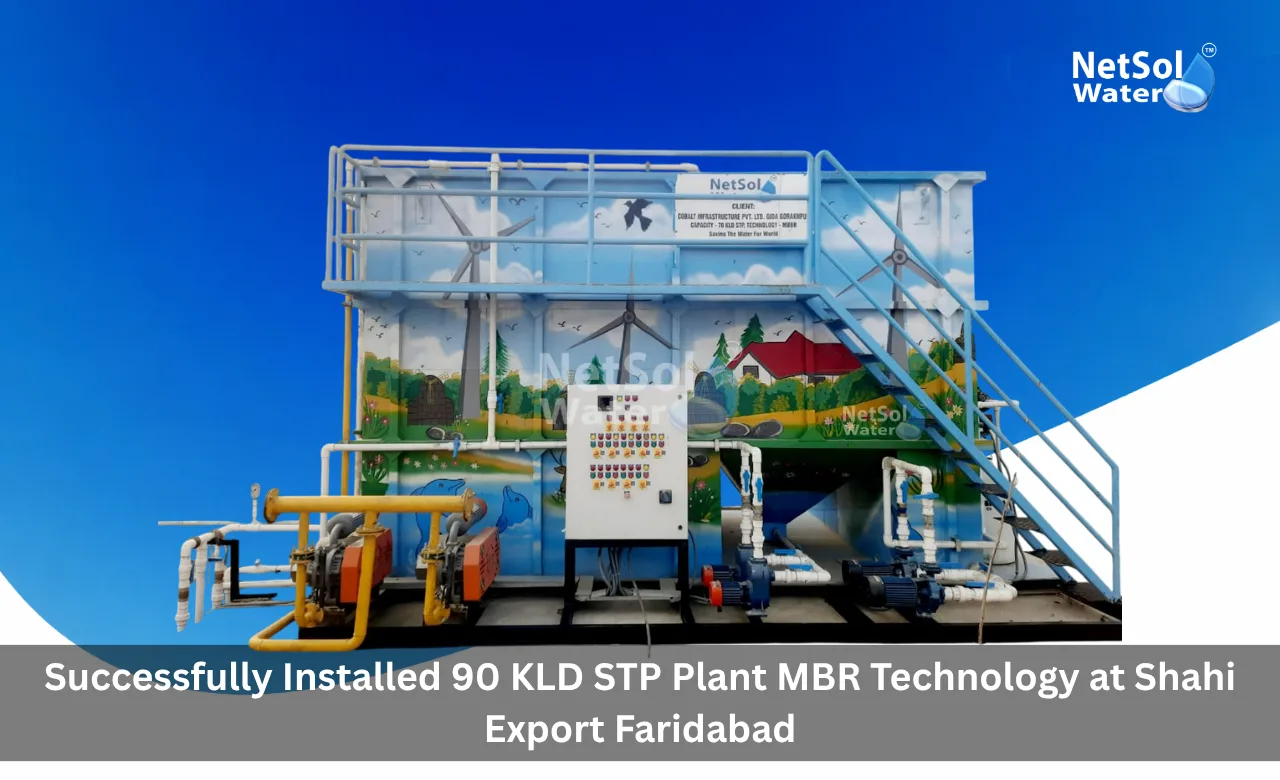
Successfully Installed 90 KLD STP Plant MBR Technology at Shahi Export Faridabad

Effective sewage treatment has become an important requirement for facilities that generate wastewater through their daily activities. Proper treatment helps a facility manage sewage in a controlled manner and supports the responsible use of treated water. At Shahi Export in Faridabad, the requirement was to establish a suitable sewage treatment system that could handle the intended wastewater load and provide treated water for reuse within the facility. To meet this requirement, a 90 KLD sewage treatment plant based on MBR technology was installed at the project site.

The project focused on creating a treatment system that matched the stated capacity requirement while using a treatment technology designed for biological treatment and membrane-based separation. MBR combines these two functions within one treatment arrangement. This allows the process to treat sewage through biological activity and then separate treated water from the biological solids through membranes.

The installation also involved the practical work needed to place the equipment at the site and connect the treatment stages into a working system. After installation, the plant went through testing and commissioning to prepare it for operation. The completed project provided Shahi Export with a dedicated treatment solution for the specified sewage treatment requirement in Faridabad. The project also reflects the type of treatment work that can be delivered by a sewage treatment plant manufacturer in Faridabad for facilities seeking a planned wastewater management system.

Project Overview

A sewage treatment project needs to consider more than just the installation of individual equipment. The treatment system must match the required capacity and follow a suitable process from sewage entry to treated water output. At Shahi Export in Faridabad, the project centered on the installation of a 90 KLD STP using MBR technology. The system was planned to address the client’s stated need for sewage treatment at the facility.

The objective of the project was to provide a dedicated treatment arrangement capable of handling the required sewage quantity. Instead of treating wastewater through a simple standalone process, the project used MBR technology to combine biological treatment with membrane filtration. This approach created a process in which microorganisms support the breakdown of biodegradable pollutants while membranes separate the treated water from the biological mixture.

The scope of the work included the installation of the treatment plant at the project location along with the placement of major treatment equipment and the required system connections. The installation needed to bring different treatment stages together into one operating arrangement. Each part of the plant had a specific role and needed to work in coordination with the other stages.

Capacity also remained an important consideration throughout the project. A 90 KLD plant was selected according to the capacity stated for the facility. The completed installation therefore focused on creating a treatment system around this defined capacity rather than using an unspecified or oversized arrangement.

Client Details

Shahi Export was the client for this sewage treatment project in Faridabad. The need for an STP indicates that the facility required a structured method for managing sewage generated at the site. A dedicated treatment system helps convert incoming sewage into treated water through a controlled process. This provides a defined treatment route instead of allowing wastewater to remain unmanaged or move directly toward disposal.

For a facility with a fixed treatment requirement, selecting the correct plant capacity and process becomes important. The treatment plant must be able to receive sewage and move it through the required stages without disturbing the intended treatment sequence. The choice of a 90 KLD capacity established the scale around which the system was installed.

The client also needed a treatment technology that could support biological treatment and membrane-based separation. MBR technology provided the process framework selected for the project. Its use allowed the installation to combine biological treatment with membrane filtration as part of the same treatment approach.

The location of the facility was equally important because the complete treatment system had to be installed and commissioned at the client’s site in Faridabad.

Detail Information
Client Shahi Export
Project Location Faridabad
System Installed Sewage Treatment Plant (STP)
Technology MBR (Membrane Bioreactor)
Executed By Netsol Water

Project Location

The project was completed at Shahi Export in Faridabad. Project location matters because a sewage treatment plant must operate within the physical conditions of the facility where it is installed. Equipment placement, connection between treatment stages and access for operation all need to be considered within the available site arrangement.

Faridabad provides the project with a defined industrial and commercial setting in which wastewater treatment requirements can vary from one facility to another. In this project, the available information identifies the requirement as a 90 KLD sewage treatment plant using MBR technology.

The installation had to bring the different treatment components together at the Faridabad location in a practical sequence. The plant needed suitable positioning so that sewage could enter the treatment system and move through the planned stages. Equipment connections also had to support the movement of wastewater and treated water across the process.

The location further influenced the installation and commissioning activities because the plant had to be made functional within the client’s existing facility. This required organized placement of the treatment components and careful system integration.

Once the site requirement was established, plant capacity became the next key consideration because the size of the STP determines the amount of sewage the system is designed to handle.

Plant Capacity

Plant capacity gives the treatment system a clear operating scale. It defines the quantity of sewage that the plant is designed to process and helps establish the size and arrangement of the treatment process. Selecting a capacity that matches the stated project requirement is therefore important when planning a sewage treatment plant.

For Shahi Export, the installed sewage treatment plant has a capacity of 90 KLD. KLD means kilolitres per day and expresses the plant’s treatment capacity on a daily basis. The specified value of 90 KLD formed the capacity basis for the project.

The plant was therefore designed and installed around the stated requirement for handling sewage at 90 KLD. This capacity gives the facility a defined treatment framework for its wastewater management needs.

Capacity and technology also work together. The 90 KLD requirement was not considered separately from the selected MBR process. The treatment stages had to operate as part of one system capable of handling the intended sewage quantity. This included the biological treatment stage and the membrane separation stage that form the core of MBR technology.

With the capacity established, attention can turn to the treatment technology that supports the treatment process.

Specification Value
Plant Capacity 90 KLD (Kilolitres Per Day)
Treatment Technology MBR (Membrane Bioreactor)
Core Stages Biological Treatment + Membrane Separation
Output Treated Water (for reuse) and Managed Sludge

Treatment Technology

The selected treatment technology plays a major role in determining how sewage moves through the plant and how treated water is separated from biological solids. For this project, Shahi Export selected MBR technology, which stands for Membrane Bioreactor.

MBR combines biological wastewater treatment with membrane filtration. In a conventional biological treatment arrangement, microorganisms break down biodegradable matter in sewage and the treated liquid is then separated from the biological solids through a separate clarification step. In an MBR system, membranes perform the separation function after biological treatment.

This combination changes the way the treatment process is arranged. The biological reactor provides the environment needed for microorganisms to act on biodegradable pollutants. The membrane stage then separates the treated water from the suspended biological solids. The result is a treatment sequence in which biological activity and membrane separation work together.

1. Biological Treatment

The biological part of an MBR system uses microorganisms to treat biodegradable components in sewage. These microorganisms consume suitable organic matter as part of their biological activity. The process reduces the pollutant load in the wastewater before membrane separation takes place.

This stage needs controlled operating conditions so that the biological population can perform its treatment function. The wastewater therefore moves through the biological treatment section before reaching the membrane stage.

2. Membrane Separation

The membrane section forms the defining feature of MBR technology. Membranes act as a physical barrier that separates treated water from the biological solids present in the reactor mixture.

Because the membrane performs the separation function, the treatment sequence can maintain a high degree of solid-liquid separation within the process. The treated liquid passes through the membrane while retained solids remain in the biological treatment system and can continue to participate in the process.

3. Why MBR Was Used

The project selected MBR because the treatment requirement called for a sewage treatment plant based on this technology. MBR provided an integrated treatment approach in which biological treatment and membrane separation formed part of the same process.

The technology also created a clear connection between the treatment stages. Sewage first enters the biological treatment section. The biological process acts on the biodegradable pollutants. The resulting mixture then reaches the membrane stage where treated water is separated from the biological solids.

Understanding the incoming sewage is another important part of the treatment design because the treatment process must be considered in relation to the characteristics of the water entering the plant.

Influent Characteristics

Incoming sewage characteristics influence the way a treatment plant is designed and operated. Parameters such as suspended solids, organic content, turbidity, nutrients and microbial load can affect the treatment process. Understanding these characteristics helps engineers determine the treatment sequence and assess the conditions under which the plant will operate.

Influent should be understood in general terms as sewage requiring biological treatment and membrane separation. The treatment system receives the incoming wastewater and prepares it for the biological process. The characteristics of the sewage determine how effectively the biological stage can treat the biodegradable load and how the membrane stage performs during separation.

Sewage enters the plant and moves through the arranged stages before reaching the MBR section. The next section explains how these stages work together.

Influent Parameter Relevance to Treatment
Suspended Solids Affects biological treatment load and membrane performance
Organic Content Determines the biodegradable load treated by microorganisms
Turbidity Indicates suspended material entering the system
Nutrients Influences biological process conditions
Microbial Load Relevant to biological treatment activity and system hygiene

Treatment Process

A well-arranged treatment process ensures that sewage moves through each stage in a controlled order. Each treatment stage has a specific function and prepares the wastewater for the next stage. In an MBR-based STP, the process connects preliminary handling, biological treatment and membrane separation into one continuous treatment route.

1. Sewage Collection and Inlet

The treatment journey begins when incoming sewage reaches the plant inlet. The inlet provides the entry point through which wastewater enters the treatment system.

At this stage, the plant receives the wastewater generated at the facility and directs it into the initial treatment arrangement. Proper flow into the plant is important because all later treatment stages depend on a steady and controlled wastewater path.

2. Preliminary Screening

The first treatment stage generally focuses on removing larger materials that may interfere with downstream equipment and treatment units. Screening provides a physical barrier that retains coarse materials present in the incoming sewage.

This stage protects later equipment by reducing the quantity of larger unwanted material entering the biological and membrane treatment sections. The screened wastewater can then move forward for further treatment.

3. Biological Treatment

After preliminary handling, the wastewater enters the biological treatment stage. Here, microorganisms act on biodegradable pollutants contained in the sewage.

The biological process forms the core of wastewater treatment because it reduces biodegradable organic matter through microbial activity. The biological mixture remains within the treatment system so that the microorganisms can continue acting on the wastewater.

For an MBR plant, this biological stage connects directly with the membrane separation process. The process therefore does not treat biological activity and solid separation as completely separate systems. Instead, both functions form part of the same treatment arrangement.

4. Membrane Bioreactor Stage

The membrane bioreactor section brings biological treatment and membrane filtration together. The biologically treated mixture reaches the membrane stage where the membranes separate the liquid from the retained biological solids.

Treated water passes through the membrane barrier while the biological solids remain within the treatment process. This separation allows the system to produce a clarified treated-water stream without depending on a conventional settling stage for the primary solid-liquid separation.

The membrane stage therefore supports the final separation required before treated water moves to its designated use or collection point.

Treated Water Collection

After membrane separation, the treated water leaves the treatment process as the output stream of the STP. The water can then move toward storage or reuse according to the facility’s intended arrangement. At the Shahi Export project, the plant was installed to address the specified sewage treatment requirement.

Sludge Management

Biological treatment produces excess biological solids that need to be managed as part of normal plant operation. The treatment system therefore includes the handling of retained solids so that the biological process can remain balanced.

The process creates a clear treatment path from sewage entry through biological treatment and membrane separation to treated water production. The equipment installed across these stages allows the process to operate as one integrated system.

Stage Function
Sewage Collection and Inlet Entry point where incoming wastewater enters the plant
Preliminary Screening Removes larger materials before further treatment
Biological Treatment Microorganisms break down biodegradable pollutants
Membrane Bioreactor Stage Membranes separate treated water from biological solids
Treated Water Collection Collects final treated water output
Sludge Management Handles excess biological solids generated during treatment

Major Equipment

Proper equipment selection supports the movement of sewage through the treatment sequence and allows each treatment stage to perform its intended function. A treatment plant is not a single machine. It is an integrated arrangement in which multiple components work together.

1. Screening Arrangement

The screening stage handles larger unwanted materials at the inlet. Its main purpose is to protect the downstream treatment process from coarse matter that could affect equipment and flow.

By controlling this material at the beginning of the process, the plant can direct more suitable wastewater toward the biological treatment stage.

2. Biological Treatment System

The biological treatment section provides the environment in which microorganisms treat biodegradable material in the sewage. This section forms an important part of the MBR process because membrane separation depends on the biological treatment occurring before filtration.

The biological reactor therefore acts as the central treatment area where the wastewater undergoes biological transformation.

3. Membrane System

The membrane assembly performs the liquid-solid separation that distinguishes MBR technology from many conventional treatment arrangements. It allows treated water to pass through the membrane while retaining biological solids.

This function helps connect the biological stage directly with the treated-water output.

4. Pumps and Flow Connections

Pumps and connecting pipelines form the movement system of the plant. They transfer wastewater and treated water between the required sections of the treatment process.

Correct connections are important because even a well-designed treatment stage cannot perform properly if the fluid path between sections is incomplete or incorrectly arranged.

5. Control and Supporting Components

A working STP also depends on supporting components used to manage operation and maintain process flow. These may include control arrangements and other plant accessories associated with the installed system.

The installed equipment collectively supports the 90 KLD treatment process and allows the MBR system to move from wastewater entry to treated water production.

Equipment Role in the Treatment Sequence
Screening Arrangement Removes larger unwanted material at the inlet
Biological Treatment System Provides environment for microbial treatment of sewage
Membrane System Performs liquid-solid separation core to MBR technology
Pumps and Flow Connections Transfers wastewater and treated water between sections
Control and Supporting Components Manages operation and maintains process flow

Installation Process

Plant installation requires careful coordination because multiple pieces of equipment must occupy the correct positions and connect to one another in the correct sequence. The installation process also needs to respect the available site arrangement so that operation and access remain practical.

At Shahi Export in Faridabad, the installation focused on establishing the 90 KLD MBR-based STP as a functioning treatment system. The work began with preparation for equipment placement and arrangement at the designated site.

1. Site Preparation

The first stage involved preparing the installation area for the treatment equipment. A suitable work area is necessary before equipment can be positioned and connected.

Site readiness supports the next phase by ensuring that the main plant components have an appropriate location and that the installation team can carry out the required work in an organized manner.

2. Equipment Placement

Once the site was ready, the treatment equipment was positioned according to the planned process arrangement. Placement had to consider the order of treatment stages so that wastewater could move logically from one section to the next.

The MBR components were positioned as part of the overall treatment route. Their placement allowed the biological process and membrane separation stages to function together.

3. Interconnection Work

After equipment placement, the plant components needed to be connected. Piping and flow connections created the path for wastewater to move through the various treatment stages.

Electrical and control connections were also needed where applicable for the operation of plant equipment. Proper interconnection ensured that individual components could function as part of the complete system.

4. System Checks

Installation work was followed by checks of the connected system. These checks helped identify issues related to alignment, connections and equipment readiness before commissioning.

This stage was important because it provided a controlled transition from physical installation to operational testing.

Once installation and connections were completed, the plant could move into the commissioning stage where the system was tested as a working treatment unit.

Plant Commissioning

Commissioning confirms whether an installed treatment plant can operate as intended. It provides an opportunity to test the equipment, verify the treatment sequence and identify any issues before regular operation begins.

For the 90 KLD MBR-based STP at Shahi Export, commissioning followed the completion of installation and system connections. The process focused on bringing the plant into operating condition and checking the relationship between the treatment stages.

The team checked the installed system so that wastewater could move through the planned sequence. Equipment operation was reviewed along with the connections between major treatment sections.

The commissioning process also provided an opportunity to verify the operation of the MBR arrangement. Since membrane performance forms an important part of the technology, the membrane stage needed to work with the biological treatment section as part of the integrated process.

Operational checks are especially important when a plant includes several interconnected treatment stages. Commissioning therefore helps confirm that the complete system works together rather than checking every component only in isolation.

The plant was prepared for regular operation after the required installation and commissioning activities were completed. Any long-term performance evaluation should use actual operating records from the facility because the supplied project information does not include extended performance data.

With the plant commissioned, the next consideration becomes the practical use of the treated water generated by the system.

Treated Water Reuse

Treatment becomes more meaningful when the facility can use the resulting treated water in an appropriate manner. Reuse can reduce the need to use fresh water for applications where treated wastewater is suitable.

The treated water produced by the MBR-based system can be directed according to the facility’s permitted and planned reuse requirements. Common reuse planning depends on the required water quality, local rules and the intended application.

An important benefit of having a dedicated treatment plant is that the facility has a defined process for handling its sewage and producing treated water. This provides a basis for controlled water management within the site.

The value of reuse also depends on consistent treatment performance. A properly maintained treatment process helps the plant continue producing treated water according to its operating objectives.

Results and Performance

Project results help show whether the installed treatment system addressed the requirement for which it was selected. In this project, the main measurable facts available are the plant capacity, the selected technology and the successful installation and commissioning of the system.

The completed project installed a 90 KLD Sewage Treatment Plant with MBR technology at Shahi Export in Faridabad. The installation established a dedicated sewage treatment facility based on the specified capacity and process technology.

From an operational perspective, the completed system provides the site with a structured treatment sequence. Incoming sewage can move through the treatment stages before reaching the membrane separation section. This creates a defined route from wastewater entry to treated water production.

The MBR configuration also integrates biological treatment and membrane separation into the same treatment approach. This arrangement supports the treatment objective by allowing biological activity to address biodegradable pollutants while the membranes perform the liquid-solid separation function.

The successful installation and commissioning of the plant are important project outcomes because they demonstrate completion of the required treatment infrastructure. The system was not only supplied as equipment. It was installed and prepared for operation at the client’s Faridabad facility.

A proper assessment of future plant performance should use actual operating records and laboratory analysis from the facility. Such records can show how the STP performs under real operating conditions over time.

For the documented project scope, the key outcome remains clear: Shahi Export received a 90 KLD sewage treatment plant using MBR technology with the installation and commissioning completed at its Faridabad site.

Customer Feedback/Testimonial

Customer feedback provides useful insight into how a completed treatment project is viewed from the client’s side. It can reflect the experience of having the treatment plant installed and brought into operation.

Read some interesting information for the Industrial RO Plant Manufacturer

Conclusion

A well-planned sewage treatment system gives a facility a defined method for managing wastewater and producing treated water through a controlled process. At Shahi Export in Faridabad, the installation of a 90 KLD STP with MBR technology established a dedicated treatment solution built around the specified project capacity. The system combines biological treatment with membrane separation and provides an integrated route for sewage treatment.

The completed installation and commissioning also show the importance of coordinating equipment placement, system connections and operational checks during a wastewater treatment project.

Organizations looking for a Sewage Treatment Plant in Faridabad can discuss their capacity requirements, wastewater characteristics and treatment objectives with Netsol Water. Netsol Water is the leading Sewage Treatment Plant Manufacturer in Faridabad and can provide guidance for suitable sewage treatment solutions based on the requirements of the facility.

For similar wastewater treatment needs, contact Netsol Water to discuss your project and request a consultation for an appropriate treatment plant solution.

Contact

Phone: +91-9650608473

Email: enquiry@netsolwater.com