RO Plant Noida - Sewage Treatment Plant Manufacturers

Successfully-Installed-250-LPH-RO-Plant-Water-Cooler-at-Spectrum-Mall-Noida.webp

September 5, 2026by Netsol Water

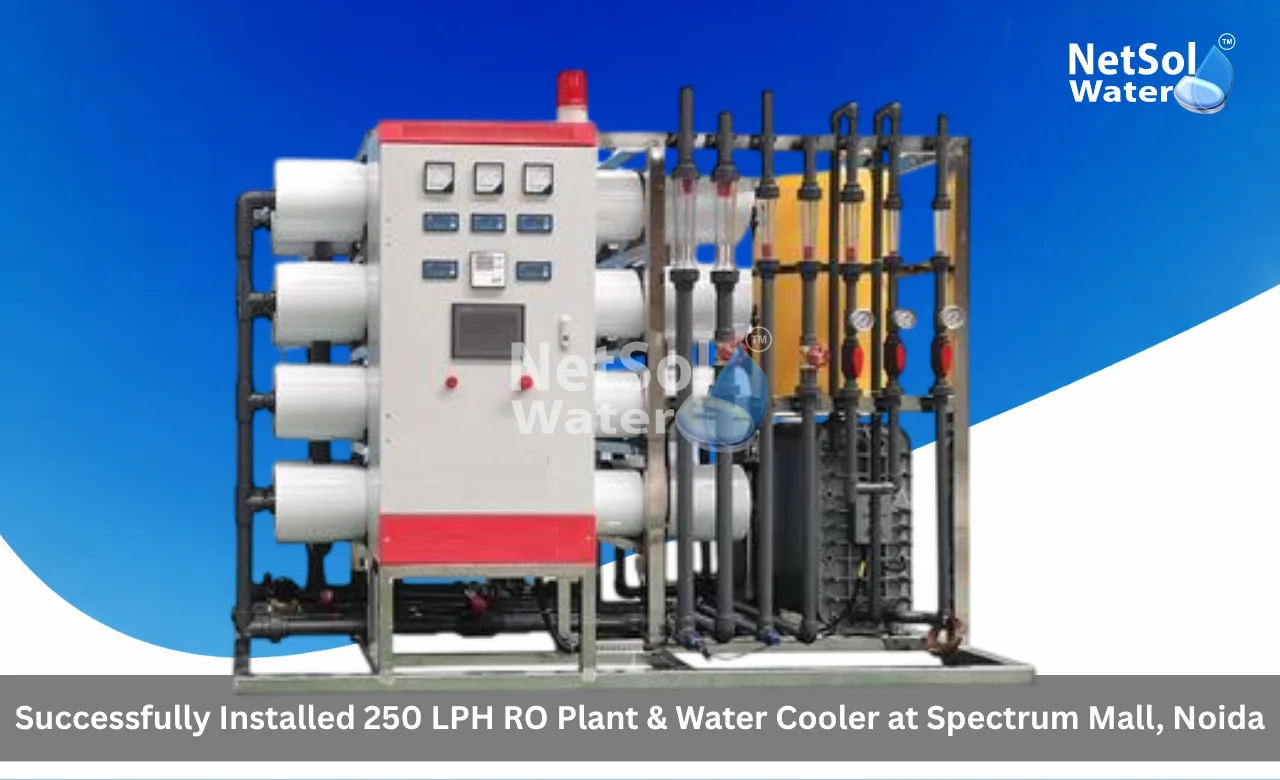
Successfully Installed 250 LPH RO Plant & Water Cooler at Spectrum Mall, Noida

Reliable access to treated drinking water is important for commercial facilities that serve a large number of people every day. Shopping malls need a practical water treatment plant that can support their operational requirements while maintaining a consistent supply of suitable drinking water. For this reason, Spectrum Mall in Noida required a compact and suitable water treatment solution that could provide treated water for its intended use.

Netsol Water successfully completed the installation of a 250 LPH RO Plant along with a water cooler at Spectrum Mall, Noida. The project focused on providing a dedicated reverse osmosis system with suitable cooling support for treated water. The selected capacity was planned according to the stated requirement of the facility and the treatment arrangement was designed to support regular water production.

As a commercial facility, the site needed a solution that could be installed properly and operated in a practical manner. The project therefore involved more than simply supplying an RO unit. It included equipment placement, system connections, testing and commissioning so that the installed setup could function as intended. The combination of RO treatment and a water cooler created a complete drinking water arrangement for the project.

This successful installation reflects Netsol Water‘s approach to delivering practical water treatment plants for commercial applications. As an experienced Commercial RO Plant Manufacturer in Noida, Netsol Water provides treatment solutions based on the required capacity and application. The Spectrum Mall project demonstrates how a properly selected RO system can support the drinking water requirements of a large commercial facility.

Project Overview

A commercial water treatment project must balance water quality, treatment capacity, equipment selection and ease of operation. The Spectrum Mall project was planned with these practical considerations in mind. The primary requirement was to install a water treatment system capable of producing treated water at the required rate while also providing cooled drinking water through a suitable water cooler arrangement.

The project included the installation of a 250 LPH RO plant and water cooler at the mall. The RO system was selected to treat incoming water through the reverse osmosis process. The treated water could then be supplied for the intended drinking water application. The water cooler formed an additional part of the solution by helping provide cooled treated water for users at the facility.

The objective was to deliver a complete and usable water treatment setup rather than an isolated treatment component. The scope therefore covered installation of the RO plant, placement of the related equipment, interconnections and final testing. Each stage was considered as part of the same system so that the treatment and cooling arrangements could work together.

The project also required proper coordination at the site. Commercial premises have fixed spaces and operational activities, so equipment installation needs to be carried out in an organised manner. Once the project requirements were established, the team could proceed with the installation and commissioning activities.

Client Details

Spectrum Mall in Noida is a commercial shopping facility that serves visitors, shoppers and the people working within the premises. Such a facility requires access to convenient drinking water as part of its day-to-day operations. Since the project was intended for a commercial environment, the water treatment system needed to support regular usage through a dedicated treatment and cooling arrangement.

The requirement at the site was focused on treated water production through an RO plant along with a water cooler. The installation was therefore intended to address the facility’s need for a suitable drinking water solution. Instead of depending only on untreated incoming water, the site could use a dedicated treatment process before making the water available for the intended purpose.

The project’s requirements also made equipment selection important. A system with an appropriate treatment capacity could help maintain a consistent supply without introducing unnecessary plant capacity. The chosen 250 LPH RO system provided a defined production rate for the application and was paired with a water cooler to complete the setup.

Netsol Water approached the requirement as a practical commercial water treatment project. The emphasis remained on providing the required treatment capacity and installing the system correctly within the client’s facility.

Detail Information
Client Spectrum Mall, Noida
Facility Type Commercial shopping mall
Requirement Treated drinking water with cooling for visitors and staff
Solution Provided 250 LPH RO Plant with Water Cooler
Installed By Netsol Water


Project Location

Location plays an important role in the planning of any commercial water treatment project. The system must fit within the available site conditions while also supporting the operational needs of the facility. In this project, the installation was completed at Spectrum Mall, Noida, which is a commercial environment with regular human activity.

The nature of a shopping mall makes convenient drinking water an important facility requirement. Visitors and staff use the premises throughout the day, which creates a need for an organised drinking water arrangement. A dedicated RO plant and water cooler can help the facility manage this requirement through a defined treatment and cooling system.

The Noida location also makes local project execution important. Equipment needs to be delivered and positioned at the site with proper planning. Connections between the treatment system and associated components must be completed carefully so that the plant can operate as intended.

For a local installation such as this one, working with an experienced Commercial RO Plant Manufacturer in Noida can help simplify coordination between system design, equipment supply and installation. Netsol Water completed the project by bringing these activities together at the client’s site.

Plant Capacity

Plant capacity determines how much treated water a system can produce within a given period. Selecting the right capacity helps ensure that the equipment is suited to the intended application without unnecessarily increasing the size of the treatment system. For a commercial facility, the selected capacity should match the expected requirement and the planned use of treated water.

The Spectrum Mall project used a 250 LPH RO plant, where LPH means litres per hour. This means the installed RO unit was designed around a rated treatment capacity of 250 litres per hour. The capacity provided a clear production rate for the intended drinking water application.

The use of a 250 LPH system also made the treatment arrangement suitable for a defined commercial requirement. The plant could process incoming water through the RO system and provide treated water for subsequent use through the water cooler arrangement.

Capacity alone does not determine plant performance. The quality of the incoming water, the condition of the equipment and regular operation also affect the overall output. However, selecting an appropriate rated capacity provides the foundation for a suitable treatment solution. In this project, the 250 LPH capacity formed the core of the installed drinking water system.

Parameter Specification
Installed Capacity 250 LPH (Litres Per Hour)
Treatment Technology Reverse Osmosis (RO)
Additional Equipment Water Cooler
Project Site Spectrum Mall, Noida
Plant Type Commercial RO Plant


Treatment Technology

The project used RO as the primary water treatment technology. RO is widely used for water purification because it can reduce dissolved substances from water through a membrane-based separation process. The technology is particularly useful when the incoming water contains dissolved salts and other impurities that need to be reduced before use.

In the Spectrum Mall installation, the RO plant formed the main treatment stage. Incoming water passed through the treatment system and reached the RO membrane after the required pre-treatment stages. The membrane allowed water to pass through while restricting many dissolved impurities.

1. Reverse Osmosis Process

The working principle of RO depends on pressure. The system applies pressure to the incoming water so that it passes through a semi-permeable membrane. The membrane separates a portion of the dissolved material from the water and produces treated water known as permeate.

This process is important because it does not depend only on physical straining. The RO membrane also helps reduce dissolved salts and other dissolved contaminants that conventional filtration may not remove effectively. The result is treated water with reduced dissolved impurity levels.

2. Water Cooling Arrangement

The project also included a water cooler. While the RO plant focused on treatment, the water cooler addressed the temperature and user convenience aspect of the drinking water arrangement. Treated water could be directed into the cooling system so that the facility could provide cooled drinking water for the intended users.

The RO plant and water cooler therefore served different but connected purposes. One handled purification while the other handled cooling. Together they created a more complete drinking water facility for the commercial site.

Influent Characteristics

Understanding the incoming water is an important part of water treatment planning. The design of an RO system depends not only on the required output but also on the quality of the feed water entering the plant. Parameters such as total dissolved solids, hardness, turbidity, iron and microbial content can influence the treatment arrangement and membrane performance.

For the Spectrum Mall project, the available project information does not provide specific laboratory test values for the incoming water. It would therefore not be appropriate to assign exact TDS, hardness, turbidity or microbial figures to the site without supporting test data.

The incoming water for an RO system may contain dissolved salts and other suspended or dissolved impurities. Such characteristics make pre-treatment important because RO membranes require suitable feed conditions for proper operation. The pre-treatment stage helps reduce substances that may affect the membrane and prepares the water for the RO process.

The actual influent characteristics should always be confirmed through proper water analysis when designing or modifying an RO plant. This ensures that the selected equipment and operating conditions match the real site conditions rather than assumed values.

Treatment Process

A properly arranged treatment sequence helps each stage perform its intended function. The treatment journey in an RO plant begins with raw water and continues through filtration and membrane treatment before the water reaches the final user point. In the Spectrum Mall project, the treatment system was installed as an integrated arrangement in which each part supported the next stage.

1. Raw Water Entry

The treatment process starts when incoming water enters the system. Raw water contains the characteristics of the source and may carry suspended particles, dissolved substances and other impurities. The first objective is to condition this water before it reaches the sensitive RO membrane.

2. Pre-Treatment

Pre-treatment prepares the water for membrane treatment. Depending on the system configuration and feed water quality, this stage can include filtration and other conditioning steps. The purpose is to reduce suspended matter and other substances that could interfere with downstream treatment.

The pre-treated water then moves towards the RO unit. Proper pre-treatment helps the membrane receive water in a more suitable condition and supports stable plant operation.

3. RO Membrane Treatment

After pre-treatment, the water enters the RO section. A high-pressure pump provides the pressure required to push the feed water through the RO membrane. The membrane separates a portion of dissolved impurities from the feed stream.

The treated permeate forms the main product water stream. Another stream carries the concentrated portion of the rejected dissolved material away from the membrane section. This separation is a central part of reverse osmosis operation.

4. Treated Water Collection

The treated water is then collected and made available for the next stage of use. Proper storage and transfer arrangements help maintain the flow of treated water from the RO plant to the final drinking water point.

5. Cooling and Final Use

The treated water is connected to the water cooler so that cooled drinking water can be provided at the intended point of use. This completes the treatment journey from raw water entry to final cooled water availability.

Each stage therefore contributes to the overall function of the plant. The pre-treatment prepares the water, the RO membrane performs the main purification step and the water cooler provides the final temperature adjustment required for convenient drinking water use.

Stage Function
Raw Water Entry Incoming water enters the system carrying source characteristics and impurities
Pre-Treatment Reduces suspended matter before water reaches the RO membrane
RO Membrane Treatment High-pressure pump pushes feed water through the membrane; separates permeate and reject
Treated Water Collection Treated water is collected and transferred for the next stage of use
Cooling and Final Use Treated water is connected to the water cooler for cooled drinking water


Major Equipment

Proper equipment selection supports consistent treatment and helps the plant perform according to its intended design. Every major component has a specific role. When the components are selected and connected correctly, the complete system can operate as one treatment unit rather than as separate pieces of equipment.

1. RO Plant

The 250 LPH RO plant is the main treatment equipment in the project. It contains the treatment components required to process the incoming feed water and produce treated water through reverse osmosis.

2. RO Membrane

The RO membrane is the central separation component of the system. It allows water to pass through while restricting a significant portion of dissolved impurities. The quality and condition of the membrane directly affect the treatment performance of the RO unit.

3. High-Pressure Pump

The high-pressure pump provides the pressure needed for membrane operation. Without sufficient pressure, water cannot pass through the RO membrane at the required rate. The pump therefore supports the membrane separation process and contributes to the production of treated water.

4. Pre-Treatment Filters

Pre-treatment filters help prepare incoming water before it reaches the RO membrane. Their function is to reduce suspended material and other impurities that may affect downstream treatment.

5. Water Cooler

The water cooler forms the final part of the installed solution. It receives treated water and provides cooled water for the intended drinking application. Its inclusion made the project more suitable for a facility where treated drinking water also needed to be conveniently cooled.

Equipment Role in the System
RO Plant (250 LPH) Main treatment equipment; processes feed water through reverse osmosis
RO Membrane Central separation component; restricts dissolved impurities
High-Pressure Pump Provides pressure needed to push water through the RO membrane
Pre-Treatment Filters Reduce suspended material before water reaches the membrane
Water Cooler Receives treated water and provides cooled drinking water


Installation Process

Successful installation depends on proper planning before the equipment is put into operation. The site must provide enough space for equipment placement and the required connections must be arranged carefully. For a commercial project, the installation process also needs to fit within the practical conditions of the facility.

The work began with preparation of the installation area. The team assessed the designated space and arranged the equipment so that the RO plant and water cooler could be positioned appropriately. Proper placement helps technicians access the system for operation and future maintenance.

Once the equipment positions were established, the major plant components were placed at their planned locations. The RO unit and related components were aligned according to the treatment flow. Attention was then given to the required water and interconnecting lines.

The team connected the raw water feed to the treatment system and completed the necessary connections between the pre-treatment stages and RO section. The treated water outlet was then connected to the downstream arrangement leading towards the water cooler.

After mechanical and piping connections were completed, the electrical and operational connections were checked. This stage ensured that pumps and other powered components could work correctly with the installed system.

The final part of installation involved inspecting the complete arrangement. Connections were checked for proper fit and the system was prepared for testing. This systematic approach helped move the project from physical installation to operational commissioning.

Plant Commissioning

Commissioning is necessary before a treatment plant begins regular operation. It allows the installation team to confirm that the equipment, connections and controls function correctly. It also provides an opportunity to identify and correct installation issues before the client begins routine use.

For the Spectrum Mall project, commissioning involved starting the installed system and checking its operation under working conditions. The team verified the functioning of the treatment components and observed the water flow through the plant.

The RO section was checked to ensure that the high-pressure system and membrane treatment process were operating properly. The treated water flow was also reviewed as part of the commissioning activity. The water cooler was checked to ensure that the downstream cooling arrangement worked with the treated water supply.

The complete system was inspected for proper operation and the necessary connections were reviewed during the testing process. These checks helped confirm that the installed plant was ready for its intended commercial application.

Commissioning therefore acted as the final technical stage before regular use. It linked the completed installation with actual operating conditions and allowed the system to move into service with the required checks completed.

Treated Water Reuse

Treating water is most useful when the resulting water can be put to practical use. In a commercial facility, the final purpose of treatment should remain connected to the original requirement. For this project, the installed system was intended to support the drinking water arrangement at Spectrum Mall.

The treated water produced by the RO plant could be supplied to the associated water cooler. This allowed the facility to combine purification and cooling within the same setup. The resulting arrangement provided treated and cooled water for the intended drinking application.

The value of the system therefore extended beyond the RO membrane itself. By connecting the treated water stream with the water cooler, the project addressed both water treatment and user convenience. This integrated approach made the installation more practical for the commercial environment.

Results and Performance

Project results provide a practical measure of whether the installed system meets its intended purpose. For the Spectrum Mall installation, the key outcome was the successful completion and commissioning of a 250 LPH RO plant along with a water cooler.

The project delivered a dedicated treatment setup rather than relying on a simple drinking water arrangement without purification. The RO plant introduced membrane-based treatment into the facility’s water supply process. The addition of the water cooler then provided cooled treated water as part of the final user arrangement.

One of the measurable project parameters is the installed treatment capacity of 250 litres per hour. This established a clear production rate for the RO unit and aligned the system with the defined project requirement.

The installation also brought together treatment equipment and cooling equipment within the same project. This reduced the need to treat purification and cooling as separate facility requirements. The completed setup therefore provided a more coordinated approach to the stated drinking water requirement.

Confirmed Outcome Status
Installation of 250 LPH RO Plant Completed
Water Cooler Installation & Connection Completed
System Testing & Commissioning Completed
Laboratory/TDS Data Not provided — not included in this case study


Customer Feedback/Testimonial

Customer feedback is useful because it reflects the practical response to a completed installation. It can indicate whether the delivered system matched the original requirement and whether the overall project was handled satisfactorily.

250 LPH RO plant and water cooler were successfully installed at Spectrum Mall, Noida. The successful completion of the installation was executed according to the available requirement. The treatment system and water cooler were brought together as the intended commercial drinking water solution.

Call to Action

A properly planned commercial drinking water system can help a facility address its treatment needs through a defined and organised process. The successful installation at Spectrum Mall, Noida shows how a 250 LPH RO plant and water cooler can be combined to create a practical treatment and drinking water arrangement for a commercial site.

Netsol Water provides water treatment solutions for different commercial applications and focuses on selecting systems according to the required capacity and intended use. As a Commercial RO Plant Manufacturer in Noida, Netsol Water can support clients with RO plant selection, equipment supply, installation and commissioning based on project requirements.

For organisations looking for a suitable RO solution for a commercial facility, the first step is to assess the required water capacity, incoming water quality, intended use and available installation space. These factors help determine the right treatment configuration.

Contact Netsol Water to discuss your commercial water treatment requirement and request a suitable RO plant solution for your facility. A project-specific consultation can help identify the appropriate treatment capacity and equipment arrangement for your application.

Read some interesting information for the Sewage Treatment Plant Manufacturer in Noida

Contact Netsol Water

Contact Details
Phone +91-9650608473
Email enquiry@netsolwater.com


What-are-the-Applications-of-Commercial-Water-Softeners-2.webp

September 3, 2026by Netsol Water

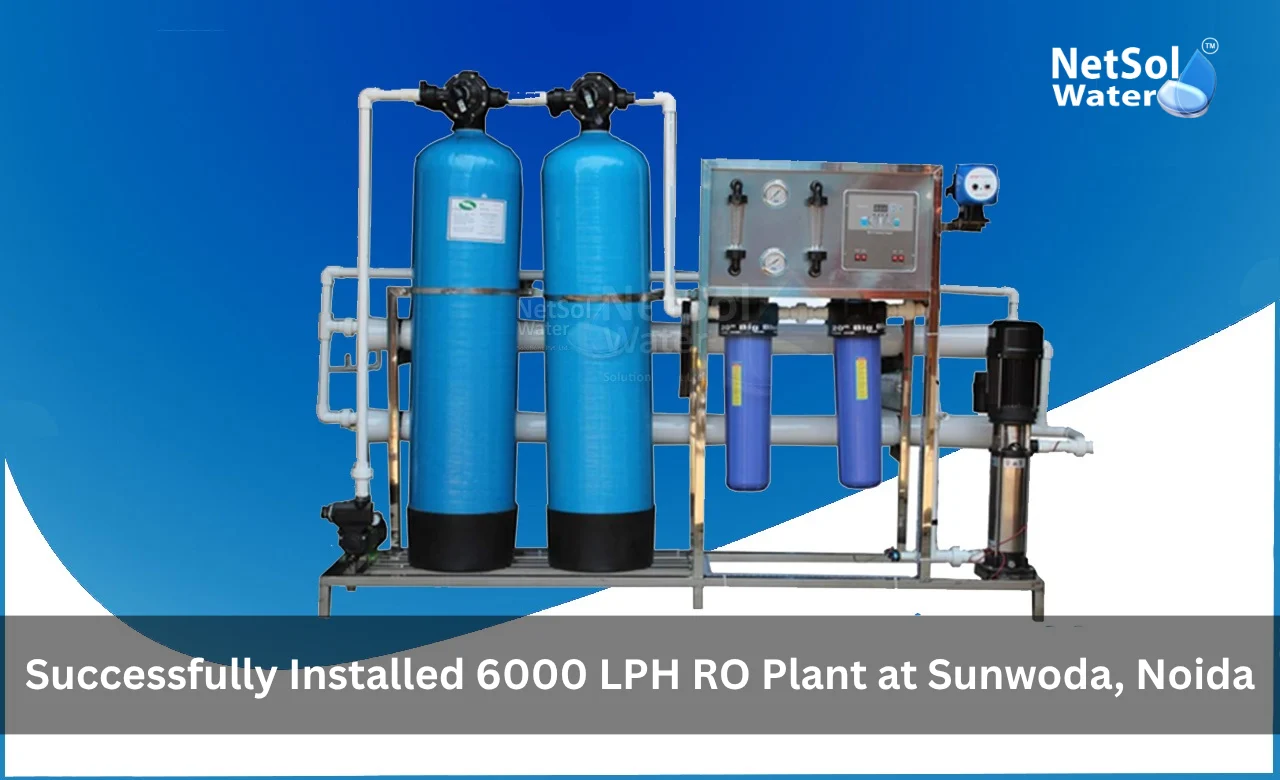
Successfully Installed 6000 LPH RO Plant at Sunwoda, Noida

Reliable water treatment is important for facilities that need a steady supply of treated water for their daily operations. At Sunwoda in Noida, a 6000 LPH RO plant was successfully installed to address the site’s requirement for treated water. The project focused on providing a suitable water purification system with the required treatment capacity while maintaining a practical process for regular operation and maintenance.

Sunwoda is part of Sunwoda Electronic Co., Ltd. which operates in the lithium-ion battery and new energy sector. The company has established operations in India and has maintained an international manufacturing and business presence. Sunwoda’s first overseas production base was established in India in 2017.

For a facility where water is required as part of ongoing operations, selecting an appropriately designed treatment system is important. The installed RO plant was planned around the required capacity and the need to convert incoming water into treated water suitable for the intended application. The project therefore involved more than simply placing an RO unit at the site. It required proper equipment selection, plant installation, interconnections, testing and commissioning so that the system could operate as an integrated treatment unit.

The successful installation demonstrates how a properly selected RO system can address a commercial or industrial water treatment requirement without adding unnecessary complexity to the operating process. It also highlights the role of an experienced commercial RO plant manufacturer in Noida in delivering a treatment solution according to the practical needs of a project.

Project Overview

A commercial water treatment project must begin with a clear understanding of the required water quantity and the intended use of the treated water. The Sunwoda project was developed with this basic principle in mind. The main objective was to install a 6000 LPH RO plant that could provide the required treated water capacity for the facility.

The scope of work involved the installation of the RO treatment system at the client’s site in Noida. The project required the treatment equipment to be positioned correctly and connected so that raw water could move through the treatment stages before reaching the treated water outlet. Attention to plant arrangement was important because every stage had to work in the correct sequence.

The project also required practical coordination between equipment installation and system commissioning. A water treatment plant is expected to operate as one connected system rather than as separate pieces of equipment. Therefore, pumps, filters, membranes, valves, pipework and electrical connections need to function together.

The 6000 LPH capacity provided a defined treatment output for the project. This made it possible to design the plant around a clear production rate instead of using an unnecessarily large system. For the client, the objective was to have an appropriate water treatment arrangement that could support its operational requirement while remaining manageable for routine use.

This approach reflects the working method expected from a professional Commercial RO Plant Manufacturer in Noida. The focus is not only on supplying the RO equipment but also on ensuring that the complete installation works as an operational water treatment system.

Client Details

Sunwoda is a global company operating in the lithium battery and new energy sector. Sunwoda Electronic Co., Ltd. was established in 1997 and has developed businesses covering 3C batteries, power batteries, energy storage batteries, energy services and smart hardware. The company has also established production and business locations outside China including India.

The presence of Sunwoda in India creates a requirement for supporting infrastructure that can serve its local operations. Water treatment is one such requirement where the quality and availability of treated water need to match the practical needs of the facility.

For this project, the requirement was addressed through the installation of a 6000 LPH RO plant. The system provided a dedicated treatment process for incoming water. Instead of depending on untreated water for the intended application, the facility could process the incoming water through a defined purification system.

The project therefore addressed an important part of the facility’s water management requirement. By installing the treatment plant at the site, the client gained a dedicated system designed around a known treatment capacity. This also created a structured process for handling the incoming water before it was directed to the intended point of use.

Detail Information
Client Name Sunwoda (Sunwoda Electronic India Pvt. Ltd.)
Parent Company Sunwoda Electronic Co., Ltd.
Sector Lithium-ion battery and new energy sector
Company Established 1997
First Overseas Production Base (India) 2017
Business Coverage 3C batteries, power batteries, energy storage batteries, energy services, smart hardware


Project Location

The project was completed at Sunwoda in Noida, Uttar Pradesh. Noida is an important industrial and commercial centre in the National Capital Region and hosts facilities belonging to companies from different sectors. Sunwoda Electronic India Pvt. Ltd. is publicly listed with locations in Noida and Greater Noida.

The location of a treatment plant matters because the system has to fit into the available site conditions. Equipment placement, access for operation, pipe routing, electrical connections and maintenance space all influence how a plant can be installed.

At an operating industrial or commercial facility, installation work also needs to be coordinated with the existing site environment. The treatment system must be placed in a practical position while allowing operators and maintenance personnel to reach the major components when required.

For the Sunwoda installation, the site requirement was addressed by arranging the 6000 LPH RO plant as a connected treatment system. The work focused on creating the required connections between the raw water source, treatment equipment and treated water discharge point.

The Noida location also highlights the importance of working with a supplier that understands local project execution requirements. A Commercial RO Plant Manufacturer in Noida can coordinate the design, installation and commissioning process with greater attention to the practical conditions of the project site.

Plant Capacity

Plant capacity is one of the most important considerations when selecting a water treatment system. A plant that is too small may not provide the required amount of treated water. A plant that is much larger than the requirement may increase equipment size, cost and operating requirements without providing a practical advantage.

For the Sunwoda project, the installed capacity was 6000 litres per hour (6000 LPH). This means the RO system was designed to produce treated water at a nominal rate of 6000 litres per hour under the applicable operating conditions.

The selected capacity provided a clear treatment output for the facility. It allowed the system to be planned around a defined flow rate rather than relying on an unspecified or variable treatment arrangement.

Capacity also affects the sizing of associated equipment. The feed system, pre-treatment arrangement, RO membrane assembly, high-pressure pump and treated water connections must all support the required flow. Proper coordination between these components is necessary for the plant to perform as intended.

The 6000 LPH capacity therefore served as the central design point for the installation. It guided the selection and arrangement of the major treatment components and established the expected production capacity of the system.

Parameter Specification
Installed Capacity 6000 LPH (Litres Per Hour)
Treatment Technology Reverse Osmosis (RO)
Project Site Sunwoda, Noida, Uttar Pradesh
Plant Type Commercial / Industrial RO Plant
Design Basis Defined flow rate matched to facility requirement


Treatment Technology

Reverse Osmosis was selected as the main treatment technology for the project. RO is a membrane-based purification process that separates dissolved substances from water by applying pressure to push water through a semi-permeable membrane.

The technology is widely used when the objective is to reduce dissolved salts and other impurities from incoming water. However, the RO membrane performs best when the water entering it has already passed through suitable pre-treatment. This is why the overall plant design needs to include more than the RO membrane itself.

1. Reverse Osmosis Process

During RO treatment, feed water is pressurised and directed towards the membrane assembly. The membrane allows a portion of the water to pass through while restricting many dissolved salts and other contaminants. The water that passes through the membrane is collected as permeate or treated water.

The remaining water contains a higher concentration of rejected substances and leaves the membrane system as reject or concentrated water. The exact recovery and rejection values depend on feed water characteristics, membrane selection, operating pressure and plant design.

For the Sunwoda project, the RO system formed the main purification stage after the incoming water had passed through the required pre-treatment arrangement. This sequence helped protect the RO membranes and supported consistent operation.

2. Importance of Pre-Treatment

Pre-treatment is necessary because suspended particles, turbidity, hardness and other unwanted substances can affect membrane performance. Depending on the incoming water characteristics, filtration and conditioning stages may be used before the RO membranes.

The purpose of pre-treatment is not to replace RO. Instead, it prepares the feed water so that the membrane stage can perform effectively. This relationship between pre-treatment and RO is an important part of proper plant design.

3. Treated Water Production

After the feed water passes through the RO membranes, the treated stream is collected and directed towards the treated water storage or use point. The final arrangement depends on the specific site connections and the intended application.

The selected RO process therefore provided a structured method of reducing dissolved impurities from the incoming water and producing treated water at the required plant capacity.

Influent Characteristics

Understanding the incoming water quality is essential before designing or operating an RO plant. Water can contain different levels of dissolved salts, hardness, suspended particles and other impurities. The treatment system must be selected according to these characteristics.

For this project, detailed laboratory values for parameters such as TDS, hardness, turbidity, iron and microbial content were not provided. Therefore, no specific test figures are assigned to the Sunwoda installation.

Instead, the treatment arrangement should be understood in general terms. Incoming water to an RO plant may contain suspended matter and dissolved substances that can affect the performance of the treatment equipment. If such contaminants reach the membrane without adequate pre-treatment, they may cause fouling, scaling or a reduction in membrane performance.

The pre-treatment arrangement therefore acts as an important protective stage. Filtration can reduce suspended material before the water reaches the RO system. Where hardness or scaling potential is a concern, suitable conditioning can also be incorporated according to the actual water analysis.

A proper RO design should always consider the source water characteristics before final equipment selection. The absence of exact influent values in the available project information means that this case study does not assign numerical values that cannot be verified.

Treatment Process

A successful RO plant depends on a properly arranged treatment sequence. Each stage has a specific purpose and prepares the water for the next stage. A clear treatment sequence also makes it easier to monitor plant performance and identify operating problems.

1. Raw Water Entry and Pre-Treatment

The process begins when incoming water enters the treatment system. Before reaching the RO membranes, the water passes through the necessary pre-treatment stages. The aim is to remove or reduce contaminants that could affect downstream equipment.

Filtration is an important part of this stage because suspended material can damage or foul the RO membranes. Depending on the actual raw water quality, different filtration and conditioning arrangements can be used.

The pre-treated water then moves towards the RO feed system. At this stage, the objective is to provide water with suitable characteristics for membrane treatment.

2. Pressure Generation

RO requires pressure to overcome the natural movement of water across the membrane. A high-pressure pumping arrangement therefore feeds the conditioned water to the RO membrane assembly.

The pump provides the required pressure and flow so that the membranes can perform the separation process. Proper pump selection is important because insufficient pressure can affect production while unsuitable operating conditions can increase stress on the system.

3. Membrane Separation

The pressurised water enters the RO membrane vessels. Inside the membrane assembly, water is separated into permeate and reject streams.

The permeate passes through the membrane and is collected as treated water. The rejected portion carries a higher concentration of dissolved substances and is discharged through the reject line according to the site arrangement.

This is the main purification stage of the plant. The membrane system therefore determines much of the treated water quality and production performance.

4. Treated Water Collection

The treated water leaving the membrane system is directed towards the designated treated water collection arrangement. It can then be stored or supplied to the intended point of use according to the facility’s requirements.

The complete process creates a controlled water treatment path from raw water entry to treated water production. Each stage supports the next and helps maintain the overall operation of the plant.

Stage Function
Raw Water Entry & Pre-Treatment Removes/reduces contaminants and suspended material before water reaches the RO membranes
Pressure Generation High-pressure pump feeds conditioned water to the RO membrane assembly
Membrane Separation RO membrane vessels separate water into permeate and reject streams
Treated Water Collection Permeate is collected and directed to storage or the point of use


Major Equipment

Proper equipment selection is necessary for stable plant operation. Every major component has to match the required treatment capacity and work correctly with the other parts of the system.

1. Pre-Treatment Equipment

The pre-treatment section supports the RO membranes by reducing suspended particles and other contaminants from the incoming water. Filtration equipment forms an important part of this section and helps protect the downstream membrane stage.

The specific arrangement depends on the quality of the incoming water. A correctly designed pre-treatment section reduces the load placed on the RO membranes and can support more consistent operation.

2. Feed and High-Pressure Pumps

Pumps move water through the treatment system. The feed arrangement delivers water to the treatment stages while the high-pressure pump provides the pressure required for membrane separation.

The performance of these pumps directly affects the flow reaching the RO membrane assembly. Correct sizing is therefore important for maintaining the required treatment capacity.

3. RO Membrane Assembly

The RO membrane system is the central purification component. It receives pressurised water and separates the permeate stream from the reject stream.

Membrane selection and arrangement must correspond to the required plant capacity and the characteristics of the feed water. The membrane vessels also need proper connections to allow pressure, flow and maintenance requirements to be managed.

4. Control and Piping Arrangement

Valves, pipelines and control components connect the different sections of the plant. These components guide water through the required path and allow the operators to control the treatment process.

A properly installed piping arrangement also supports maintenance because individual sections can be accessed and isolated when required.

Together, these components form the working structure of the 6000 LPH RO plant. The role of a Commercial RO Plant Manufacturer in Noida extends to coordinating these components so that the complete system functions as one treatment unit.

Equipment Role in the System
Pre-Treatment Equipment Reduces suspended particles and contaminants, protecting the RO membranes
Feed Pump Delivers incoming water to the treatment stages
High-Pressure Pump Provides the pressure required for membrane separation
RO Membrane Assembly Central purification component; separates permeate from reject stream
Valves, Pipelines & Controls Guide water through the required path and allow process control


Installation Process

Plant installation requires careful planning because treatment equipment has to be positioned correctly and connected according to the process design. Poor equipment placement or incorrect connections can affect both operation and maintenance.

The installation process began with site preparation. The available area was assessed for equipment placement and access. The objective was to establish a practical layout in which the treatment components could be connected in the correct sequence.

Once the installation area was prepared, the major equipment was positioned according to the planned arrangement. Pumps, filtration equipment and the RO unit were placed so that water could move through the system without unnecessary routing.

The next stage involved connecting the water pipelines. Raw water connections were linked to the treatment system while the treated water outlet and reject lines were arranged according to the process requirements.

Electrical connections were also completed for the pumps and control components. These connections were checked to ensure that the equipment could be operated in the required sequence.

After the physical installation was completed, the team inspected the connections and equipment alignment. This stage helped identify any installation issues before the plant moved into commissioning.

The complete installation process was therefore treated as an integrated activity rather than simply placing individual machines at the facility.

Plant Commissioning

Commissioning is the stage that confirms whether an installed treatment plant can operate properly. It allows the project team to test the system under operating conditions and identify issues before regular operation begins.

For the 6000 LPH RO plant, commissioning involved checking the installed equipment, water connections, electrical systems and process flow. The pumps and associated components were operated to confirm that water moved through the intended treatment path.

The team also checked the RO section to make sure that feed water reached the membrane assembly and that the permeate and reject streams followed the designed routes.

Operating parameters were reviewed during testing. This type of verification is important because a plant can appear correctly installed while still having problems with pressure, flow, leakage, electrical connections or equipment sequence.

Commissioning also provides an opportunity to confirm that the plant operates according to the project requirement. Once the system was checked and the installation was found to be functioning as intended, it could move towards regular operation.

Treated Water Reuse

The value of a treatment plant depends not only on how the water is purified but also on how the treated water is used after production. Effective use of treated water can help a facility make better use of its water treatment infrastructure.

For the Sunwoda project, the 6000 LPH RO plant provides treated water for the intended site requirement. However, detailed information about the exact end-use application and internal reuse pattern was not provided.

Therefore, it would not be appropriate to assign a specific reuse process without confirmation from the client. The available project information confirms the installation of a dedicated RO treatment system designed to produce treated water at 6000 LPH.

The treated water can be directed towards the designated site application through the plant’s outlet arrangement. This provides the facility with a controlled source of treated water rather than sending untreated incoming water directly to the intended use point.

Where the site has suitable provisions, treated water can also be integrated with storage and distribution arrangements. The actual reuse pattern should be determined according to the client’s operational requirements and water quality specifications.


Results and Performance

Project results provide the clearest indication of whether a treatment installation has addressed its intended purpose. For the Sunwoda project, the main measurable outcome was the successful installation and commissioning of a 6000 LPH RO treatment system.

The plant established a dedicated water purification process at the site. The installed capacity provides a nominal treated water production rate of 6000 litres per hour. This gives the facility a defined treatment capability that can be managed according to its operational requirement.

The project also resulted in an integrated treatment arrangement in which the pre-treatment, pumping, RO membrane and supporting components work together. This improves the structure of the water treatment process by providing a clear path from incoming water to treated water.

Another important result is the completion of the installation and commissioning process. The system was checked after installation so that the equipment and connections could be evaluated before regular use.

No detailed laboratory results, recovery figures, TDS reduction data or operating cost figures were provided for this project. For that reason, the performance discussion does not include unverified percentages or numerical claims.

The project can therefore be evaluated on the confirmed outcomes: successful installation of the 6000 LPH RO plant, completion of the treatment system connections and commissioning of the plant for operation.

These results reflect the practical value of working with an experienced Commercial RO Plant Manufacturer in Noida that can manage the project from equipment installation through system commissioning.

Confirmed Outcome Status
Installation of 6000 LPH RO Plant Completed
Treatment System Connections (piping, electrical) Completed
Plant Commissioning Completed
Laboratory/TDS/Recovery Data Not provided — not included in this case study


Customer Feedback or Testimonial

Customer feedback is useful because it provides an external view of the completed installation. It can show whether the supplied system met the client’s expectations and whether the installation process was handled satisfactorily.

The successful installation and commissioning of the 6000 LPH RO plant at the Sunwoda facility in Noida was done by Netsol Water. The defined installation scope was carried out and the treatment system was brought into operation.

Read some interesting information for the Industrial RO Plant Manufacturer in Delhi

Conclusion

The successful installation of the 6000 LPH RO plant at Sunwoda in Noida demonstrates the importance of matching treatment capacity, equipment selection and installation practices with the actual needs of a facility. The project created a dedicated RO treatment plant with a defined capacity of 6000 litres per hour and a structured process for converting incoming water into treated water.

The project also shows why proper execution matters at every stage. Pre-treatment supports the membrane system. Pumps maintain the required water movement and pressure. The RO membranes carry out the main purification process. Piping, electrical connections and controls bring these components together into one operating system. Testing and commissioning then provide the final check before regular operation.

For businesses and industrial facilities looking for a suitable RO solution, selecting an experienced Commercial RO Plant Manufacturer in Noida can simplify the process from system selection and equipment supply to installation and commissioning. A properly designed plant can provide a practical treatment solution while keeping capacity and operating requirements aligned with the facility’s needs.

Netsol Water provides RO plant solutions for commercial and industrial water treatment requirements. Businesses that need a new RO plant or want to discuss a suitable treatment capacity can contact Netsol Water for project consultation and technical guidance based on their water source, required capacity and application.

Contact Netsol Water

Contact Details
Phone +91-9650608473
Email enquiry@netsolwater.com


Successfully-Installed-3000-LPH-RO-Plant-at-SMC-Corporation-Noida.webp

August 25, 2026by Netsol Water

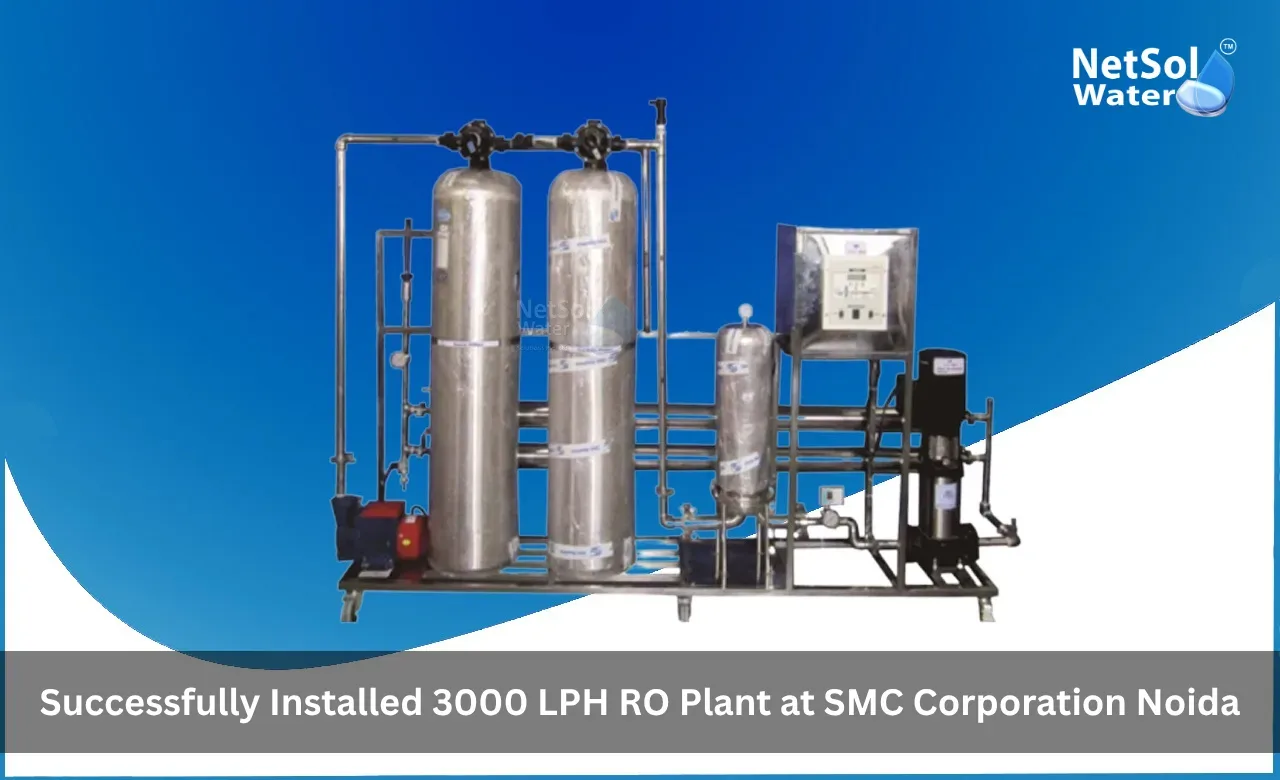
Successfully Installed 3000 LPH RO Plant at SMC Corporation Noida

Reliable water treatment plays an important role in facilities where a regular supply of suitable-quality water is needed for day-to-day operations. For SMC Corporation in Noida, the requirement was to install a commercial RO plant that could provide treated water at a suitable operating capacity. To meet this need, Netsol Water completed the installation of a 3000 LPH RO plant at the client’s Noida facility.

Netsol Water is a leading water and wastewater treatment company in the Noida region. The company manufactures commercial and industrial RO plants in different capacities and provides design, installation and commissioning support for water treatment projects.

The project focused on providing SMC Corporation with an RO-based water treatment solution that could support its operational water requirements. A properly selected RO system helps reduce dissolved impurities from feed water and produces treated water for suitable applications. The 3000 LPH capacity also provided a defined treatment rate for the facility. This project shows how a Commercial RO Plant Manufacturer in Noida can support a commercial facility through planned system selection, installation and commissioning.

Project Overview

A commercial water treatment project requires more than the supply of an RO machine. The treatment capacity must match the intended demand and the system must fit the available facility and operating conditions. The installation at SMC Corporation was planned around these basic requirements.

The project involved the installation of a 3000 LPH Reverse Osmosis plant at SMC Corporation in Noida. The main objective was to provide a dedicated water treatment system that could process incoming water and produce treated water through the RO process. The selected capacity gave the facility a treatment output of up to 3,000 litres per hour under the rated operating conditions of the plant.

The scope of the project centred on the installation of the RO treatment plant and the activities required to bring the plant into operation. This included positioning the treatment equipment, completing the required connections and carrying out testing before regular operation. Since water treatment performance depends on correct installation as well as the treatment process itself, the project required attention to both equipment setup and commissioning.

Netsol Water‘s commercial RO systems are offered across a wide range of capacities. Its published commercial RO range includes systems from small commercial units to much larger installations. The 3000 LPH plant selected for this project therefore formed part of a broader commercial water treatment capability.

Client Details

SMC Corporation is the Indian subsidiary of SMC Corporation Japan and operates in the field of pneumatic and automation technology. SMC India was incorporated in 1995 and has its head office at A-4, Sector-88, Noida. The company operates manufacturing facilities in India and maintains a network that supports its industrial customers.

The Noida facility provides an industrial setting where a dependable utility water supply can support normal facility operations. In such an environment, water quality must be considered when selecting a treatment system because untreated water may contain dissolved salts, suspended matter or other impurities that make it unsuitable for a specific application.

The project information available for this installation does not provide detailed information about SMC Corporation‘s exact end use of the RO water. Therefore, it would not be correct to assign a specific application such as drinking, process water, boiler feed or cleaning water without supporting documentation. The confirmed requirement was the installation of a 3000 LPH RO plant at the client’s Noida facility.

With the client requirement established, the location became an important part of the project planning and execution.

Project Location

The project was carried out at SMC Corporation, A-4, Sector-88, Noida. SMC Corporation‘s official corporate information identifies this address as its Noida head office and factory location.

Noida is a major industrial and commercial area within the Delhi-NCR region. An industrial facility in this setting may have continuous utility requirements and limited tolerance for interruptions in essential services. Water treatment equipment must therefore be installed in a way that suits the available site and allows the system to operate as intended.

The project location also offered a practical advantage for Netsol Water because the company operates in Noida and the wider Delhi-NCR region. Netsol Water is a water and wastewater treatment company and provides commercial RO solutions for customers in the region.

With the site and facility requirements understood, the next consideration was choosing a treatment capacity that matched the intended demand.

Plant Capacity

Plant capacity determines how much water a treatment system can process within a given period. Selecting an appropriate capacity helps ensure that the system can support the required water demand without being significantly undersized or unnecessarily oversized.

For this project, Netsol Water installed a 3000 LPH RO plant, where LPH means litres per hour. At its rated capacity, the system is designed to treat up to 3,000 litres of feed water per hour. If operated continuously at its rated flow, this corresponds to a theoretical gross treatment throughput of 72,000 litres over 24 hours. Actual daily production can vary according to operating hours, feed-water conditions, recovery, membrane performance, cleaning cycles and other plant conditions.

Parameter Value
Rated Capacity 3000 LPH (Litres Per Hour)
Theoretical Gross Throughput (24 hrs continuous) 72,000 litres


The 3000 LPH specification provided SMC Corporation with a defined treatment capacity for its facility. It also established a clear operating benchmark for the installed equipment.

Netsol Water‘s published commercial RO range includes capacities from 50 LPH to 10,000 LPH and beyond for larger requirements, showing that commercial systems can be selected according to the expected water demand.

Capacity alone, however, does not determine treatment performance. The quality of the incoming water and the selected treatment technology also influence the design.

Treatment Technology

Reverse Osmosis is widely used when a water treatment system needs to reduce dissolved salts and other impurities from water. The process uses pressure to push feed water through a semi-permeable membrane. Water passes through the membrane while a significant portion of dissolved substances and other contaminants remains in the reject stream.

For the SMC Corporation project, the selected technology was Reverse Osmosis. The basic purpose of the RO stage was to convert incoming feed water into treated water through membrane-based separation.

1. Reverse Osmosis Working Principle

The RO process starts when feed water reaches the membrane under pressure. The pressure must be sufficient to overcome the natural osmotic pressure of the feed water. As the pressurised water moves across the membrane surface, water molecules pass through the membrane while many dissolved salts and other unwanted substances are retained.

This process makes RO different from simple filtration. A conventional filter mainly removes suspended particles based on their physical size. RO also addresses many dissolved impurities that cannot be removed through ordinary mechanical filtration.

Netsol Water explains that its RO plants use membrane treatment to reduce impurities from incoming water and produce purified water.

2. Importance of Pretreatment

RO membranes need suitable feed-water conditions to maintain performance. Suspended particles, excess turbidity, chlorine and other substances can affect membrane life and operating efficiency. For this reason, commercial RO plants commonly use suitable pretreatment before water reaches the RO membrane.

The exact pretreatment arrangement installed at SMC Corporation has not been provided in the available project information. Therefore, specific filter models, dosing arrangements, membrane models or chemical treatment values cannot be confirmed for this project. The treatment discussion remains focused on the confirmed RO technology and the normal role of pretreatment in protecting the membrane.

Influent Characteristics

Understanding the incoming water quality is an important part of RO system planning. Water sources can contain different levels of dissolved solids, hardness, turbidity, iron, organic matter and microbial content. The treatment design should consider these characteristics before the equipment is selected and commissioned.

For this project, no detailed feed-water laboratory report or exact influent values have been provided. There are therefore no confirmed project-specific figures for TDS, hardness, turbidity, iron, pH or microbial load that can be reported.

The absence of these figures does not change the purpose of the installed RO system. Rather, it means that the case study should not assign numerical values that have not been documented. In a normal RO design process, these parameters help determine pretreatment requirements, membrane selection, operating pressure and expected performance.

The incoming water first needs suitable conditioning so that it can enter the membrane stage under appropriate conditions. From there, the treatment process can continue toward the production of treated water.

Treatment Process

A successful RO installation depends on a properly arranged treatment sequence. Each stage supports the next by preparing the water for the following treatment step. This reduces the load placed on the RO membrane and supports stable operation.

1. Raw Water Entry and Pretreatment

The treatment journey begins when raw or feed water enters the treatment system. Before the water reaches the RO membrane, the system normally prepares the feed through pretreatment. This stage can remove suspended matter and reduce substances that may create problems for the membrane.

The exact pretreatment equipment used at SMC Corporation has not been specified in the project details. However, the principle remains the same. Water must reach the membrane in a condition suitable for RO operation.

2. Pressure and Membrane Treatment

After the necessary pretreatment, feed water moves toward the high-pressure section of the RO system. The pump provides the pressure needed to drive water through the semi-permeable RO membrane.

The membrane separates the incoming stream into two paths. The permeate contains the water that passes through the membrane. The reject stream carries a higher concentration of retained dissolved substances and does not form part of the treated-water output.

3. Treated Water Collection

The permeate then moves toward the treated-water collection or subsequent use point. The final arrangement depends on the site’s piping and storage configuration.

This sequence provides a clear connection between the raw water source and the treated-water output. Proper operation of each stage helps the plant maintain the intended treatment function.

Major Equipment

Proper equipment selection supports consistent plant operation. An RO plant needs several components to move water, condition the feed, apply pressure and carry out membrane separation.

For this project, the confirmed major treatment equipment is the 3000 LPH RO plant itself. The plant includes the RO treatment assembly required to process feed water at its rated capacity. Netsol Water‘s commercial RO systems commonly use components such as membranes, high-pressure pumps, pressure vessels, control panels and dosing pumps, depending on the plant configuration.

Equipment Function
RO Membrane Assembly Performs the main separation process. It allows water to pass through under pressure while retaining a substantial portion of dissolved impurities.
High-Pressure Pump Provides the pressure needed for membrane separation. Its operation is directly linked to maintaining the pressure conditions required by the RO process.
Control Panel Helps the operator manage the plant and monitor its operating sequence. The exact control philosophy and automation level installed at SMC Corporation have not been provided.
Pretreatment and Supporting Components Protects the RO membrane and helps prepare the feed water. The specific filter vessels, dosing units, valves and instruments used for this project are not documented in the information available.


As a result, no unverified equipment list is presented as a project fact.

Installation Process

Plant installation requires careful planning because the equipment must fit the site while maintaining proper connections between the different treatment stages. The work should also allow operators to access the system for normal inspection and maintenance.

The installation at SMC Corporation involved placing the 3000 LPH RO system at the client’s Noida facility and preparing it for operation. The equipment had to be positioned appropriately before the required piping, water connections and electrical connections could be completed.

Once the equipment position was established, the installation team could connect the treatment sections so that water could move through the intended process. Electrical and control connections were also required to prepare the plant for testing.

The final stage of installation involved checking the physical setup and confirming that the system was ready for commissioning. This step was important because a treatment plant must be mechanically and electrically prepared before performance testing can begin.

Plant Commissioning

Commissioning confirms whether an installed treatment system is ready for regular operation. It provides an opportunity to check the plant under operating conditions and identify installation issues before the system enters normal service.

After installation, the RO plant was prepared for testing and commissioning. The commissioning process involved checking the operating sequence and confirming that the equipment could function as intended. Water movement through the treatment system had to be verified along with the operation of the principal components.

The commissioning stage also provided an opportunity to observe the plant’s treatment behaviour at its intended operating capacity. A proper commissioning process helps confirm that the system is connected correctly and that the plant can move from installation into routine operation.

The available project information does not include detailed commissioning readings such as recovery percentage, feed pressure, permeate TDS or hourly production records. These figures have therefore not been added to the project results.

Treated Water Reuse

Treating water becomes more useful when the resulting water can support an appropriate application within the facility. RO-treated water can be directed to a designated use point depending on the quality requirement and the site’s internal water management arrangement.

For the SMC Corporation project, the confirmed scope establishes the installation of a 3000 LPH RO plant but does not specify the exact final use of the treated water. It would therefore be inappropriate to state that the water was used for a particular process without supporting information.

The practical value of the system lies in creating a dedicated source of treated water for the client’s identified requirement. When used appropriately, such a system can help provide greater control over the quality of water supplied to the intended application.

Results and Performance

Project results provide a practical measure of whether the installed system met its intended purpose. In this installation, the major confirmed outcome was the successful installation and commissioning of a 3000 LPH RO plant at SMC Corporation‘s Noida facility.

The system established a dedicated RO-based treatment capacity of 3,000 litres per hour. This provided the client with a defined water treatment system rather than depending only on untreated incoming water for the relevant requirement.

The treatment technology also created a process for reducing dissolved impurities through membrane separation. Netsol Water identifies RO as one of its core commercial water treatment solutions and offers commercial systems in different capacities for varied applications.

No project-specific laboratory figures, before-and-after water quality results or long-term operating data were provided. The performance discussion is therefore limited to the confirmed installation, capacity and successful movement of the plant into operation. This approach keeps the project record factual and avoids presenting unverified performance claims.

Customer Feedback/Testimonial

Customer feedback helps demonstrate how a completed project performs from the client’s perspective. It can also provide useful information about installation quality, plant operation and overall project satisfaction. The 3000 LPH RO plant was successfully installed at the specified Noida facility and taken through the required commissioning stage.

Read some interesting information for the Industrial RO Plant Manufacturer in Gurgaon

Call to Action

Netsol Water‘s completed installation at SMC Corporation shows how a properly selected RO system can provide a dedicated water treatment solution for a commercial facility. The project combined a defined treatment capacity with membrane-based purification and onsite installation support. Netsol Water operates from the Noida region and provides commercial RO systems in a range of capacities for different water treatment requirements.

Businesses looking for a Commercial RO Plant Manufacturer in Noida can consult Netsol Water to discuss their feed-water source, treatment capacity and application requirements. A suitable system should always be selected after understanding the site’s water quality and expected demand rather than simply choosing a standard capacity.

Netsol Water is the leading commercial RO plant manufacturer, supplier and exporter based in Noida, according to its published company information, and provides commercial RO systems across a broad capacity range.

For organisations planning a new RO installation or upgrading an existing water treatment system, professional consultation can help define the right treatment approach. Contact Netsol Water to discuss your requirement and request a suitable commercial RO plant solution for your facility.

Contact Netsol Water at:

Contact Details
Phone +91-9650608473
Email enquiry@netsolwater.com