
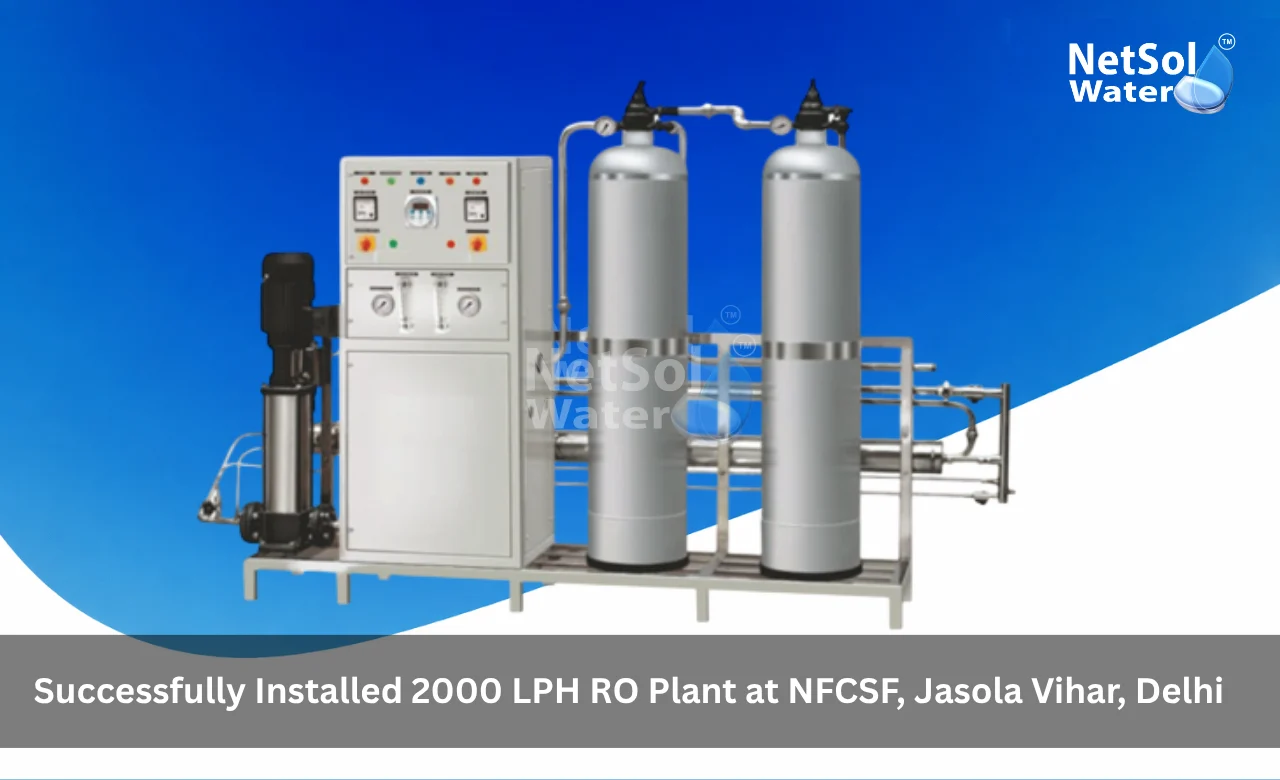
Successfully Installed 2000 LPH RO Plant at NFCSF, Jasola Vihar, Delhi
Reliable water treatment plays an important role when a facility needs a consistent supply of treated water for its operations. Water quality can vary depending on the source and local conditions. A suitable treatment plant helps address this requirement by processing incoming water and producing treated water at the required capacity. For this reason, selecting the right treatment plant is important for facilities that need a practical and dependable water treatment arrangement.
We completed the installation of a 2000 LPH RO plant at NFCSF in Jasola Vihar, Delhi. The project focused on providing a commercial water treatment solution that could meet the intended water requirement of the facility. The installed system uses Reverse Osmosis technology to treat the incoming water and produce treated water.
The project demonstrates how a properly selected RO plant can support a facility’s water treatment requirement when capacity and treatment needs receive careful attention. The installation also reflects Netsol Water‘s role as a Commercial RO Plant Manufacturer in Delhi that provides water treatment systems for different operational requirements.
Project Overview
A water treatment project must begin with a clear understanding of the client’s requirement. The treatment plant should match the required water capacity while using a process that suits the intended application. The project at NFCSF followed this basic approach by focusing on the installation of a suitable RO system with a defined treatment capacity.
The requirement at the facility was addressed through the installation of a 2000 LPH RO Plant. The objective was to provide a treatment system capable of processing the incoming water and producing treated water for the intended use at the site. The selected capacity gave the project a clear operating target and helped define the treatment system needed for the facility.
The scope of work covered the installation of the RO plant at the project location. The treatment system had to be positioned properly and connected so that water could move through the required treatment stages. The project also involved preparing the system for operation and carrying out commissioning activities before regular use.
A successful installation does not depend only on placing equipment at the site. The complete system must work as one treatment arrangement. Each part must connect correctly with the next stage so that raw water can enter the plant and treated water can be produced in the required manner. This made planning and execution important parts of the project.
Client Details
NFCSF was the client for this water treatment project. The facility required a suitable RO treatment system to address its treated water requirement.
The need for an RO plant indicates that the facility required treated water rather than using the incoming water directly for its intended purpose. Water treatment helps convert the source water into water suitable for the planned application. In such situations, the treatment plant must be selected according to the required capacity and the treatment objective.
The project therefore focused on providing NFCSF with an RO-based solution rather than a general water handling system. The treatment plant was selected and installed to create a defined process for treating incoming water. This arrangement gave the facility a dedicated treatment system that could operate according to the specified 2000 LPH capacity.
The client’s requirement also influenced the practical approach to installation. The plant had to fit into the available site and connect with the water movement required at the facility. Once the equipment was installed and commissioned, the system was ready to support the intended water treatment process.
Understanding the client’s basic requirement provides the foundation for understanding why the selected project location and plant capacity were important. The next section looks at the location where the treatment system was installed and how the site formed part of the project planning.
| Detail | Information |
| Client | NFCSF |
| Location | Jasola Vihar, Delhi |
| Solution Provided | 2000 LPH RO Plant |
| Installed By | Netsol Water |
Project Location
The location of a water treatment plant affects how the system is installed and connected to the facility. The available space, access to the installation area and the connection points for raw and treated water all influence the practical execution of the work. These considerations become especially important when a treatment plant must be installed within an existing facility.
The project was completed at NFCSF, located in Jasola Vihar, Delhi. The installation therefore took place in an urban facility where the treatment equipment needed to be placed and connected according to the site’s available arrangement. The location formed an important part of the project because the plant had to be installed in a way that supported proper water flow and practical operation.
Jasola Vihar is within Delhi. For the project itself, however, the key consideration was the client’s facility and the available installation area rather than general geographic features. The treatment system needed to fit the site’s operational requirements while allowing the equipment to function as intended.
The installation team therefore had to consider the physical arrangement of the plant and its connections during execution. Proper placement helped create a clear path for raw water entry and treated water movement. It also supported the commissioning stage by allowing the installed equipment to operate as one connected treatment system.
With the project location established, the next consideration was the amount of water the plant needed to treat. Capacity selection played a direct role in determining the size and operating target of the installed RO system.
Plant Capacity
Plant capacity provides the basis for designing and selecting a water treatment system. A plant that matches the intended water requirement can process water at a defined rate and support the facility’s operational needs. For this project, capacity was one of the main factors that shaped the selected treatment solution.
The installed plant has a capacity of 2000 LPH. The term LPH means litres per hour. Therefore, the plant is designed to process 2000 litres of water per hour under the intended operating conditions. This capacity provided a clear treatment rate for the NFCSF facility.
Selecting a 2000 LPH system also established the operating scale for the treatment plant. The plant needed to process the incoming water at this stated capacity and produce treated water through the RO process. The treatment system was therefore configured around the defined output requirement rather than using an unspecified or general-purpose arrangement.
The stated capacity is also useful from an operational perspective because it provides a measurable reference for plant use. The facility can understand the expected treatment rate and plan the use of treated water around the installed capacity. This makes the capacity an important link between the treatment equipment and the practical requirement at the site.
Since the project was designed around a 2000 LPH output, the treatment technology had to support this operating requirement. Reverse Osmosis was selected as the core treatment process.
| Parameter | Specification |
| Installed Capacity | 2000 LPH (Litres Per Hour) |
| Treatment Technology | Reverse Osmosis (RO) |
| Project Site | NFCSF, Jasola Vihar, Delhi |
| Plant Type | Commercial RO Plant |
| Design Basis | Defined output requirement matched to facility’s treatment rate |
Treatment Technology
Choosing the right treatment technology is important because different water treatment processes address different water quality requirements. Reverse Osmosis is a membrane-based treatment process that uses pressure to move water through a semi-permeable membrane. The membrane allows water to pass while restricting many dissolved substances and other unwanted components present in the source water.
The NFCSF project uses Reverse Osmosis as the main treatment technology. The RO plant receives incoming water and applies pressure to push the water through the RO membrane. During this process, the membrane separates the water into a treated stream and a reject stream.
1. Reverse Osmosis Process
The central part of an RO plant is the RO membrane. Before water reaches the membrane, it must pass through the required treatment stages that prepare it for membrane filtration. This preparation helps the RO stage operate under suitable conditions.
Once the prepared water reaches the membrane section, pressure drives the water through the membrane. The membrane acts as a barrier to many dissolved substances. Water that passes through the membrane forms the treated water stream. The remaining stream carries the rejected material away from the membrane section.
The process therefore uses physical separation rather than adding a treatment chemical to remove dissolved contaminants. The effectiveness of the system depends on proper operation of the complete treatment sequence and the condition of the membrane system.
2. Role of RO in the Project
For the NFCSF project, RO provides the main treatment step required to convert incoming water into treated water. The technology also fits the project’s defined treatment capacity of 2000 LPH. The plant was installed as a complete treatment arrangement so that water could move through the required stages before reaching the RO membrane.
RO technology was therefore not treated as an isolated component. It formed the main part of an integrated treatment process that included water entry, preparation, membrane treatment and treated water collection. This connected approach helped ensure that each stage supported the next.
The suitability of the treatment process also depends on the characteristics of the incoming water. Before operating any RO system, it is important to understand what is present in the source water.
Influent Characteristics
Understanding incoming water quality is an important part of water treatment planning. The treatment system must receive water that matches the conditions for which the plant has been selected and prepared. Parameters such as dissolved solids, hardness, turbidity, iron and microbial content can influence treatment requirements. Knowing these characteristics helps determine the treatment approach and supports proper operation.
Importance of Water Quality Assessment
TDS is commonly used to describe the total amount of dissolved substances in water. Hardness relates mainly to dissolved calcium and magnesium salts. Turbidity indicates the presence of suspended particles that can make water appear cloudy. Iron can create treatment and operational concerns when present at elevated levels. Microbial content provides another important measure when water treatment involves biological contamination.
| Parameter | Relevance to Treatment |
| TDS | Describes the total amount of dissolved substances in water |
| Hardness | Relates mainly to dissolved calcium and magnesium salts |
| Turbidity | Indicates suspended particles that can make water appear cloudy |
| Iron | Can create treatment and operational concerns at elevated levels |
| Microbial Content | Important measure when biological contamination is a concern |
Treatment Process
A proper treatment sequence allows the RO plant to perform its main function effectively. Water should move through the system in an orderly manner so that each stage prepares the water for the next stage. This arrangement supports stable treatment and helps protect the main RO membrane from conditions that could affect its operation.
At NFCSF, the treatment process begins when incoming water enters the treatment system. The water then moves through the stages provided in the RO plant before reaching the membrane section. After membrane treatment, the treated water is collected for the intended use.
1. Raw Water Entry
The first stage involves the entry of the incoming water into the treatment system. This creates the starting point for the complete treatment cycle. Raw water must enter the plant through the planned connection so that it can move into the treatment sequence without disrupting the flow.
The design of this stage provides the basic foundation for the remaining process. Once water enters the system, it moves toward the treatment stages that prepare it for RO membrane filtration.
2. Water Preparation
Before entering the membrane stage, water requires suitable preparation. The preparation stage helps control the conditions under which the RO membrane operates. Depending on the plant design and source water quality, this stage can involve the removal or reduction of materials that may interfere with membrane performance.
3. RO Membrane Treatment
After preparation, the water reaches the RO membrane section. A high-pressure arrangement pushes the water toward the semi-permeable membrane. The membrane allows a portion of the water to pass through while restricting many dissolved substances present in the incoming stream.
The water that passes through the membrane becomes the treated product water. This water is then directed toward the treated water collection point. The remaining water forms the reject stream and leaves the membrane section through the designated reject outlet.
4. Treated Water Collection
The final stage of the treatment journey involves collecting the water produced by the RO process. The treated water can then be directed toward the client’s intended use within the facility. The collection arrangement provides a clear separation between treated water and reject water.
This sequence creates a connected flow from raw water entry to final treated water production. Every stage has a defined role and supports the next stage. The effectiveness of this process also depends on selecting and installing the right equipment for each part of the system.
| Stage | Function |
| Raw Water Entry | Incoming water enters the treatment system through the planned connection |
| Water Preparation | Controls conditions under which the RO membrane operates |
| RO Membrane Treatment | High-pressure arrangement pushes water through the membrane, separating treated and reject streams |
| Treated Water Collection | Collects treated water and directs it to the client’s intended use |
Major Equipment
Equipment selection has a direct impact on how a treatment plant operates. Each component must perform its intended function and work correctly with the rest of the system. A properly arranged plant allows water to move through the treatment process in a controlled manner.
The major technology confirmed for the project is the Reverse Osmosis system with a capacity of 2000 LPH.
1. RO Membrane System
The RO membrane system forms the main treatment section of the plant. It performs the membrane separation process that produces treated water from the incoming stream. Pressure pushes water through the membrane while the membrane restricts many dissolved materials.
The membrane section therefore acts as the core of the treatment plant. Its operation determines the separation step that defines the RO process.
2. High-Pressure Arrangement
Pressure is necessary for Reverse Osmosis because the treatment process requires water to move through the membrane against the natural osmotic pressure. The high-pressure arrangement provides the force required for this process.
The pressure system must work in coordination with the membrane section. Proper operation helps maintain the flow required for treatment and supports the plant’s intended capacity.
3. Water Flow and Collection Connections
The plant also requires suitable connections for raw water entry, treated water movement and reject water discharge. These connections link the different treatment stages and ensure that water follows the planned route.
The equipment arrangement at NFCSF was installed with these connections so that the plant could be tested as a complete system during commissioning. Once the major components were placed and connected, the project moved into the installation and execution stage.
| Equipment | Role in the System |
| RO Membrane System | Core of the treatment plant; performs the membrane separation process |
| High-Pressure Arrangement | Provides the force required to move water through the membrane |
| Water Flow & Collection Connections | Link raw water entry, treated water movement and reject discharge |
Installation Process
Plant installation requires careful planning because the equipment must be positioned correctly and connected in the proper sequence. A treatment plant cannot perform as intended unless the physical arrangement and water connections support the treatment process. The installation at NFCSF therefore involved arranging the system at the site and preparing it for operation.
1. Site Preparation
The installation process began with attention to the site where the RO plant would be placed. The available area had to support the equipment arrangement and allow the required connections. Site preparation created the conditions needed for safe and practical equipment placement.
The installation area also had to permit access to the system for operation and routine attention. Proper positioning helped the team maintain a logical flow between the different treatment stages.
2. Equipment Placement
Once the site was ready, the RO plant equipment was placed according to the planned arrangement. Correct positioning was important because the components needed to connect with one another in the order required by the treatment process.
The equipment placement also helped establish the flow path from the raw water side to the treated water side. This ensured that water could move through the treatment process without unnecessary changes in direction or connection.
3. System Connections
After equipment placement, the required connections were made between the treatment stages. Raw water connections allowed the incoming stream to enter the plant. The treatment connections linked the water path to the RO section. Treated and reject water connections completed the system’s output arrangement.
Each connection had to match the intended flow direction. This stage required attention to the complete system rather than to individual components because an RO plant functions through the combined operation of all connected sections.
4. Final Installation Checks
Following connection work, the installed system required a final review before commissioning. The team needed to ensure that the equipment had been positioned correctly and that the water paths were ready for testing.
Completing these checks created the transition from installation to commissioning. The plant was then ready for controlled testing before regular operation began.
Plant Commissioning
Commissioning confirms whether an installed treatment plant operates according to its intended design. It provides an opportunity to check connections, water movement and equipment operation before the plant enters regular service. This step is especially important for an RO system because the complete process must function together.
At NFCSF, commissioning followed the completion of the installation work. The plant was prepared for operation so that the treatment sequence could be checked under working conditions.
1. System Testing
The testing stage involved checking the installed arrangement and verifying that the system could operate through its treatment sequence. The team reviewed the water flow from the entry side through the treatment section and into the treated water outlet.
The RO section also had to operate as part of the complete system. This meant checking the membrane treatment stage and confirming that the water path remained consistent during operation.
2. Performance Confirmation
Commissioning also provides a basis for confirming whether the plant meets the project requirement. For this installation, the key defined requirement was the 2000 LPH plant capacity and the use of RO technology.
The commissioning process therefore focused on preparing the system for operation and confirming that the installed plant functioned as intended. Once the checks were completed, the treatment system could move into its intended operational role at the facility.
The successful commissioning completed the main installation cycle and prepared the plant to support treated water use. This makes the question of treated water utilisation important to the overall value of the project.
Treated Water Reuse
Producing treated water is only one part of a water treatment project. The treated water must also serve a useful purpose within the facility. Effective use of the treated output helps connect the treatment plant directly with the client’s operational requirement.
At NFCSF, the installed RO plant provides treated water for the intended requirement of the facility. 2000 LPH RO plant was installed to provide treated water through the Reverse Osmosis process. The produced water can be directed to the required point of use within the facility according to the client’s operating needs.
The plant therefore creates a defined path from incoming water to treated water supply. This arrangement gives the facility a dedicated treatment source and allows water to be processed before it is used for its intended purpose.
The usefulness of the system can be assessed further by looking at the outcomes of the installation and the information available about its performance.
Results and Performance
Project results provide a practical way to understand whether an installed treatment system has achieved its intended objective. In a water treatment project, performance may be assessed through treatment capacity, treated water quality, system operation and other measured parameters.
The NFCSF project resulted in the successful installation and commissioning of a 2000 LPH RO Plant. The plant now provides a defined RO-based treatment process for incoming water.
1. Treatment Capacity
The installed system has a rated capacity of 2000 LPH. This gives the project a clear and measurable treatment rate. The capacity was the central output requirement around which the plant was installed.
2. Operational Readiness
Completion of installation followed by commissioning indicates that the plant was prepared for operation. The treatment equipment was installed, connected and tested as part of the project execution.
3. Water Treatment Output
The RO process provides treated water by passing water through the RO membrane under pressure. The 2000 LPH RO system and its commissioning therefore was successful installed at the NFCSF facility in Jasola Vihar, Delhi. The completed project provided the client with the intended treatment infrastructure and a defined RO treatment process.
Customer response also provides useful context after a project is completed.
| Confirmed Outcome | Status |
| Installation of 2000 LPH RO Plant | Completed |
| System Connections & Testing | Completed |
| Plant Commissioning | Completed |
| Laboratory/TDS Data | Not provided — not included in this case study |
Customer Feedback/Testimonial
Customer feedback helps show how a completed project met the client’s requirement. It can also provide a practical view of the installation experience and the value of having the required treatment system in place.
Customer Testimonial
Having the 2000 LPH RO Plant installed at our NFCSF facility in Jasola Vihar has given us the dedicated water treatment system required for our site. The project was completed with the installation and commissioning of the RO plant as planned. We now have a defined treatment system with a capacity of 2000 litres per hour to support our treated water requirement. The installation has provided us with the RO-based water treatment solution we needed for the facility.
Read some interesting information for the commercial RO plant manufacturer in Faridabad
Conclusion
The successful installation of the 2000 LPH RO Plant at NFCSF in Jasola Vihar, Delhi demonstrates the practical role of a properly selected commercial water treatment system. The project addressed the client’s requirement through a defined RO treatment process and an installed capacity of 2000 LPH. The plant was installed at the facility, connected as a complete treatment system and commissioned before operation.
The project also shows why capacity, treatment technology, installation planning and commissioning need to work together. For NFCSF, the completed installation established a dedicated RO treatment arrangement for its intended water requirement.
Netsol Water continues to provide water treatment solutions as a Commercial RO Plant Manufacturer in Delhi. Facilities that require an RO system can benefit from selecting a plant according to their treatment objective and required capacity. Proper assessment of the water source and the intended application also helps in choosing a suitable treatment arrangement.
For information about commercial RO plants or to discuss a similar water treatment requirement, contact Netsol Water for a consultation and project discussion. The team can help evaluate the requirement and identify a suitable RO treatment solution for the facility.
Contact Netsol Water
| Contact | Details |
| Phone | +91-9650608473 |
| enquiry@netsolwater.com |