
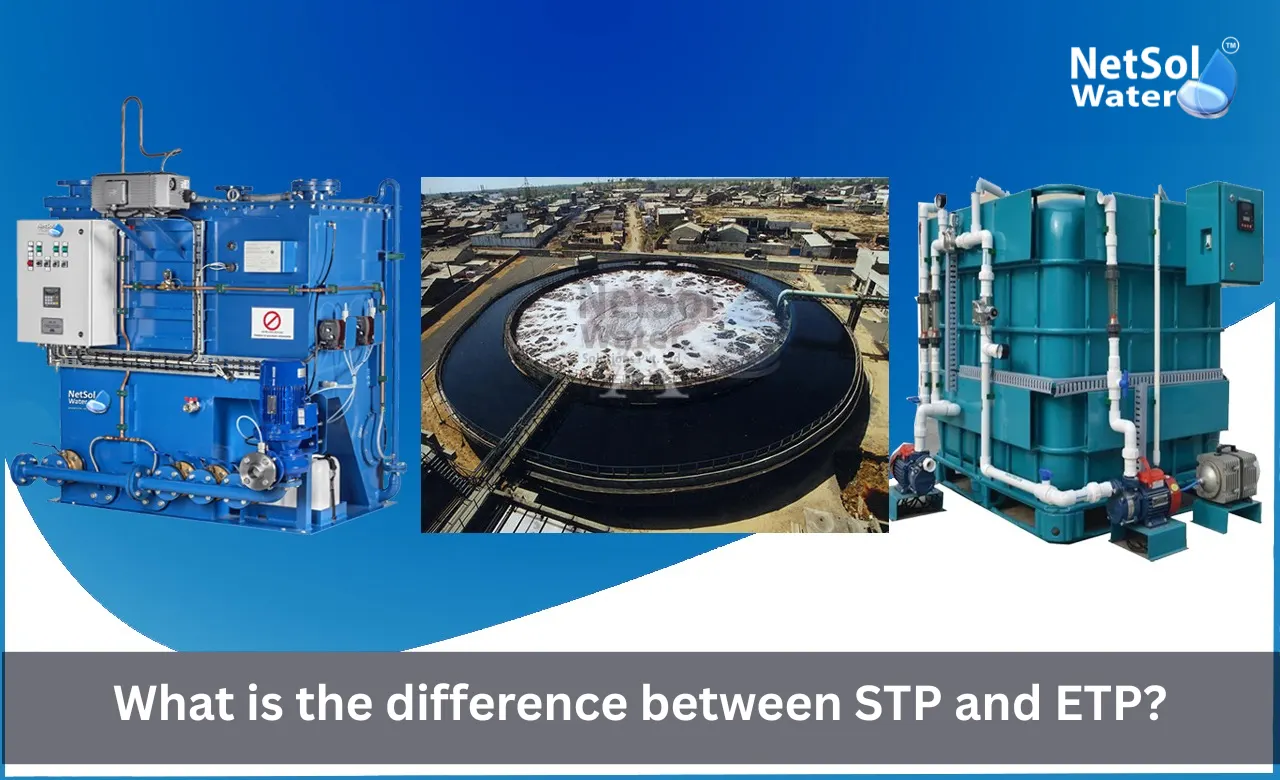
What is the difference between STP and ETP?
People need clear water solutions in cities and towns across India. Urban growth and industry bring water use and water waste. Engineers design plants that clean water so people stay healthy and work can continue. We will explain the difference between STP and ETP. Netsol Water helps many clients with plants, and it leads the market with reliable design and service.
What is an STP and why it matter?
Sewage treatment handles wastewater from homes and offices. This water contains organic matter, human waste, and household detergents. An STP removes solids and harmful microbes. It protects public health and keeps rivers and lakes cleaner. Let us have a look at some common STP steps and their function.
1. STP process and units
A sewage treatment plant manufacturer makes plants that use screens, sedimentation, and biological treatment to remove waste. First, the plant removes large solids by screening. Then it slows water so particles sink in a settling tank. Next, the plant uses bacteria to break down organic matter. Finally, the plant filters and disinfects the water before release. Each unit works in sequence, and the plant controls flow to match the load. Plants for small communities differ from plants for large towns. A good manufacturer sizes each unit to match real use and to ensure low maintenance.
2. Example for household wastewater
Household wastewater needs careful biological processing. Bacteria in the treatment tanks convert organic waste into simpler compounds and gas. The process reduces odour and reduces disease risk. The treated water can serve for gardening or flushing after proper checks. A sewage treatment plant manufacturer offers compact models for small housing projects and larger models for apartment complexes. These models use simple controls so local staff can operate them with ease.
What is an ETP and why industry needs it
An ETP handles wastewater from factories and industrial sites. This water carries chemicals, oils, heavy metals, and other industrial residues. Effluent can harm soil, plants, and aquatic life if not treated correctly. An effluent treatment plant manufacturer must design a plant that deals with the specific pollutants in each industry stream. Let us have a look at some common ETP methods and their importance.
1. ETP units and treatment steps
An effluent treatment plant manufacturer often uses chemical dosing, coagulation, and separation to remove industrial contaminants. The plant may use oil-water separators for oily wastewater. It may use neutralization tanks to adjust acid or alkali levels. For dissolved pollutants, the plant may use adsorption or advanced oxidation. Sludge from these steps needs safe handling and disposal. Each industry brings a unique mix of pollutants, and the plant design must match that mix.
2. Example for textile and dyeing units
Textile wastewater often carries colour and organic load. An ETP for such units uses chemical treatment to remove colour, then uses biological steps to reduce organic load. The plant may add tertiary treatment to polish water so it meets reuse standards. An effluent treatment plant manufacturer can provide modular units so factories can scale as needed. Proper design reduces water cost and lowers environmental impact.
Key differences in purpose, design, and regulatory needs
Understanding the contrast helps clients choose the right partner. STP focuses on domestic sewage and uses biological steps that work well on organic waste. ETP focuses on industrial effluent and uses chemical and physical methods that handle specific pollutants. Let us have a look at some practical points that show the difference.
1. Design emphasis and compliance needs
A sewage treatment plant manufacturer aims at removing pathogens and organics so that treated water meets discharge norms for domestic sites. The plant design uses robust biological reactors and disinfection units. An effluent treatment plant manufacturer places more emphasis on chemical dosing and on units that remove heavy metals and oils. Both kinds of plants must meet environmental rules, but the permits and monitoring differ. Factories may need regular testing for specific pollutants, and they may face stricter limits.
2. Operational needs and maintenance comparison
STP operation relies on biological balance and consistent flow. Operators must monitor oxygen levels and sludge age. ETP operation often requires chemical stock management and safe handling of hazardous sludge. Maintenance for ETP may require more safety gear and trained personnel. Both plant types benefit from reliable spare parts and timely service. Choosing a manufacturer who offers training and support helps in long-term operation.
How to choose between STP and ETP and the role of manufacturers
Choosing the right plant depends on the wastewater source and on reuse goals. A sewage treatment plant helps housing and municipal projects. An effluent treatment plant helps factories and industrial parks. Let us have a look at some selection tips that clients use.
Selection tips and why Netsol Water can help
Clients must match the system to the waste stream volume and pollutant type. Start with a sample test and a flow estimate. Then choose a plant that allows future expansion. Check who will support operation and repair. Netsol Water offers experience in both sewage and effluent systems and supplies tailored designs for many sectors. The company helps clients with permits, testing, and setting up monitoring programs. Choosing a trusted manufacturer reduces risk and helps projects meet deadlines and standards.
Read some interesting information for the Industrial RO Plant Manufacturer in Noida
Conclusion
A clear choice depends on the source and the pollution load. STP and ETP manufacturers serve different needs and use different methods. Netsol Water leads the field for both kinds of plants. Contact us to get a consultation and to check what fits your site. Request a site visit and a custom plan to meet your regulatory needs and to protect your local water resources.
Contact Netsol Water at:
Phone: +91-9650608473
Email: enquiry@netsolwater.com